Culture & Customs · Costa Rica
Costa Rica: Pura Vida and the Painted Oxcart
A pilgrimage that fills the roads every August, a courtesy so ingrained that friends address each other formally, masked giants in the streets, and a painted cart that has become a symbol of the nation
By Worldlore Editorial · 30 September 2026
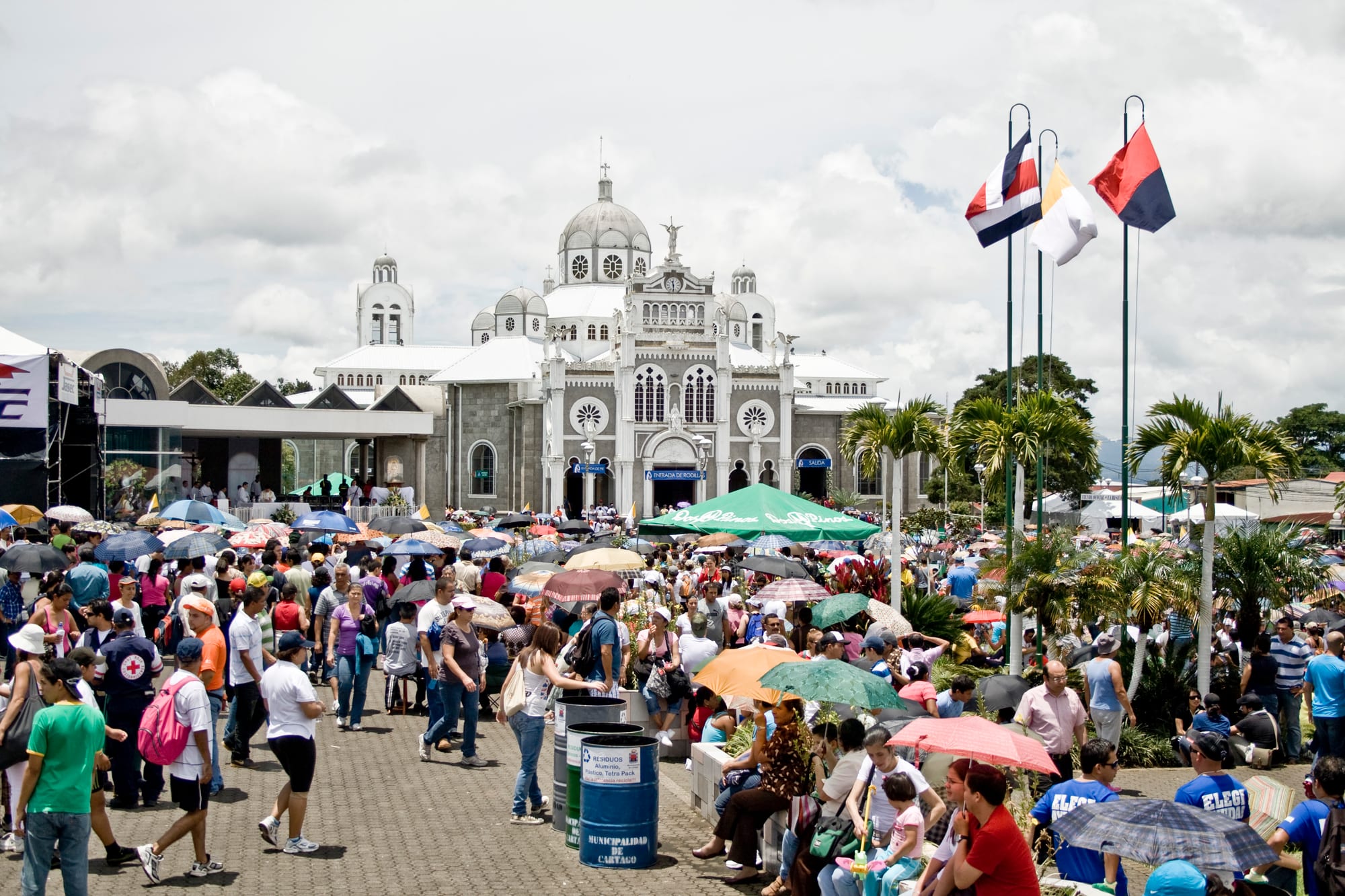
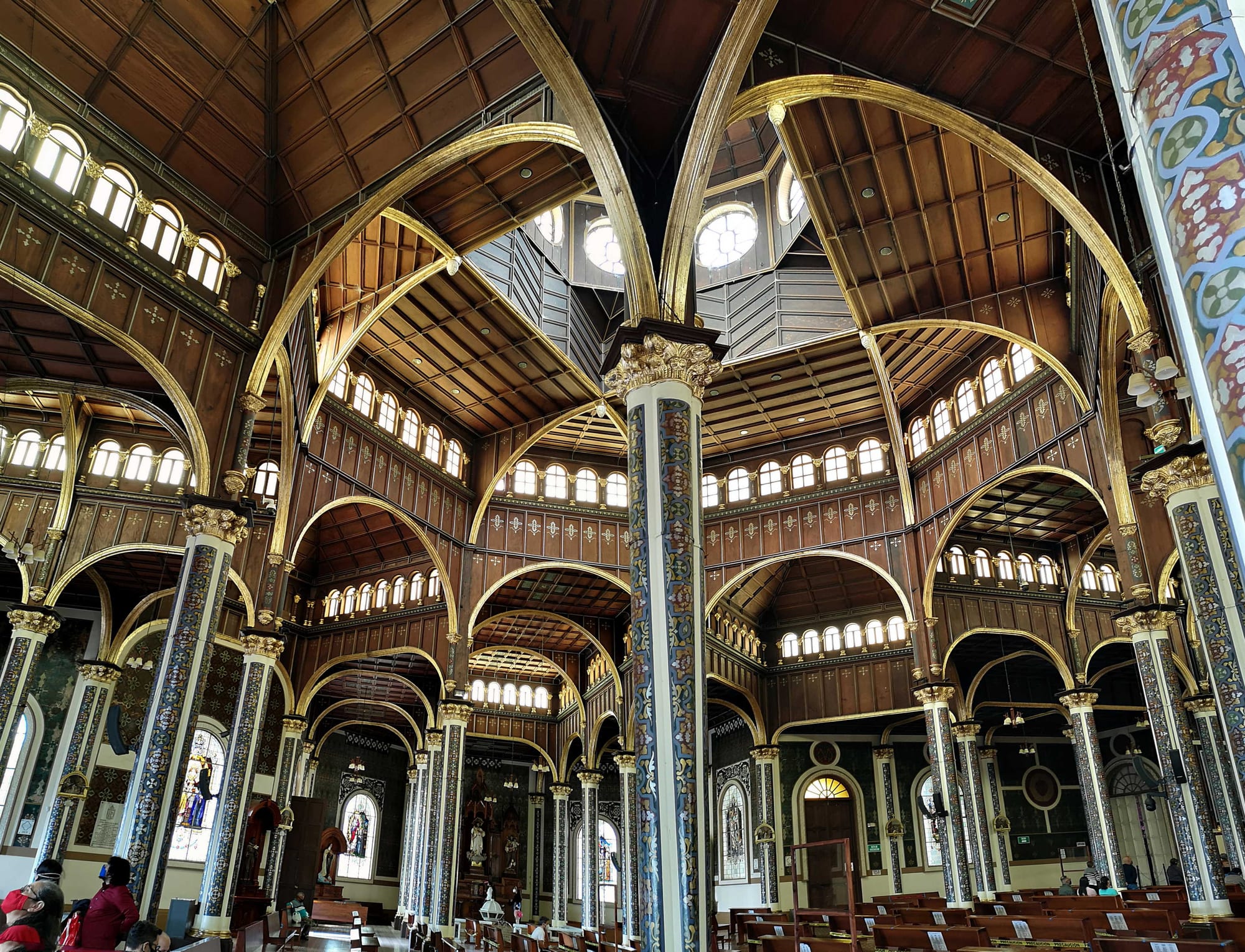
In the last days of July, the roadsides leading to Cartago begin to fill with walkers. Some set out from the capital, a little over twenty kilometres away; others have been on the road for days from the far corners of the country, many walking through the night to avoid the heat. By the time they reach the great grey-and-white basilica, the square is a sea of umbrellas and families. Some pilgrims cover the last stretch on their knees. Inside, people queue to touch the rock where, according to tradition, a small dark stone figure of the Virgin was found in 1635, and to fill bottles at the spring behind the church. The Romería is the largest gathering in Costa Rica's year, and it shows two sides of the national character at once: a deep, quiet faith, and an instinct for turning out together.
Faith, identity and values
Costa Rica is the only country in the Americas where Roman Catholicism remains the official religion of the state under the constitution, which also guarantees freedom of religion. In practice, the religious landscape has changed quickly. Surveys by the University of Costa Rica show the Catholic share falling to around half of the population, from about seven in ten a decade earlier, with evangelical Protestant churches growing fast and a significant minority, particularly among the young, reporting no religion at all. Catholic identity is nonetheless woven through the calendar, through family life and through the devotion to the Virgen de los Ángeles, known affectionately as La Negrita, who was declared the country's patron saint in 1824 and given a papal coronation in 1926.
Costa Ricans call themselves ticos, and the phrase most associated with them is pura vida — "pure life". It works as a greeting, a farewell, a thank you, a reply to "how are you?" and an all-purpose statement that things are fine. Behind it lies a set of values that visitors notice quickly. Politeness and courtesy matter a great deal, and everyday Costa Ricans tend to be uncomfortable with open confrontation, a trait often linked to the country's pride in its peaceful, army-free democracy. Disagreement is usually softened, and a refusal may come wrapped in so much courtesy that it does not sound like one. Family is at the centre of social life, and large family gatherings mark weekends, holidays and every stage of life.
Greetings and meeting people
A handshake is the standard greeting in formal and business settings. In social situations, women commonly greet both women and men with a single light kiss on the right cheek, often more of a touch of cheeks than a real kiss, while men greeting each other shake hands or give a brief one-armed hug. The same gestures are usually repeated on leaving.
Language carries much of the courtesy. Costa Rican Spanish makes wide use of usted, the formal "you", in situations where many other Spanish speakers would use the familiar form. Some Costa Ricans use usted with almost everyone, including friends and relatives; others move between usted and the informal vos depending on the person and the setting. Costa Ricans tend to use usted with foreigners, and for visitors it is always the safe choice. Older people and those in positions of respect are addressed as don or doña followed by their first name — Don Carlos, Doña María — a form used for a neighbour, a landlady or a boss alike.
Thanks are answered not with the textbook de nada but with "con mucho gusto" — "with great pleasure" — and hearing it in shops and cafés is one of the first things visitors pick up. Among friends, the word mae, roughly "mate" or "dude", peppers conversation, though it is not a word for use with elders.
Hospitality and being a guest
Hospitality in Costa Rica is at its most visible at Christmas. Families build a portal, or nativity scene, usually set up in early December, in many Catholic households around 8 December, the Feast of the Immaculate Conception. It is laid out with moss, sawdust, cypress branches, rocks and plants, and populated with the Holy Family, the ox and the mule, the Three Kings, shepherds, sheep and angels; the figure of the Christ Child goes in on Christmas Day. Once it is finished, neighbours, relatives and friends are invited round to see it, and visitors are offered coffee, aguadulce made from sugarcane, biscuits or a slice of tamal. Accepting such an invitation, and admiring the portal properly, is a warm gesture.
Making tamales is itself a social occasion. Families gather in the weeks before Christmas for tamaleadas, when relatives of every generation work together to assemble and wrap large batches for sharing with neighbours and friends. The season is helped along by the aguinaldo, the Christmas bonus, in effect a thirteenth month's pay, that salaried workers receive in December, and it brings large family reunions, with church services on Christmas Eve competing with fireworks going off across the neighbourhoods.
For visitors eating out, one practical point: restaurant bills normally already include a service charge of 10 per cent, added by law and listed separately from sales tax, so any extra tip is a personal choice rather than an obligation.
Festivals and life's big moments
The religious year peaks on 2 August, the feast of the Virgen de los Ángeles and a national holiday, which closes the Romería. The pilgrimage begins in late July, with a novena of prayers in parishes across the country, and estimates put participation at around two million people over the whole period — in a country of about five million. Christmas runs from the setting up of the portal to the Rezo del Niño, a gathering of family, friends and neighbours to pray and give thanks before the nativity scene is finally taken down.
Independence Day, 15 September, is celebrated with particular affection. In the days before it, a torch of independence is carried by relays of runners, many of them students, from Guatemala through El Salvador, Honduras and Nicaragua into Costa Rica, a symbol of the Central American independence of 1821. On the evening of 14 September comes the desfile de faroles, the lantern parade, in which children and their families walk through towns across the country carrying home-made lanterns — once simple constructions of card and tissue paper, now often elaborate models of houses, oxcarts or footballs. The tradition was begun in 1953 by Víctor Manuel Ureña, a director of schools in San José, and school parades follow on the day itself.
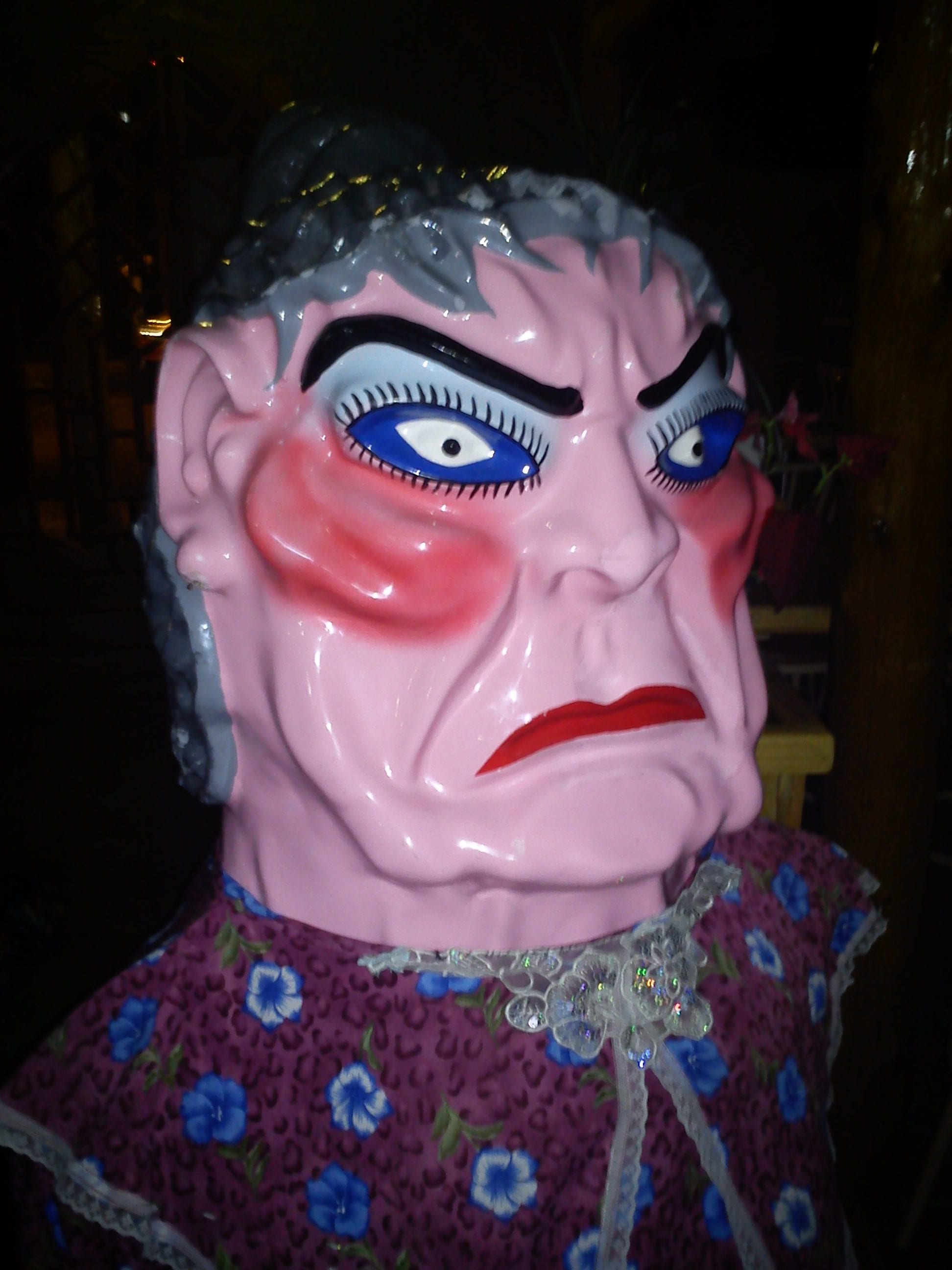
Local celebrations, from saints' days to the fundraising fairs known as turnos, are often enlivened by a mascarada. Performers known as mantudos or payasos, wearing oversized masks, parade through the streets, dance to the brass and percussion of a cimarrona band and chase the crowd, to shrieks and laughter. The characters include giants and giantesses, devils, witches and figures from Costa Rican legend. The tradition blends colonial Spanish festivities of giants and big-headed figures with Indigenous influences; 31 October has been the National Day of the Traditional Costa Rican Mascarada since the 1990s, and in 2022 a law declared the mascarada a national symbol.
Deaths are marked by the velorio, the wake, traditionally held in the family home, where neighbours, friends and relatives come through the night to pray, drink coffee and keep the family company. Burial usually follows quickly, and for nine days afterwards mourners gather at the house to pray the novena for the person who has died. On 2 November, All Souls' Day, families visit cemeteries to clean graves, lay flowers and light candles — a quieter observance than Mexico's Day of the Dead.
Arts, crafts and music
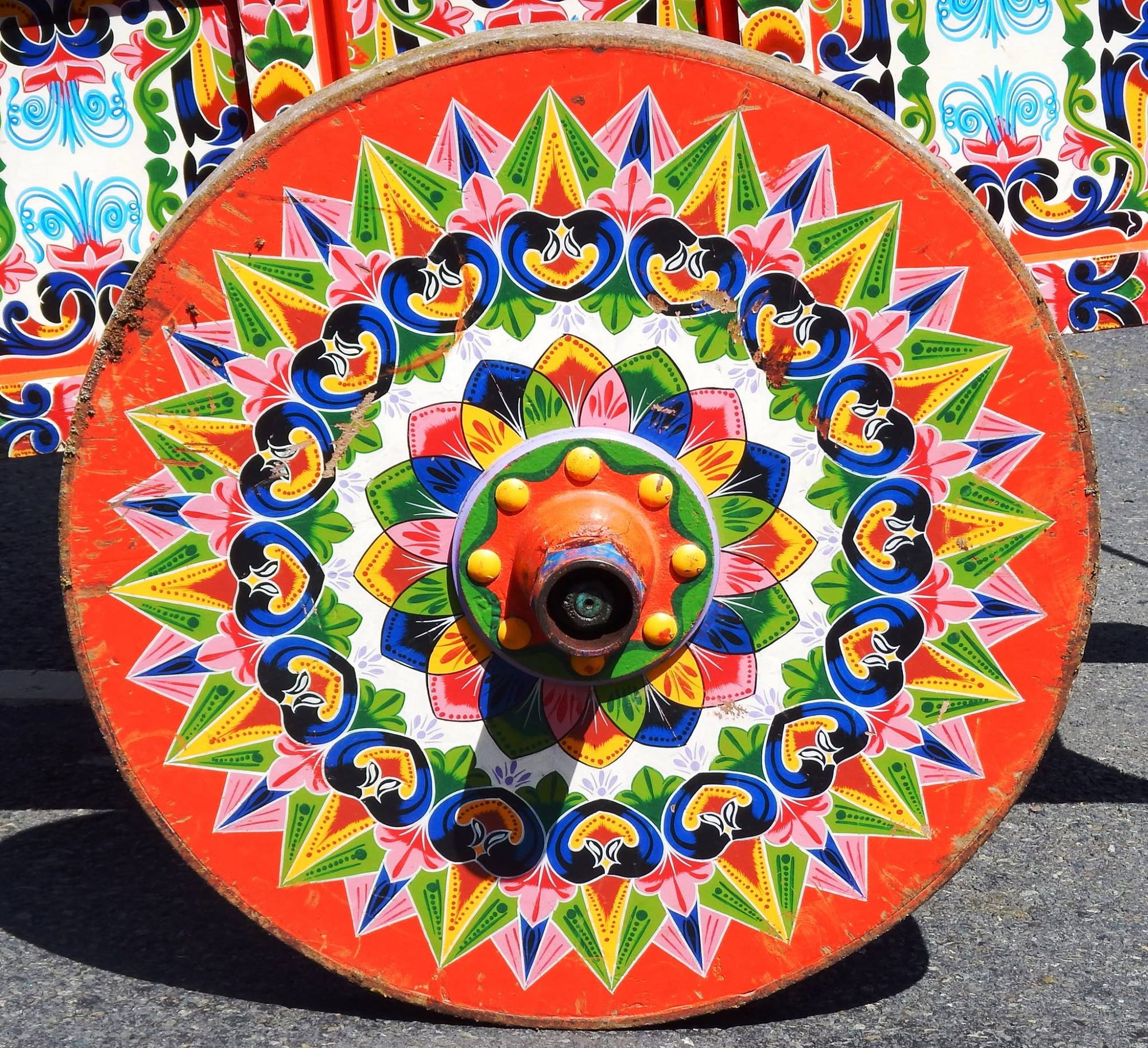
The most famous object in Costa Rican folk art is the carreta, the painted oxcart. From the 1840s, carts drawn by oxen carried coffee from the Central Valley over the mountains to the Pacific port of Puntarenas, a journey of several days. They were built with spokeless wheels, able to cut through the mud, and as they rolled each cart gave off its own ringing note where metal struck the hub. From the early twentieth century, owners began decorating them, first with designs that showed which region a cart came from, later with flowers, faces, star-like patterns and miniature landscapes in brilliant colours. The oxcart remains a strong symbol of the country's rural past, still paraded at festivals and religious celebrations, and "Oxherding and oxcart traditions in Costa Rica", proclaimed a UNESCO Masterpiece of the Oral and Intangible Heritage of Humanity in 2005, has been on the Representative List of the Intangible Cultural Heritage of Humanity since 2008 — though the number of craftspeople trained to build and paint them has fallen sharply.
The masks of the mascarada are a craft of their own, and the National Museum celebrates the tradition as a showcase for the skill of the artisans who make them. Music runs alongside: cimarrona bands for the street, and for dancing, swing criollo, a fast, close partner dance born in the dance halls of the 1950s from cumbia rhythms and the swing steps of the era. It was declared part of Costa Rica's intangible cultural heritage by executive decree in 2012, and in 2025 the government nominated it for UNESCO's list.
Dos and don'ts for visitors
- Do shake hands on meeting; among friends, a single light kiss on the right cheek is common between women and between women and men.
- Do use usted, and address older people as don or doña with their first name.
- Do reply to thanks with "con mucho gusto", and expect to hear pura vida in almost every context.
- Do accept an invitation to see a family's portal at Christmas and admire it properly.
- Do check restaurant bills, which normally include a 10 per cent service charge by law.
- Don't expect a blunt "no"; a softened or vague answer is often a polite refusal.
- Don't treat the Romería as a spectacle; give pilgrims space, especially those walking the final stretch on their knees.
- Don't take a mascarada chase personally; being pursued by a giant mask is part of the fun.
What to take away
Costa Rican courtesy can seem gentle to the point of vagueness, but it rests on something firm — a deep dislike of conflict, a strong sense of family and faith, and a genuine pleasure in welcoming others — and visitors who answer it with the same warmth will hear "con mucho gusto" wherever they go.