Attractions & Natural Wonders · Costa Rica
Costa Rica: Ten Attractions and Natural Wonders
A near-perfect volcanic cone over a hot-spring town, a cloud forest you cross on swaying bridges, a river that runs sky-blue, and rainforest so dense with life it feels loud
By Worldlore Editorial · 19 September 2026
Small country, outsized nature
Costa Rica is about the size of West Virginia but holds an estimated five percent of the world's species. It abolished its army in 1948 and put the money into schools and, later, conservation — roughly a quarter of the country is protected. The result is one of the most developed ecotourism industries anywhere: a compact country where you can be in cloud forest in the morning and on a Pacific beach by evening.
The ten below spread across the volcanic highlands, both coasts, and the southern rainforest. The dry season (roughly December to April) is the peak; the green season is wetter, cheaper, and lush. Roads can be slow and rough.
1. Arenal Volcano and La Fortuna
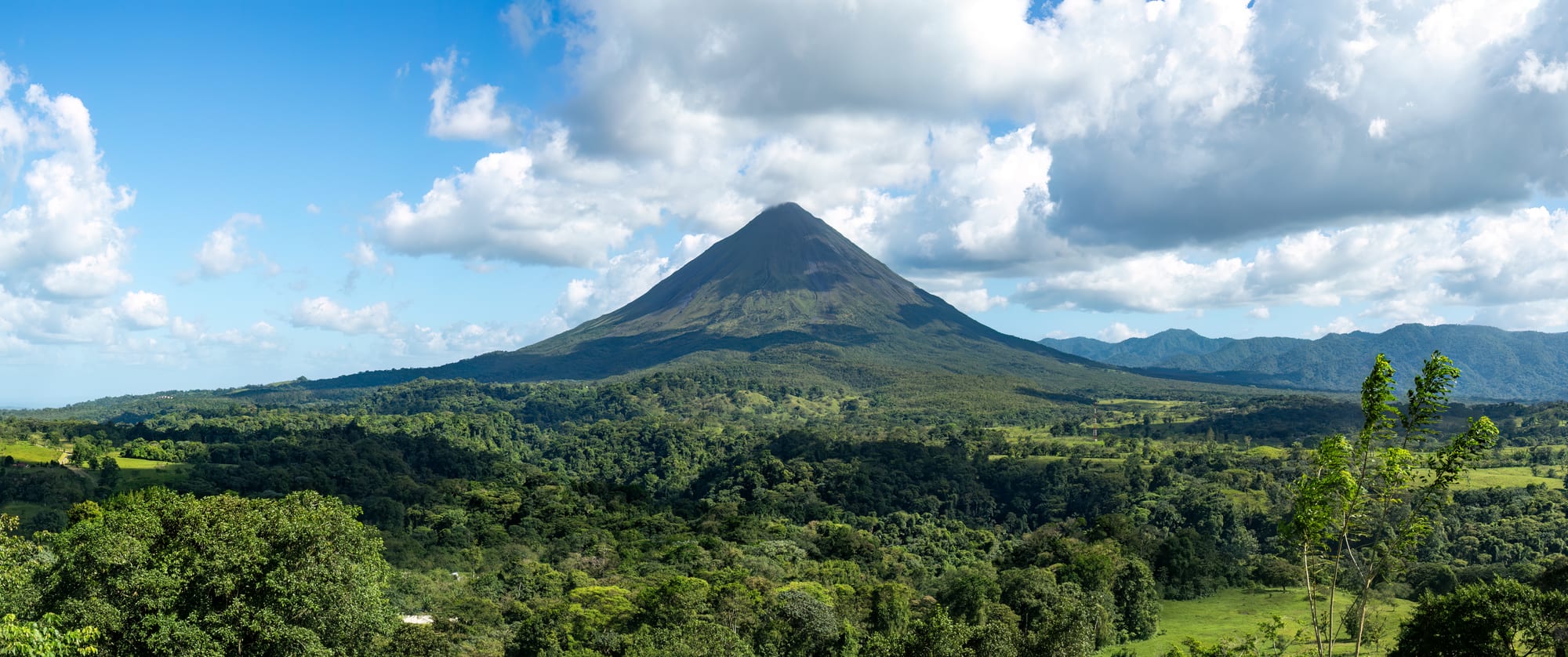
Arenal was one of the world's most active volcanoes from 1968 to 2010 — a textbook cone that glowed and rumbled nightly — and although it is quiet now, the town of La Fortuna at its foot is Costa Rica's adventure-tourism hub. The volcano is the backdrop for hikes over old lava flows in the national park, hanging bridges, white-water rafting, and a strip of hot-spring resorts fed by the still-warm ground.
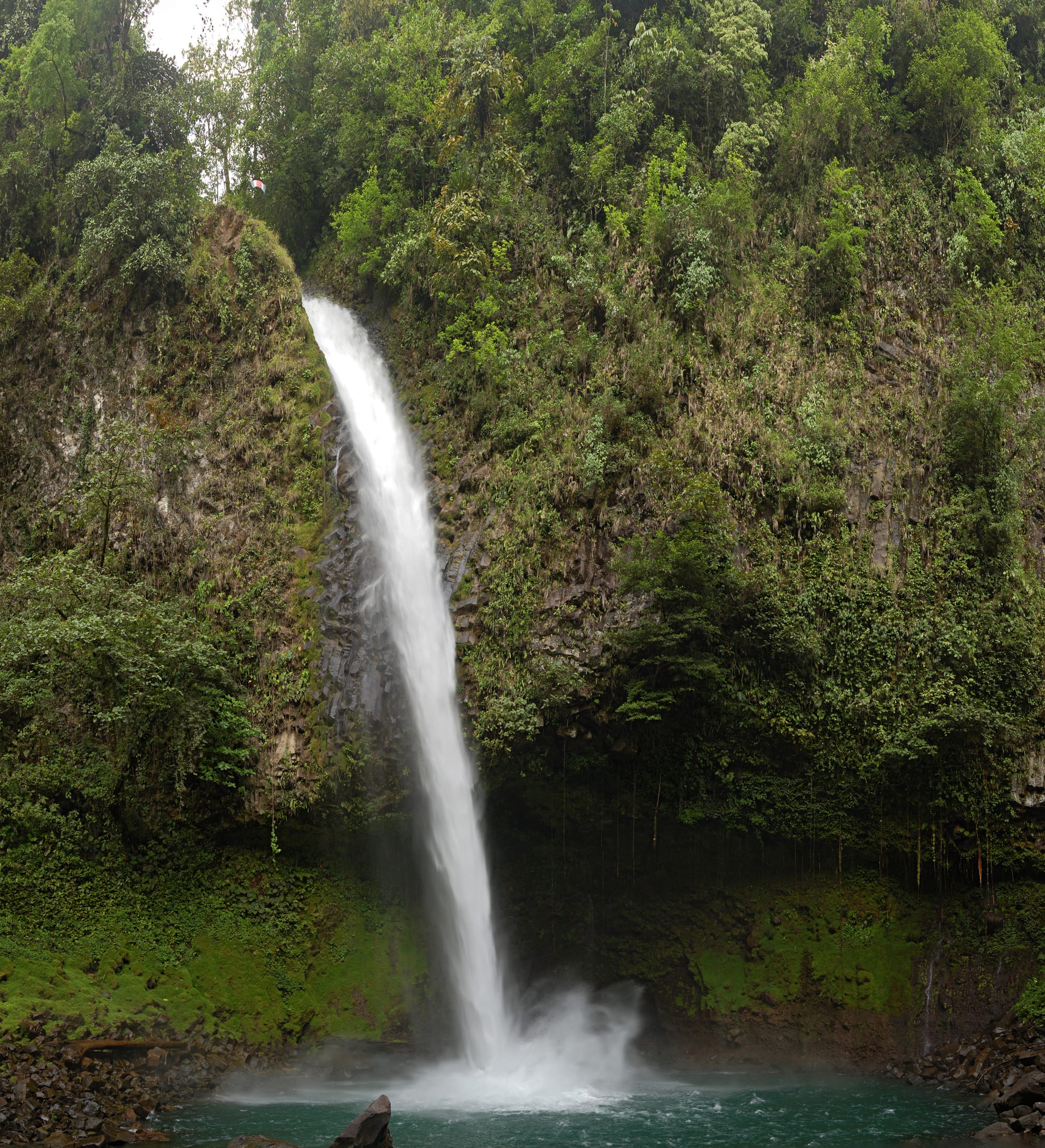
The 70-metre La Fortuna Waterfall and Lake Arenal (windsurfing, birdlife) round out the area.
2. Monteverde Cloud Forest
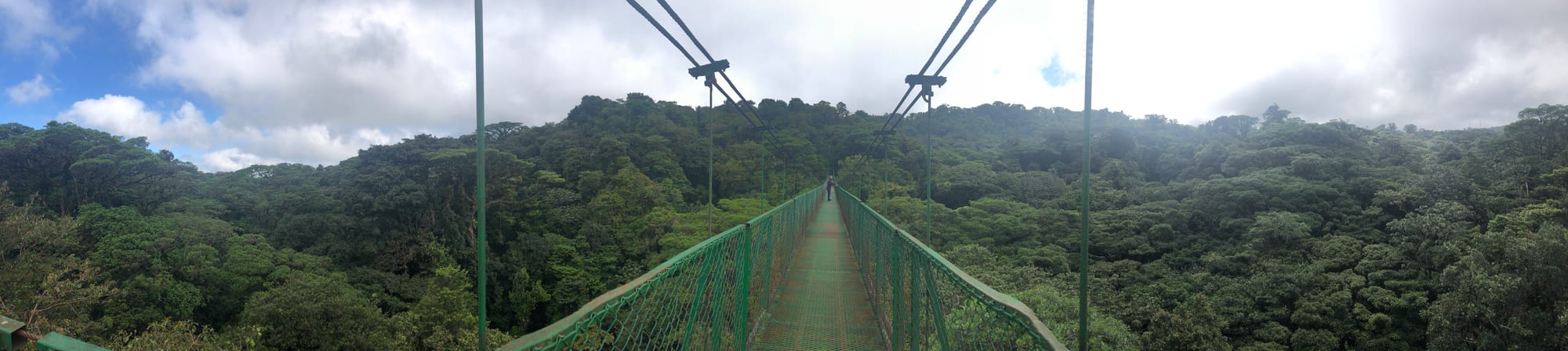
High on the Tilarán range, Monteverde is a dripping, moss-hung cloud forest — epiphytes on every branch, orchids, the resplendent quetzal, and (rarely seen) five species of cat. It was founded partly by Quaker settlers from Alabama in the 1950s, and it pioneered many now-standard activities: canopy zip-lines, hanging bridges, and night walks.
The last stretch of road is deliberately left unpaved to limit numbers. The neighbouring Santa Elena reserve is quieter.
3. Manuel Antonio National Park
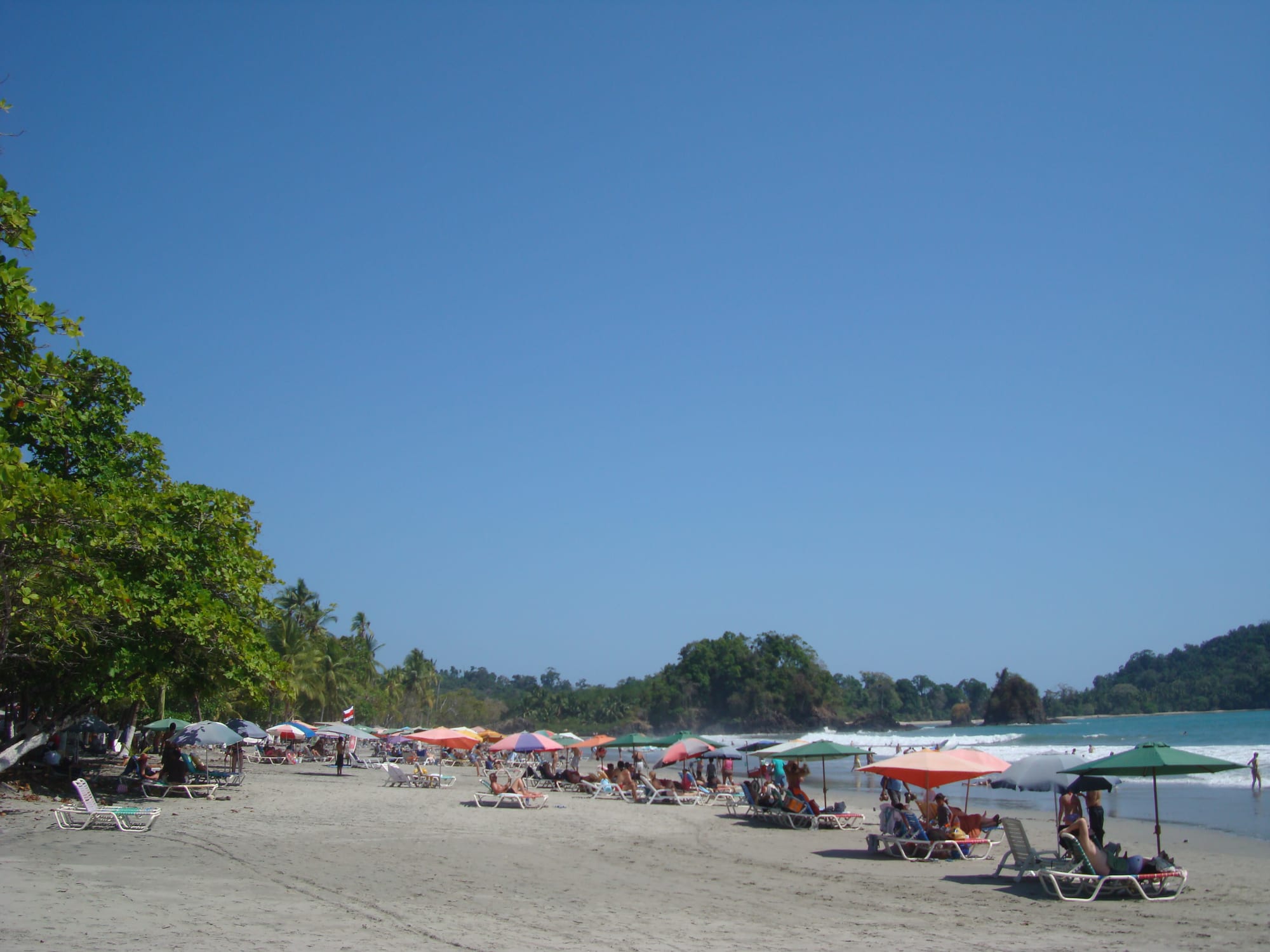
On the central Pacific coast, Manuel Antonio is Costa Rica's smallest national park and its most visited: a compact peninsula of rainforest fringed by picture-perfect white-sand coves. Because the animals are used to people, it is one of the easiest places to see three types of monkey, two- and three-toed sloths, agoutis, and coatis, often right beside the trail.
It gets crowded, has a daily visitor cap, and is closed on Tuesdays. The town of Quepos nearby is the base.
4. Corcovado National Park
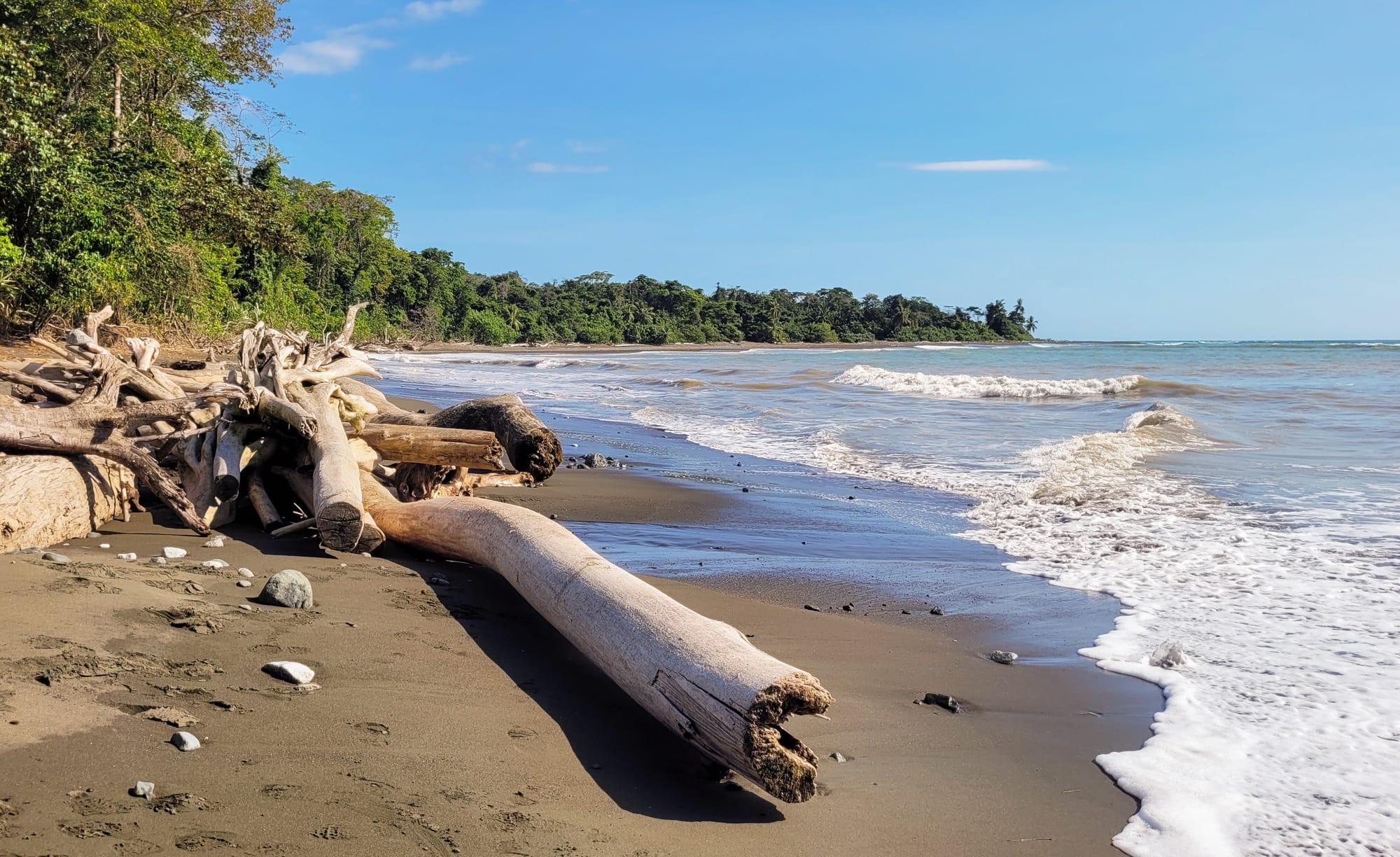
On the remote Osa Peninsula in the southwest, Corcovado protects the largest tract of lowland Pacific rainforest in Central America — home to all four Costa Rican monkey species, tapir, scarlet macaws in flocks, and one of the healthiest jaguar and puma populations in the region. There are no roads in; you hike or take a boat, with a certified guide (now compulsory), staying at the Sirena ranger station or in lodges around Drake Bay.
It is the country's most serious wilderness experience and takes real planning.
5. Tortuguero
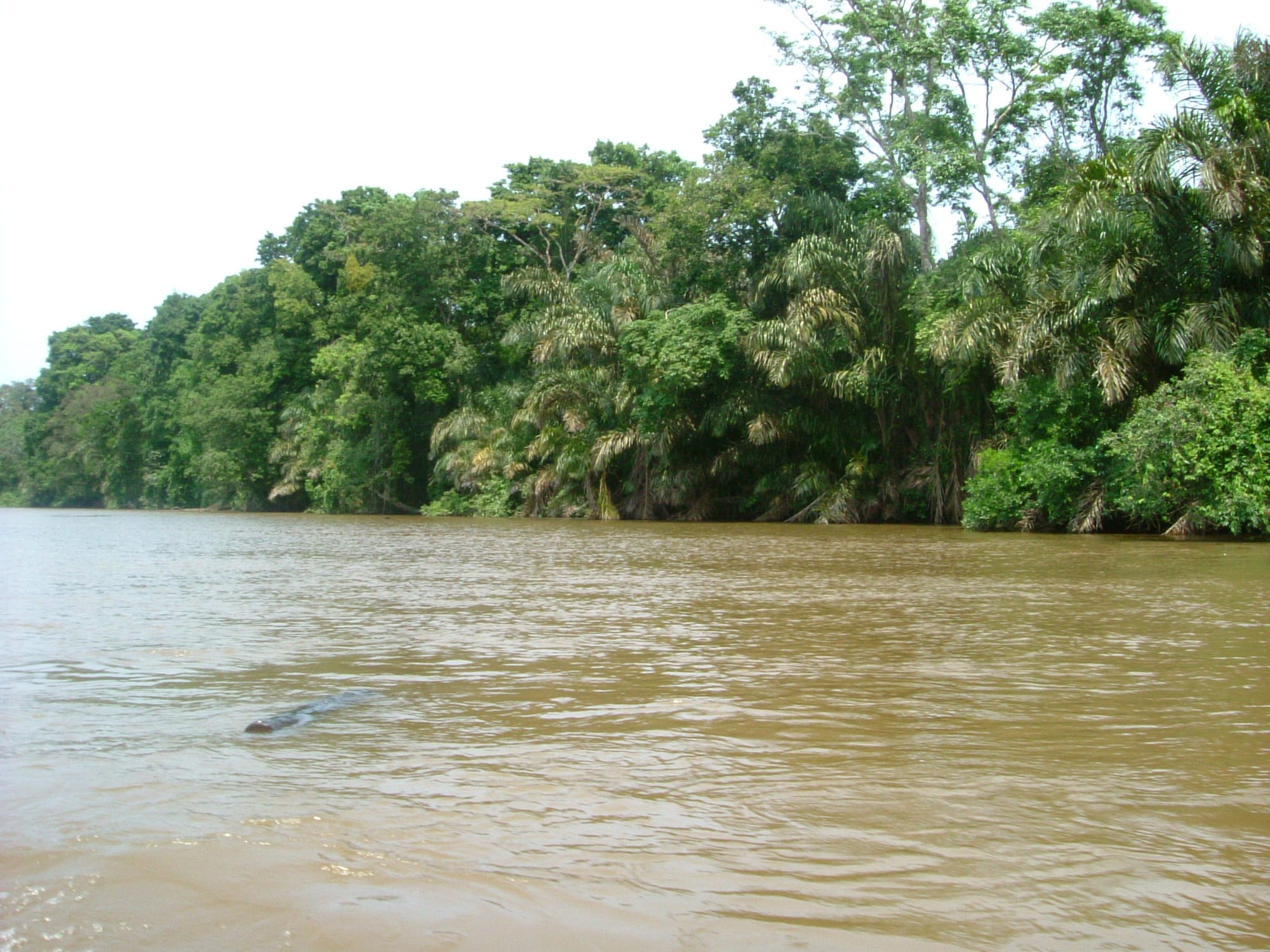
On the northern Caribbean coast, Tortuguero is a maze of freshwater canals and lagoons behind a wild black-sand beach, explored by silent boat or kayak — herons, caimans, river otters, three monkey species, and, at night on the beach in season (roughly July–October), green turtles hauling out to nest in one of the most important rookeries in the western hemisphere.
The village has no road access. It rains a lot here, year-round.
6. Poás Volcano
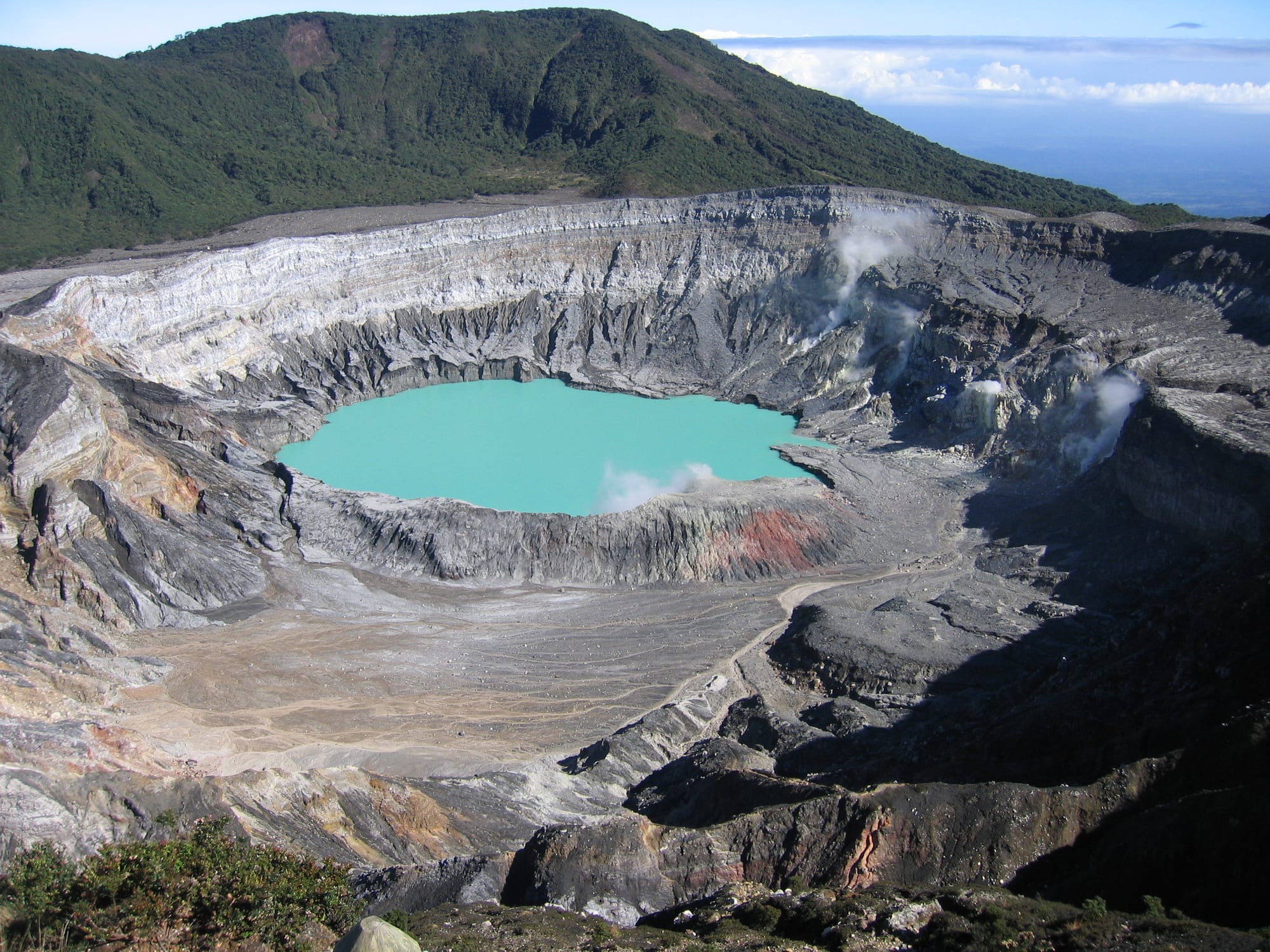
Poás, in the highlands north of the capital, has a huge crater — 1.6 kilometres across — with a steaming, sulphurous, blue-green acid lake at the bottom, viewed from a platform a short walk from the car park. It is one of the most accessible active volcanoes anywhere.
The volcano periodically erupts and closes; when open, visits are by timed reservation and are kept short because of the gas. The surrounding Central Valley has coffee farms, cloud-forest gardens, and the La Paz waterfalls.
7. Río Celeste
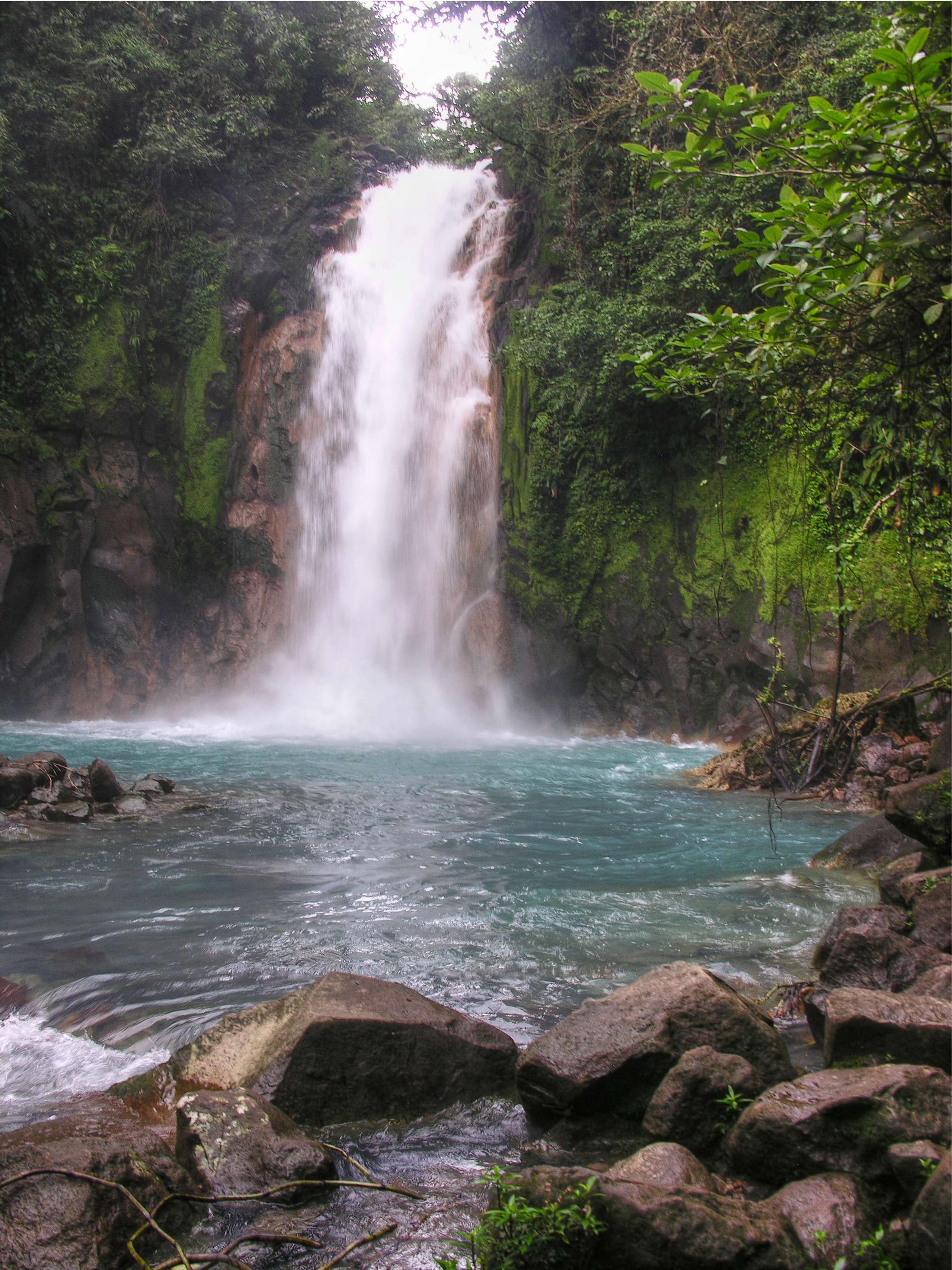
In Tenorio Volcano National Park, in the northern lowlands, the Río Celeste runs a startling opaque sky-blue. The colour is not dye or minerals dissolving but an optical effect: where two clear streams join, aluminium-rich particles from the volcano clump to just the right size to scatter blue light. There is a "dye spot" (los teñideros) where you can watch it happen.
A muddy forest trail of about six kilometres round trip leads to the waterfall, the blue lagoon, and bubbling hot springs.
8. The Nicoya Peninsula beaches
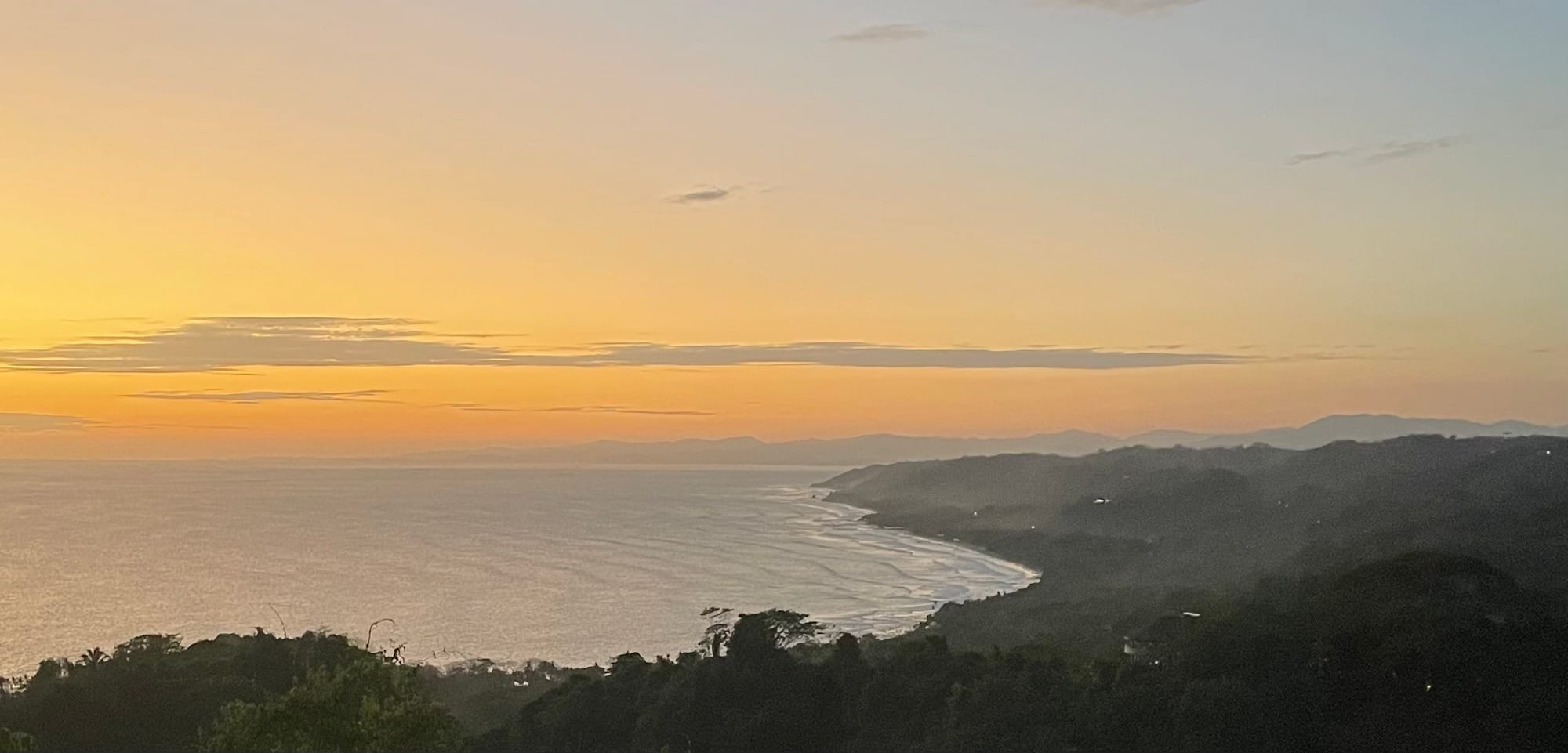
The Nicoya Peninsula, on the northern Pacific coast, has Costa Rica's most famous beaches and its driest, sunniest weather. The north end (Tamarindo, Playa Flamingo, the surf breaks around Playa Grande, where leatherback turtles nest) is the developed part; the south end (Santa Teresa, Mal País, Montezuma) is the scruffier, surfer-and-wellness scene, reached by long dirt roads or the Puntarenas car ferry.
Nicoya is also one of the world's "Blue Zones", noted for the longevity of its older rural residents.
9. The southern Caribbean coast
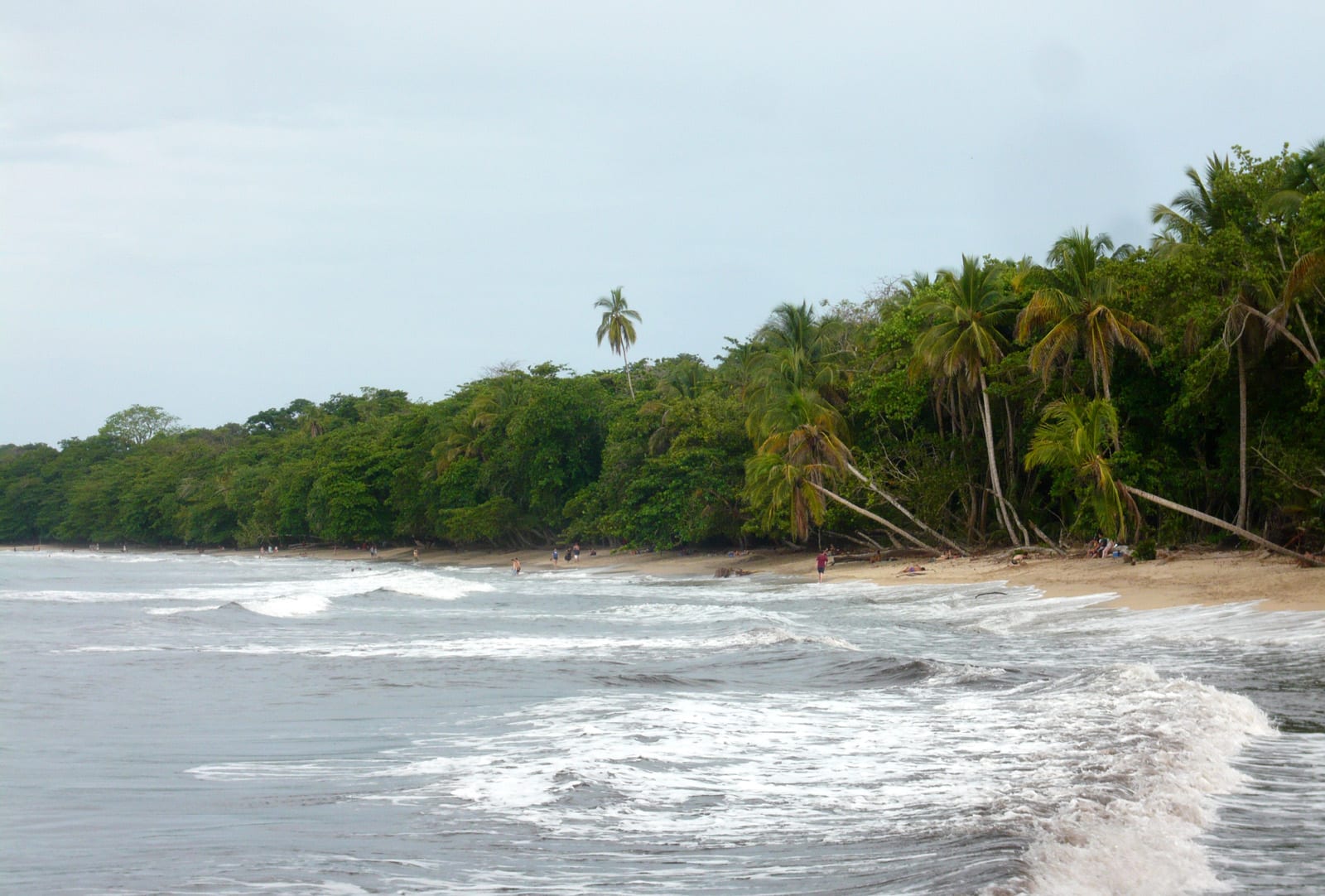
The Caribbean coast south of Limón — Cahuita, Puerto Viejo de Talamanca, Manzanillo — is culturally distinct: Afro-Caribbean, English- and Creole-speaking, with calypso, coconut-and-spice cooking, and a slower rhythm. Cahuita National Park has an easy coastal trail past a reef; the Gandoca-Manzanillo refuge protects mangrove, forest, and dolphins; and the beaches range from calm to serious reef-break surf (Salsa Brava).
It rains less here from September to October, the opposite of the Pacific side.
10. Wildlife everywhere
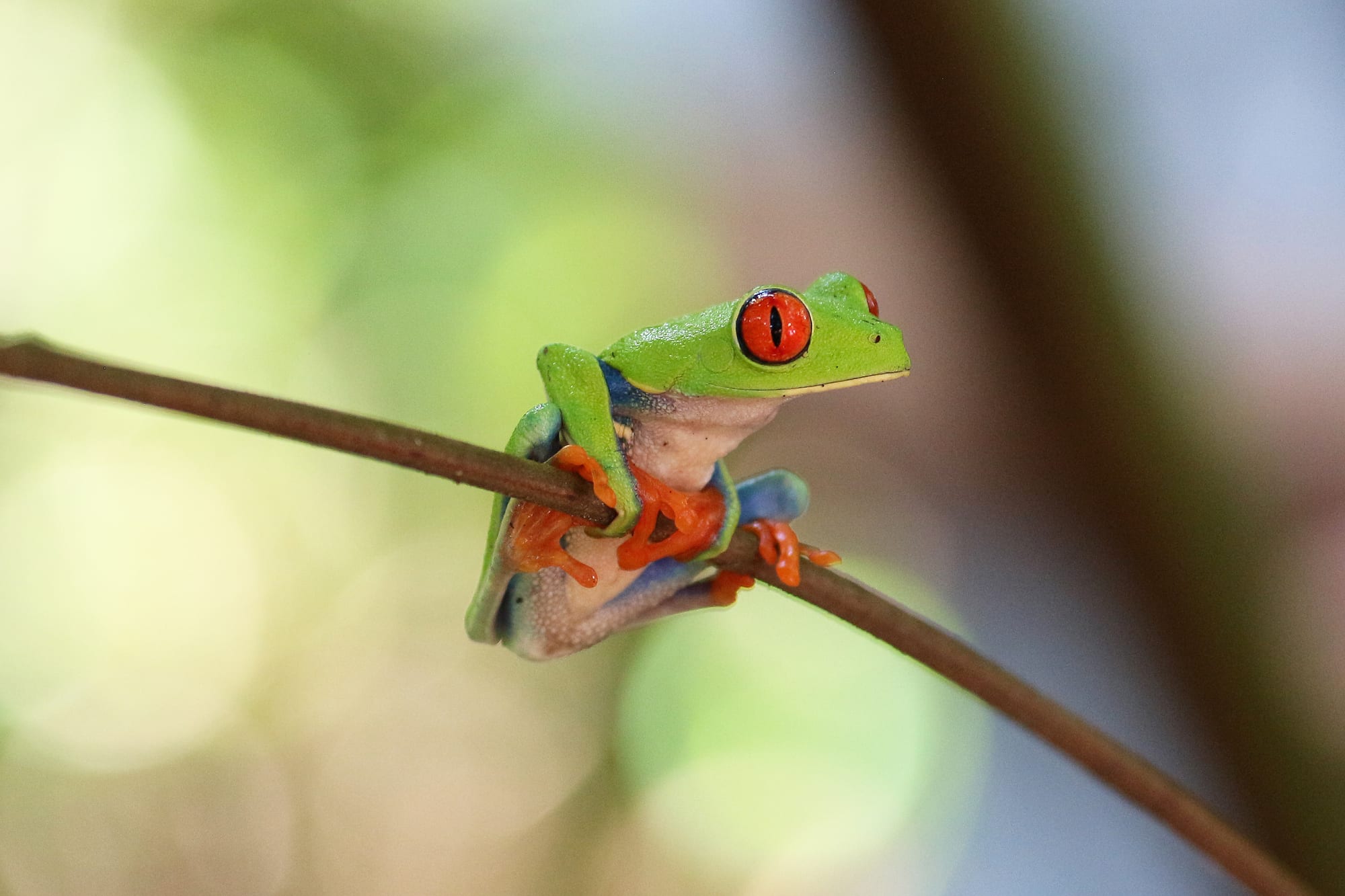
Beyond the headline parks, Costa Rica's appeal is that wildlife is close at hand almost anywhere: sloths in roadside trees, hummingbirds at breakfast, howler monkeys as an alarm clock. The Sarapiquí lowlands, the Osa's Piedras Blancas, the Caño Negro wetlands, the quetzal cloud forests of San Gerardo de Dota, and the turtle beaches of Ostional and Tortuguero each reward a stop.
Offshore, Cocos Island — 550 kilometres out, a UNESCO site — is a bucket-list liveaboard dive for hammerhead sharks.
Costa Rica is easy to travel and rewards a loop: the northern volcanoes and cloud forest, then down one coast for beaches and rainforest. Ten days covers a good slice; two weeks lets you reach the Osa or the Caribbean.