History · Caribbean Netherlands
The Caribbean Netherlands: Three Islands, One Country
Bonaire's salt pans, Statia's smugglers' harbour, and Saba's cloud-wrapped village — three scraps of the Dutch Caribbean that became part of the Netherlands itself
By Worldlore Editorial · 19 September 2026
Three islands that are not a country
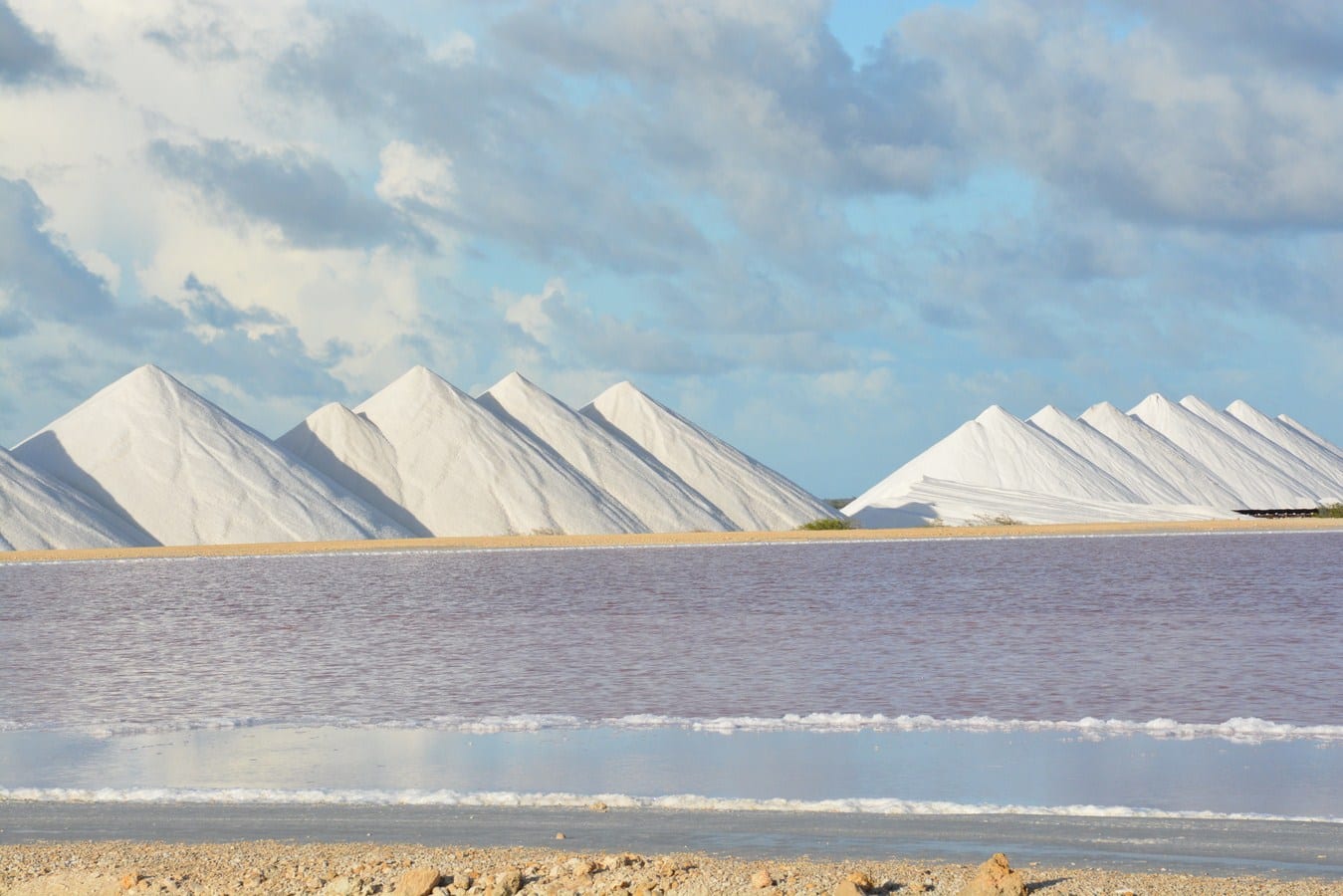
The "Caribbean Netherlands" is an odd unit: three small islands that are legally part of the Netherlands itself, as "special municipalities", rather than a separate country. They have almost nothing in common with each other. Bonaire is a flat, dry, Papiamentu-speaking island off the coast of Venezuela, ringed by coral reef and edged with salt. Sint Eustatius and Saba are tiny English-speaking volcanic rocks in the northern Lesser Antilles, hundreds of kilometres away. What links them is a shared Dutch colonial past and a shared decision, in 2010, to bind themselves directly to the Netherlands rather than strike out alone.
A short history
- pre-1500
The Caquetío
Arawak people from Venezuela settle Bonaire; the northern islands are used by Kalinago.
- 1636
The Dutch West India Company
The Company takes Bonaire with Curaçao; Dutch settlers reach Saba and Statia in the 1640s.
- 17th–19th c.
Salt and sailors
Bonaire is a company salt plantation worked by enslaved people; Saba raises seamen.
- 1770s–1780s
The Golden Rock
Sint Eustatius becomes the busiest free port in the Caribbean.
- 16 November 1776
The First Salute
Statia's fort salutes an American ship — the first foreign recognition of US independence.
- 1781
Rodney's sack
A British fleet plunders Statia; its trade never recovers.
- 1863
Emancipation
Slavery is abolished in the Dutch colonies.
- 10 October 2010
Integration
The Netherlands Antilles is dissolved; the three islands become Dutch special municipalities.
Bonaire: salt and the ABC islands
Bonaire was settled around a thousand years ago by the Caquetío, an Arawak people from the Venezuelan mainland, who left rock paintings in its caves. Spain claimed the island in 1499, shipped most of the Caquetío away as forced labour, and later used it to graze cattle. The Dutch West India Company seized it in 1636, along with Curaçao, and ran it as a company property — livestock, and above all salt, raked from the great lagoon in the south by enslaved Africans in brutal heat. The little stone huts still standing by the salt pans housed those workers during the working week.
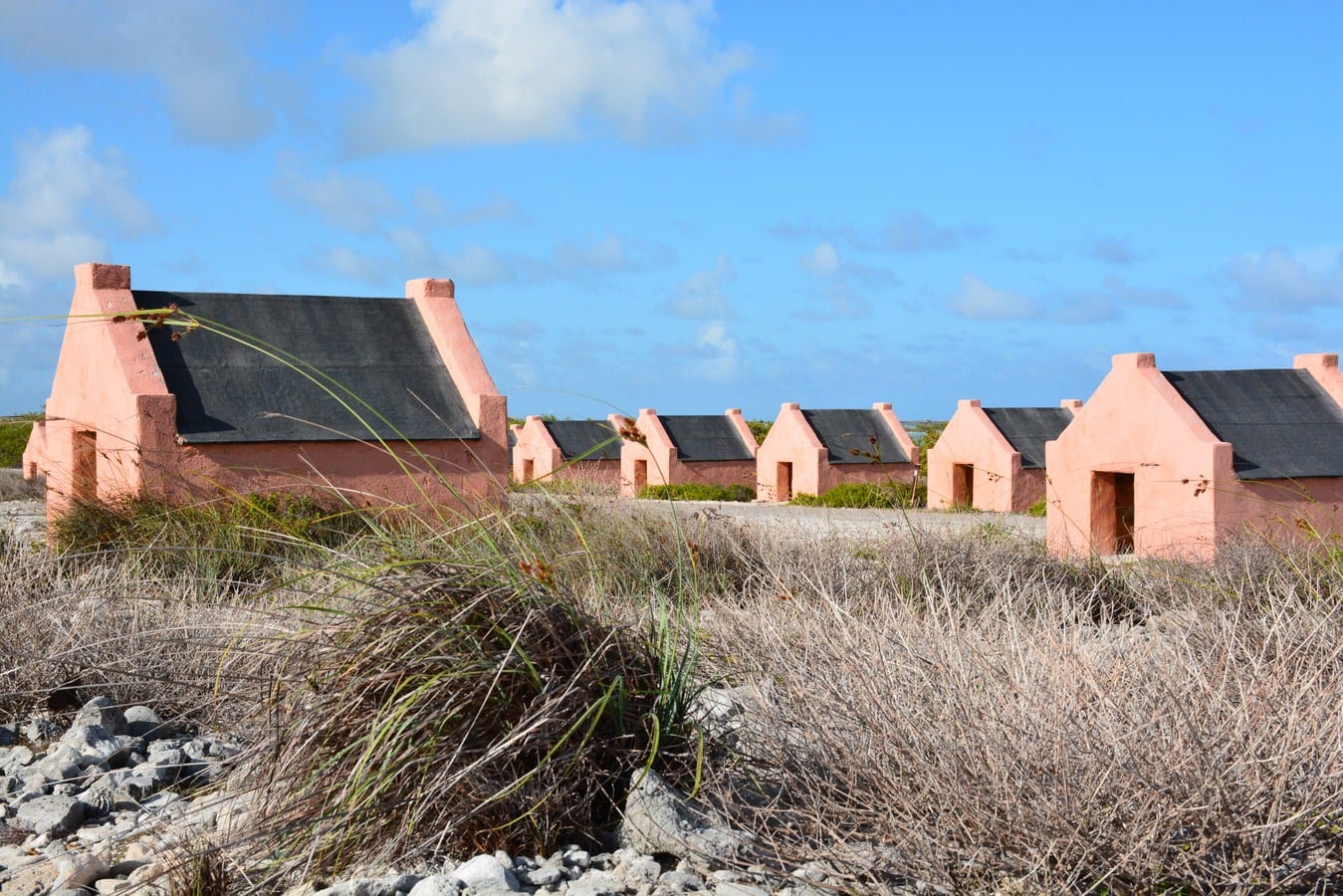
After slavery ended in 1863, Bonaire lived on salt — now an industrial operation — on aloe, and on the wages its men sent back from the oil refineries of Aruba and Curaçao. In recent decades it has run on diving tourism and, since 2010, a growing population of Dutch newcomers. Low and coral-dependent, it is now one of the Caribbean's front lines for climate change.
Sint Eustatius: the Golden Rock
Sint Eustatius — Statia — is barely 21 square kilometres, but in the 18th century it was one of the most important places in the Caribbean. The Dutch made it a free port with no customs duties, and in the 1770s and 1780s it became "the Golden Rock": thousands of ships a year, a warehouse district more than a mile long, a major transshipment point for enslaved people, and a merchant community that included one of the oldest synagogues in the Americas.
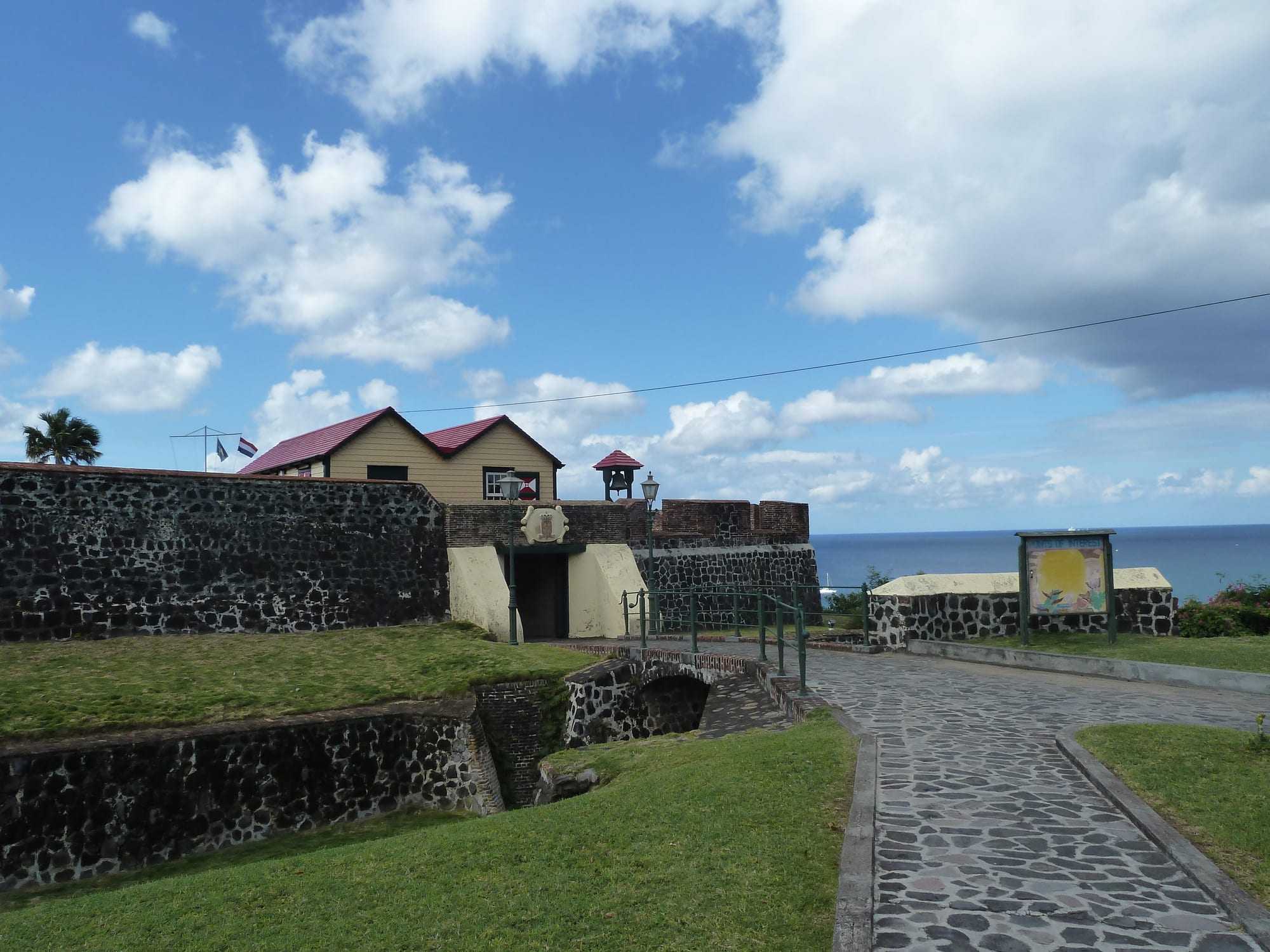
Statia sold arms and supplies to the American rebels, and in 1776 its fort fired a salute to a ship flying the new Continental colours. Britain took its revenge in 1781, when a fleet under Admiral Rodney seized the island and stripped it — warehouses, ships, and the property of merchants of every nationality, including the Jewish community. Statia changed hands ten times among the Dutch, British and French, and its trade never came back. It sank into a poor, half-empty backwater, and its local government was placed under direct Dutch control in 2018 after the Netherlands found gross financial mismanagement.
Saba: the island of sailors
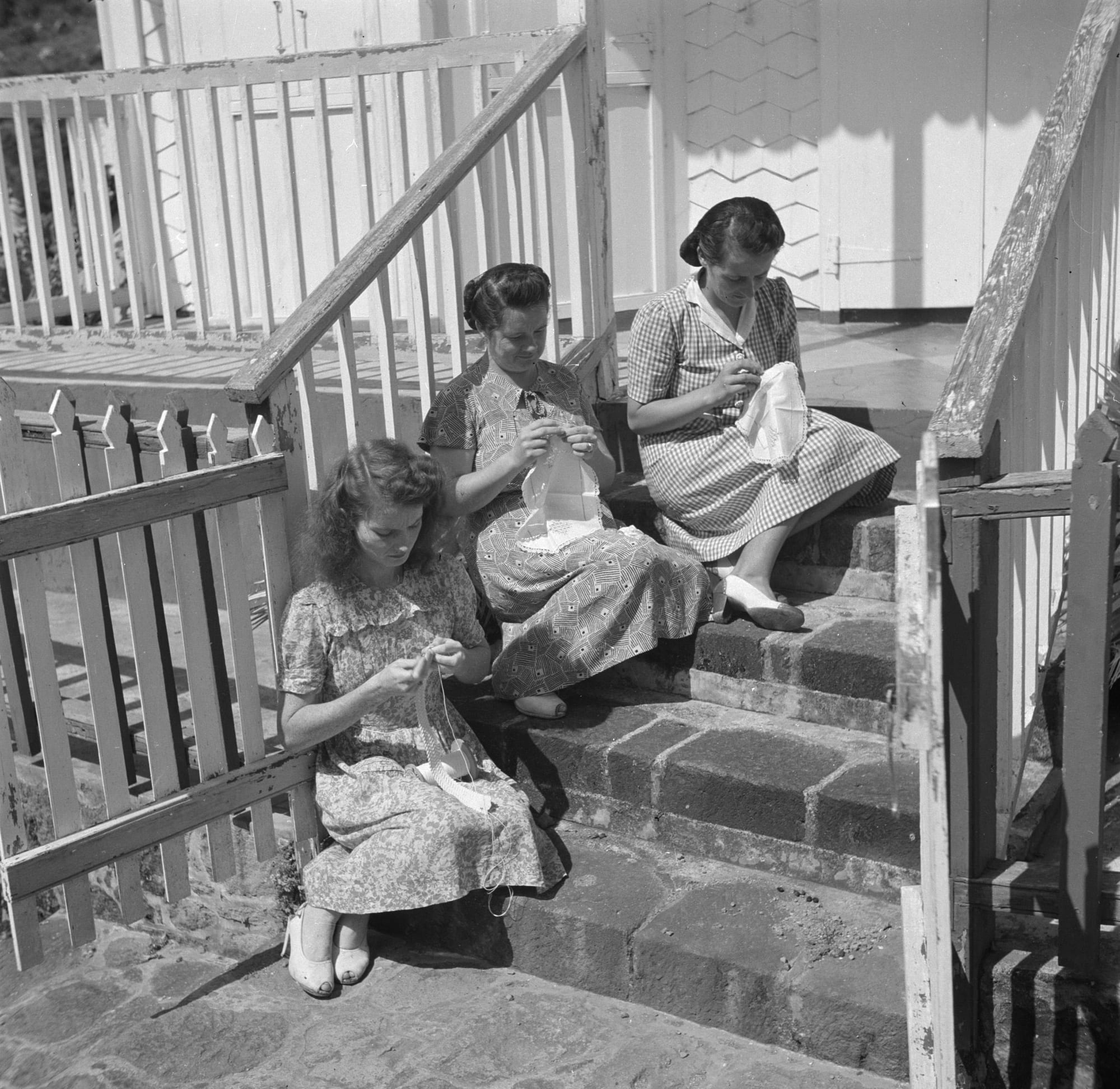
Saba is smaller still — a single steep green cone rising to Mount Scenery, at 887 metres the highest point in the entire Kingdom of the Netherlands. It has no beaches and almost no flat ground; its four villages cling to the slopes. The Dutch settled it in the 1640s, and it became a community of English-speaking small farmers and, above all, sailors: Saba produced merchant seamen and sea captains far out of proportion to its size, and while the men were away for years the women made "Saba lace" to sell to passing ships.
Saba's airport, opened in 1963, has one of the shortest commercial runways in the world, and the island became the first place in the Dutch Caribbean to recognise same-sex marriage, in 2012.
Becoming part of the Netherlands
For most of the 20th century all six Dutch Caribbean islands were governed together as the Netherlands Antilles, a self-governing country within the Kingdom, run from Curaçao. Aruba broke away in 1986, and by the 2000s the rest wanted out too. When the Antilles was formally dissolved on 10 October 2010, Curaçao and Sint Maarten became separate countries within the Kingdom — but Bonaire, Sint Eustatius and Saba, too small to stand alone, chose instead to become special municipalities of the Netherlands itself. Their people are Dutch citizens, they use the US dollar, and they are governed by Dutch law adapted to island conditions — though they remain outside the European Union.
What the islands keep
The three islands of the Caribbean Netherlands are a reminder that Dutch expansion in the Caribbean was never about large plantation colonies but about specific, practical uses: a salt lake, a duty-free harbour, a supply of sailors. Each island kept its own language, its own character and its own economy through the centuries, and each, given the choice in 2010, decided that the safest future was to stop being a colony and simply become part of the metropole.