Culture & Customs · Caribbean Netherlands
Caribbean Netherlands: Harvest Dances, Lace and a First Salute
Three small islands, two everyday languages and one shared history of emancipation, each keeping its own calendar of carnivals, harvest festivals, masquerades and island days
By Worldlore Editorial · 30 September 2026
New Year's Day on Bonaire, and a group of strangely silent visitors has arrived at a family's door. Every one of them is in full disguise, faces hidden, identities secret. To the music of a harmonica and a drum, they act out short wordless sketches and then move on to the next house, and the next. The hosts offer food and drink in thanks. Traditionally the masks come off only at the end, when the neighbourhood finally learns who has been entertaining it. This is the Maskarada, a tradition that came close to disappearing and survived, and it says a good deal about all three of these small islands: close communities, a sharp sense of their own heritage, and a calendar full of customs worth keeping.
Faith, identity and values
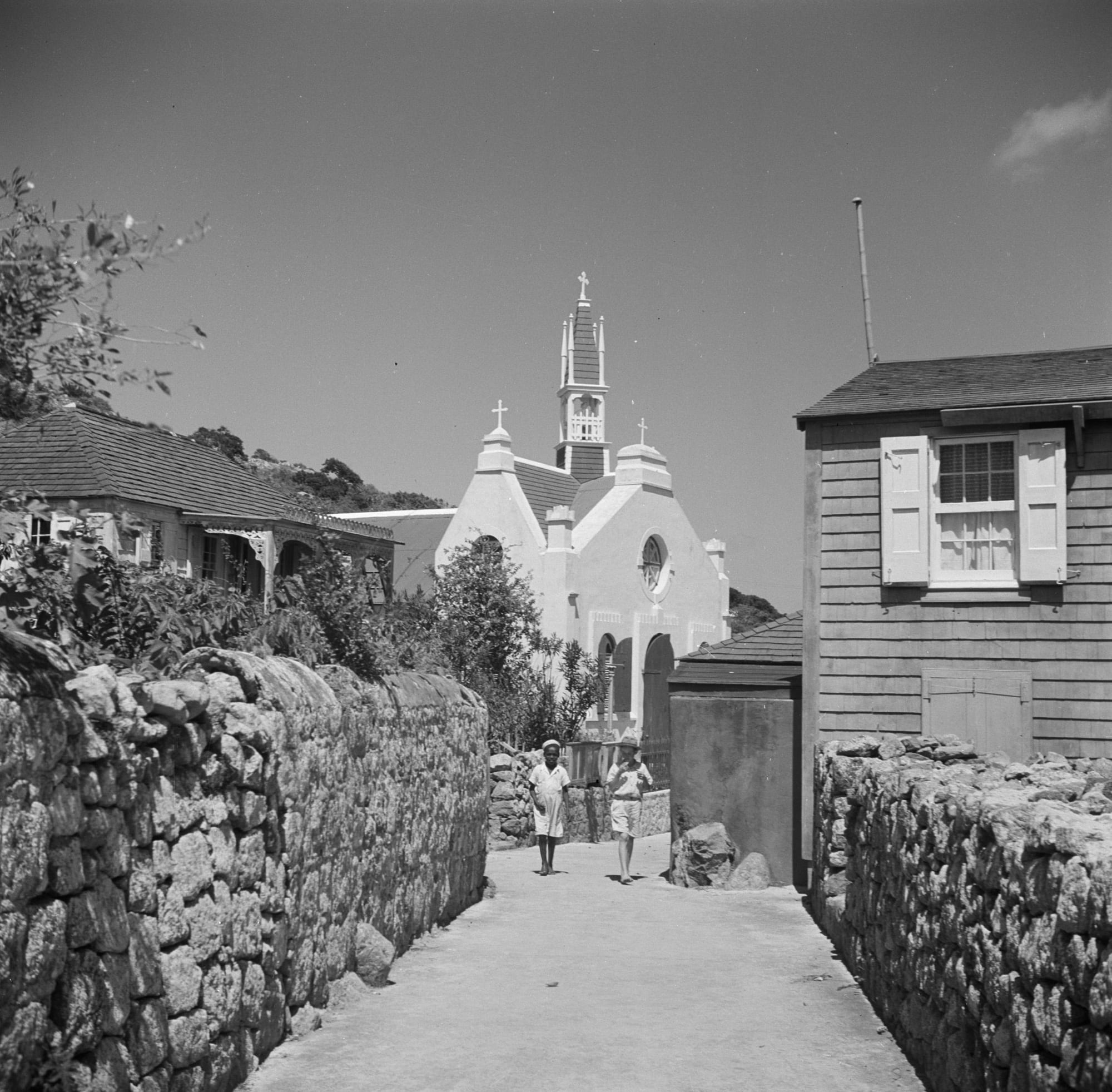
Bonaire, Sint Eustatius and Saba have been special municipalities of the Netherlands since 2010, when the Netherlands Antilles were dissolved, but in daily life they are three quite different places. The clearest dividing line is language. According to Statistics Netherlands, around 62 per cent of Bonaire's adults speak Papiamentu as their main language, the creole shared with Aruba and Curaçao, with Dutch and Spanish the main languages of many of the rest. On Sint Eustatius, known everywhere as Statia, and on Saba, English is the main language for more than 80 per cent of people. Dutch, the language of government and schooling, is the everyday tongue of only a small minority on each island.
Religion remains an important part of community life. In 2021, around 85 per cent of Bonaire's population belonged to a religious group, as did roughly 80 per cent on Saba and 78 per cent on Statia. Bonaire and Saba are predominantly Catholic, with about 60 and 50 per cent of residents belonging to the Roman Catholic Church respectively. Statia's religious life is more evenly divided, between Methodists, Roman Catholics and Seventh-day Adventists, each accounting for roughly a fifth to a quarter of the population. Evangelical, Pentecostal and Anglican congregations are found on all three islands, and evangelicals are a growing group on Bonaire.
A shared history also binds the islands. Slavery was abolished across the Dutch Caribbean on 1 July 1863, and the memory of emancipation runs through the islands' commemorations of freedom each 1 July. Each island also takes pride in its own story and its own flag, marked every year with an island day of speeches, music and community events.
Greetings and meeting people
On Bonaire, a word or two of Papiamentu goes a long way. Visitors are greeted with "bon bini", meaning welcome, on arrival or when stepping into a shop, and the everyday greetings are "bon dia" in the morning, "bon tardi" in the afternoon and "bon nochi" in the evening. English is spoken almost everywhere in the tourism trade, but local people appreciate any attempt at their language. On Saba and Statia, English is the language of daily life, so there is no need to reach for Dutch.
Language is itself something of a courtesy on these islands. Because Dutch is the main language for only a few residents, opening a conversation in Papiamentu on Bonaire, or simply in English on the other two islands, reflects the way people actually live, rather than the official language of the state.
Hospitality and being a guest
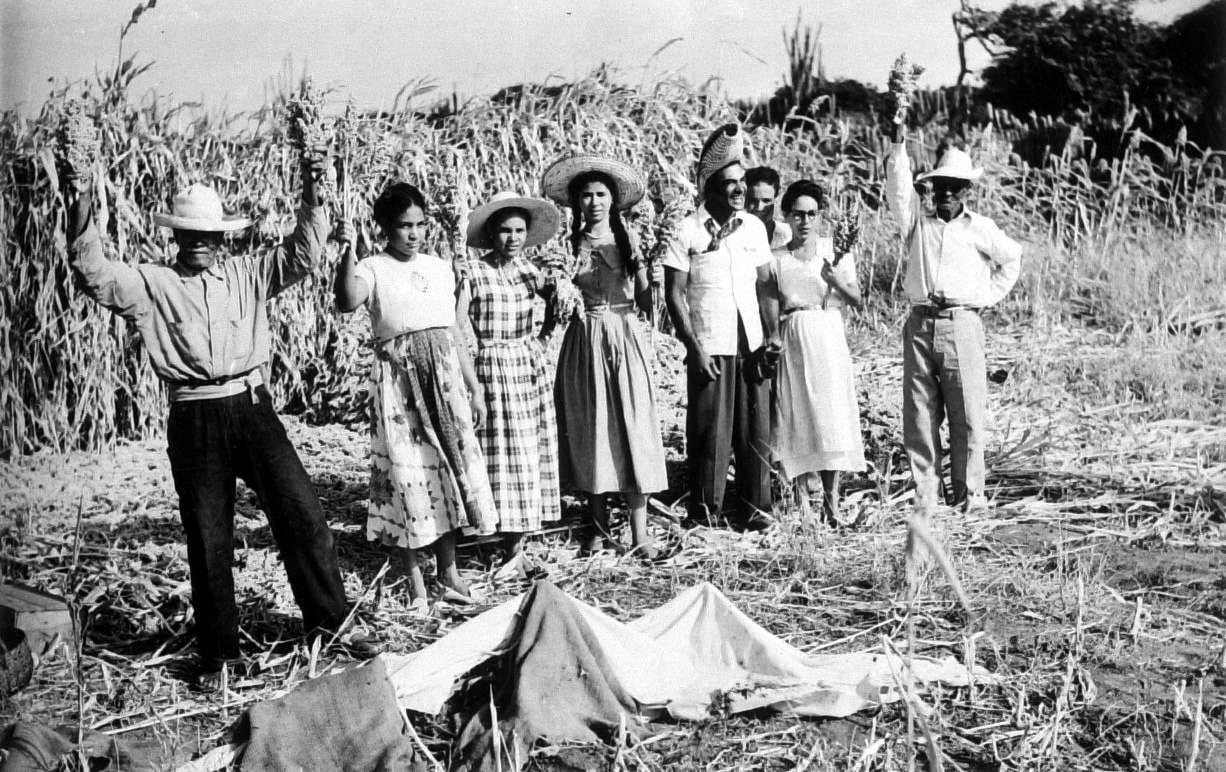
Hospitality on the islands is bound up with shared work and shared celebration. On Bonaire, the harvest has traditionally been a communal affair: families and friends turn out to help bring in a farmer's crop of sorghum and maize, and the farmer in return provides food and drink for everyone who has lent a hand. The same spirit runs through the Maskarada, whose performers are rewarded at each house with something to eat and drink. At Christmas, many Bonairean families decorate their homes, and the day itself is given over to church, long family meals, gifts and games. Large public festivals such as Rincon's annual celebration are occasions where food and drink are part of the shared experience, with stalls selling local fare to thousands of visitors.
Festivals and life's big moments
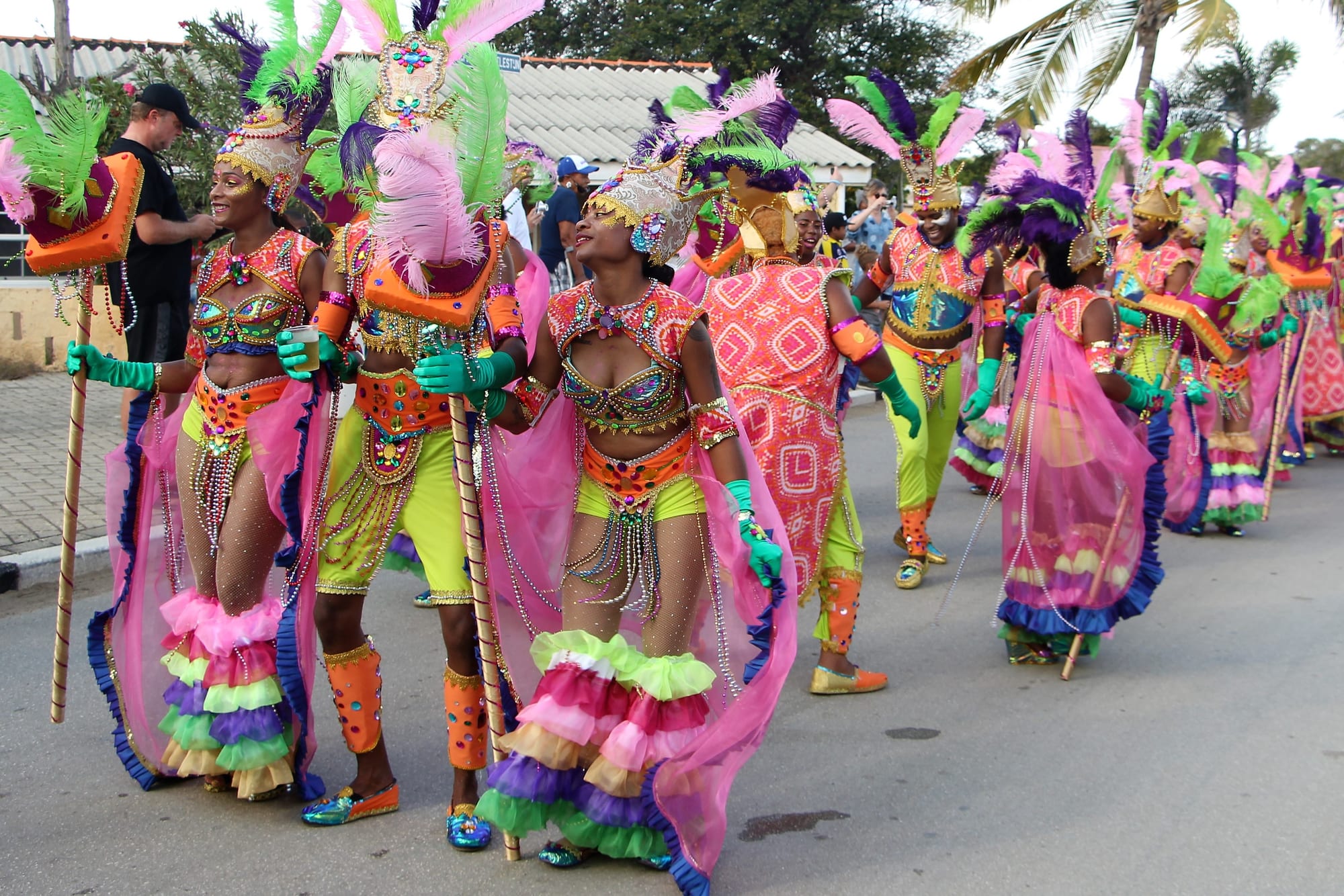
Bonaire's carnival runs for about a month in the weeks before Lent. The season opens with the Festival di Tumba, a competition to choose the official carnival song, whose lyrics are expected to carry a message and to suit Bonaire as well as get people dancing. Then come parades for teenagers, children, elders and adults in both Rincon and Kralendijk, street "jump-ups" behind live bands, and finally the burning of King Momo as carnival ends on the eve of Lent. Saba holds its carnival in summer instead, in late July, with parades, music, dancing and costume competitions.
Rincon, the island's oldest settlement, hosts Dia di Rincon every 30 April, Bonaire's biggest celebration of traditional culture, with music, dance, traditional dress and a folkloric procession. The Simadan, the harvest festival, gives thanks to God for the season's crops, above all the sorghum harvested from about February to April, and is danced to its own call-and-response songs. On New Year's Eve, long chains of firecrackers called pagara are strung across pavements and shopfronts, and on New Year's Day the Maskarada makes its rounds.
Emancipation Day on 1 July is observed on all three islands. On Bonaire it is marked with a public commemoration. On Statia it has been a public holiday since 2021, when it replaced Carnival Monday on the island's calendar. Saba, which also marks the day, is making it a public holiday from 2027.
The islands' own days complete the calendar. Statia Day on 16 November commemorates the First Salute with official speeches, parades, cultural performances, live music and traditional dances in Oranjestad. Saba Day, in early December, is the island's own day, when offices, schools and shops close for a weekend of sports and fishing competitions, concerts, barbecues and dances.
Arts, crafts and music
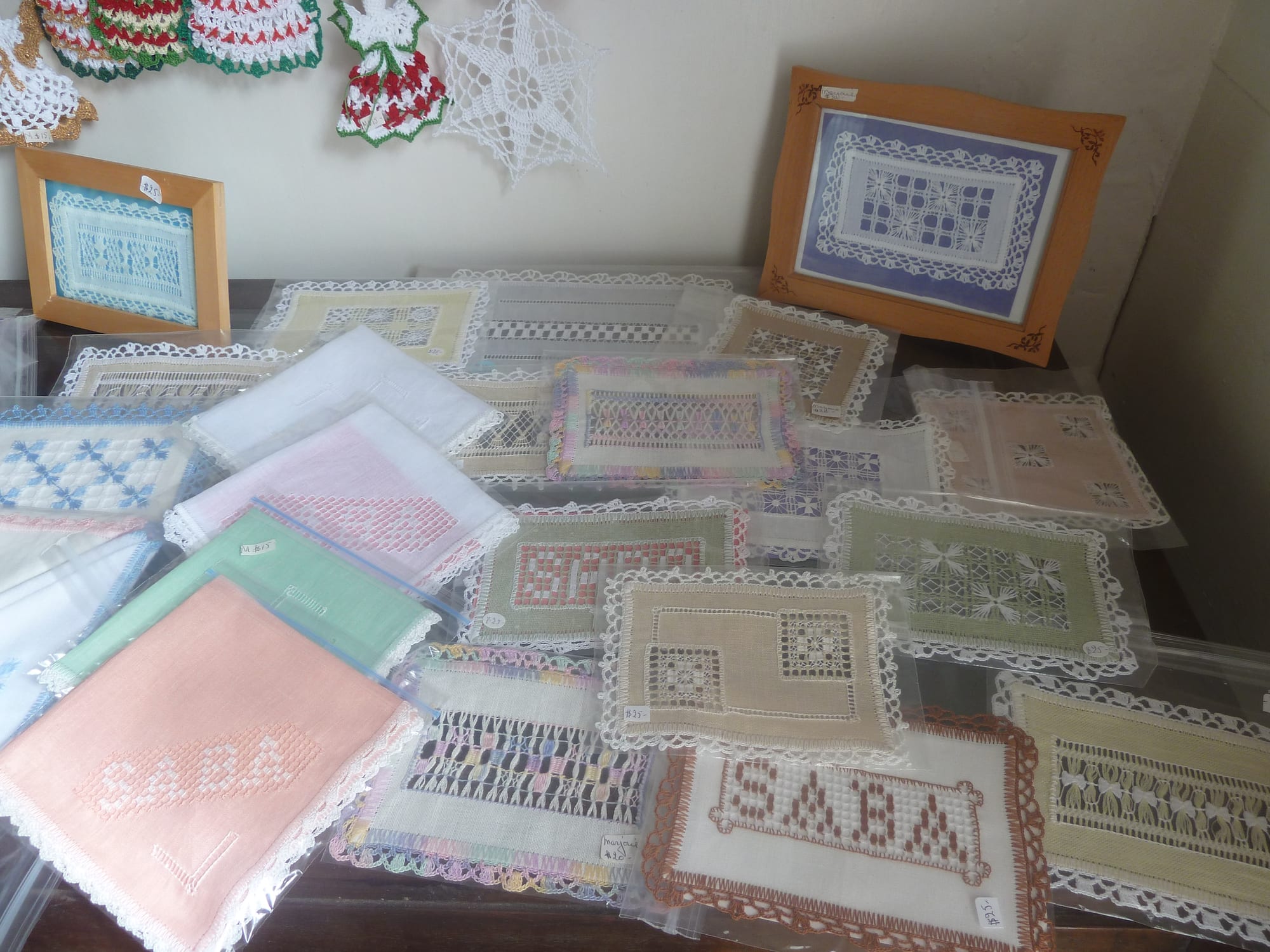
Saba's best-known craft is its lace, a form of drawn-thread work also called Spanish work. It was brought to the island in the late nineteenth century by Mary Gertrude Hassell Johnson, a Saban woman who had learnt the technique at a Catholic convent in Venezuela and returned home in the 1870s. After a mail service opened in 1884, the women of Saba turned it into a mail-order business selling far beyond the Caribbean. The craft is still practised today by a small group of lace makers who sell what they make.
On Bonaire, music and dance are the heart of living heritage. The Simadan has its own songs and dance, distinct in style from similar harvest traditions elsewhere in the Dutch Caribbean, and performed at village festivals. The Maskarada is accompanied by its own music, played on harmonica and drum. Carnival has its tumba songs, written and performed anew each year. Islanders have documented many of these living traditions — from Maskarada and Simadan to traditional music and healing — in an inventory of Bonaire's cultural heritage.
Dos and don'ts for visitors
- Do greet people on Bonaire with "bon dia", "bon tardi" or "bon nochi"; any effort at Papiamentu is warmly received.
- Don't assume Dutch is the everyday language: it is Papiamentu on Bonaire and English on Saba and Statia.
- Do pay the mandatory nature fee before swimming, snorkelling or diving in Bonaire's marine park.
- Do join the carnival jump-ups, where visitors are welcome to dance through the streets with the locals.
- Do treat 1 July as a day of remembrance as well as celebration, marking the end of slavery in 1863.
- Do look out for the island days — Dia di Rincon, Statia Day and Saba Day — when each island celebrates its own heritage.
- Do buy Saba lace from the island's lace makers, who still work and sell the craft themselves.
What to take away
The Caribbean Netherlands is best understood not as one culture but as three, each with its own language, faith and festival calendar — and visitors who greet each island on its own terms will be welcomed into traditions that their communities have worked hard to keep alive.