Culture & Customs · Cabo Verde
Cabo Verde: Morabeza and Sodade
A Catholic island nation of saints' day parties, warm greetings repeated through the day, a meal for every guest, and a song of longing that carries the feeling of a people spread across the world
By Worldlore Editorial · 30 September 2026
A family has gathered to welcome someone home. The table has been prepared for days, the relatives have come in from across the island, and once the meal is over someone picks up a guitar. What follows is a morna, slow and tender, its words in Creole telling of departure, separation, the sea and the homeland, and of the joy of coming back. Nobody in the room needs the feeling explained. In a country where so many families have someone living abroad, the song of longing known as sodade belongs to everyone, and so does its counterpart: morabeza, the warmth and kindness with which Cabo Verdeans receive a guest.
Faith, identity and values
Cabo Verde is a strongly Catholic country. In the 2021 census, 73 per cent of the population described themselves as Roman Catholic, while Seventh-day Adventists, Nazarenes and Christian Rationalists each accounted for about 2 per cent and Muslims for about 1 per cent; 16 per cent identified with no religion. An agreement between the state and the Holy See recognises the legal status of the Catholic Church, and Catholic marriages are valid under civil law. Many Catholics describe themselves as non-practising, and for most families the church is less a matter of weekly observance than a framework for the year and for life's great moments, from baptism to burial.
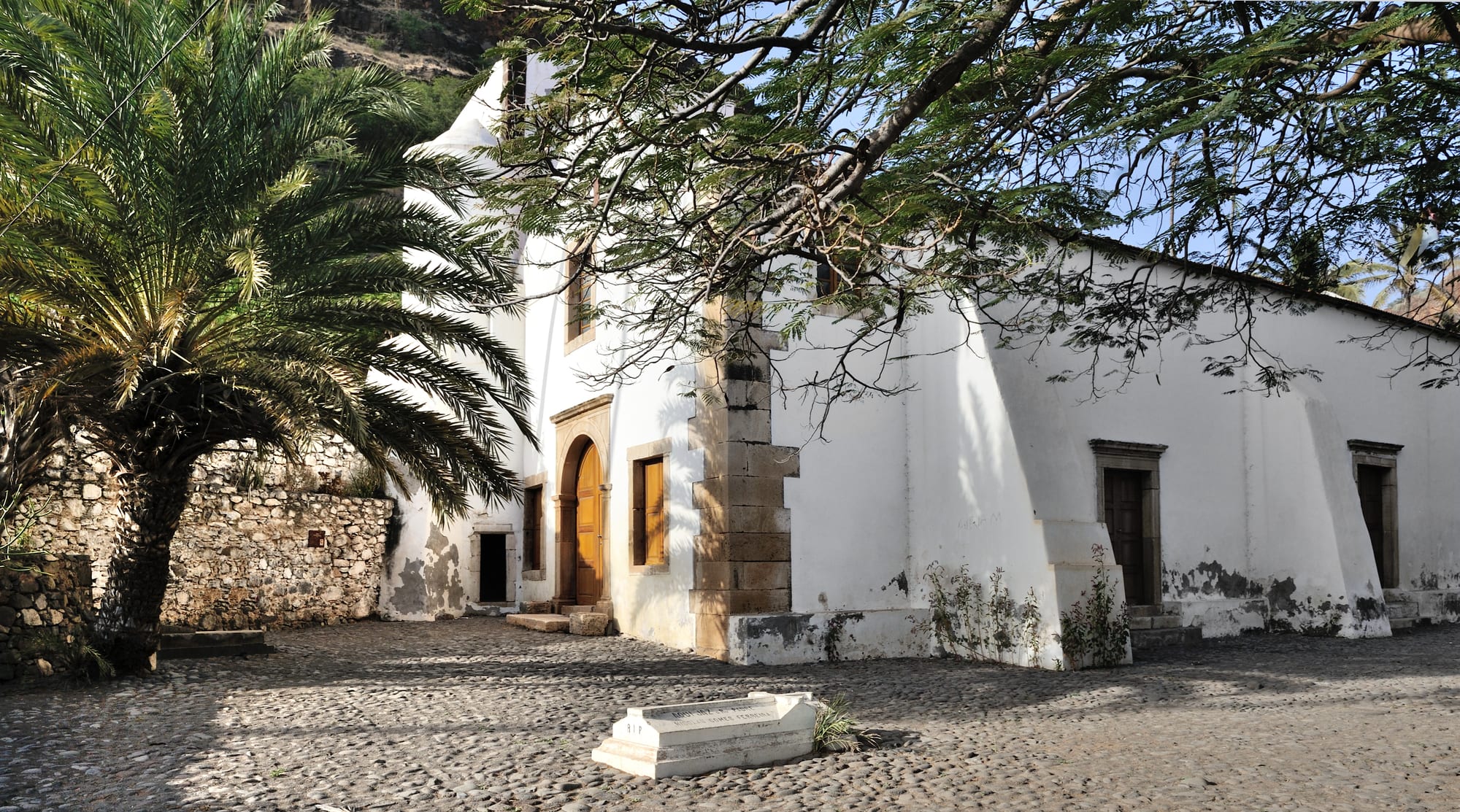
The culture is Creole in the fullest sense, a blend of European and African influences that shows in the language, the music and the way people live. Portuguese is the official language, used in schools, in official business and for almost everything written, but the language of daily life is Cabo Verdean Creole, rooted in fifteenth-century Portuguese and shaped by West African languages. How the blend is felt varies across the islands: some communities identify more closely with the Portuguese side of their heritage, others with the African. What unites them are two ideas that Cabo Verdeans often point to as the heart of the national character. Morabeza is hospitality and kindness, a generous openness towards others. Sodade, or saudade, is a sense of longing and homesickness, born of generations of emigration, and it runs through the country's literature and song.
Family ties are strong and reach across oceans. An estimated one million Cabo Verdeans live abroad, more than live in the islands themselves, and emigration has shaped households for generations; many are headed by single mothers, with partners, parents or children working overseas.
Greetings and meeting people
Greetings are unhurried, warm and physical. People greet one another with a handshake or, among women, with kisses, and they ask after each other's health and family. Greetings are rarely rushed, and even a brief encounter usually begins with these enquiries.
Conversation happens at close quarters. People stand near one another when talking and are physically demonstrative, often touching or holding hands as they speak. Taking time over a greeting, and asking after someone's family, is therefore the natural way to begin any encounter, whether in a shop, on a doorstep or in an office.
Hospitality and being a guest
Hospitality is a point of pride. Cabo Verdeans are known for their generosity, and even the poorest households take pride in presenting guests with a meal. A visitor who is offered food is being paid a compliment, and accepting it graciously is the right response. The same principle works in reverse: it is considered rude to eat in front of other people without offering to share.
Feasts involve a great deal of shared preparation. Before a saint's day celebration, women typically spend the preceding days pounding corn, cleaning and cutting vegetables and preparing meat, and the work itself is a social occasion. Guests at such gatherings can expect to be fed generously, and the meal is often followed by music and dancing.
Festivals and life's big moments
The religious calendar gives the islands many of their liveliest days. Saints' days are often the basis for community-wide parties, with dancing, drinking and food. Independence Day on 5 July is the main national occasion.
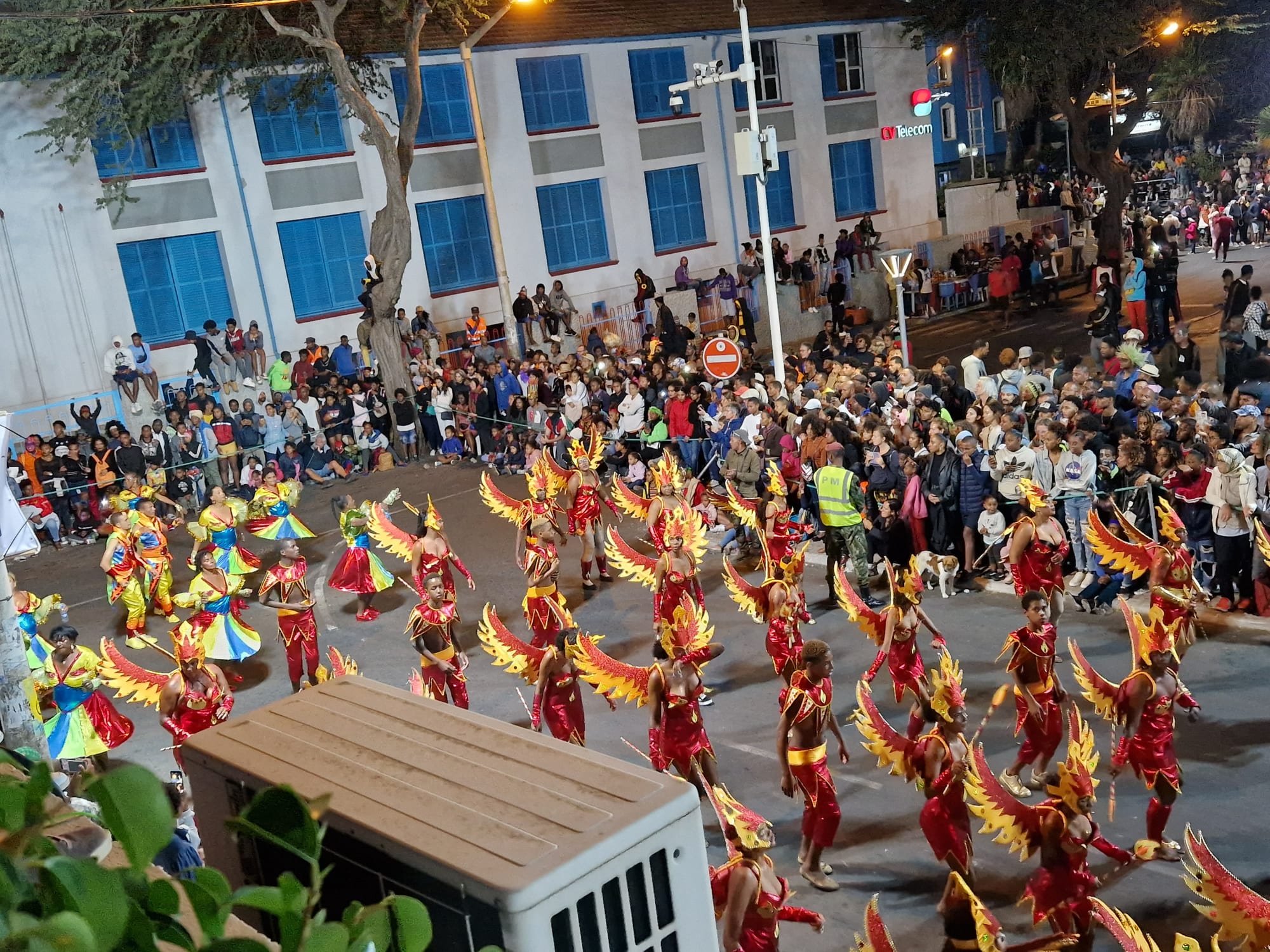
Carnival is the most spectacular event of the year. Its biggest celebration draws thousands of visitors to the island of São Vicente. In the days before Lent, children's groups parade with themes of their own, groups of mandingas bring a contagious energy to the streets, and satirical characters poke fun at local politicians and the events of the past year. The climax comes on the night of Carnival Tuesday, when the official groups, each with a large cast of participants, compete with elaborate floats and costumes built around a chosen theme, and the dancing carries on in the streets with live music after the parade has passed.
Older and quieter is tabanka, a tradition rooted in the rural communities of Santiago since the era of slavery. A tabanka is both a festival and a mutual aid association, which historically helped its members with funerals, baptisms and shared celebrations. Its season runs from May into early July, and its processions, driven by drums and conch shells and accompanied by women singers, feature a cast of kings, queens and other characters, in a parody of colonial society. The high points include the ritual "theft" of a saint's image from a chapel and its later recovery, followed by a communal feast. Many tabankas have faded, and only a handful survive in something like their original form.
Formal weddings are relatively uncommon. More often a couple simply begin to live together, the woman leaving her family's house to move in with her partner, and after four years of cohabitation the relationship acquires the status of a common-law marriage. When weddings, christenings and family reunions do take place, morna is a fixture of the celebrations.
Funerals are large events, attended by much of the community, and the whole cycle of mourning is widely known as the tchôro, after the laments at its heart. Women relatives, friends and neighbours of the dead person sing a highly stylised, musical wailing, often led by the widow with the others responding. Weeping aloud is expected in the street as the body leaves the house and during the procession to the cemetery, but afterwards it belongs inside the home. Feeding the many visitors is a central part of the rite. In the days that follow, relatives, neighbours and friends keep visiting the house, praying the rosary and staying through the night to keep the bereaved company, and traditionally no cooking was done in the home for the first days, with neighbours bringing food instead. A Mass on the seventh day marks the end of the most intense mourning, with further ceremonies in the months that follow. Mourning remains long and strict: close family members traditionally dress in black for a full year and are forbidden during that time to dance or play music, a remarkable restriction in a country where music is so central to life.
Arts, crafts and music
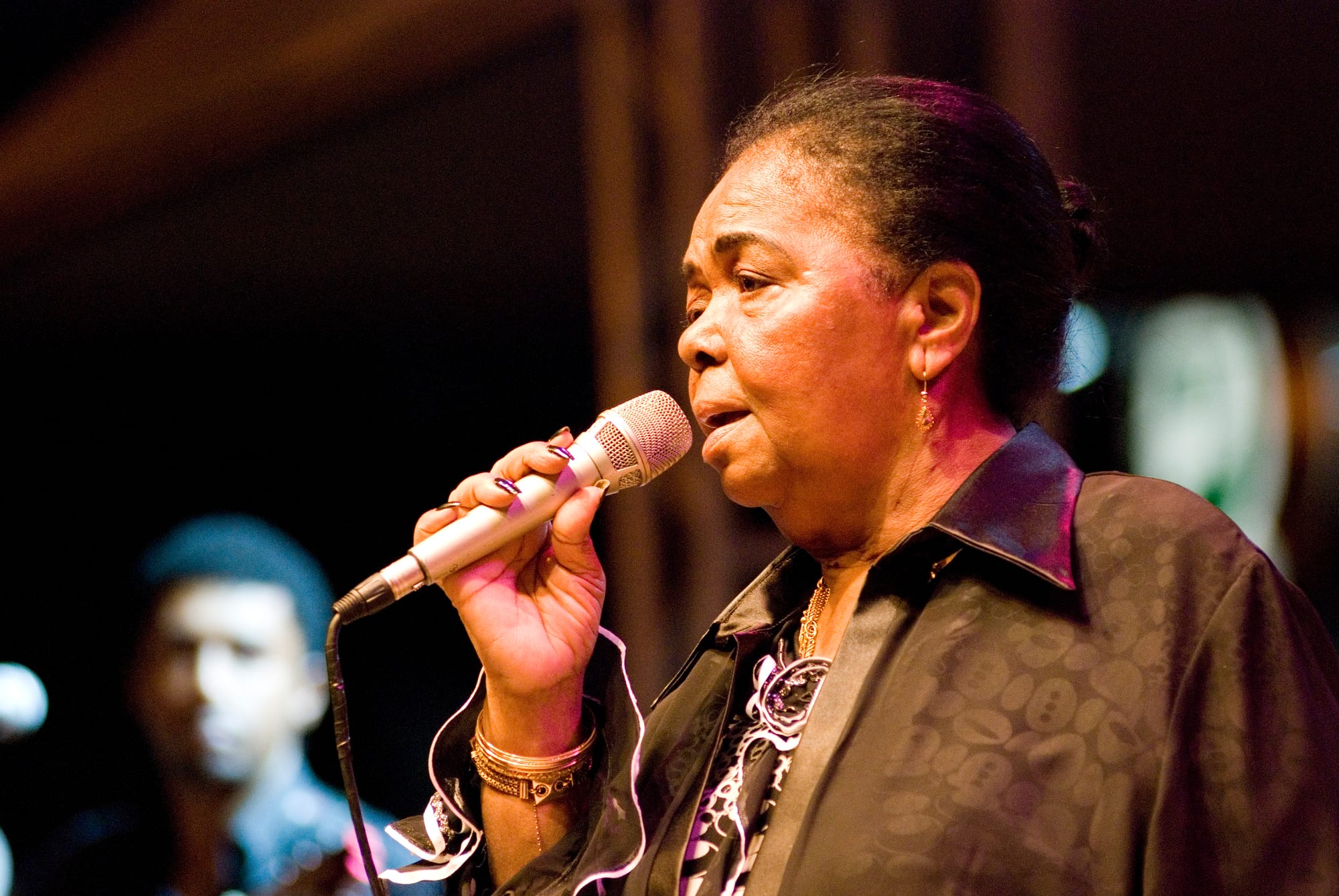
Music is Cabo Verde's great art, and musicians are so highly regarded that the singer Cesária Évora appears on one of the country's banknotes. Morna is its most celebrated form. UNESCO, which lists morna as part of the intangible cultural heritage of humanity, describes it as combining voice, music, poetry and dance, and as central to Cabo Verdean social life. The guitar is at its heart, alongside the violin, the ten-string guitar and the small cavaquinho, with piano and percussion added in modern ensembles. Its lyrics speak of love, departure, separation, reunion, longing, the ocean and the motherland, and today it is sung predominantly in Cabo Verdean Creole rather than Portuguese.
Morna is passed on through workshops, radio programmes, performances and festivals, and through the singers, players, poets and composers who carry the tradition, as well as through Todo Mundo Canta, a singing competition held across the islands. For the diaspora, the music is a bond with home, its themes of longing and separation speaking as clearly in a distant city as in the islands.
Batuku is one of the oldest styles, and it belongs above all to women. A group of singers and percussionists sits in a circle, beating out interlocking rhythms on a rolled-up cloth or cushion held between the thighs, known as a xabeta, while a lead singer calls and the rest of the group answers. At the climax a dancer rises into the centre of the circle for the torno, a fast dance driven from the hips and legs while the upper body stays almost still. Colonial authorities disapproved of the sensuality of the dance and it was even forbidden in the towns, but after independence in 1975 interest in reviving it grew, and from the 1990s younger composers and singers gave it new forms.
Funaná, another traditional style of the rural interior, is dance music played on an accordion with an iron bar used as a rhythm instrument. Literature, like song, has returned again and again to saudade, the longing born of emigration, which gives much Cabo Verdean writing its particular tone.
Dos and don'ts for visitors
- Do greet people with a handshake, and ask after their health and family.
- Do take time over a greeting rather than getting straight to business.
- Do accept a meal or refreshment when it is offered; it is an expression of pride and welcome.
- Don't eat in front of other people without offering to share.
- Do join in the dancing if invited at a saints' day, carnival or family celebration.
- Do show quiet respect to a funeral procession; loud public weeping is part of the rite.
- Don't expect a family in mourning to take part in music or dancing; the custom can last a full year.
What to take away
Cabo Verde's customs grow from two feelings, the welcome of morabeza and the longing of sodade, and a visitor who meets the first with warmth will soon begin to understand the second.