Culture & Customs · Burkina Faso
Burkina Faso: The Greeting Comes First
Three faiths often shared within one family, greetings that ask after health, household and work before anything else, and an old system of joking kinship that lets whole peoples tease one another in the name of peace
By Worldlore Editorial · 30 September 2026
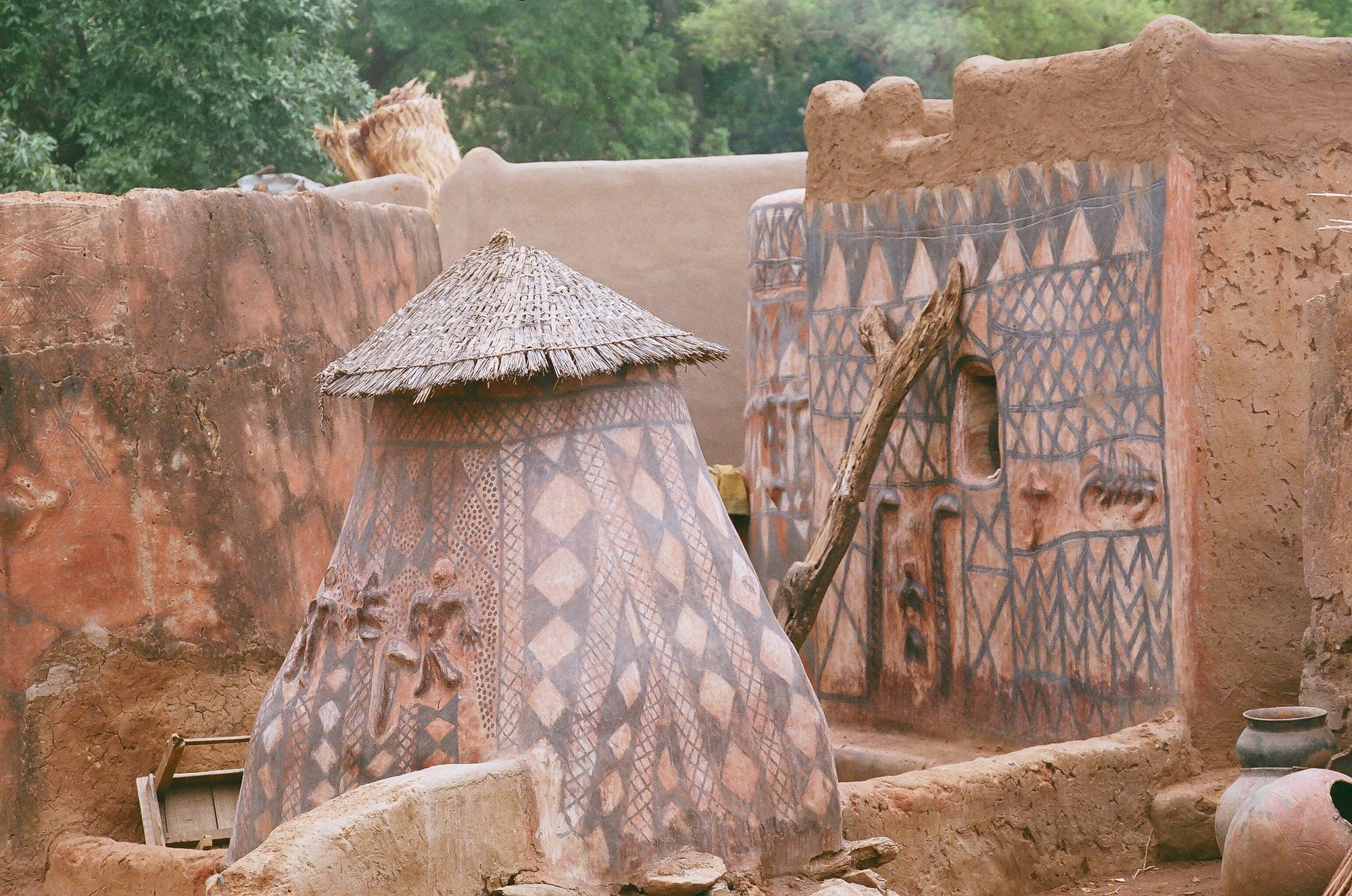
A visitor steps into a family courtyard in the morning. Before anything else happens, before any question is asked or any errand explained, there is the greeting. In Mooré, the most widely spoken language, it runs through a series of questions: did you sleep well, how is the family, how is your body, how is the work? To each one the answer is the same word, laafi, meaning health or peace, often strengthened to laafi bala. The reply is always positive, even on a bad day, because the exchange is less an enquiry than a ritual of goodwill. Only when it is finished can the real business of the visit begin. That order of things, people first and purpose second, runs through Burkinabè life, in a country that counts around sixty ethnic groups and prizes, above almost anything, the ability to live alongside one another.
Faith, identity and values
Burkina Faso is a country of several faiths, and often of several faiths at once. In the 2019 census, around 64 per cent of the population was Muslim, around 20 per cent Roman Catholic and around 6 per cent Protestant, while 9 per cent followed traditional beliefs alone. Those figures understate how widely traditional religion is practised, since many Muslims and Christians also keep aspects of it. Traditional belief honours the ancestors and spiritual forces associated with natural features and shrines, and offerings of chickens, guinea fowl or larger animals are made to them. Ancestors remain part of community life through their shrines, and when a death seems suspicious, establishing its cause matters, so diviners may be consulted. Families of mixed faith are common, and religious leaders have long made a point of attending one another's festivals. That tradition of tolerance has come under strain in recent years from armed extremist groups, but it remains a value that Burkinabè of every faith hold up as their own.
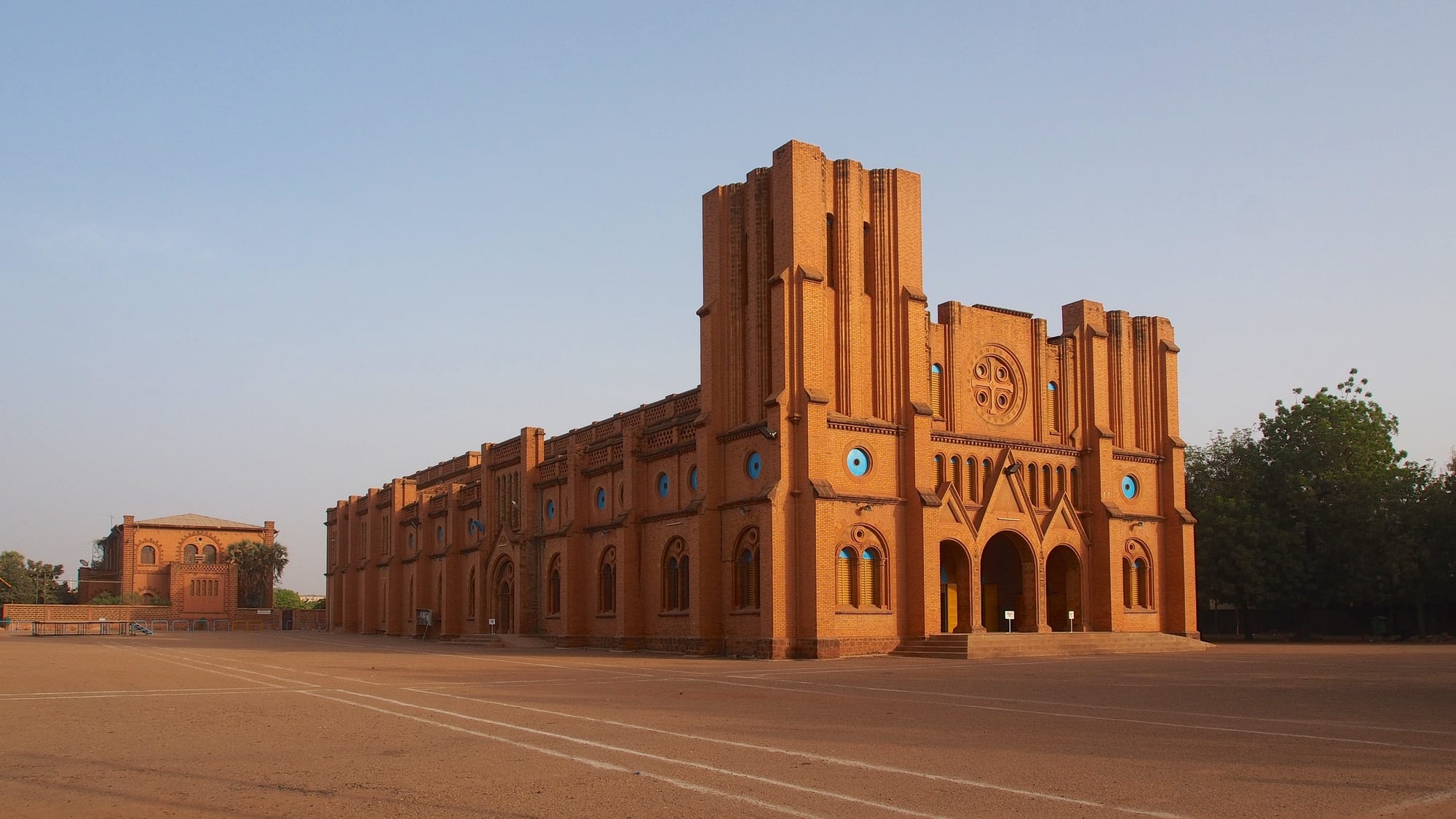
Community comes before the individual. A saying from the Gourounsi people puts it simply: one hand alone cannot collect flour. Extended family is the basic unit of society, and respect for elders is paramount; even someone only slightly older is treated with deference.
One of the country's most distinctive institutions is joking kinship, known in Mooré as rakiré and in French as parenté à plaisanterie. Certain peoples are paired as joking allies, among them the Mossi and the Samo, the Gourounsi and the Bissa, the Bobo and the Fulani, and the Senufo and the Lobi. Members of allied groups may tease and mock one another freely and in public, trading mock insults about who conquered whom, and no one is supposed to take offence. Behind the humour lies a pact: joking allies must never truly insult or harm one another, and the relationship has long been used to defuse quarrels and mediate disputes. Burkina Faso, together with Mali and Niger, has put forward these joking relationships for inscription on UNESCO's list of intangible cultural heritage.
Greetings and meeting people
Greeting is the foundation of good manners. Guidance given to newcomers is blunt on the point: nothing should be started without greeting people first, and everyone in a group should be greeted, not just the person being visited. Greetings involve handshakes and a sequence of questions about health, family and work, and conversation generally moves from the general to the particular, with the purpose of a visit raised only once everyone is at ease. Different greetings belong to different times of day, and the distinction between formal and informal greetings matters.
Blessings are woven into everyday speech. Many phrases in Mooré begin with "Wẽnd na", "may God", and are answered with "Amina": may God show us another day, may God let us sleep in health, may God bring you home in peace. There are set blessings for travellers, for the sick, for newlyweds, for a new baby and for the bereaved.
Respect is shown to age and rank. Elders are greeted first and with care, and officials and anyone in uniform are approached formally. The deepest forms of deference are seen at the court of the Mogho Naaba, the traditional king of the Mossi, where dignitaries remove their headwear, crouch and greet him by rubbing their palms and touching the ground.
The best-known expression of that court culture is a short ceremony held every Friday morning in the courtyard of the Mogho Naaba's palace. The king appears dressed in red, as if about to ride out to war; his ministers and advisers dissuade him, and he withdraws, returning dressed in white, having chosen peace. The lesson drawn by those who watch is that great decisions should come from reflection rather than anger, and that war is a last resort.
Using the right hand to give or receive anything, whether money, food or a gift, is the polite norm.
Hospitality and being a guest
Visitors are received with warmth, and the time spent greeting and sitting together counts for more than anything that is brought. A gift is not expected; a small token of friendship is enough. Dressing well in public is part of showing respect, and Burkinabè put real care into their appearance at work and even at the market. It is almost unheard of for adults to wear shorts in public except for sport, and wrinkled, dirty or torn clothes are avoided by anyone who wishes to be taken seriously.
Social life is unhurried. Much of it consists of sitting and talking with friends and neighbours, drinking tea, going to the market or joining a local festival, and the line between working time and personal time is far less sharp than in much of Europe or North America. Relationships built over tea and conversation are what make work, and life, run smoothly.
Some unwritten rules are worth knowing. Women do not traditionally go to bars on their own. Photographing officials, soldiers, police or government buildings is discouraged, and anyone present when the national flag is lowered is expected to stand still until the ceremony is over. At the weekly ceremony of the Mogho Naaba's court, which the public may watch, photographs and video are forbidden. Across the country, people are best asked before their photograph is taken.
Festivals and life's big moments
The calendar reflects the country's mix of faiths. Muslim feasts, including the end of Ramadan and Tabaski, the Feast of the Sacrifice, sit alongside Christmas, Ascension and the Assumption as national holidays, and in families of mixed faith, and among religious leaders, it is common to share in the celebrations of another faith. Each occasion has its greeting: in Mooré, festivals and the New Year are marked with "Ne y taabo", and "may God show us next year" is answered, as ever, with "Amina".
Marriage is an alliance between families as much as between two people. In traditional marriages the groom's family gives a bride price to the bride's family, the amount varying from one people to another, and the bride joins her husband's household. Gifts of pagnes, lengths of brightly dyed cloth, are presented to the bride, and kola nuts are shared among the guests. Traditional ceremonies can last several days, with pounding of millet, processions and dancing. Civil marriage exists alongside these customs, and in the cities couples increasingly choose their own partners. A new birth is welcomed with a naming ceremony and a round of blessings for the child's long life.
Funerals show the country's diversity most clearly. Muslims bury their dead within a day and with little ceremony. Followers of traditional religion hold long and elaborate funerals, whose purpose is to raise the deceased to the company of the ancestors. Among the Bobo, a first "fresh" funeral guides the dead to their resting place, and later come the grand funerals, when fibre masks representing spirits of the bush dance to drums and war chants and neighbouring villages gather in a show of unity. Joking kinship has its place here too: allies of the bereaved family may tease the mourners, block the way to the grave or demand gifts before the burial can go ahead, lightening the weight of grief with laughter.
Arts, crafts and music
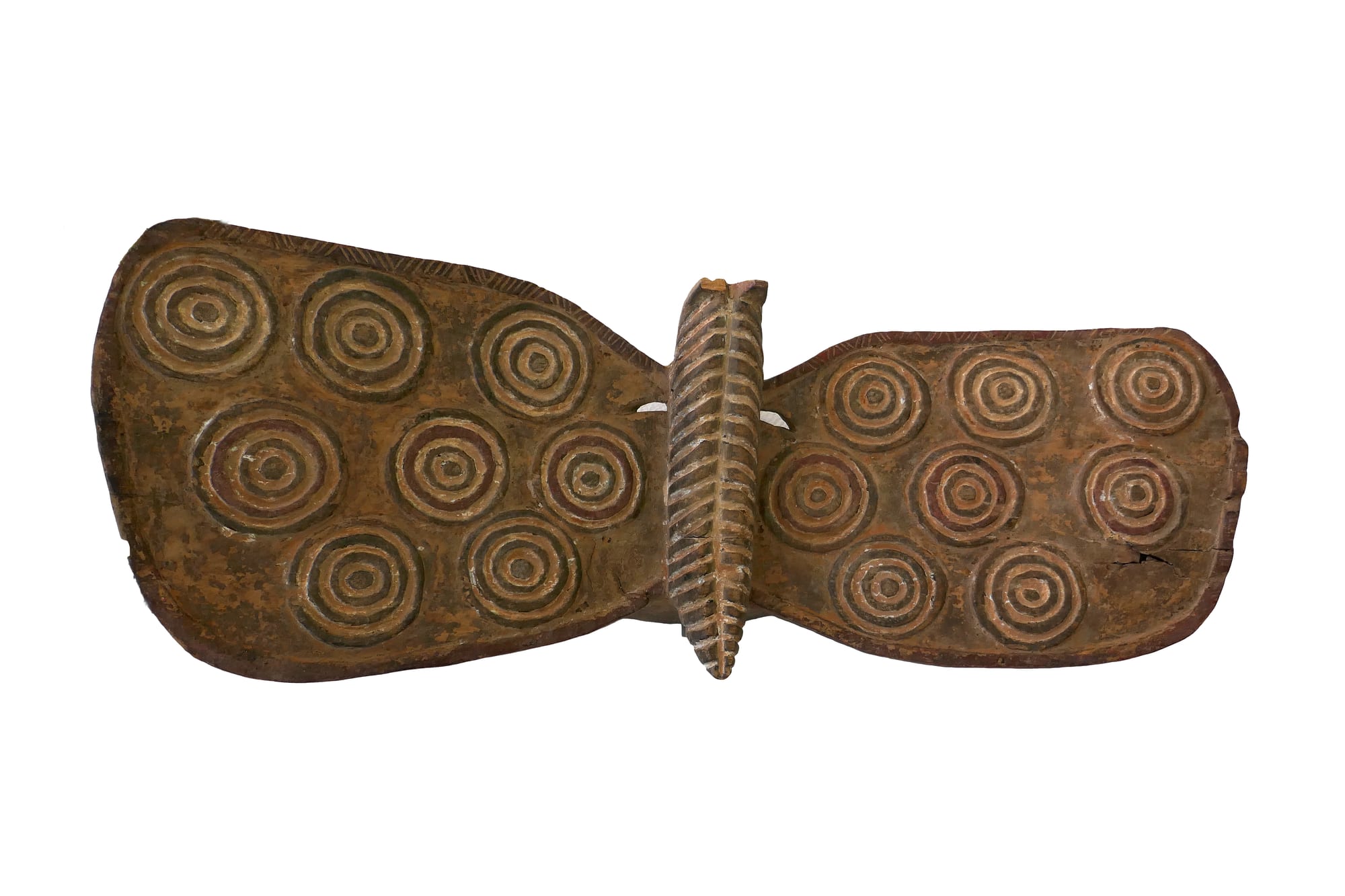
Masks are among the great art forms of the country. Carved from wood or made from leaves and fibre, and often painted in bold geometric designs, they belong to specific peoples and to sacred occasions, appearing at funerals, initiations and other rites of passage rather than as decoration. Alongside them flourish woodcarving, leather and basketwork, hand-dyed textiles, pottery and lost-wax metal casting.
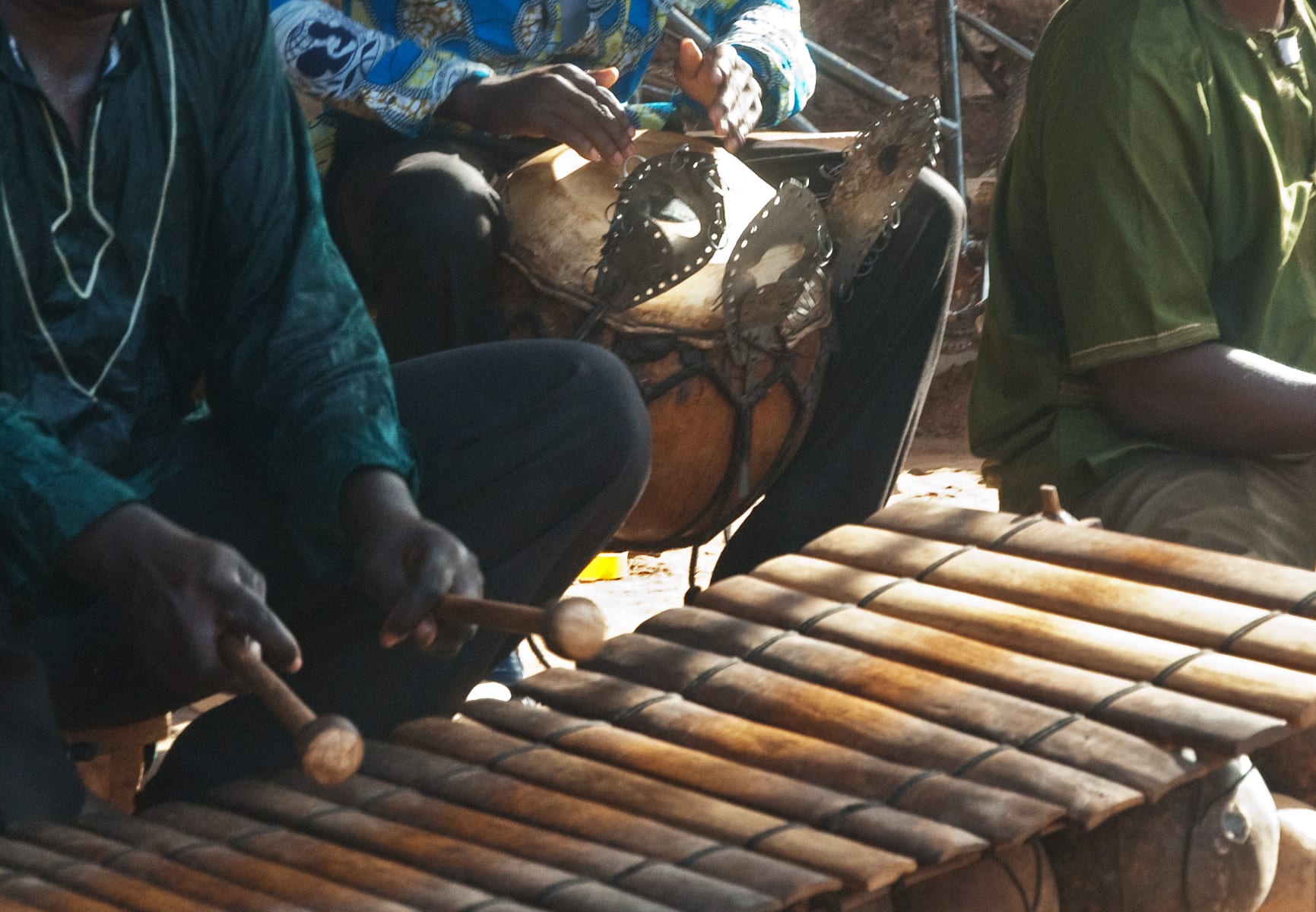
Music accompanies almost every gathering. The balafon, a wooden xylophone whose keys sit over gourd resonators, is shared across the region, and since 2024 UNESCO has listed its practices and expressions in Burkina Faso, Mali and Côte d'Ivoire together with the related kolintang of Indonesia, the country's only entry on the list so far. Drumming, including the djembe, is equally central, and the western city of Bobo-Dioulasso has an internationally known drumming tradition.
Burkina Faso's modern cultural reputation rests above all on cinema. FESPACO, the Panafrican Film and Television Festival of Ouagadougou, was founded in 1969 and is held every two years, bringing together filmmakers from across Africa and its diaspora in what the festival calls the largest gathering of African cinema. Only films by African filmmakers compete, and its prizes are among the most coveted in African film.
Dos and don'ts for visitors
- Do check the latest government travel advice before any trip; several governments advise against all or all-but-essential travel to the whole country, and consular help is minimal.
- Do greet everyone present, shaking hands and greeting elders first with particular deference, before starting any conversation or business, and allow time for the questions about health and family.
- Do use the right hand to give or receive money, food and gifts.
- Do dress neatly and conservatively; adults wear shorts in public only for sport.
- Do stand still if the national flag is being lowered nearby.
- Don't photograph soldiers, police, officials or government buildings, and ask before photographing anyone.
- Don't take photographs or video at the Mogho Naaba's weekly court ceremony, where cameras are forbidden.
- Don't mistake the teasing between joking allies for hostility; it is a mark of kinship.
What to take away
Burkina Faso's customs all point in one direction, towards patience, courtesy and the steady work of keeping people on good terms, and a visitor who takes time over a greeting has already understood the most important of them.