Daily Life · Burkina Faso
Burkina Faso: The Courtyard and the Market Day
One of the youngest populations on earth, households that run three generations deep, and a country where, for millions displaced by conflict since 2015, an ordinary day now has to be rebuilt from scratch
By Worldlore Editorial · 30 September 2026
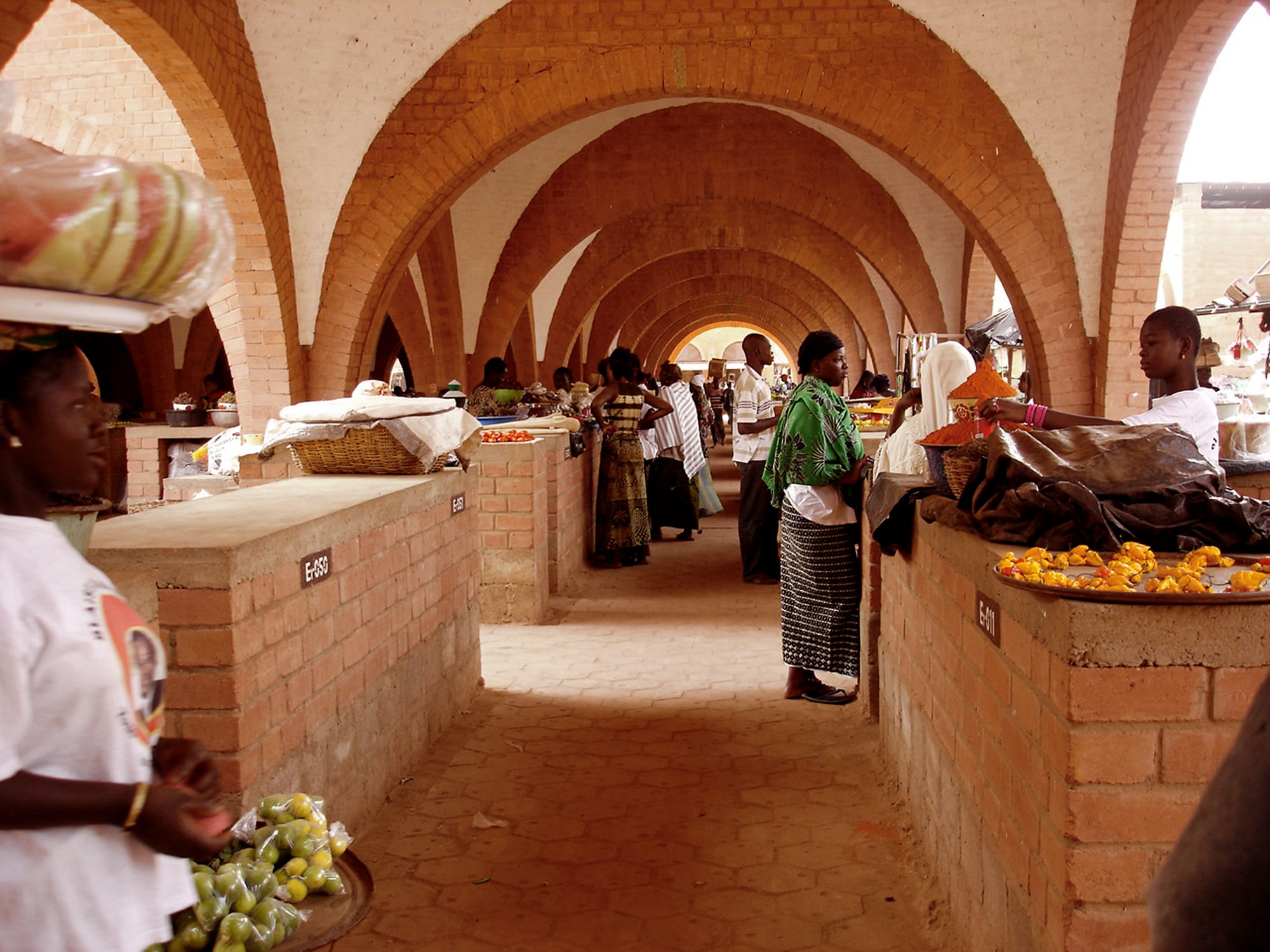
Burkina Faso is a young country in the most literal sense: with a median age of around 18, well over half the population has never known life without mobile phones, and children and teenagers fill the streets, courtyards, and school paths nationwide. The day runs on family labour and the market rather than the office, and the household, not the individual, is still the basic unit that daily life is organised around. Since 2015, a spreading jihadist insurgency has also pulled more than two million people from their homes, and for them an ordinary day now starts in a displacement camp or a swollen town rather than the village they grew up in.
Family and home life
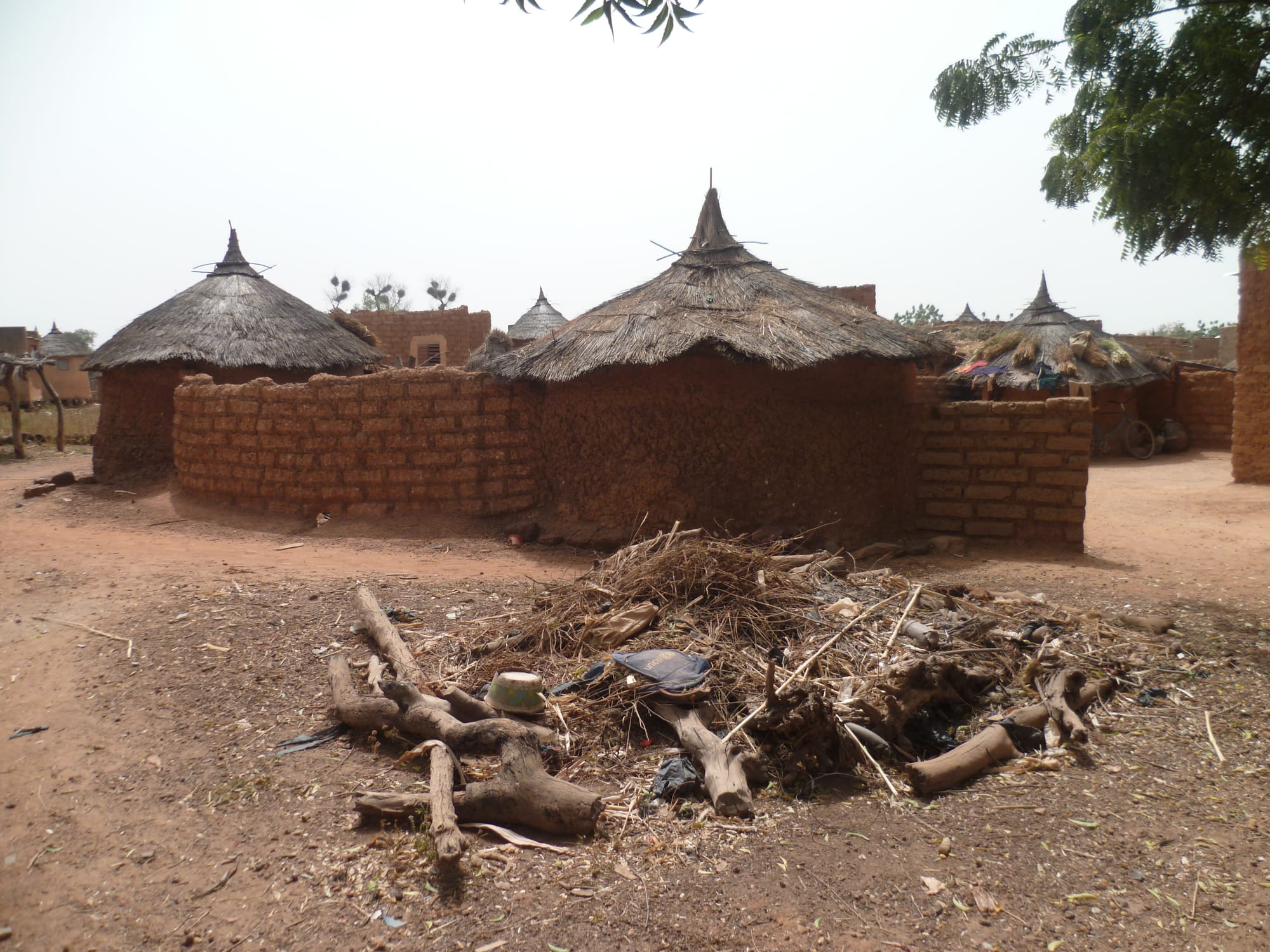
Households are often large, and it is common for them to be multigenerational, with grandparents, parents, and children sharing a single walled compound built around a shared courtyard. Women bear an average of around four children over their lifetime, among the higher fertility rates in the world, and domestic work such as pounding grain, fetching water, and cooking falls mainly to women and girls, often done together rather than alone. Polygamy is still practised in some families, particularly in rural areas, and a married son may build his own room within his father's compound rather than move away, so a household frequently grows to include several linked nuclear families under one roof.
Work, school and the rhythm of the day
Most Burkinabè still farm or herd for a living, growing millet, sorghum, maize, and cotton, or working at gold mines, large and small, which provide much of the country's export earnings; only a minority hold formal office jobs. Where formal employment exists, the working week generally runs Monday to Friday, and many shops close for a break in the hottest part of the day. Schooling, unusually, keeps its own separate rhythm: classes run Monday through Saturday, with Thursday off, and are mainly taught in French even though most children grow up speaking Mooré, Dioula, or another home language first. In the north, east, and Sahel regions, the insurgency has closed many schools and clinics outright, so for many children this ordinary rhythm has already been broken.
Community life and public spaces
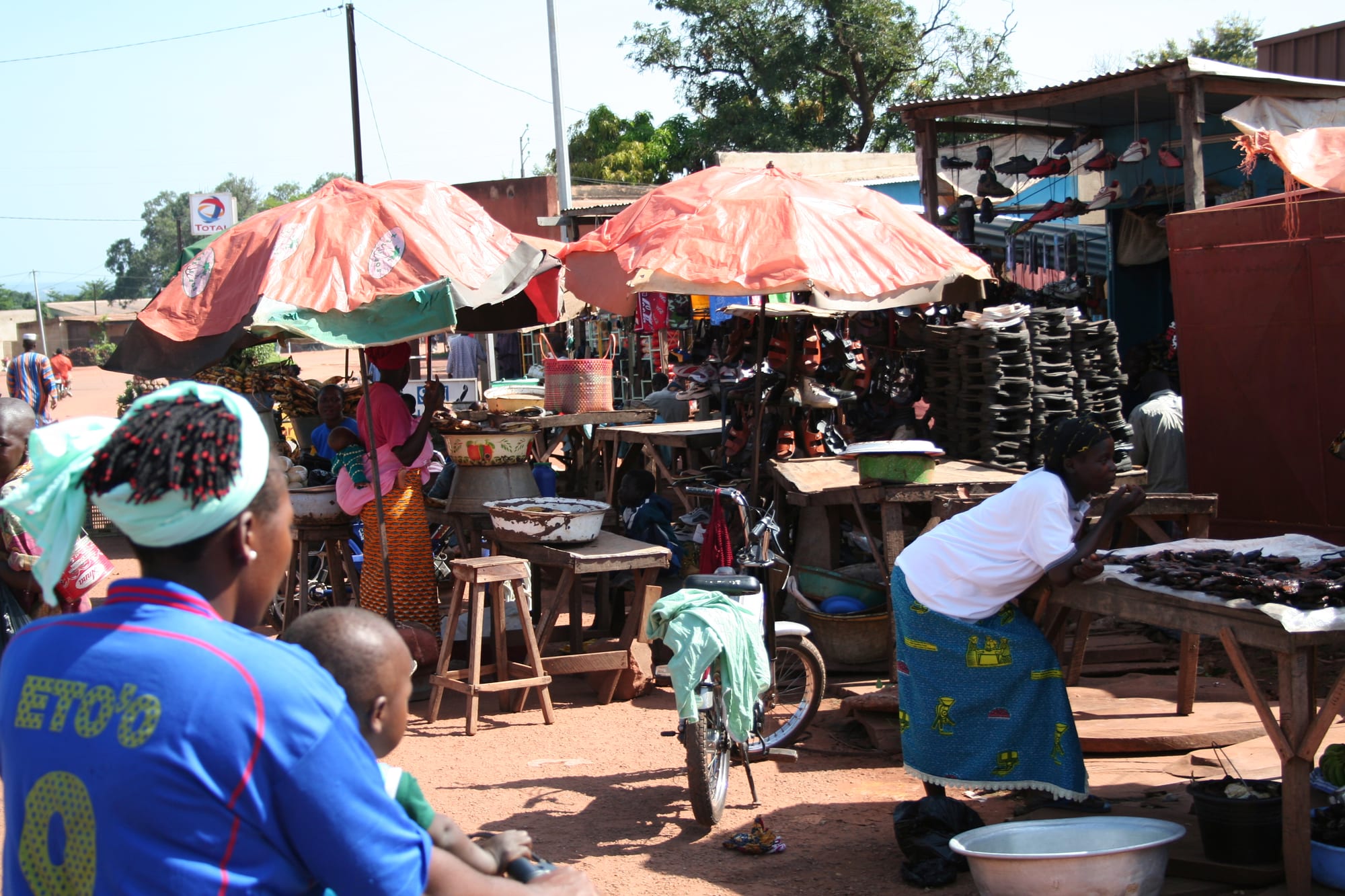
The market is the country's real public square, more than any office, church, or mosque. Towns hold a large weekly or twice-weekly market day when stalls fill every available surface with grain, vegetables, cloth, and hardware, while smaller daily markets sell prepared food and household basics. Bicycles and mopeds, not cars, are the everyday way most people get around and through a market, weaving between stalls and handcarts rather than waiting for a clear path. Since the security crisis worsened, many rural markets in the north and east have shrunk or closed as roads became unsafe, funnelling more everyday trade into Ouagadougou, Bobo-Dioulasso, and other larger towns.
Free time and weekends
Sunday is the shared day off for those in formal work, generally spent on family visits, church or mosque, and time at the market, which doubles as a social occasion as much as a shopping trip. Football is followed closely nationwide, watched at home or gathered around a shared television or radio, and informal matches on dirt pitches are a common sight in towns and villages alike. Where distance and money allow, the biennial FESPACO film festival and the SIAO craft fair, both held in Ouagadougou, draw crowds from across the country and give free time a rare, festival-scale outlet.
A visitor's ordinary day
Burkina Faso runs largely on cash; CFA francs are essential outside the two main cities, where ATMs and card payments are limited or unavailable. Shared taxis and minibuses, rather than fixed-route buses, handle most everyday transport between towns, generally leaving once full rather than on a set timetable. A yellow fever vaccination certificate is required for entry, and most foreign governments currently advise against all travel to the country because of the security situation, which should be checked in full and close to any travel date rather than assumed from older advice. Electricity and mobile coverage are better in Ouagadougou and Bobo-Dioulasso than elsewhere.
What to take away
An ordinary day in Burkina Faso is still shaped first by the household and the market, but increasingly by a second, harder fact: for millions of people, that ordinary day has already been interrupted, and daily life now includes finding a way to keep going without it.