Attractions & Natural Wonders · Burkina Faso
Burkina Faso: Eight Attractions and Natural Wonders
Mud mosques with wooden spikes, a jagged range of sandstone blades, painted Kassena courtyards, and a stone enclosure whose builders left no record
By Worldlore Editorial · 9 September 2026
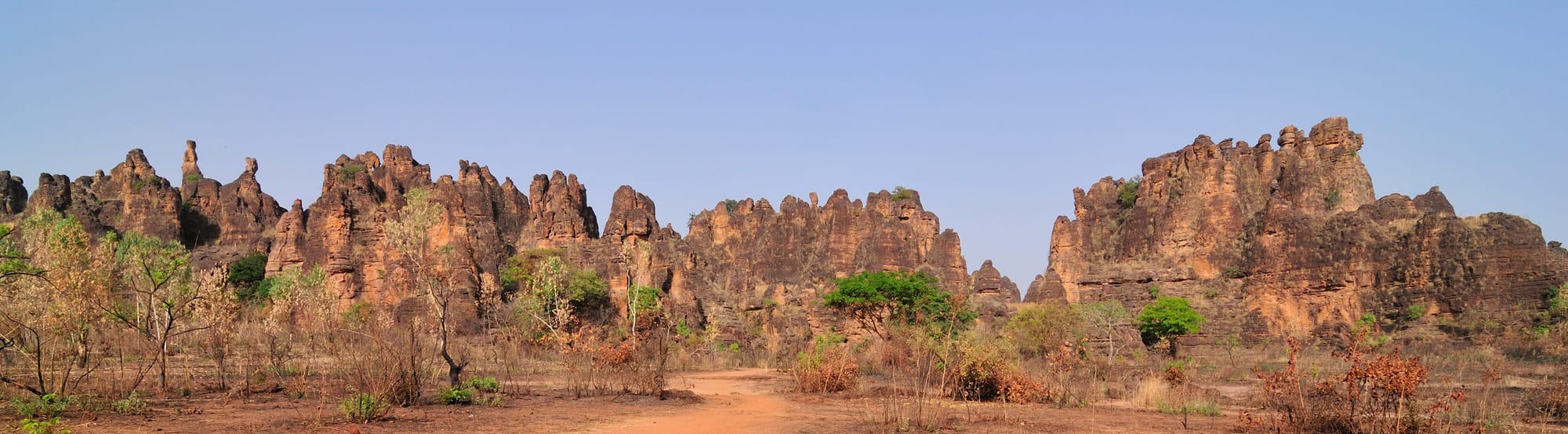
A landlocked country of earth architecture
Burkina Faso ("land of upright people") is a flat, dry, landlocked country in the West African Sahel. It is one of the poorest countries in the world, and — the essential caveat for this article — one of the most dangerous to travel in: since the mid-2010s an armed insurgency has spread across much of the country, large areas are outside government control, and Western governments advise against all travel. The places below are described for reference and for a calmer future, not as a current itinerary. If you go, it must be with expert local advice on which roads and regions are usable.
The eight are spread from the southwest, around Banfora and Bobo-Dioulasso — historically the safest and most visited region — to the capital and the far south.
1. The Grand Mosque of Bobo-Dioulasso
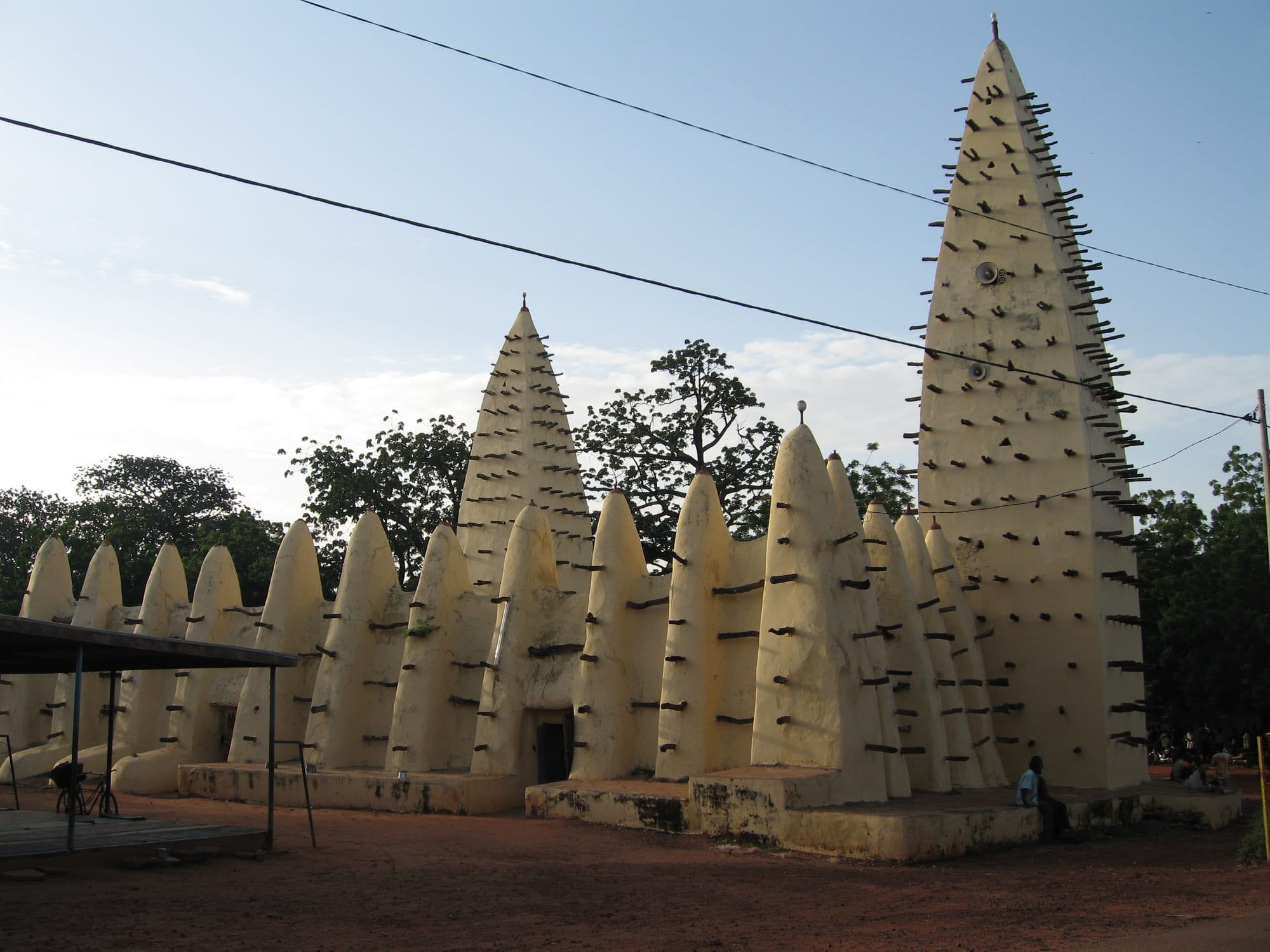
Burkina's second city, Bobo-Dioulasso, has the country's most striking building: a mud-brick mosque of tapering towers and buttresses studded with permanent wooden scaffolding (torons), which double as the framework for the annual re-plastering. It was built around 1880 in the old quarter of Kibidwé, a maze of earthen houses and lanes beside the sacred catfish pond of Dafra.
Bobo is also the centre of Burkinabè music, with a lively bar and balafon scene.
2. The Sindou Peaks
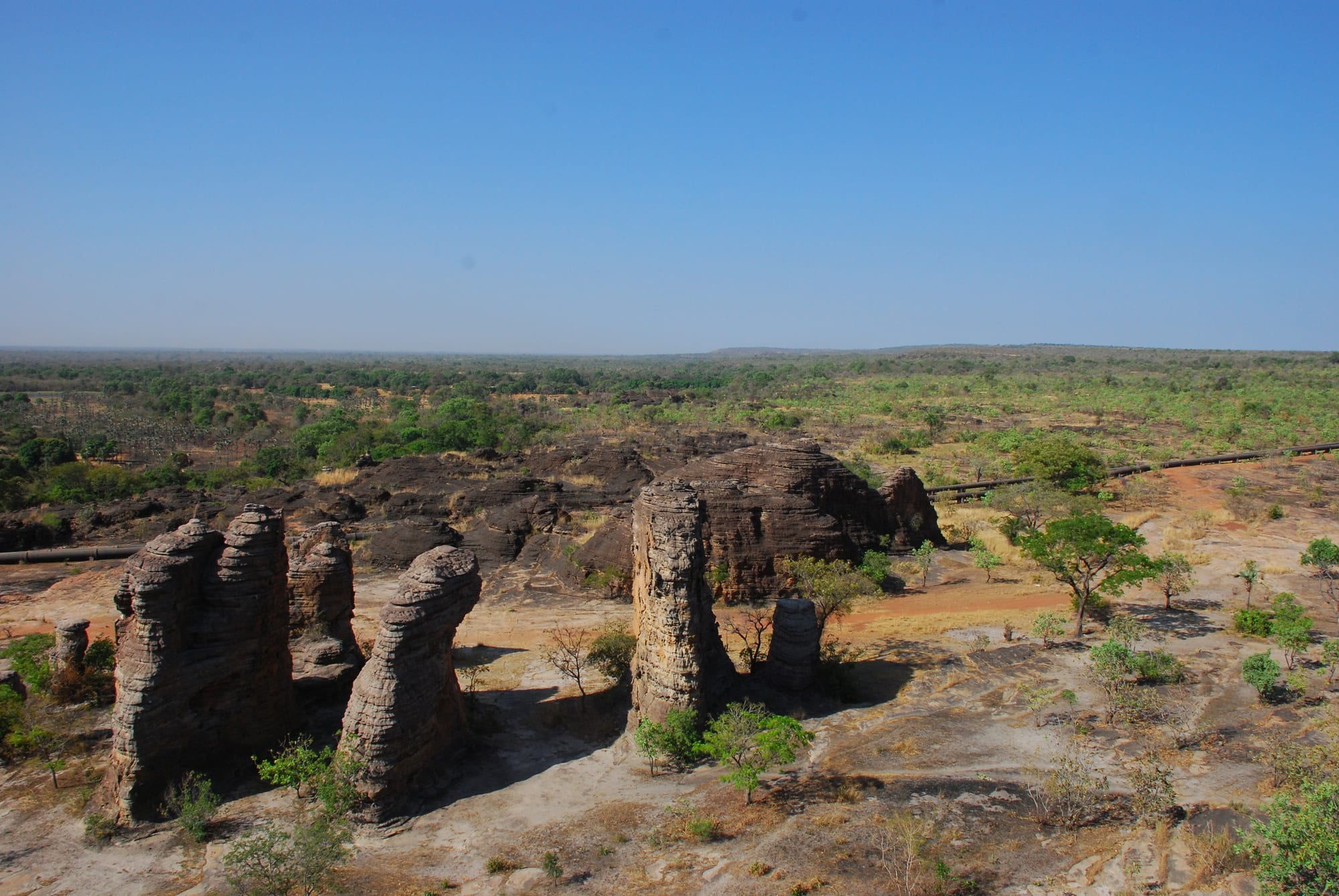
Near Banfora in the southwest, a chain of grey-and-ochre sandstone has been eroded into a serrated ridge of blades, cones, and arches — the Pics de Sindou. A path threads through and over them, best in the soft light of early morning or late afternoon, with guides available from Sindou village.
The Senufo people of the area regard parts of the formation as sacred.
3. The Domes of Fabédougou
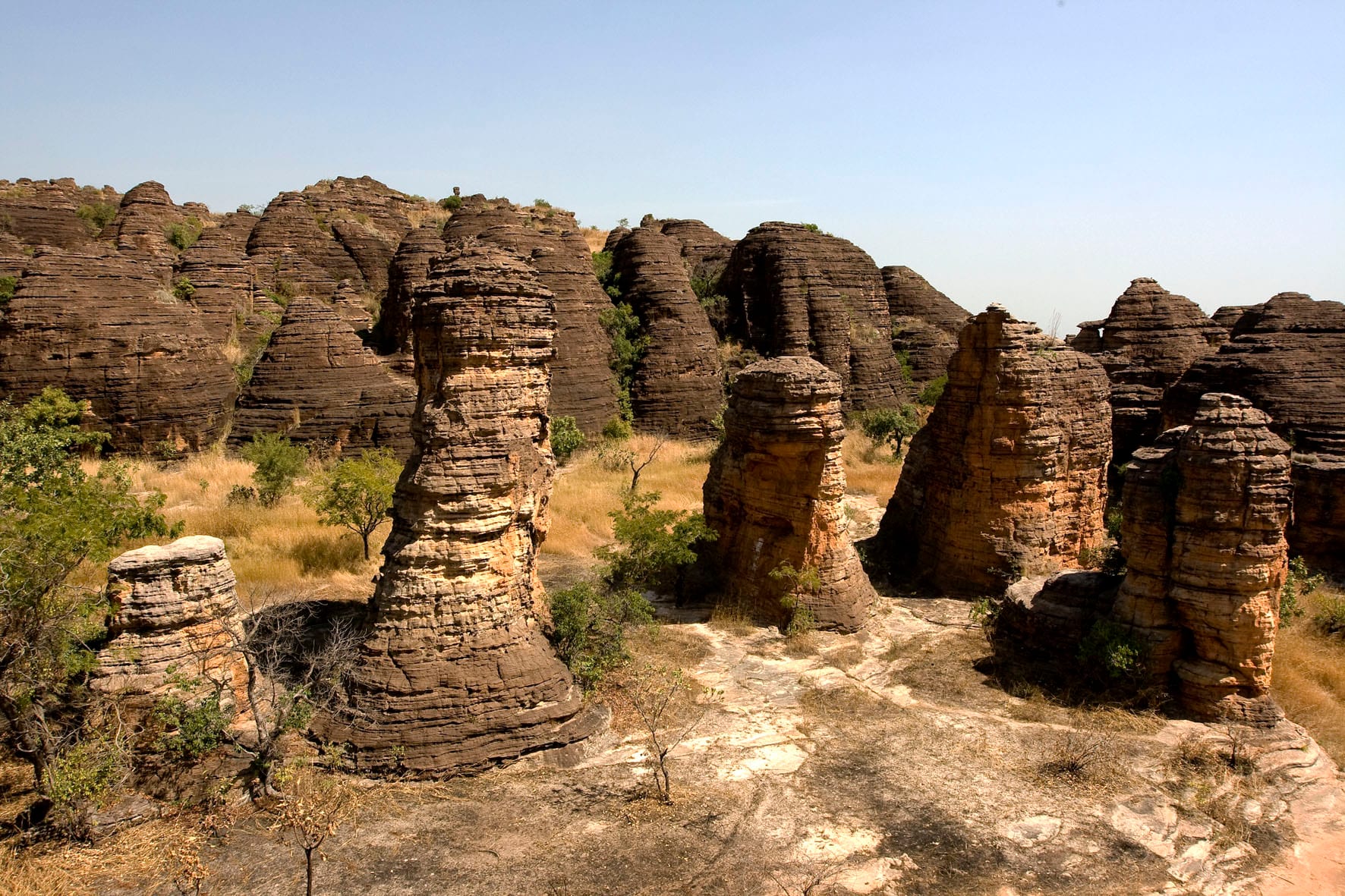
A short drive from the Sindou Peaks, the Fabédougou domes are a cluster of rounded, horizontally banded sandstone mounds — a formation hundreds of millions of years old, resembling a field of stone beehives. You can scramble up between them for a view over the sugarcane plantations of the Comoé valley.
They are usually combined with the Karfiguéla falls and the Tengréla lake, where hippos can sometimes be seen.
4. The Karfiguéla Falls
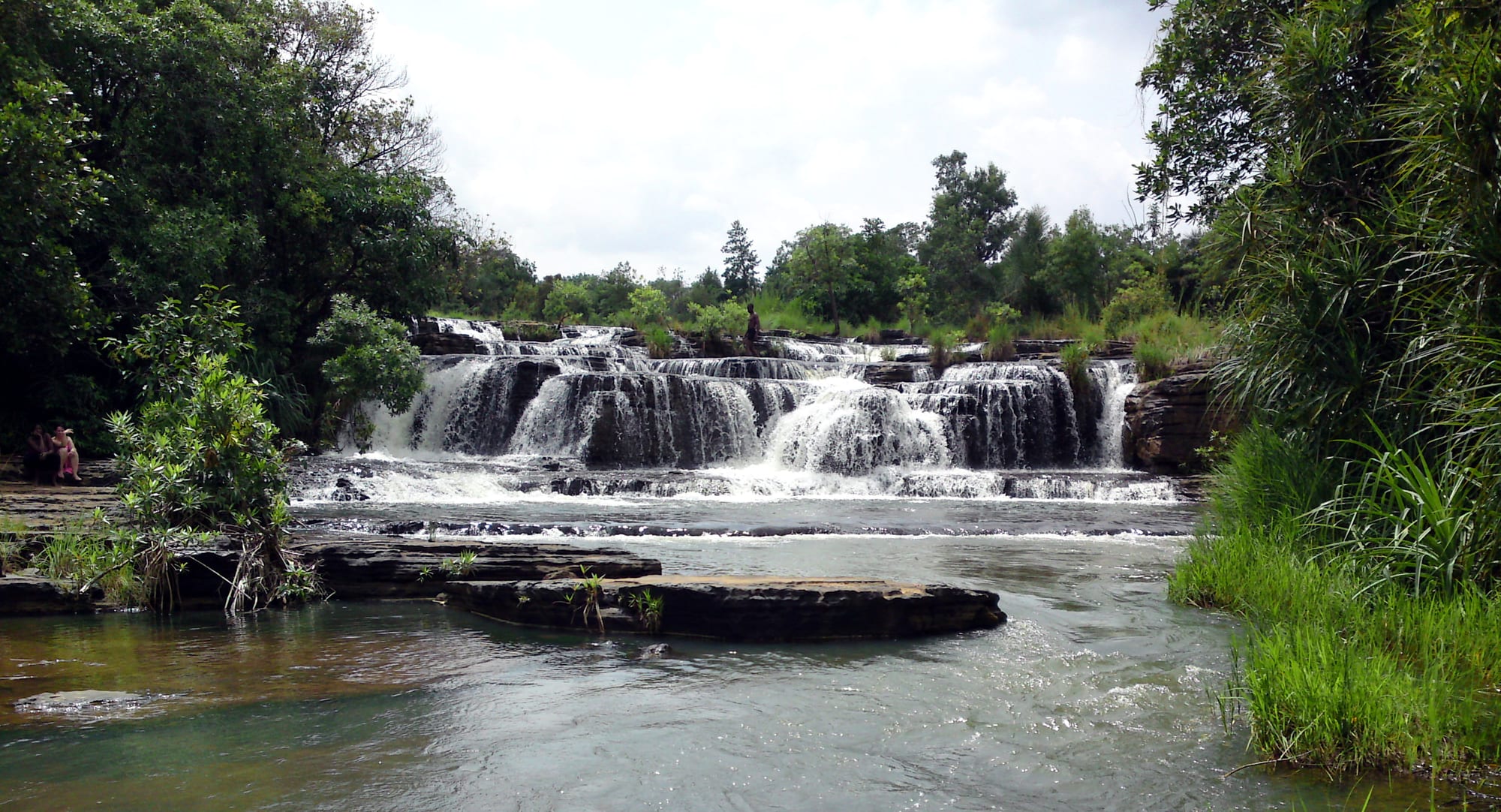
Outside Banfora, the Comoé river drops over a series of rock terraces into pools you can swim in — the country's best-known waterfall, fullest in and just after the rainy season (roughly August to November). A path climbs alongside the cascades to the calmer river above, lined with mango trees.
The wider Banfora area, green and watered by the river, is the most scenic part of Burkina Faso.
5. The Nazinga Game Ranch
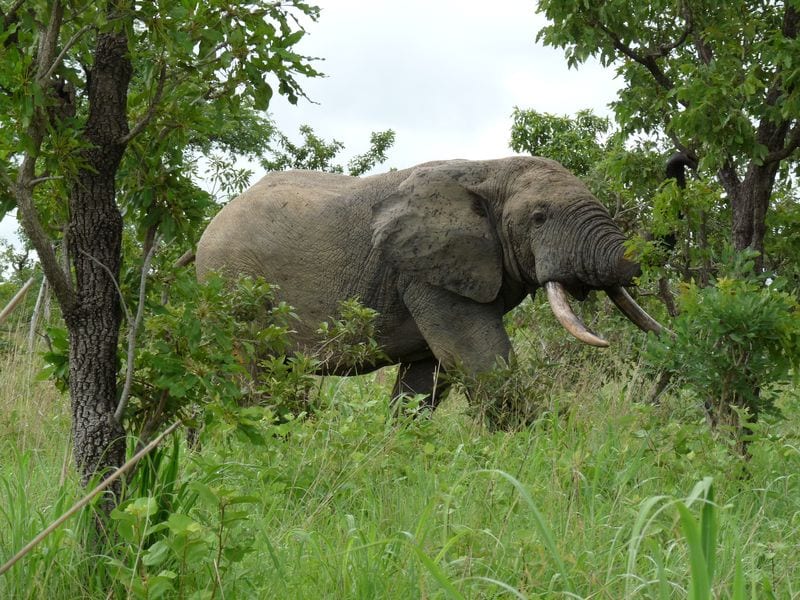
Near the Ghanaian border south of Ouagadougou, Nazinga is a community wildlife area set up in the 1980s that became one of the easiest places in the region to see wild elephants — often coming to drink at the dams near the lodge — along with antelope, warthog, baboon, and crocodile.
Its accessibility from the capital made it Burkina's main safari destination, though the security situation has since affected access to the far south.
6. The Laongo Sculpture Symposium
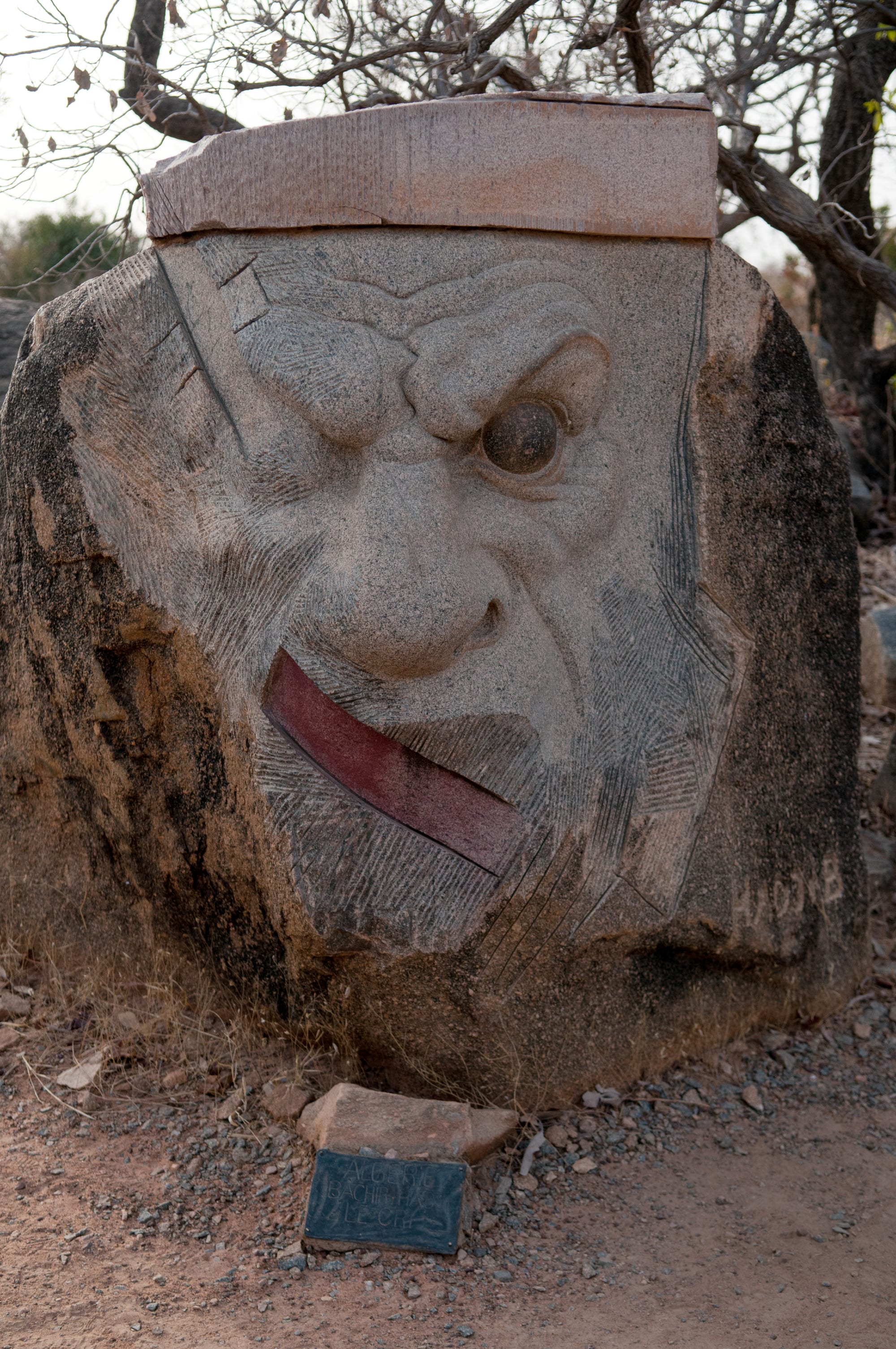
About 30 kilometres east of Ouagadougou, a broad sheet of exposed granite has been turned into an open-air gallery: since 1989, an international sculpture symposium has invited artists to carve works directly into the rock, and dozens now dot the outcrops — faces, animals, abstract forms — weathering slowly in the sun.
It is an easy half-day from the capital, and one of the few sights close to Ouagadougou.
7. The Ruins of Loropéni
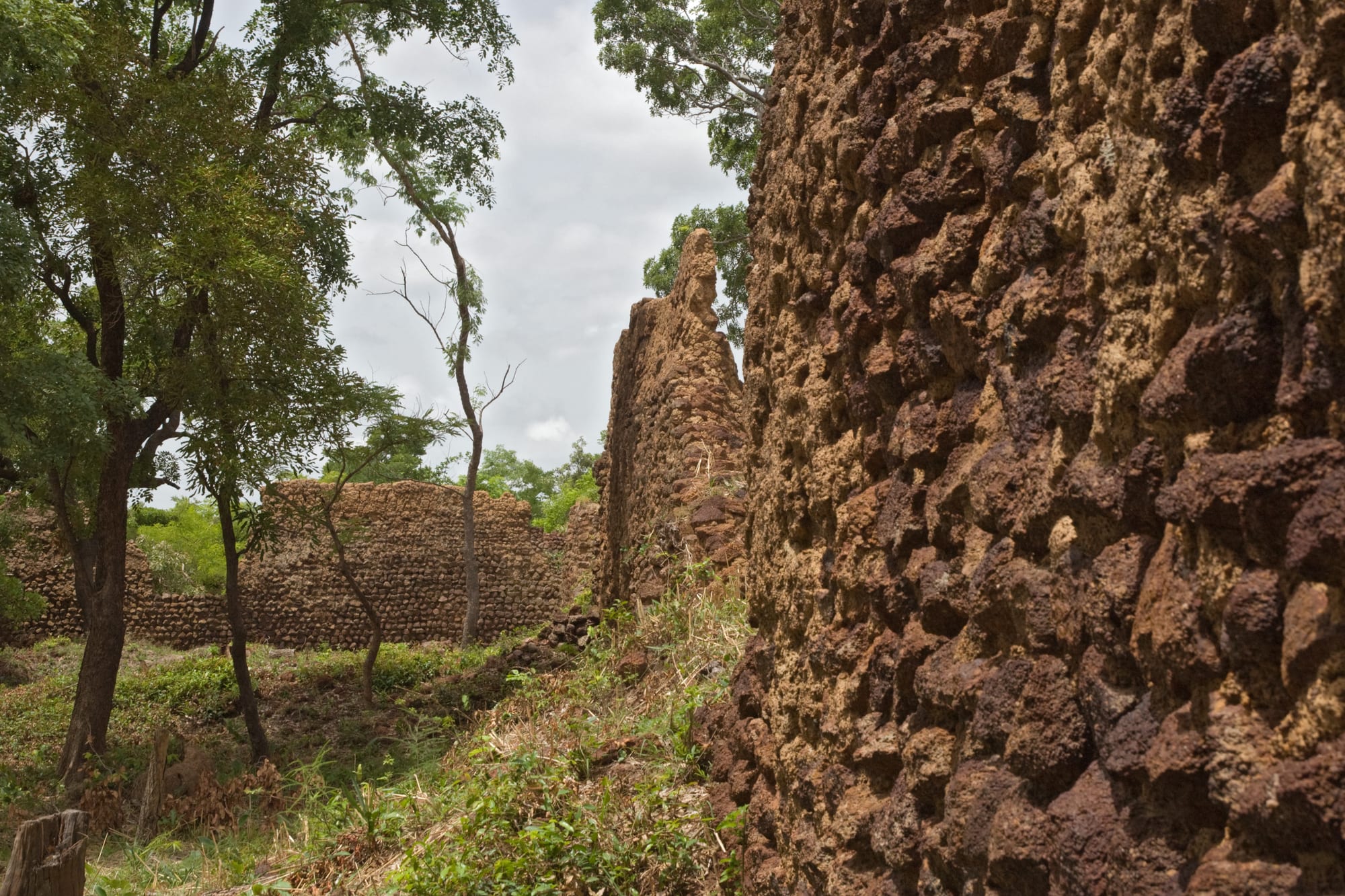
Near the borders with Ivory Coast and Ghana stand the laterite-stone walls of a large fortified enclosure, up to six metres high, at least 1,000 years old and probably linked to the trans-Saharan gold trade. Who built it, and why it was abandoned, is not known — much of it is still unexcavated. It is the best of a group of about a hundred such ruins in the region, and Burkina Faso's first World Heritage Site (2009).
The far south, where it lies, is currently among the least secure parts of the country.
8. Ouagadougou
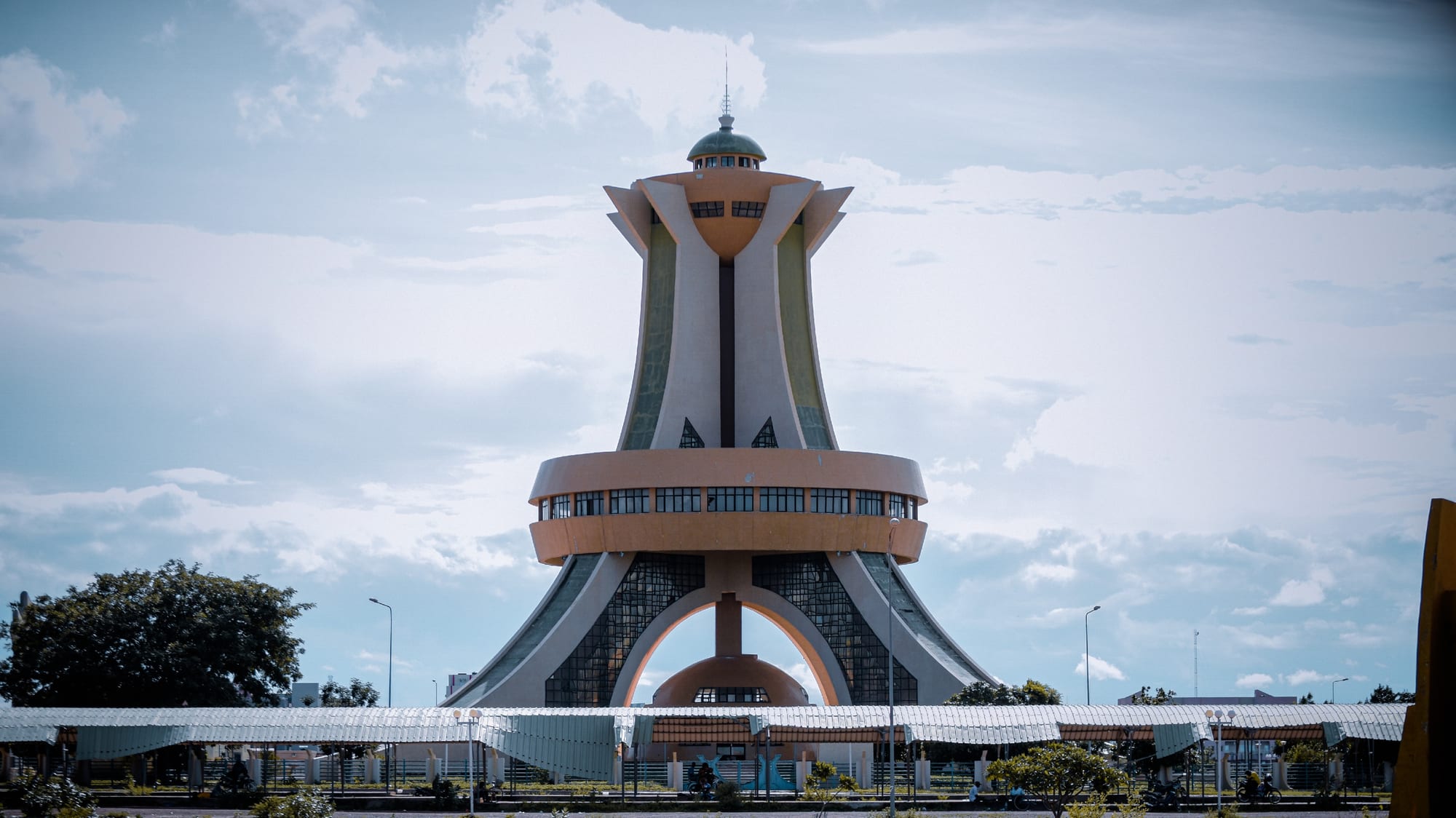
The capital, "Ouaga", is a spread-out, low-rise city best known for two festivals: FESPACO, the biggest African film festival, held every two years, and the SIAO craft fair. Its sights are modest — the Moro-Naba palace, where a short traditional ceremony is performed most Fridays; the national museum; the cathedral; the big Ouagadougou central market — plus the monuments and roundabout sculptures along the main boulevards.
The painted Kassena courtyard houses of Tiébélé, near the Ghanaian border, are another cultural highlight of the region when it is safe to reach them.
Burkina Faso was, until the mid-2010s, a friendly and rewarding introduction to West Africa. That is not the situation now: this article is a record of what is there, to be weighed against current security advice rather than acted on directly.