History · Bhutan
Bhutan: The Last Himalayan Kingdom
A Buddhist state unified by a fleeing lama, sealed off for centuries, ruled by kings since 1907, and a democracy since 2008 — the country that measures Gross National Happiness
By Worldlore Editorial · 19 September 2026
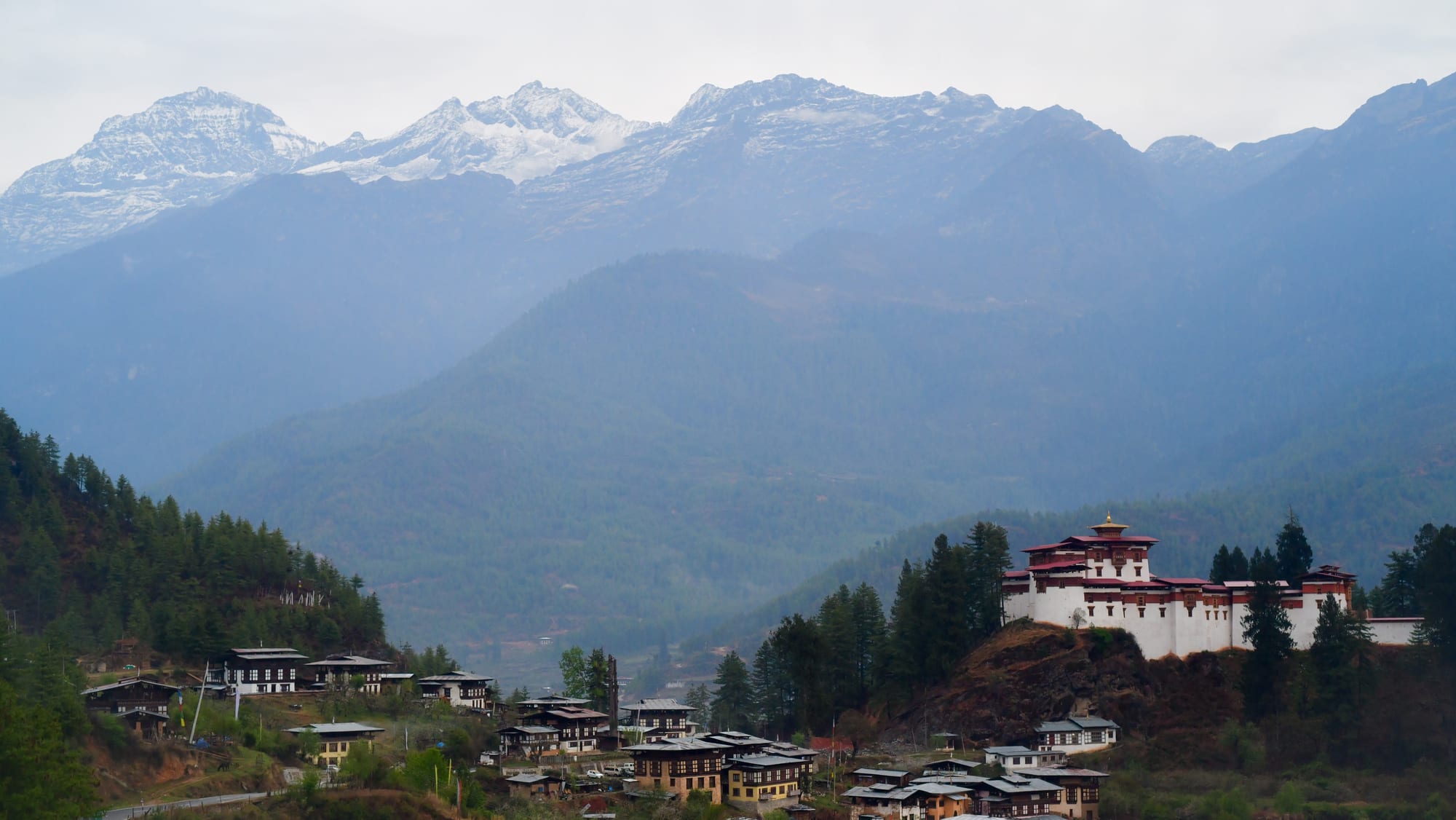
A kingdom in the mountains
Bhutan is a small landlocked country in the eastern Himalayas, wedged between Tibet and India, rising from steamy subtropical foothills to peaks above 7,000 metres — one of which, forbidden to climbers, is the highest unclimbed mountain on earth. Fewer than 800,000 people live there. It is the last of the independent Buddhist Himalayan kingdoms — Sikkim was absorbed by India, Ladakh and Tibet by others — and it has spent its history deliberately holding the outside world at arm's length, first to survive, and more recently to protect a way of life it has decided is worth more than growth.
A short history
- 8th c.
Guru Rinpoche
The saint who brought Buddhism to Tibet is said to visit Taktsang; monasteries follow.
- 1616–1651
The Zhabdrung
A Tibetan lama, Ngawang Namgyal, unifies Bhutan and builds its fortress-monasteries.
- 17th–19th c.
Dzongs and civil war
A dual religious-and-temporal government fragments into regional feuds.
- 1864–65
The Duar War
Bhutan loses its southern lowlands to British India.
- 1907
The monarchy
Ugyen Wangchuck is chosen as the first hereditary king.
- 1949
Treaty with India
India replaces Britain as the guide of Bhutan's foreign relations.
- 1972
Gross National Happiness
The fourth king proposes happiness, not GDP, as the goal of development.
- early 1990s
The Lhotshampa expulsions
About a sixth of the population, ethnic Nepalis of the south, are driven out.
- 2008
Democracy
The king hands power to an elected parliament under a new constitution.
Guru Rinpoche and the Zhabdrung
Bhutan lies within the Tibetan Buddhist world, and its founding story is religious. Guru Rinpoche, the 8th-century master credited with establishing Buddhism in Tibet, is said to have flown to a cliff above the Paro valley on the back of a tigress and meditated in a cave there — the site of the Tiger's Nest monastery. Over the following centuries competing Tibetan Buddhist lineages set up monasteries and small domains across the valleys.
The country was unified by one of them. Ngawang Namgyal, a lama of the Drukpa Kagyu school known as the Zhabdrung, fled a succession dispute in Tibet and reached Bhutan in 1616. Over 35 years he brought the western valleys under one authority, built a chain of dzongs — massive fortress-monasteries that were at once strongholds, administrative centres and monasteries — beat off repeated Tibetan invasions, and created a system of government split between a chief abbot and a secular ruler. He also codified Bhutanese dress, architecture and etiquette, consciously setting the country apart from Tibet.
The dzongs
Ngawang Namgyal's fortress-monasteries still hold Bhutan's district governments, each shared between officials and a community of monks.
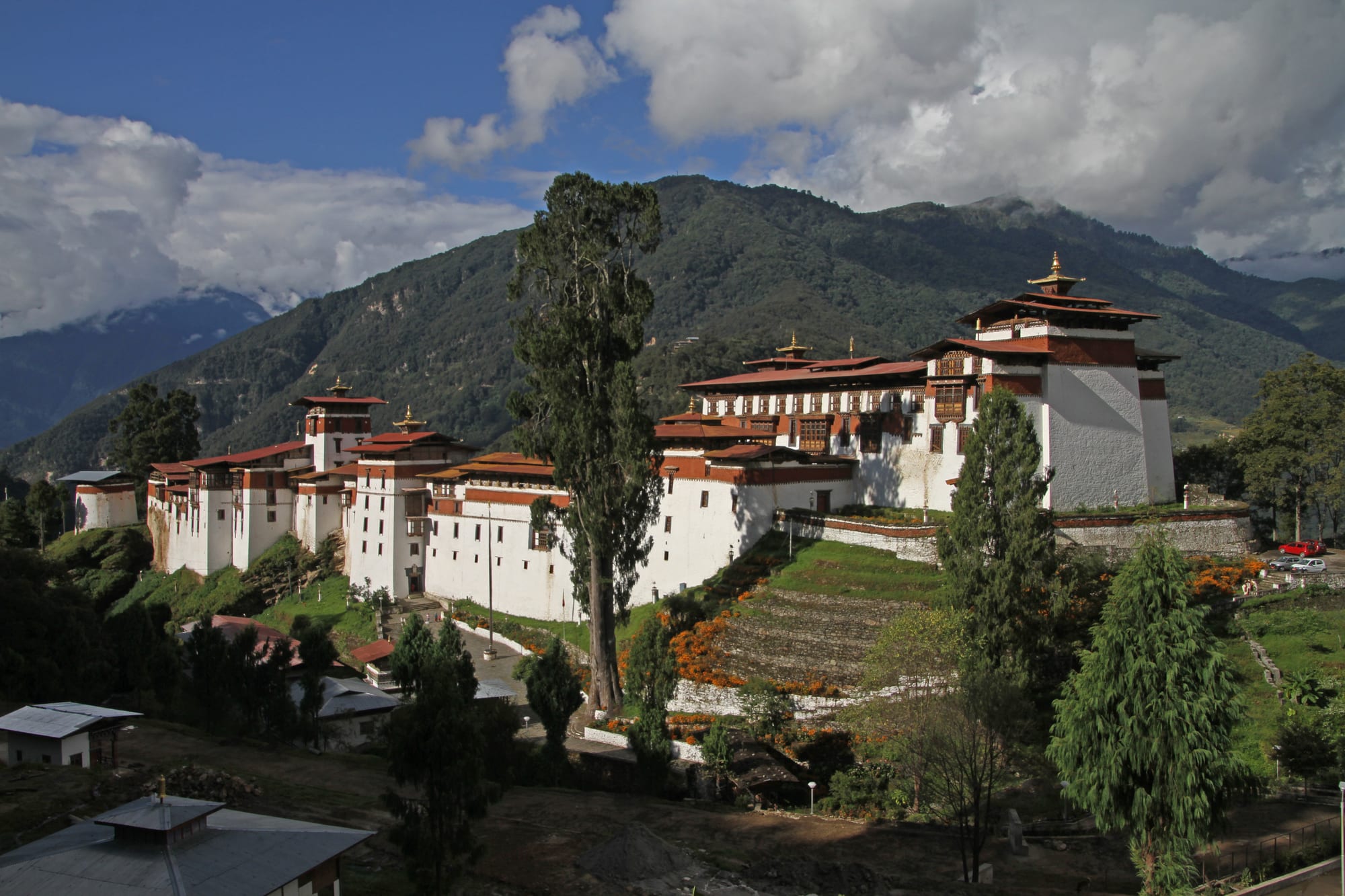
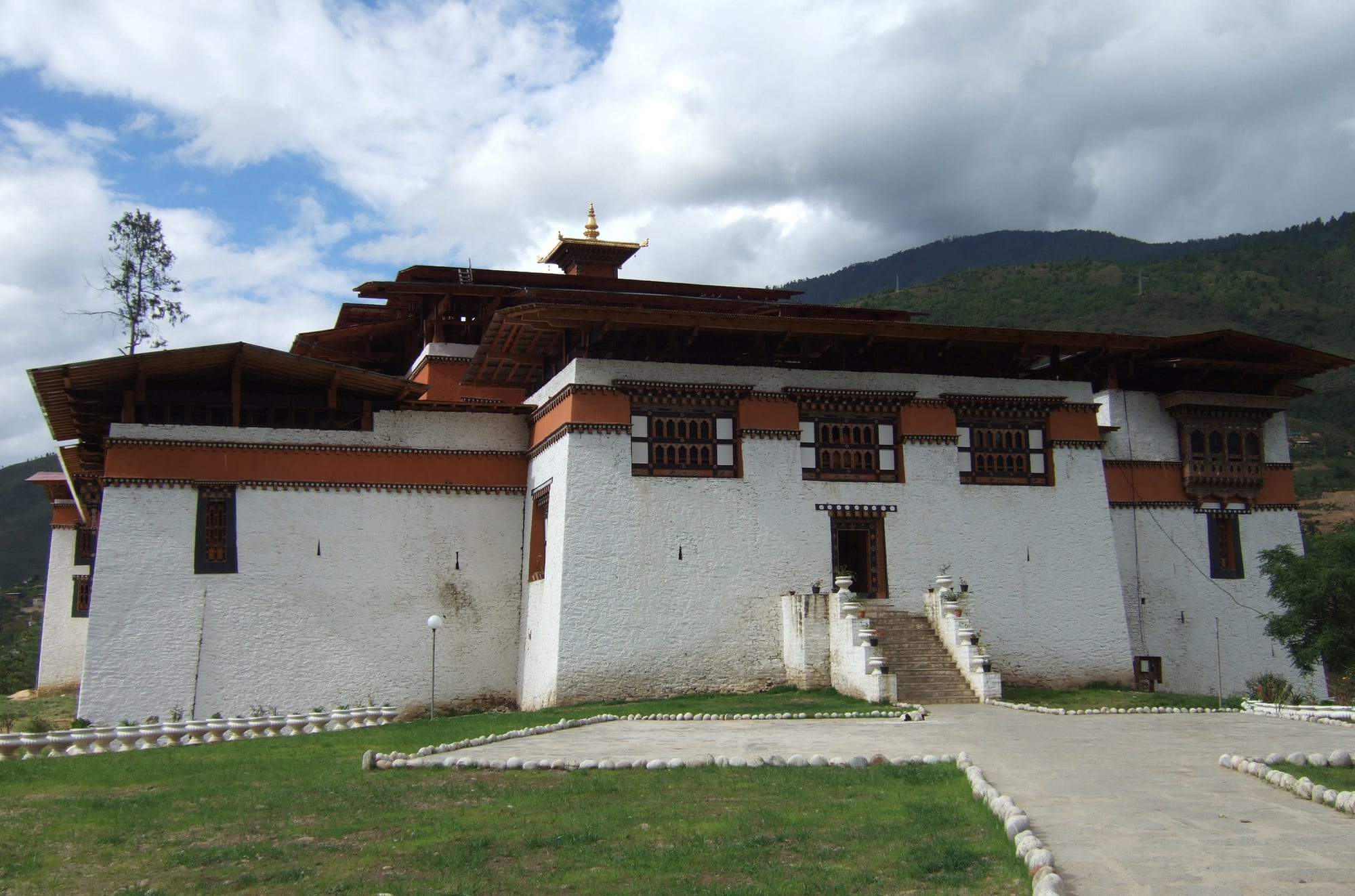
After the Zhabdrung's death — kept secret for decades — the dual system decayed into two centuries of civil war among regional governors, the penlops.
The birth of the monarchy
In the 19th century Bhutan collided with the expanding British Empire over the fertile southern strip called the Duars. The war of 1864–65 ended with Bhutan ceding the Duars to British India in return for an annual subsidy. Out of the internal power struggles that followed, one man emerged on top: Ugyen Wangchuck, the Penlop of Trongsa, who cultivated the British and helped mediate their 1904 expedition to Lhasa.
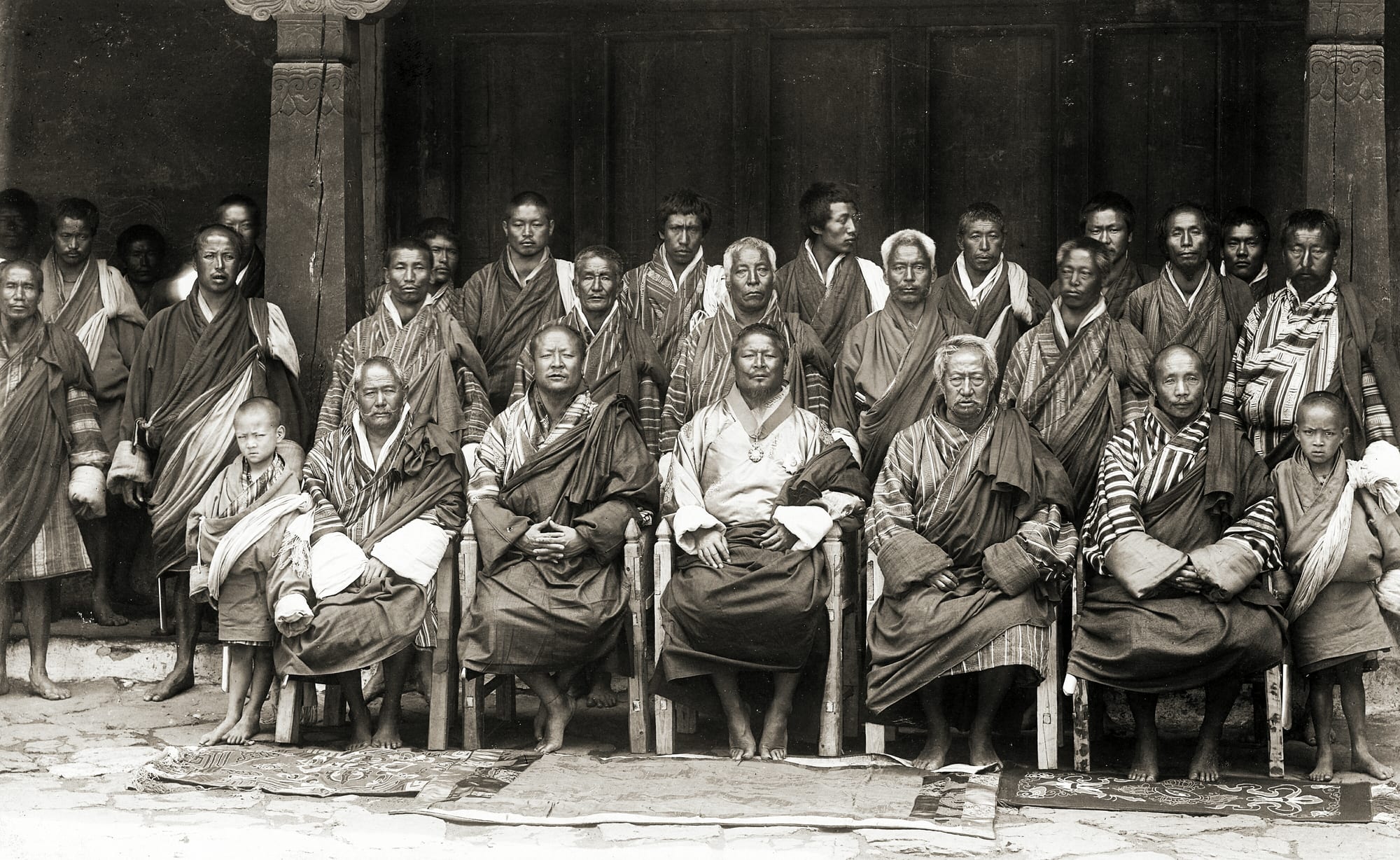
In 1907 an assembly of monks, officials and headmen chose Ugyen Wangchuck as the first hereditary Druk Gyalpo, King of Bhutan, ending the old dual government. A 1910 treaty put Bhutan's foreign relations under British "guidance" while guaranteeing that Britain would not meddle in its internal affairs — a formula that, transferred to India in 1949, kept Bhutan independent and closed.
Opening, carefully
Bhutan modernised slowly and from the top. The third king, from the 1950s, abolished serfdom, redistributed land, set up a national assembly and a court system, built the country's first roads and schools with Indian help, and took Bhutan into the United Nations in 1971. His son, the fourth king, crowned at 16 in 1974, framed the whole project around a phrase that became famous: Gross National Happiness — the idea that development should be measured by wellbeing, cultural continuity and a healthy environment, not by economic output alone. Bhutan protected that model with a deliberately restrictive tourism policy and by delaying television and the internet until 1999.
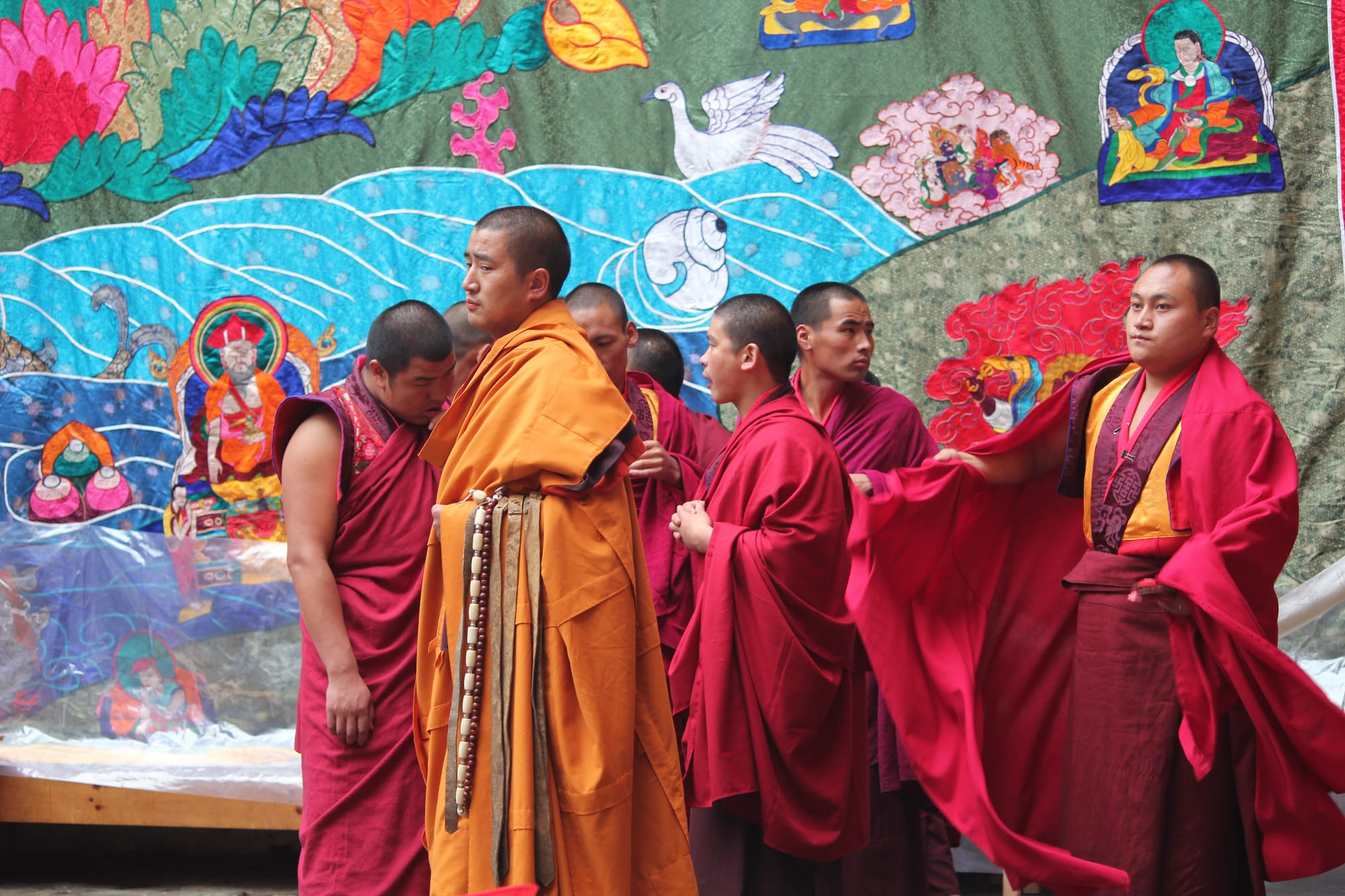
The preservation policy had a harsh side. In the late 1980s the government, anxious about the growing ethnic-Nepali population of the southern lowlands, enforced a "One Nation, One People" campaign — compulsory national dress and the Dzongkha language, and a citizenship law applied retroactively. In the early 1990s roughly 100,000 Lhotshampa, about a sixth of Bhutan's people, were expelled or fled to refugee camps in Nepal; most were eventually resettled to the West. The expulsion has never been reversed.
Democracy from the throne
The fourth king then did something rare: he gave power away. He devolved executive authority to an elected cabinet in 1998, commissioned a written constitution, and abdicated in 2006 in favour of his son. Bhutan held its first national elections in 2007–08 and adopted the constitution in July 2008, becoming a democratic constitutional monarchy — a change urged by the king on a population that was, in places, reluctant to see the monarchy step back.
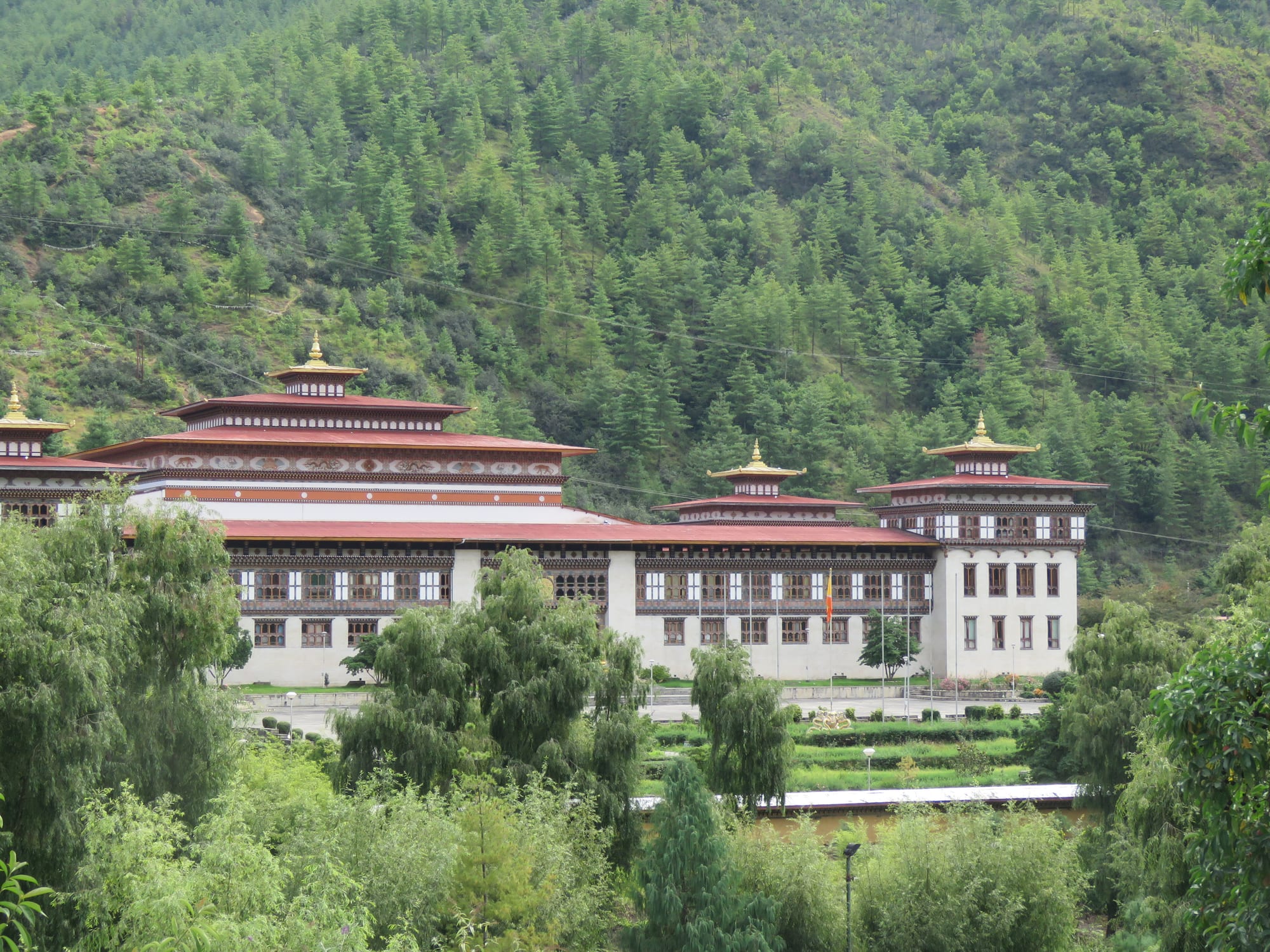
Elections since have produced peaceful changes of government. Bhutan's economy runs mainly on selling hydroelectricity to India, on carefully limited tourism, and on Indian aid; its forests, constitutionally protected, make it one of the few carbon-negative countries. It still has no relations with any of the big powers on the UN Security Council and an unsettled border with China.
What Bhutan keeps
Bhutan's through-line is control. A lama built it as a fortress state to keep Tibet out; the kings kept it closed to keep the empire, and then the modern world, at a manageable distance; and the transition to democracy was managed from the throne rather than forced from below. The result is a country that has preserved an unusual amount of its culture and its forests — and that carries, mostly unspoken, the cost of the population it decided did not belong.