Daily Life · Bahrain
Bahrain: The Weekend That Crosses the Causeway
A country small enough to cross in about an hour, where roughly half the people living there are foreign nationals, and where the working week ends with a tide of cars over a bridge to Saudi Arabia
By Worldlore Editorial · 30 September 2026
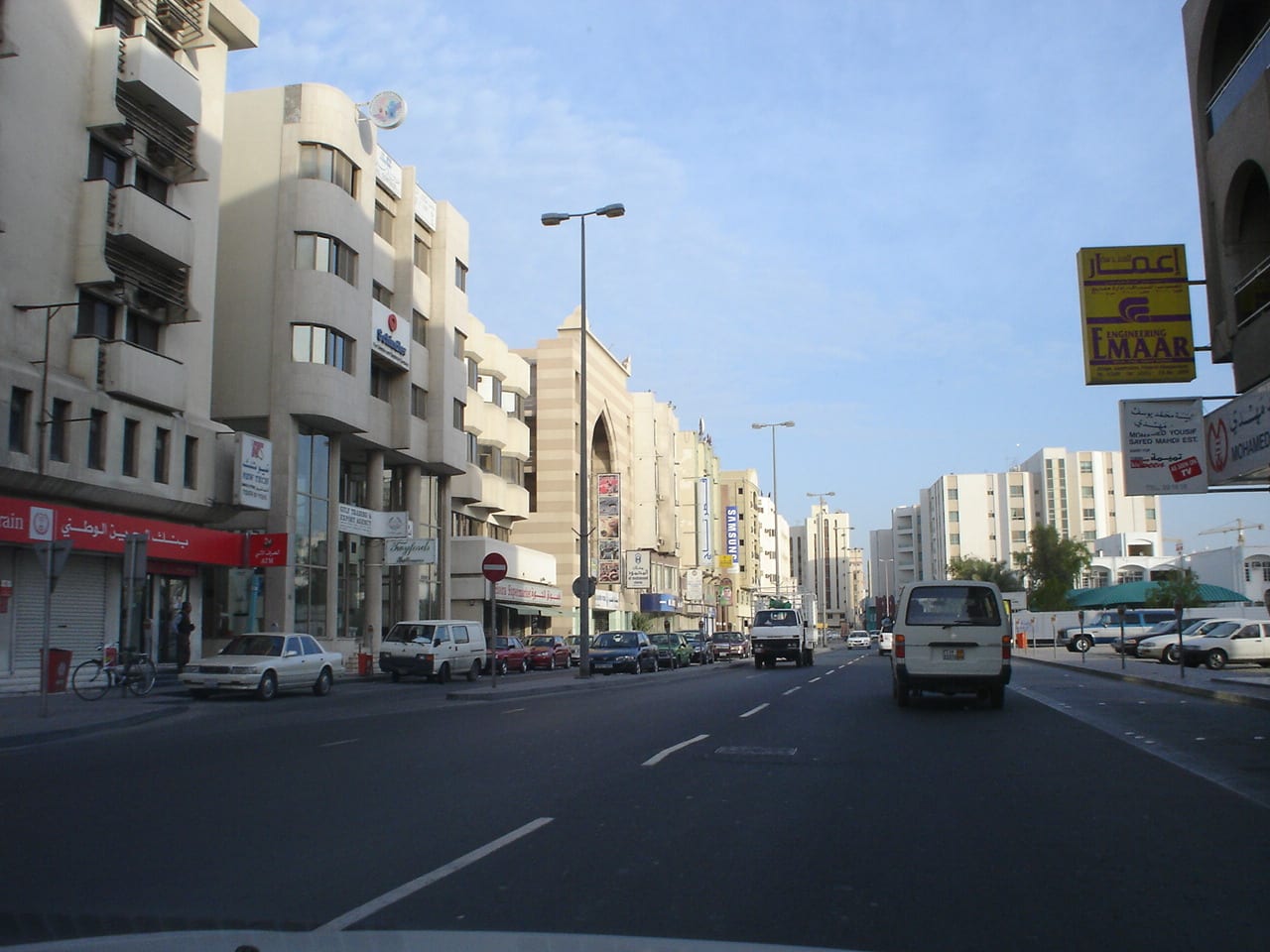
Bahrain is small enough that a car can cross the entire country, north to south, in about an hour, and dense enough that almost everyone lives within that same short stretch of island rather than spread across it. Roughly half of the people going about an ordinary day here are foreign nationals, most of them from South Asia, alongside Filipinos, other Arabs, Britons and Americans, and that mix shows up everywhere, in the languages heard on the street, the food courts, and the mosques, churches and temples within a few minutes of one another. The working week runs Sunday to Thursday, so by Wednesday evening the talk has usually turned to the weekend, and for a great many households that means a drive across the causeway to Saudi Arabia rather than a day spent entirely at home.
Family and home life
Households vary enormously by nationality and income. Bahraini families commonly live as extended households, with parents, children and often a grandparent under one roof, and adult children frequently stay in or near the family home even after marriage, with rooms added on rather than a move elsewhere. Employing a live-in domestic worker, often a woman from the Philippines, India or Sri Lanka, to help with childcare and housework is common enough among Bahraini families to be considered ordinary rather than a luxury. Lower-wage migrant labourers live very differently, mostly apart from family altogether in dormitory-style labour accommodation shared with co-workers; conditions in this housing have drawn repeated criticism from human rights researchers over overcrowding and poor upkeep.
Work, school and the rhythm of the day
Bahrain's weekend moved from Thursday-Friday to Friday-Saturday in 2006, the pattern most of the Gulf now follows. Government offices generally open early in the morning and close in the early-to-mid afternoon, while private businesses and shops keep longer, more varied hours, often staying open into the evening. Summer reshapes the day nationwide: outdoor labourers are legally barred from working between noon and four in the afternoon during the hottest summer months, and many people who can shift their own schedule do so, running errands early or after dark rather than in the midday heat. During Ramadan, working hours are shortened by law, and daytime opening hours for cafés and restaurants shrink or disappear entirely.
Community life and public spaces
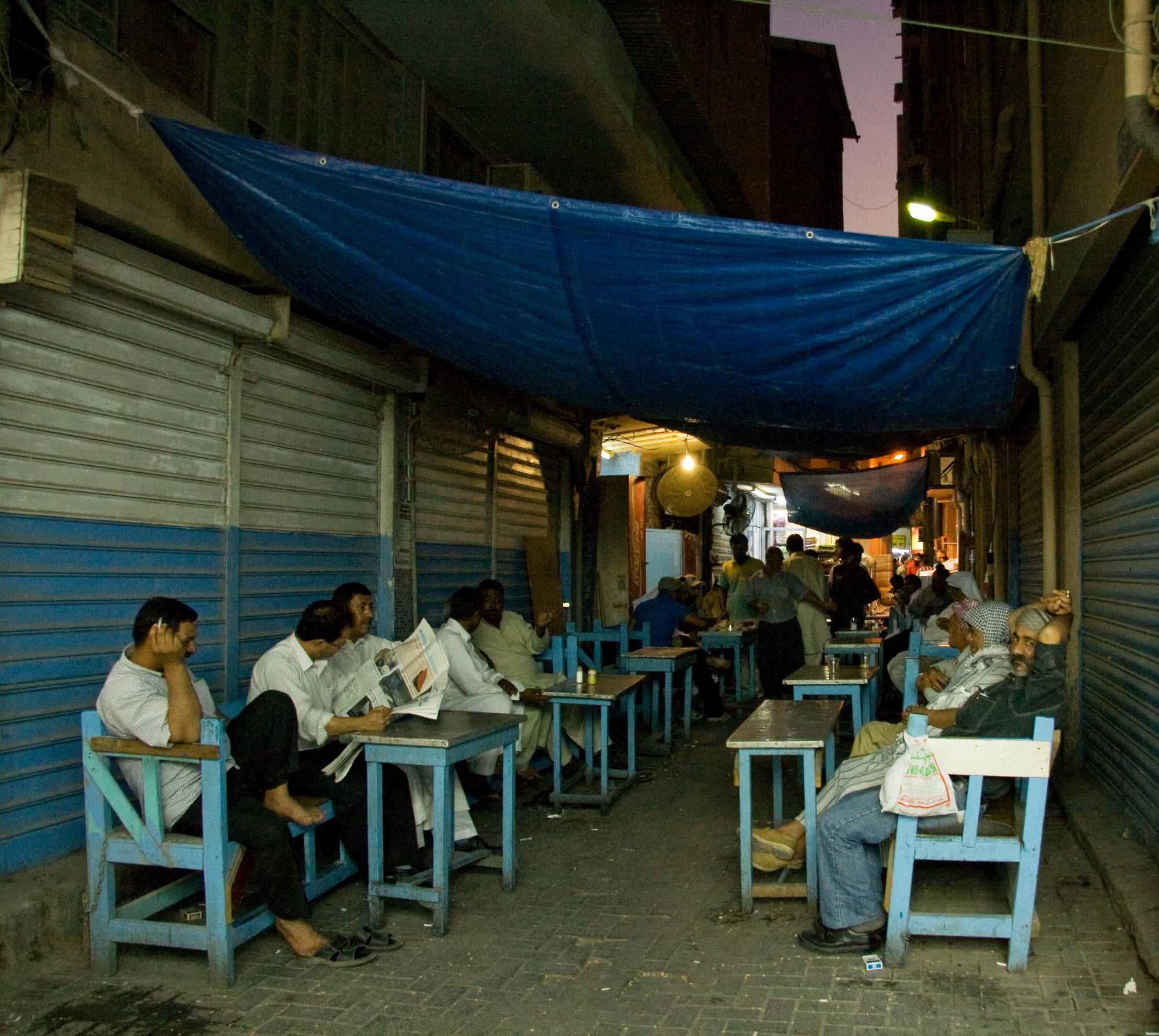
Small, informal cafeterias, more than any single civic square, are where a great deal of ordinary public life happens, especially the countless stalls selling karak, a strong, sweet, cardamom-spiced milk tea with South Asian roots that has become an everyday habit across the whole population, sold morning and night from stools and plastic chairs set out on the pavement. The old Manama souq, entered through the Bab al-Bahrain gateway, still functions as a working market for cloth, spices and gold rather than existing purely for visitors, and its narrow lanes and shopfront cafés remain a genuine daily gathering point. Air-conditioned shopping malls serve much the same social function for a good part of the year, when the heat outdoors makes them the more practical place to meet.
Free time and weekends
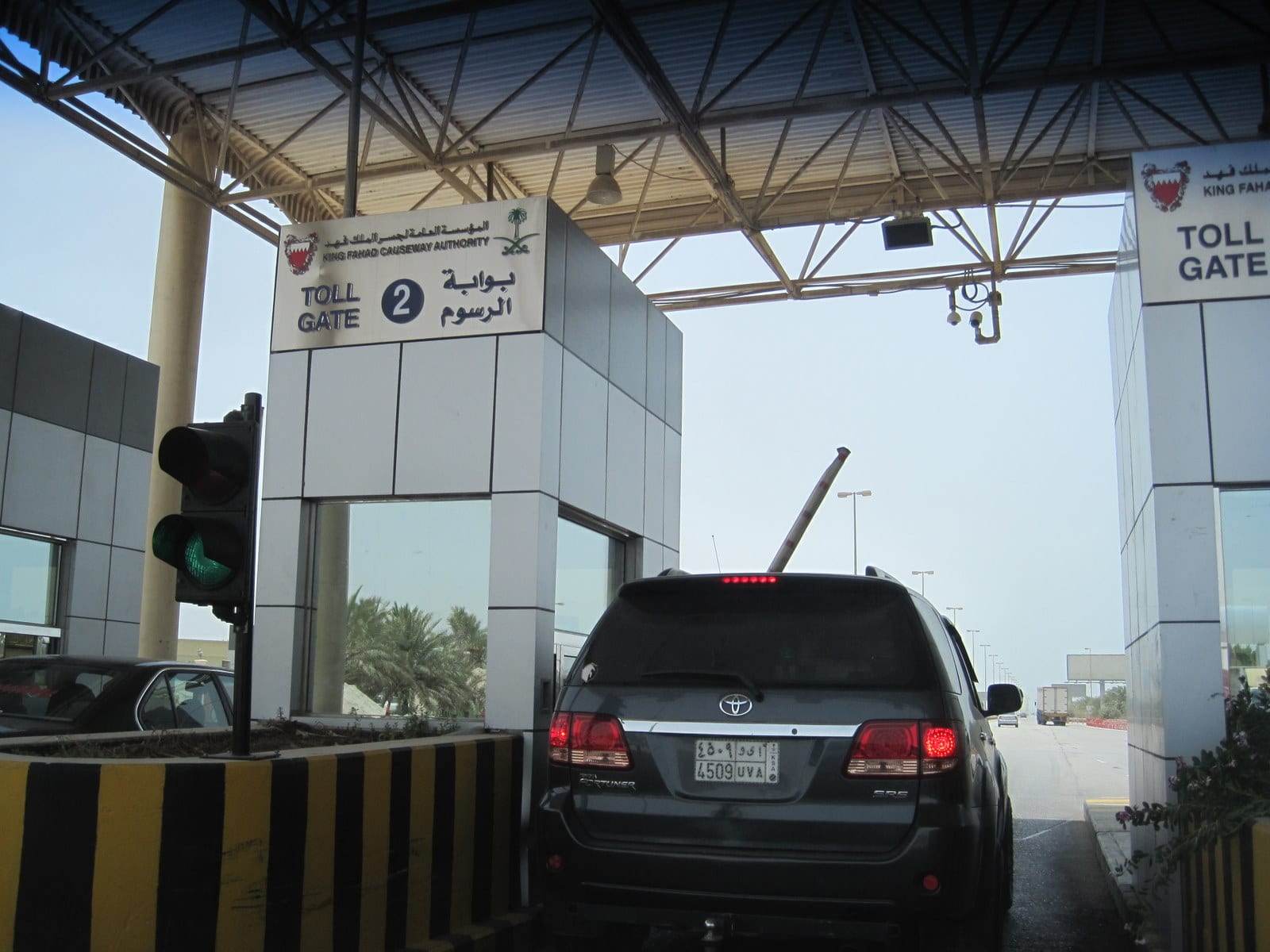
With Saturday as the second day of the weekend, families often use it for a slower start before an afternoon at a mall, the waterfront corniche, or one of the public parks that make up much of Manama's green space, and football is followed closely, in stadiums and cafés alike. For a great many Bahraini and Saudi families, the weekend also means the causeway: Bahrainis cross into Saudi Arabia for shopping and eating out, while Saudi families come the other way for restaurants, cinemas and a more relaxed public atmosphere than at home, and on the busiest days crossings have topped 100,000 travellers.
A visitor's ordinary day
Bahrain runs mostly on cards, though small cafeterias and karak stalls often expect cash, so it is worth keeping some on hand in fils and dinars, one of the highest-valued currencies in the world. There is no passenger rail, and while a public bus network covers Manama, Muharraq and the main towns, most residents drive, and most visitors get around by metered taxi or a ride-hailing app instead. Shops and souqs generally open by mid-morning and stay open into the evening most days, though hours shorten and daytime food service can disappear entirely during Ramadan. Given how small the country is, day trips rarely take more than half an hour each way, and it is worth checking the causeway queue before travelling on a Thursday or Friday, when it is at its longest. Since February 2026 Bahrain has been drawn into the war between Iran and the United States and Israel, with Iranian strikes on its territory, so current official travel advice is worth checking before any trip.
What to take away
An ordinary day in Bahrain is shaped less by any single tradition than by scale and mixture: a country crossed in under an hour, home to roughly as many foreign residents as citizens, whose working week ends with a tide of traffic over a bridge to somewhere else entirely.