Culture & Customs · Bahrain
Bahrain: The Open Majlis
Doors thrown open on Ramadan nights, coffee that is never refused, songs first sung by pearl divers, and a Gulf society that pairs deep religious observance with a merchant's ease among strangers
By Worldlore Editorial · 30 September 2026
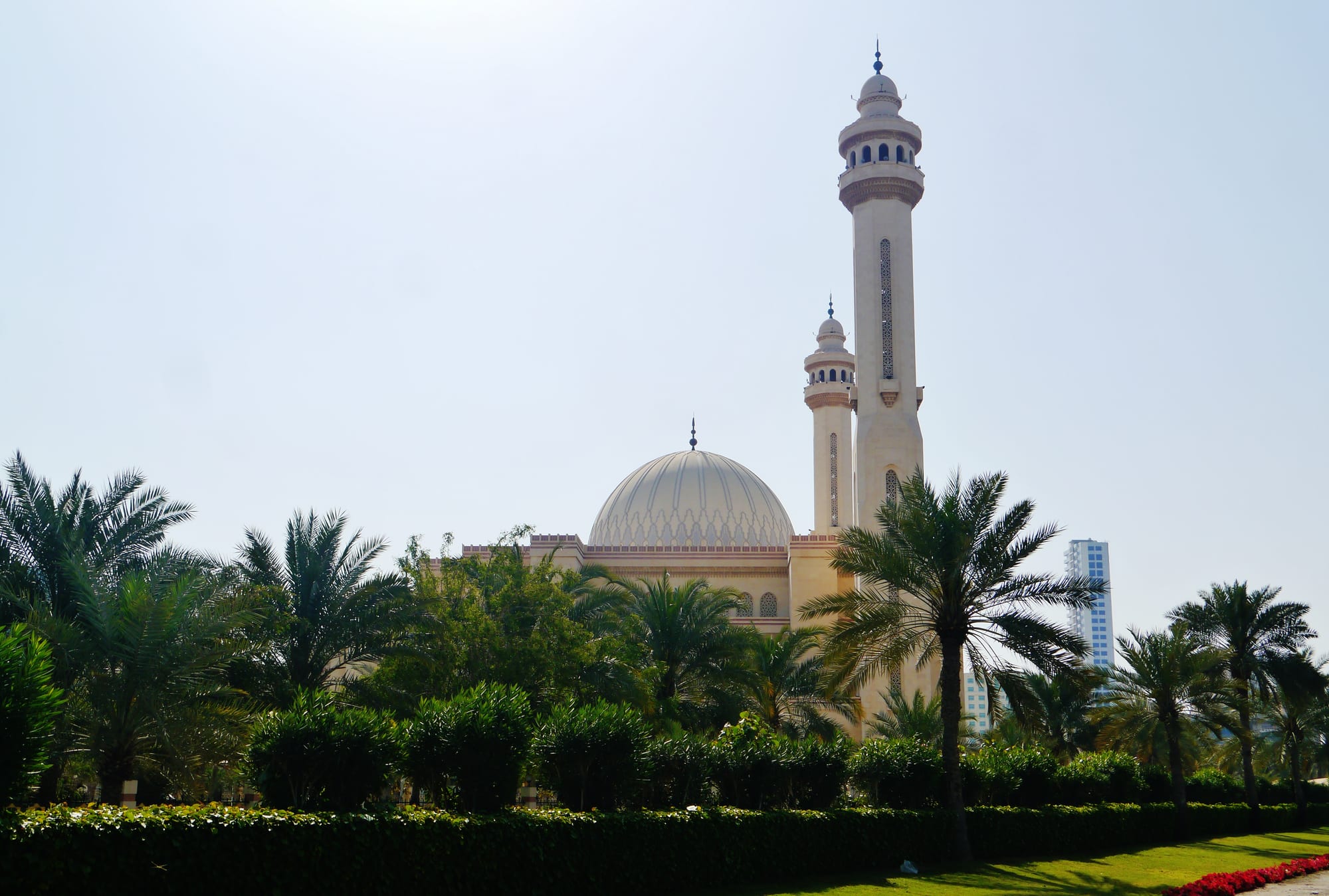
It is late on a Ramadan evening, after the last prayers of the night, and the door of a family majlis stands open onto the street. The reception room is lined with cushions or low sofas, and men arrive in ones and twos in white thobes, greeting the host with a handshake and a blessing before taking a seat along the wall. Coffee is poured into small cups, dates are passed round, and the talk moves easily from family news to business to the state of the world. Some of the visitors are neighbours, some are relatives, and some are simply people who have come to pay their respects, including, on occasion, government ministers and foreign diplomats. Throughout the holy month, homes across the country open their majlis in the same way. The scene captures a great deal about Bahrain: a society rooted in Islam and in family, where hospitality is a public duty and the exchange of visits is treated as part of what binds the country together.
Faith, identity and values
Islam is the state religion and the foundation of social life. At the 2010 census about 70 per cent of the total population, and almost all citizens, were Muslim, with Christians and Hindus, most of them foreign residents, making up the bulk of the rest. Bahraini Muslims belong to both the Shia and Sunni traditions; estimates of the balance between them vary and no recent census figures exist, and the relationship between the two communities has been a sensitive political question. The call to prayer sounds five times a day, devout Muslims pray at each of those times, and a host may politely break off a conversation or meeting to do so. Friday is the day of the main congregational prayer and the principal day of rest.
The Shia month of mourning for Imam Hussain, the Prophet's grandson, is one of the most visible religious seasons in the country. During Muharram, congregations gather in ma'tams, community halls devoted to the commemoration, large numbers of which are registered with the state. Black banners go up, food is shared out from roadside stands, and processions organised by the ma'tams pass through the streets, culminating on Ashura, the tenth day of the month. The ninth and tenth of Muharram are both public holidays, and the processions are coordinated each year between community organisers and the authorities.
Beneath religious observance lie values that shape everyday behaviour. Family networks are strong and influence everything from marriage to business. Politeness is highly prized: blunt statements are usually softened into something more balanced, and a direct "no" is often avoided in favour of a gentler, more indirect answer. Respect for elders and hosts is expected. Bahrainis also take quiet pride in the island's long history as a trading and pearling centre, which has left the country comparatively open-minded and at ease with foreigners by Gulf standards.
Greetings and meeting people
Greetings are warm and are not rushed. Among Muslims the customary greeting is as-salamu alaykum, "peace be upon you", answered with wa alaykum as-salam, "and upon you be peace", and the exchange is often followed by enquiries after health and family before any business is raised. Visitors who use the greeting are generally well received.
Handshakes are common between men. Between men and women, the rule is to follow the other person's lead: many Bahraini women prefer not to shake hands with men outside their family, and a man should wait for a woman to offer her hand rather than extending his own. People are addressed by title and first name, and business cards are exchanged at a first meeting. Meetings usually begin with sociable conversation rather than going straight to the matter at hand, and it is normal for them to be interrupted by calls or visitors.
The right hand is the one used for eating, and it is also the polite hand for greeting and for giving or receiving things. Traditional dress is widespread among Bahrainis, with men in the long white thobe and headcloth and women in the abaya, often with a headscarf, although foreign residents and visitors generally wear Western clothes.
Hospitality and being a guest
Hospitality is at the heart of Bahraini social life, and the offer of coffee or tea is its first gesture. Accepting it matters: the ritual of drinking together is how trust is built and how a conversation is properly begun, and refusing outright can seem cold.
When invited to a home, guests remove their shoes at the door, dress conservatively and bring a small, thoughtful gift; alcohol is not appropriate. Meals are usually served family-style and in generous quantities, and the host will keep offering more. Eating with the right hand is expected. Unlike in some cultures, leaving a little food on the plate is taken as a sign that the guest has been well fed, whereas a cleared plate may simply prompt another helping. Men and women often socialise separately, both in the home and at larger gatherings.
Ramadan brings hospitality to its peak. Families break the fast together at sunset, and later in the evening many open their majlis to visitors, while late-night gatherings known as ghabga, held between the evening meal and the pre-dawn one, bring friends and extended family together. Senior figures, including members of the royal family, make a point of touring the Ramadan majlises of ordinary citizens, and the custom is widely described as one of the things that holds Bahraini society together. For visitors, the most important rule of the month is legal as well as social: it is illegal for anyone, Muslim or not, citizen or visitor, to eat, drink or smoke in public during daylight hours, and those who break the law can face a fine or even imprisonment. Anyone who needs to eat during the day does so indoors and out of sight, and restaurants mostly close for dining in until sunset.
Festivals and life's big moments
The Islamic calendar sets the rhythm of the year, and because it follows the moon, its festivals move earlier by around eleven days each year. Ramadan is the most important month. In the middle of it, around the fifteenth night, children celebrate Gergaoon: dressed in their finest traditional clothes, girls in colourful embroidered dresses and gold jewellery and boys in thobes and caps, they go from door to door singing songs and are given sweets and nuts. The custom rewards children for fasting, and the treats, once dates, rice, wheat and sugar, are now mostly sweets.
Eid al-Fitr marks the end of Ramadan with new clothes, family visits and gifts for children. Eid al-Adha, the festival of sacrifice at the close of the Hajj, is the other great feast, and it is preceded by the children's Hiya Biya ritual by the sea. The civic calendar adds National Day on 16 December, a date chosen to mark the accession of the ruler in 1961, followed by Accession Day for the present king on 17 December. The two days are a public holiday, celebrated with flags, parades and fireworks.
Weddings are major family occasions, often celebrated separately by men and women, and henna plays a central part. Decorating the hands and feet of the bride with henna, accompanied by songs and chants among the women of the two families, is a long-standing custom before a wedding. Henna is also used at births and other festive moments, and its rituals are inscribed on UNESCO's list of intangible cultural heritage in the name of Bahrain and fifteen other Arab countries.
When someone dies, burial follows quickly in keeping with Islamic custom. The family then receives condolences, with men and women receiving visitors at separate venues, often a majlis, a ma'tam or a community hall, and the places and times are announced in newspaper notices. Visiting to offer condolences is an important obligation, and mourners dress soberly.
Arts, crafts and music
The best-loved musical tradition is fijiri, the song of the pearl divers. It grew up among the crews of the pearling boats, who expressed the hardships of long months at sea through song. A lead singer, the nahham, calls and a chorus of men answers, supported by handclaps, drums and a clay water pot used as a percussion instrument. Traditionally the men gathered to perform in a dar, a meeting house, between voyages. Fijiri is still performed by all-male groups, many of them descendants of pearling families, and is enjoyed by the whole community; it was inscribed on UNESCO's list of intangible cultural heritage in 2021.
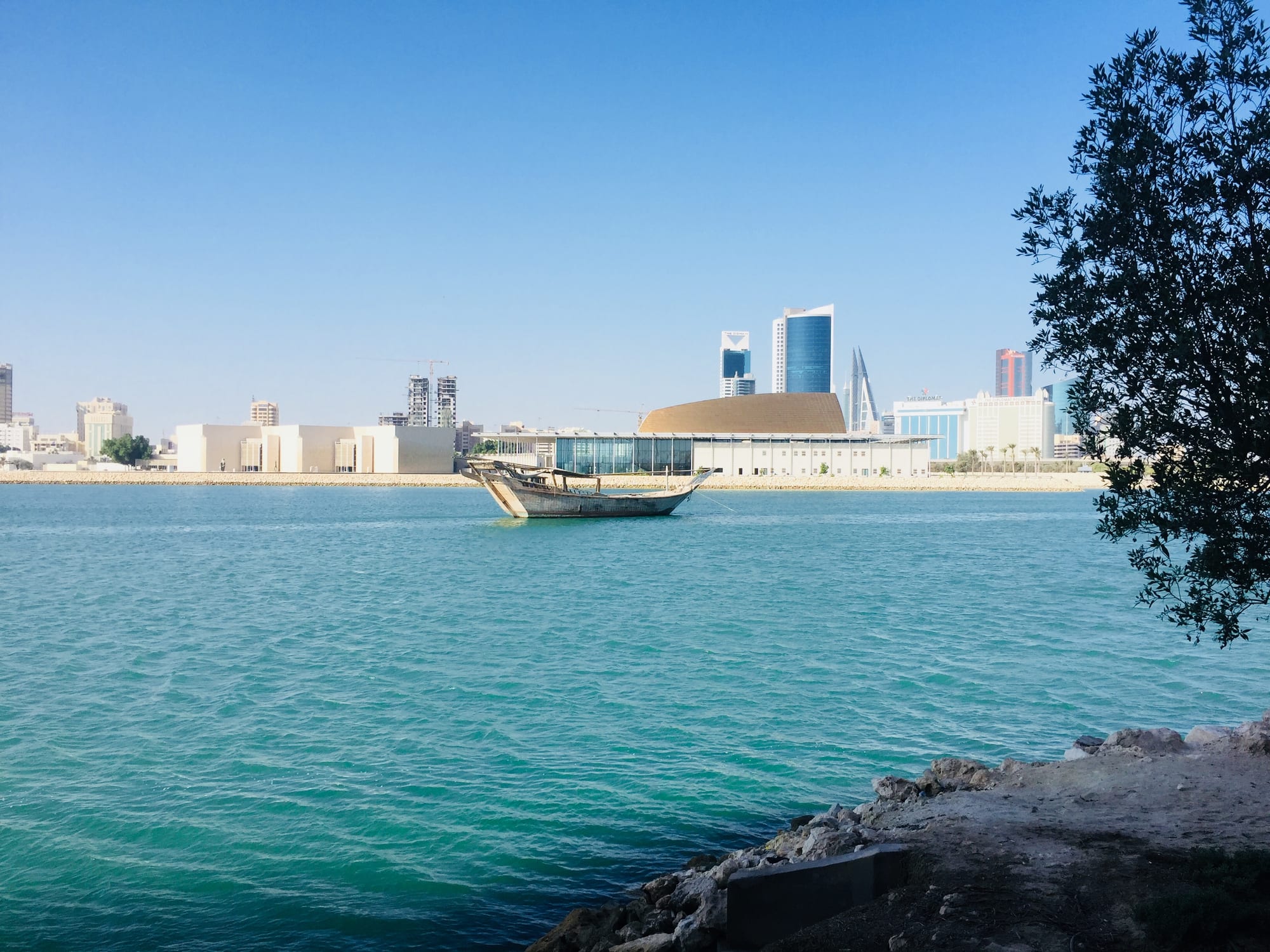
Several other living traditions are on UNESCO's list alongside fijiri and henna, shared with neighbouring Arab states: Arabic calligraphy, the knowledge and customs surrounding the date palm, and the skills of making the bisht, the fine cloak worn by men over the thobe on formal occasions. The bisht was listed jointly by nine Arab countries. Woven traditionally from wool, camel hair or goat hair, it is draped over the shoulders and wrapped across the chest in a way that leaves the right hand free for greeting, and wearing one is itself a mark of respect for an occasion.
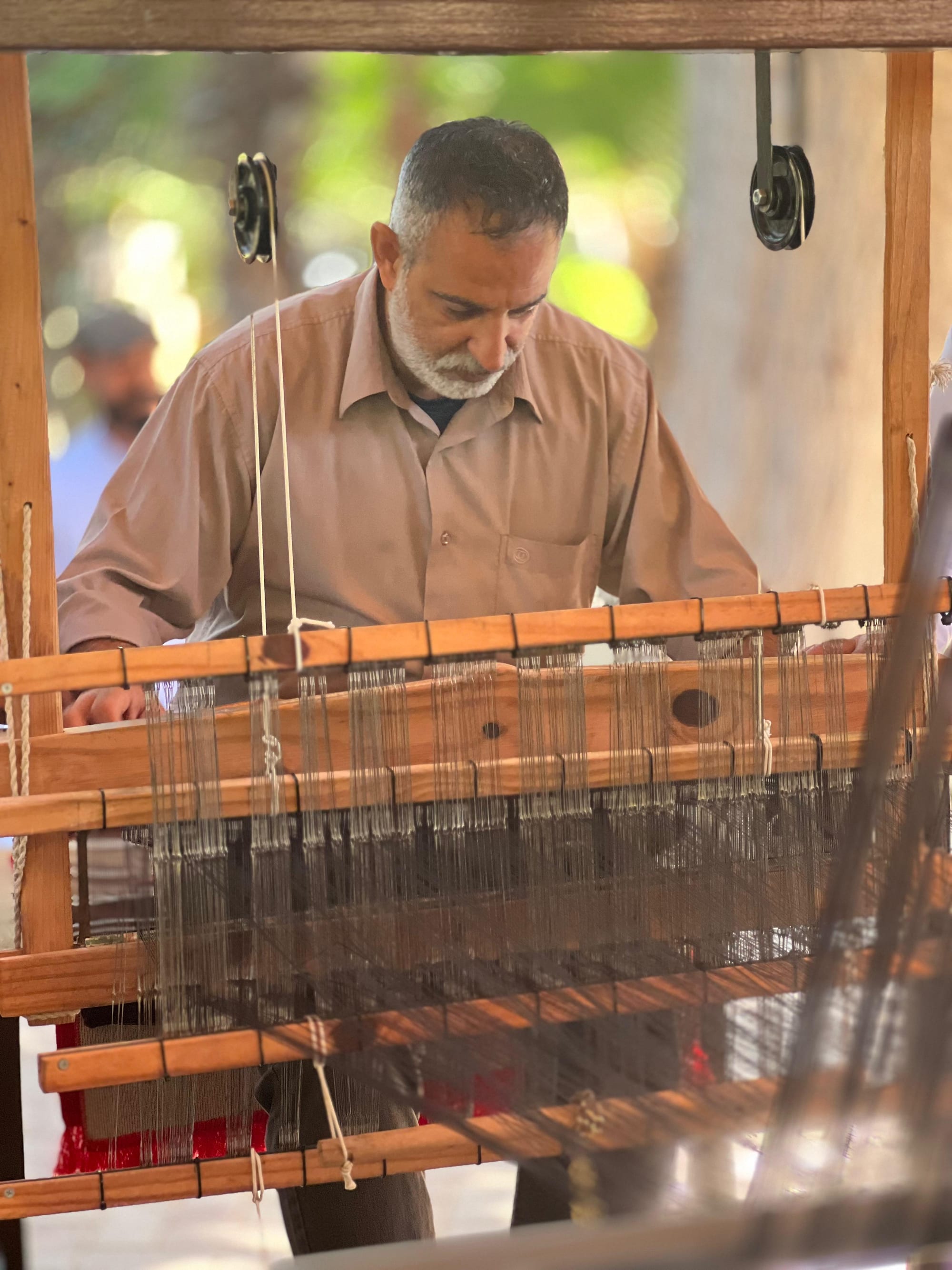
Crafts have deep roots. Pottery is thought to be the oldest, with origins traced back thousands of years to the Dilmun civilisation, whose clay vessels are displayed in the national museum. Hand-weaving of cloth on wooden looms has long been the speciality of particular villages, and the country's culture authority has set up workshops to keep it alive. Palm fronds from the country's date groves are woven into dining mats, storage baskets and hand fans, a craft still demonstrated at heritage centres.
Dos and don'ts for visitors
- Do check the latest government travel advice before travelling; since February 2026 Bahrain has been drawn into the war between Iran and the United States and Israel.
- Do accept coffee or tea when it is offered; refusing outright can seem unfriendly.
- Do use the right hand for eating, and for giving and receiving things.
- Do wait for a Bahraini woman to offer her hand before shaking it.
- Do remove shoes before entering a home or a mosque, and join a guided tour to visit a mosque as a non-Muslim.
- Do dress modestly away from beaches and hotel pools, especially at religious sites and during Ramadan; women visiting a mosque will be asked to cover up.
- Don't eat, drink or smoke in public during daylight hours in Ramadan; it is against the law for everyone.
- Don't bring alcohol as a gift.
- Don't expect a blunt "no"; disagreement is often expressed gently and indirectly.
What to take away
Bahraini customs revolve around faith, family and the welcome of the majlis, and a visitor who accepts the coffee, respects Ramadan and follows local cues on greetings and dress will find the hospitality as open as the doors on a Ramadan night.