History · Azerbaijan
Azerbaijan: The Land of Fire
Caucasian Albania, Persian and Turkic layers, the world's first oil boom, a partitioned nation, and two wars over Karabakh
By Worldlore Editorial · 19 September 2026
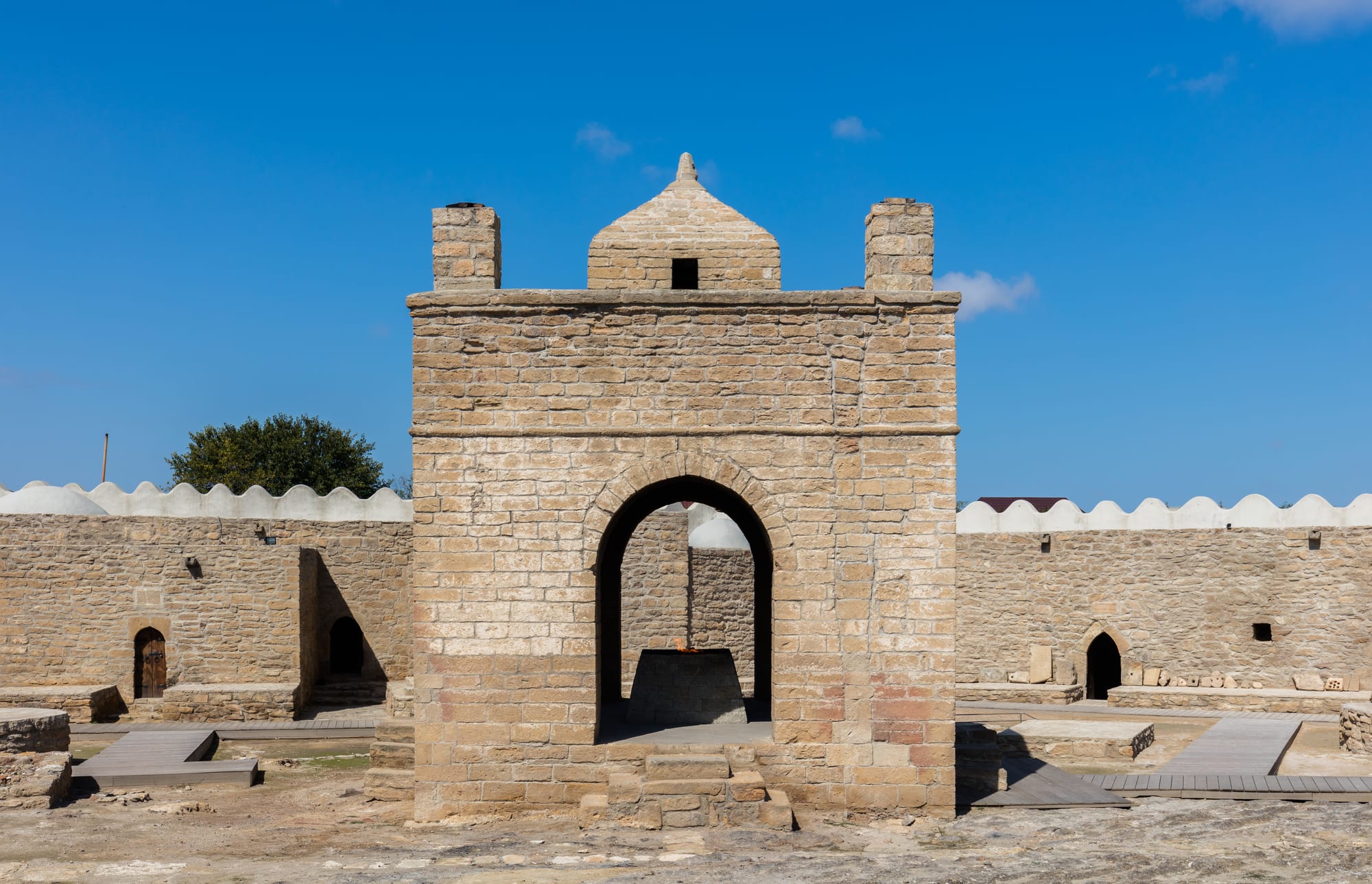
Fire, oil, and a divided nation
Azerbaijan sits on the western shore of the Caspian Sea, where the Caucasus mountains come down to the oilfields of the Absheron peninsula. Natural gas seeping from the ground here has burned in the open for thousands of years, and the same geology holds some of the oldest exploited petroleum on earth. Three other threads run through the country's history: a language and identity that are Turkic, laid over a Persian cultural and religious base; a long border dispute with Armenia over Nagorno-Karabakh; and the fact that the historic Azerbaijani homeland is split in two — the independent republic north of the Aras River, and a larger Azerbaijani-populated region south of it, inside Iran.
A short history
- 2nd c. BCE – 8th c. CE
Caucasian Albania
A Christian kingdom on the territory of modern Azerbaijan, later Islamised by the Arab conquest.
- 11th c.
The Turkic turn
Oghuz Turkic migration under the Seljuks shifts the region's language to Turkic.
- 9th c.–1538
The Shirvanshahs
A long-lived local dynasty rules from Shamakhi and Baku.
- 1501
The Safavids
A dynasty from Iranian Azerbaijan makes Shia Islam the religion of Persia.
- 1813 / 1828
Russian conquest
Treaties with Persia give the khanates north of the Aras to Russia.
- 1870s–1900s
The oil boom
Baku becomes, for a time, the source of about half the world's oil.
- 28 May 1918
The first republic
The Azerbaijan Democratic Republic — the first secular parliamentary republic in the Muslim world.
- 1920
Soviet rule
The Red Army takes Baku; Azerbaijan becomes a Soviet republic.
- 1988–1994
The first Karabakh war
Fighting with Armenia ends with Armenian forces holding Nagorno-Karabakh.
- 2020 / 2023
Karabakh retaken
Azerbaijan recovers the territory; its Armenian population leaves.
Albania, Persia, and the Turkic turn
The first state on the territory of modern Azerbaijan was Caucasian Albania — no relation to the Balkan country — a kingdom that emerged before the Common Era, adopted Christianity in the 4th century, and had its own alphabet. The Arab conquests of the 7th and 8th centuries brought Islam, which spread gradually. The deeper cultural layer, though, was Persian: this region was part of successive Iranian empires, and its cities were centres of Persian-language poetry and learning. That changed linguistically in the 11th century, when Oghuz Turkic tribes migrated in under the Seljuks and the population came, over generations, to speak a Turkic language — today's Azerbaijani.
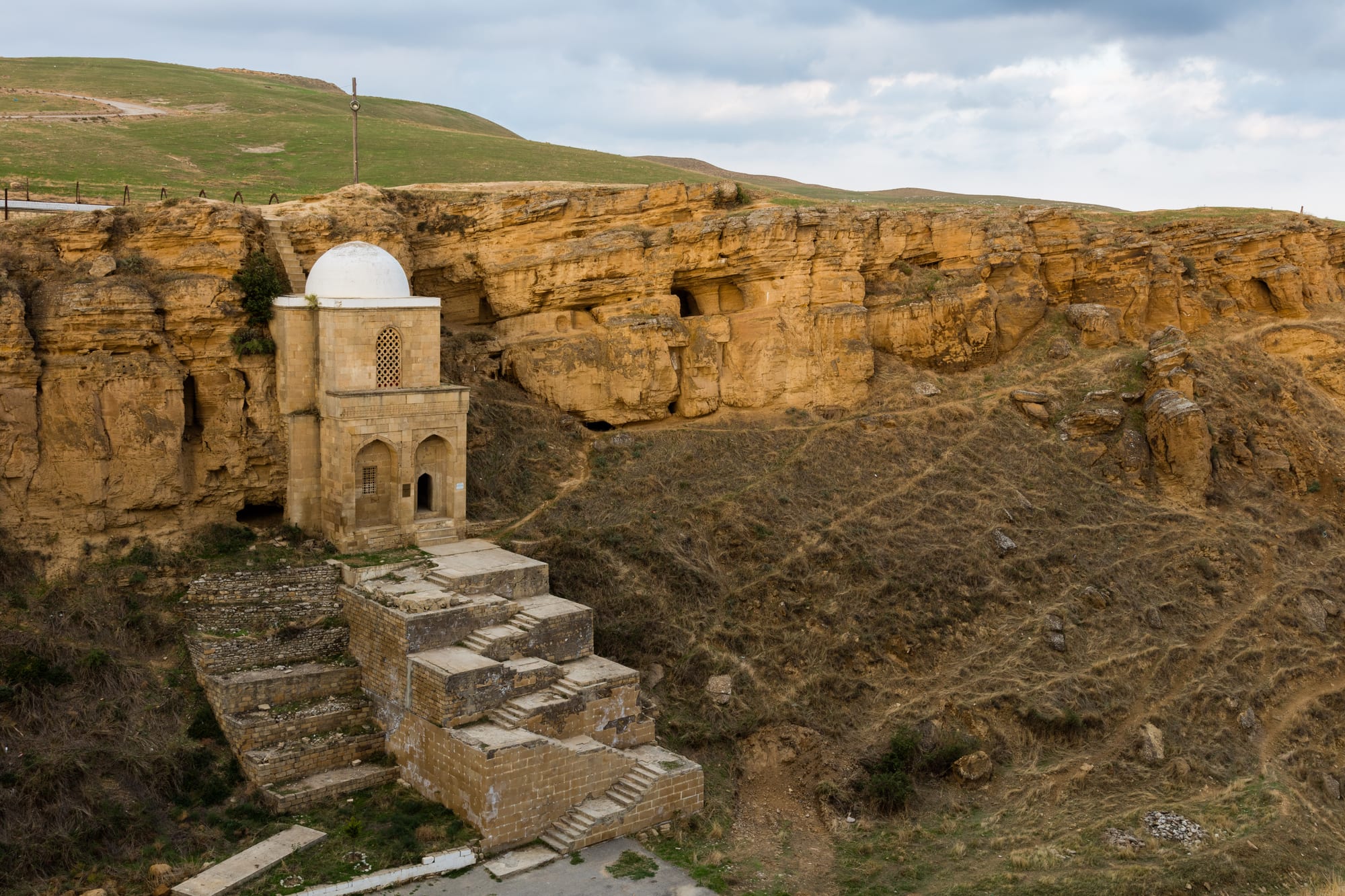
Local dynasties ran the region for long stretches, above all the Shirvanshahs, whose rule from Shamakhi and then Baku spanned roughly six centuries. In 1501 a dynasty from Iranian Azerbaijan, the Safavids, conquered Persia and made Twelver Shia Islam its state religion — which is why Azerbaijanis, like Iranians, are a mainly Shia people. When the Safavid state collapsed in the 18th century, the region broke into a patchwork of small khanates under loose Persian overlordship.
Partition and the oil boom
Russia took the region by force in two wars with Persia. The treaties of Gulistan in 1813 and Turkmenchay in 1828 drew the border along the Aras River: the khanates to the north — Baku, Ganja, Karabakh and the rest — became Russian, while the land to the south stayed Persian. That line still divides the Azerbaijani people between two states.
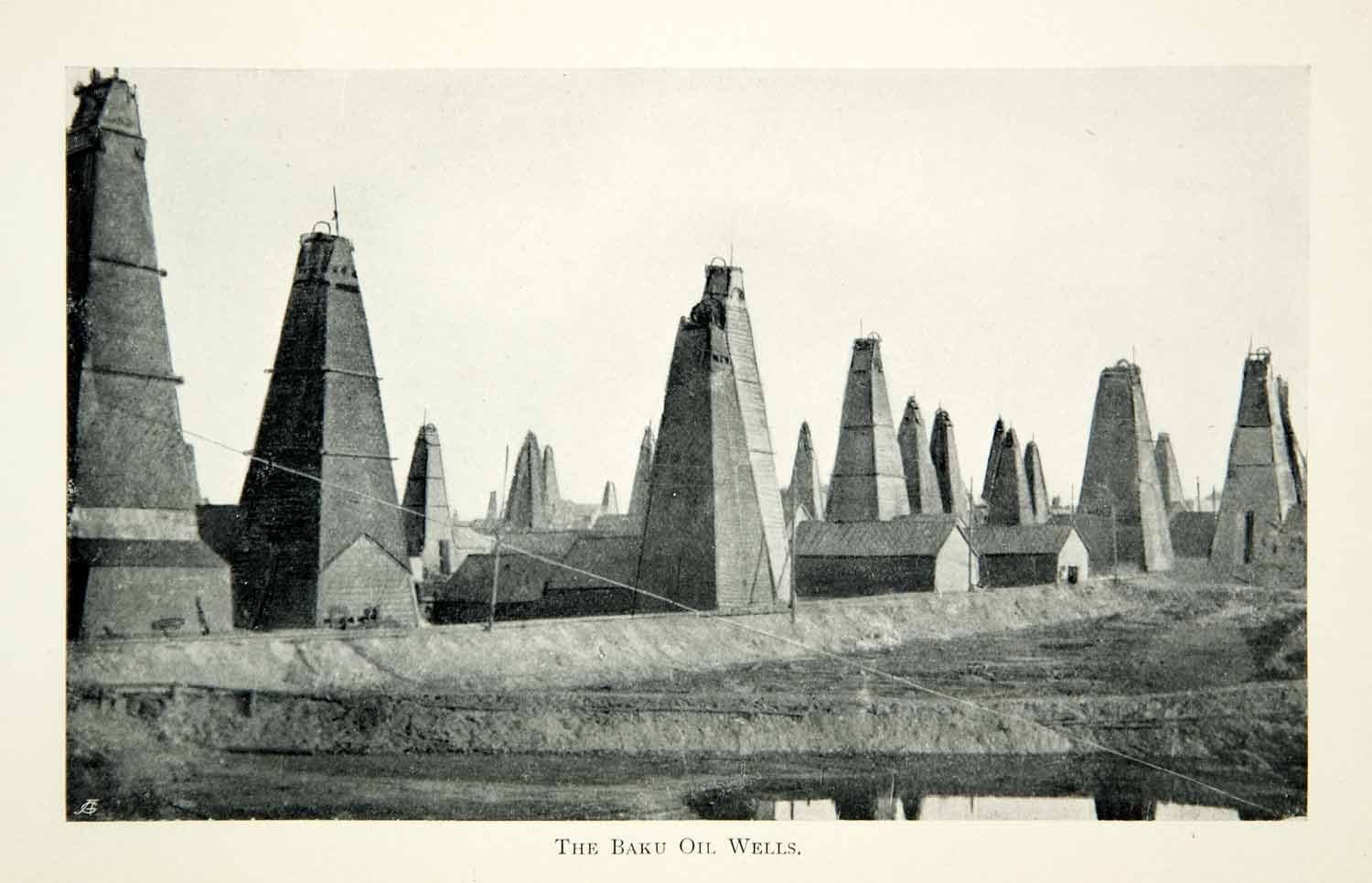
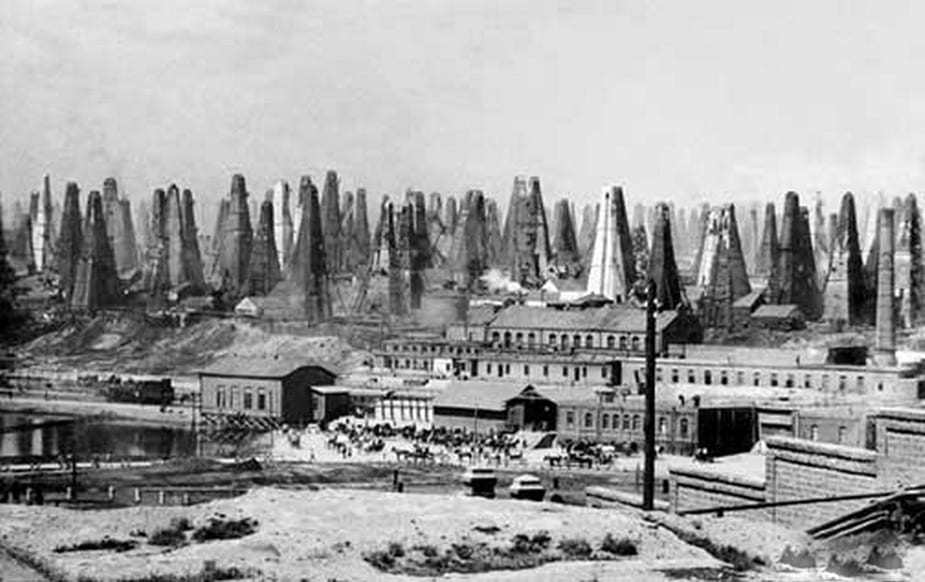
Under Russian rule, Baku became one of the boom towns of the industrial age. Oil had been collected around the city for centuries, but after the Russian government ended its monopoly in 1872 the field was opened to private capital, and money poured in — the Nobel brothers, the Rothschilds, Armenian and Azerbaijani magnates. By 1900 the Baku region was producing roughly half the world's oil. The city swelled into a polluted, fabulously unequal, multi-ethnic place, a hotbed of strikes and revolutionary politics, and the scene of savage Armenian–Azerbaijani massacres in 1905 and 1918.
Baku's first oil age
The first republic, and the Soviet century
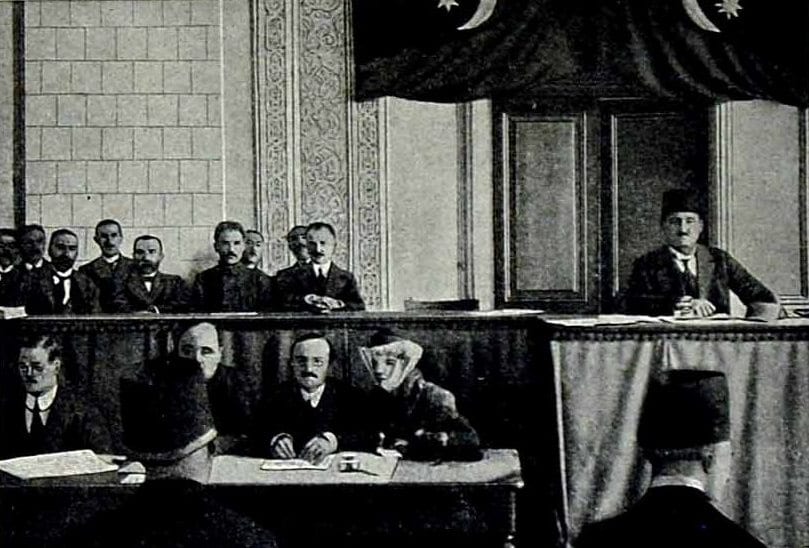
As the Russian Empire collapsed, Azerbaijani leaders proclaimed the Azerbaijan Democratic Republic on 28 May 1918 — the first secular, parliamentary republic in the Muslim world, and one that gave women the vote before Britain or the United States did. It lasted 23 months. In April 1920 the Red Army rolled into Baku, and Azerbaijan became a Soviet republic.
Soviet Baku's oil fuelled the USSR and was a prime target of Hitler's 1942 offensive, which never reached it. Within the republic, Soviet planners made the mainly Armenian district of Nagorno-Karabakh an autonomous region in 1923 — a decision that would detonate 65 years later. Late Soviet Azerbaijan was run for a time by Heydar Aliyev, a former KGB general who became the republic's Communist Party boss and then a member of the Politburo in Moscow.
Black January and independence
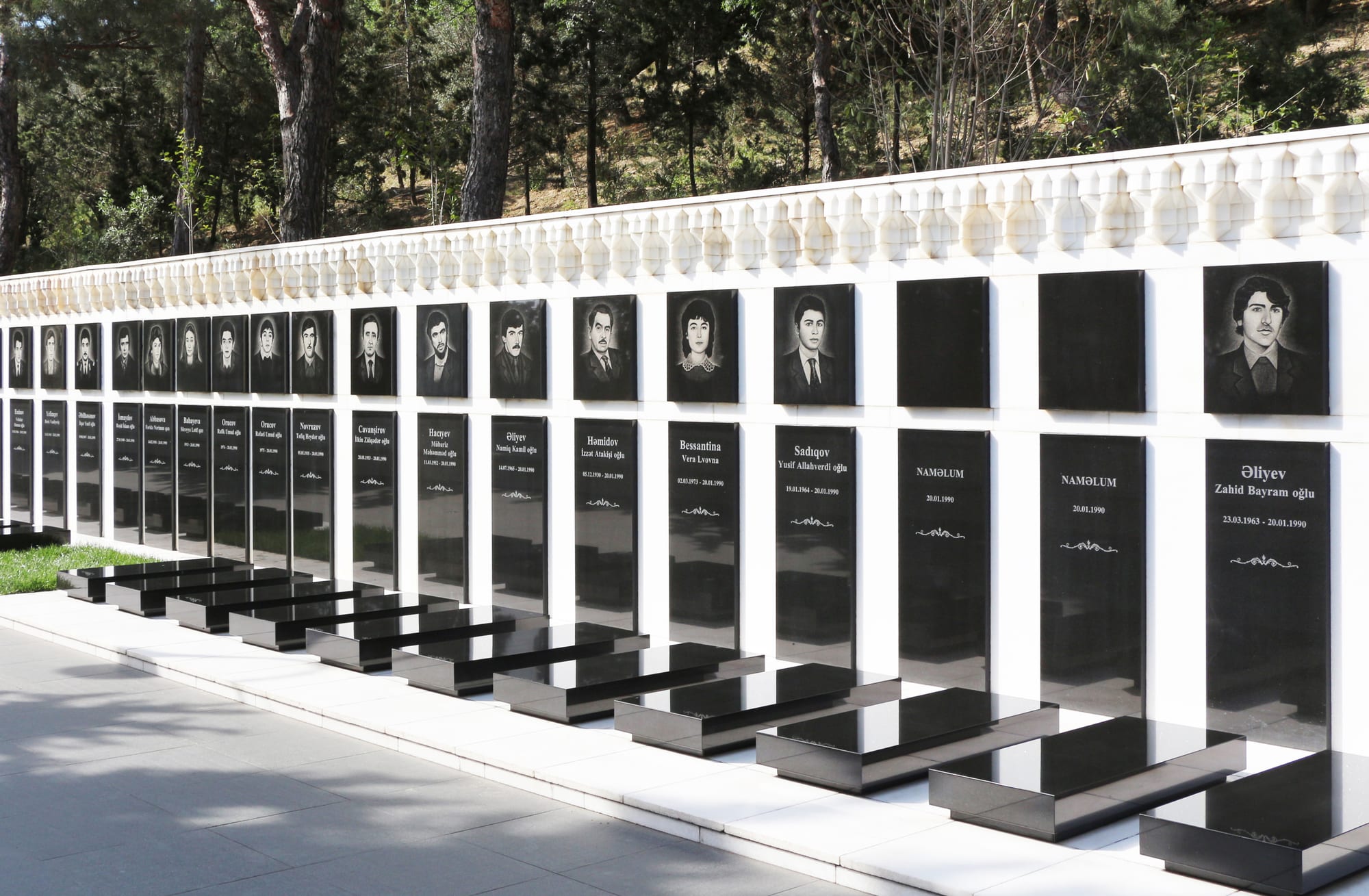
The Karabakh dispute reignited in February 1988, when the region's assembly voted to join Armenia. Anti-Armenian pogroms followed in the Azerbaijani towns of Sumgait and then Baku, a mass nationalist movement rose against Moscow, and on 19–20 January 1990 Soviet troops stormed Baku and killed well over a hundred civilians to crush it. "Black January" ended whatever loyalty to the Soviet Union remained.
Azerbaijan declared independence in 1991 into a losing war. The first Nagorno-Karabakh war, from 1992 to 1994, ended with Armenian forces holding the enclave and a wide belt of surrounding Azerbaijani land — about a seventh of the country — and around 700,000 Azerbaijanis driven from their homes. Amid the military collapse, Heydar Aliyev returned to power in 1993.
The oil state
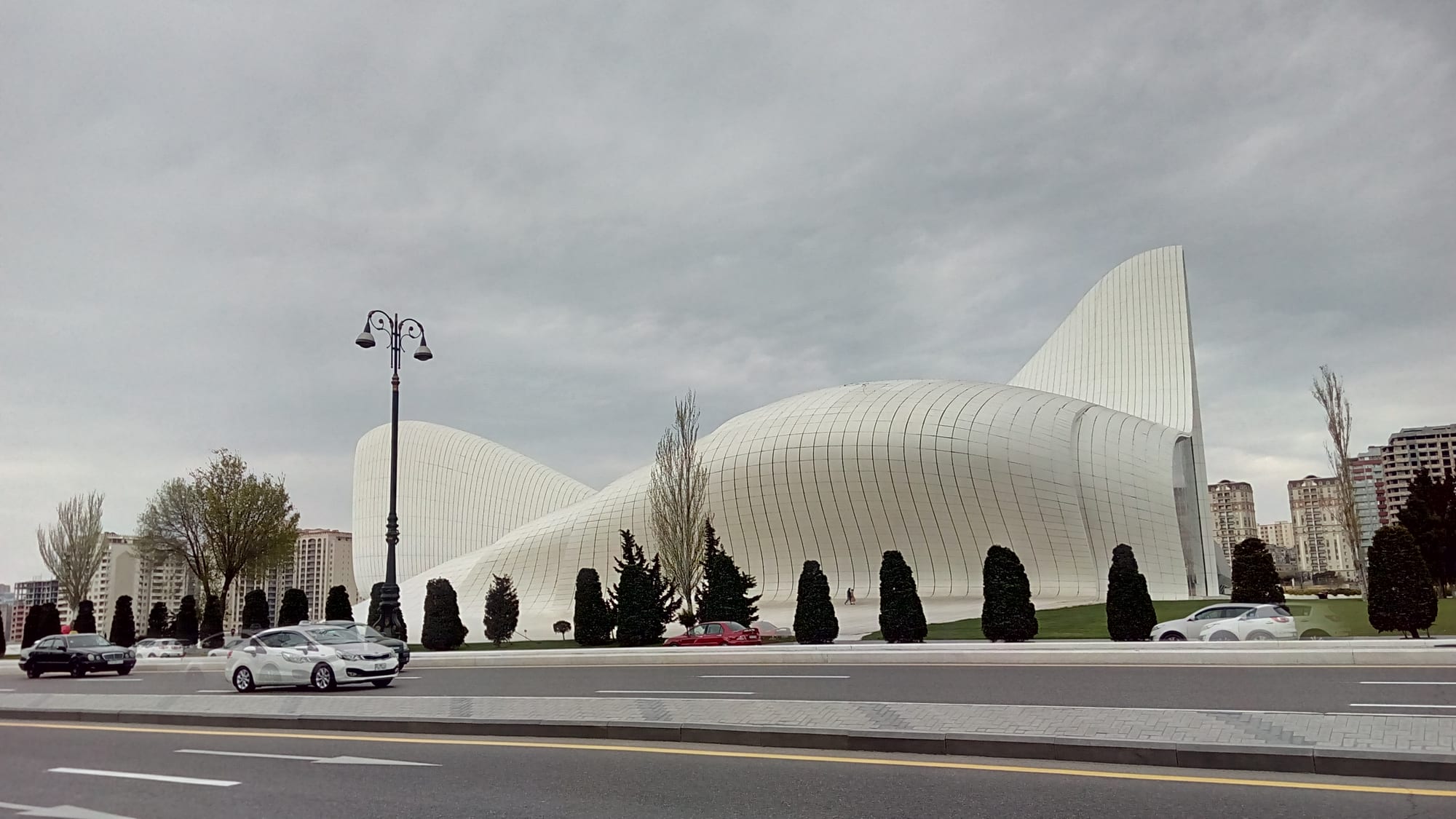
Aliyev's government signed a 1994 deal — the "Contract of the Century" — opening the Caspian's offshore fields to Western companies, and built pipelines westward through Georgia to carry the oil and gas to Turkey and Europe, bypassing both Russia and Iran. When Heydar Aliyev died in 2003 he was succeeded by his son, Ilham, who has ruled ever since through elections that observers do not consider free, removing term limits and making his wife vice-president. Petroleum revenue paid for a glittering rebuilding of Baku and for a large modern army, while independent media and opposition were shut down.
That military settled the Karabakh question by force. In a 44-day war in the autumn of 2020, Azerbaijan — backed by Turkey and using drones to devastating effect — retook the surrounding districts and much of Nagorno-Karabakh itself. Three years later, in September 2023, a one-day offensive ended the enclave: its entire Armenian population, more than 100,000 people, left for Armenia, and the self-declared republic there dissolved. After 35 years, Azerbaijan controls all of the territory again.
What Azerbaijan carries
Azerbaijan's identity is a compound — Turkic speech, Persian and Shia religious culture, a Caucasian setting, a Soviet institutional inheritance — and its modern politics have been shaped above all by two things: the oil under Baku, which has funded the state and its rulers since the 19th century, and the long struggle over Karabakh, which the country has now won on the battlefield. The other half of the Azerbaijani nation, across the river in Iran, remains where the treaties of the 1820s left it.