Daily Life · Azerbaijan
Azerbaijan: Life Poured in Small Glasses of Tea
A secular, oil-funded capital of glass towers, a countryside still paced by the harvest, and a pear-shaped glass of black tea that punctuates almost every hour of the day
By Worldlore Editorial · 30 September 2026
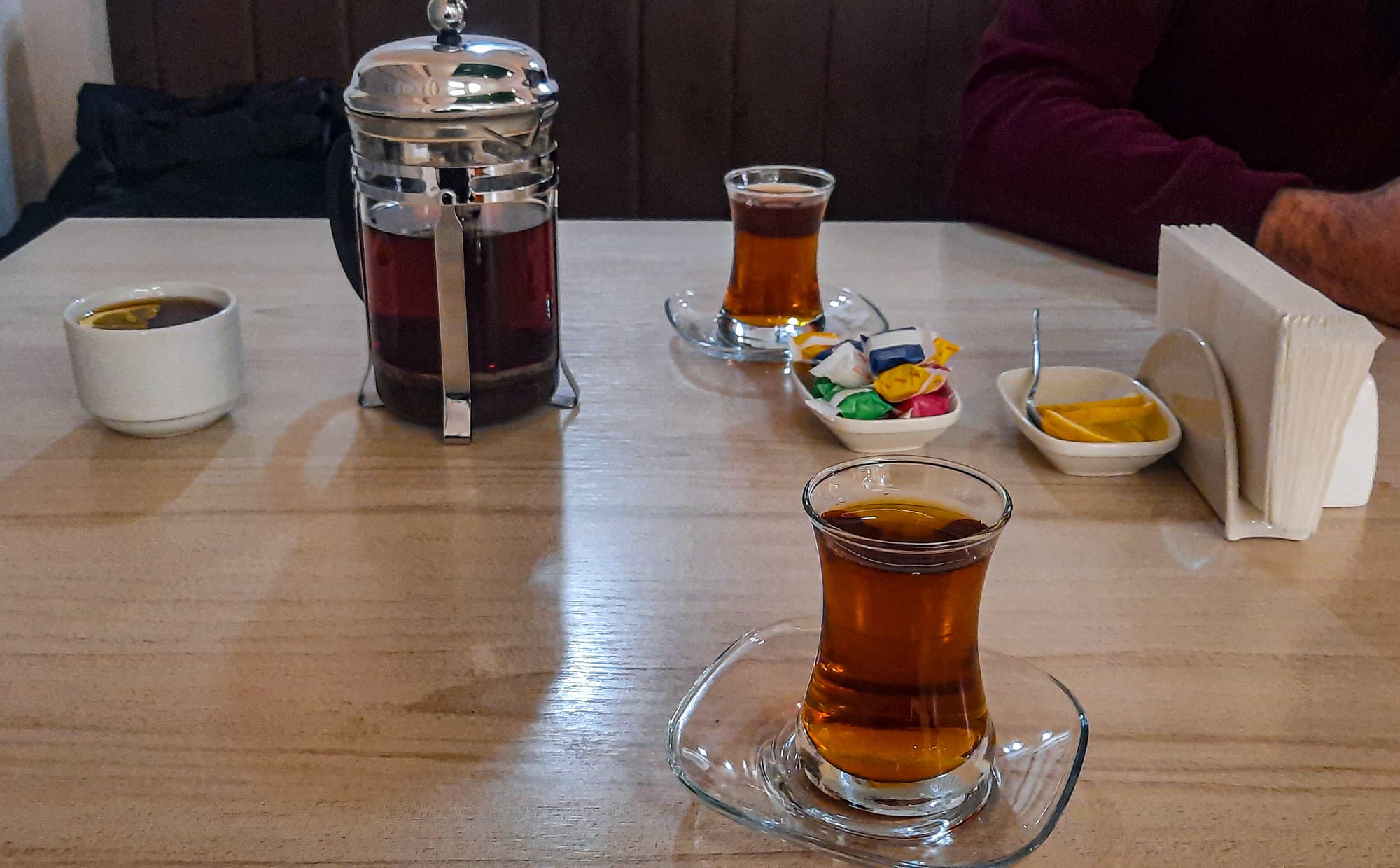
An ordinary day in Azerbaijan rarely goes far without tea. It appears at the start of a workday, after a meal, between errands and at the close of an evening, almost always black, traditionally in a small, pear-shaped glass called an armudu, and usually alongside sugar, lemon, jam or a plate of sweets. Around that one constant, the country runs two rather different lives: a secular, fast-modernising Baku, built on oil and gas wealth and dense with new glass towers, and a slower countryside of farming villages in the Caucasus foothills and along the Caspian plain, where the day still follows the rhythm of the harvest more than the office clock.
Family and home life
Extended family ties remain strong nationwide, and it is still common for several generations to live under one roof or within easy reach of one another, particularly outside Baku. Some households also rely in part on money sent home by relatives working abroad. Inside Baku itself, housing ranges from restored oil-boom mansions and Soviet-era apartment blocks to a newer skyline of high-rise flats, and the wealth generated by the country's energy exports is unevenly spread between the capital and the regions. Outside the city, households are more likely to keep livestock, grow vegetables and fruit, or farm wheat and barley, depending on the region.
Work, school and the rhythm of the day
Azerbaijani labour law sets a standard working day of eight hours and a working week of 40 hours, with Saturday and Sunday as the usual days of rest. In practice, office hours in Baku typically run from around nine to six, while small shops, market stalls and teahouses keep far longer and looser hours than any office. Away from the capital, the working day bends to the season: planting and harvest in the farming regions, while Baku itself fills up around set-piece events such as its Formula One street race.
Community life and public spaces
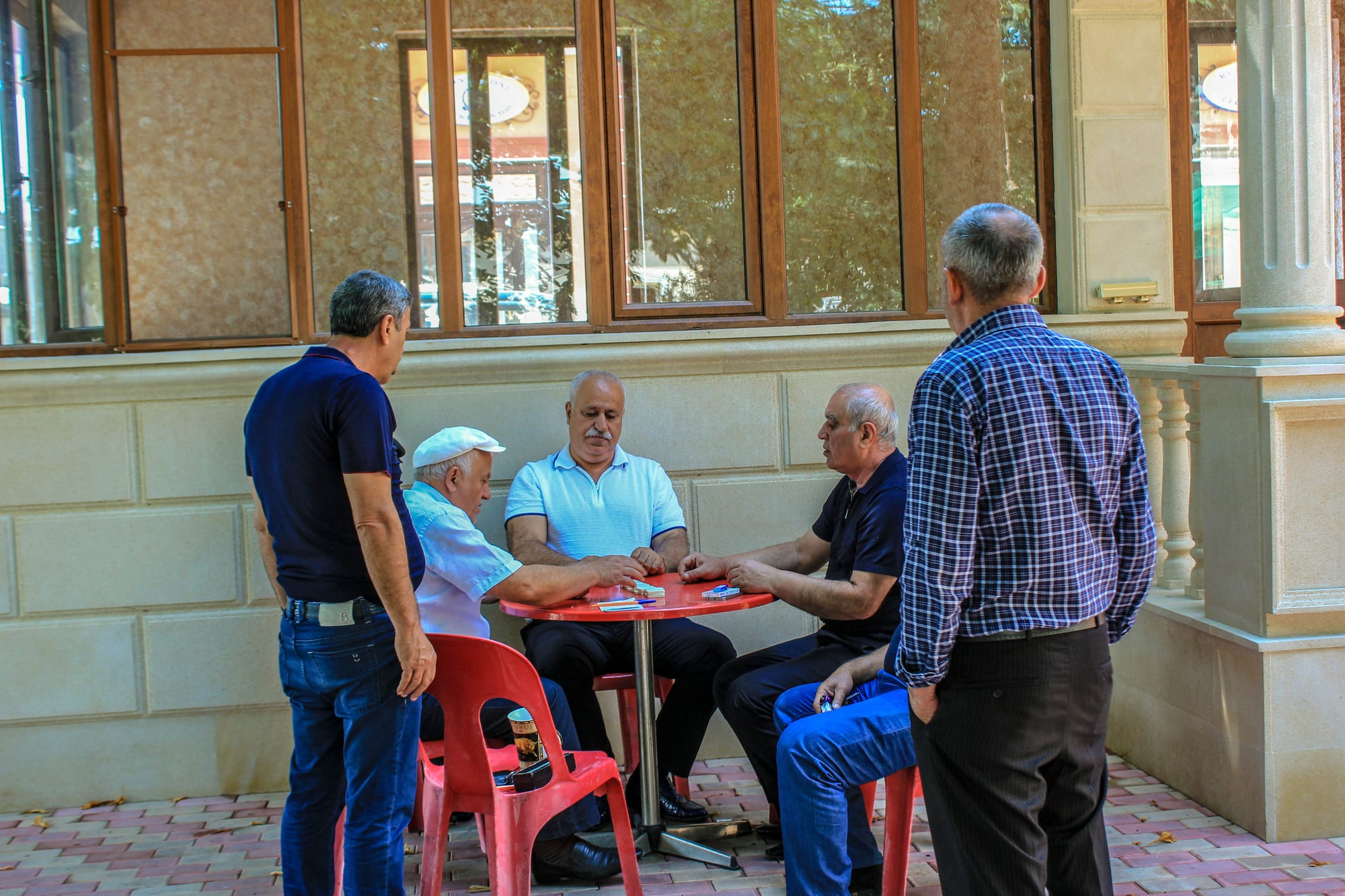
The çayxana, or teahouse, is the country's real social institution, found in some form in every town, where tea, backgammon and conversation have historically been the main draw, more traditionally a space used by men than women. Markets and bazaars remain central to daily shopping outside the big supermarket chains that have grown in Baku, and the capital's walkable Old City and seafront boulevard function as shared public space for residents rather than only a tourist attraction. Baku's metro, opened in the Soviet era and still expanding, carries a large share of the capital's daily commute.
Free time and weekends
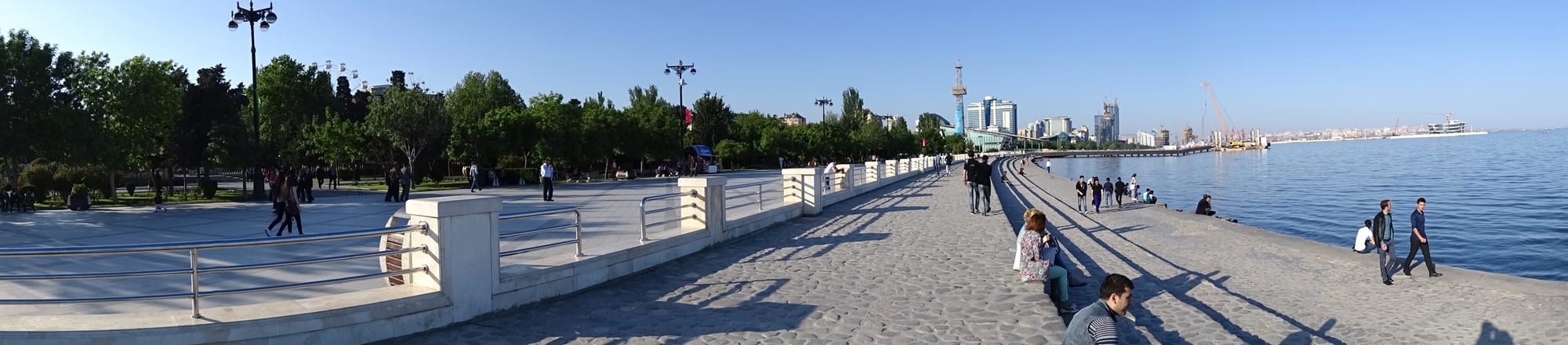
With Saturday and Sunday as the shared days off, weekends bring family visits, long unhurried meals and, in Baku, walks along the seafront boulevard that runs along much of the city's Caspian shore. The boulevard functions as the capital's default outdoor gathering place, drawing families, couples and groups of friends out in the evening once the heat of the day has eased. Novruz, the ancient spring new year festival marked with bonfires and sprouted wheat, or samani, is one of the biggest shared celebrations of the year, with five days off work, and draws heavy public participation nationwide.
A visitor's ordinary day
Cards work reliably in Baku but cash is still needed in the regions, in teahouses and for shared taxis, and the local manat can be hard to obtain outside the country, so exchange after arrival. The metro and city buses cover Baku well and are cheap, while intercity travel outside the capital relies largely on buses and shared taxis, alongside a limited rail network. Expect teahouses to be open long hours every day, unlike offices and many shops, and expect the pace of daily life to slow noticeably once outside Baku and the other main towns.
What to take away
What defines an ordinary day in Azerbaijan is less the divide between oil wealth and rural tradition than the one ritual that crosses it almost without exception: a glass of tea, offered and accepted, several times over, in almost any setting the day brings.