Food · Azerbaijan
Azerbaijan: Food and the National Dish
Saffron rice with a crackling golden crust, dozens of kinds of stuffed leaves, and tea served in a glass shaped to keep it at the right temperature
By Worldlore Editorial · 16 September 2026
Where the Caucasus meets Persia
Azerbaijan's food sits at a genuine crossroads: Turkic in language and much of its everyday cooking, but shaped just as strongly by centuries of Persian rule and by the shared culture of Iranian Azerbaijan just across the border. Saffron, dried fruit, fresh herbs eaten by the handful, rice, lamb and a deep tea-drinking culture all point south toward Persia, while the grilled meat and bread traditions point toward Turkey and the wider Caucasus. The result is fragrant rather than fiery, and built as much around rice as around bread.
The national dish: plov
Plov is Azerbaijan's rice pilaf, and it comes in more forms — by some counts, several dozen regional and festive versions — than almost any other dish in the region. What sets the Azerbaijani style apart from other Central Asian and Caucasus pilafs is technique: rice is parboiled and then steamed separately from its meat, fruit or herb filling, often with a layer of thin dough, lavash or butter at the bottom of the pot that turns golden and crisp — the prized gazmakh, or crust, dug out and served alongside the rice as a delicacy in its own right.
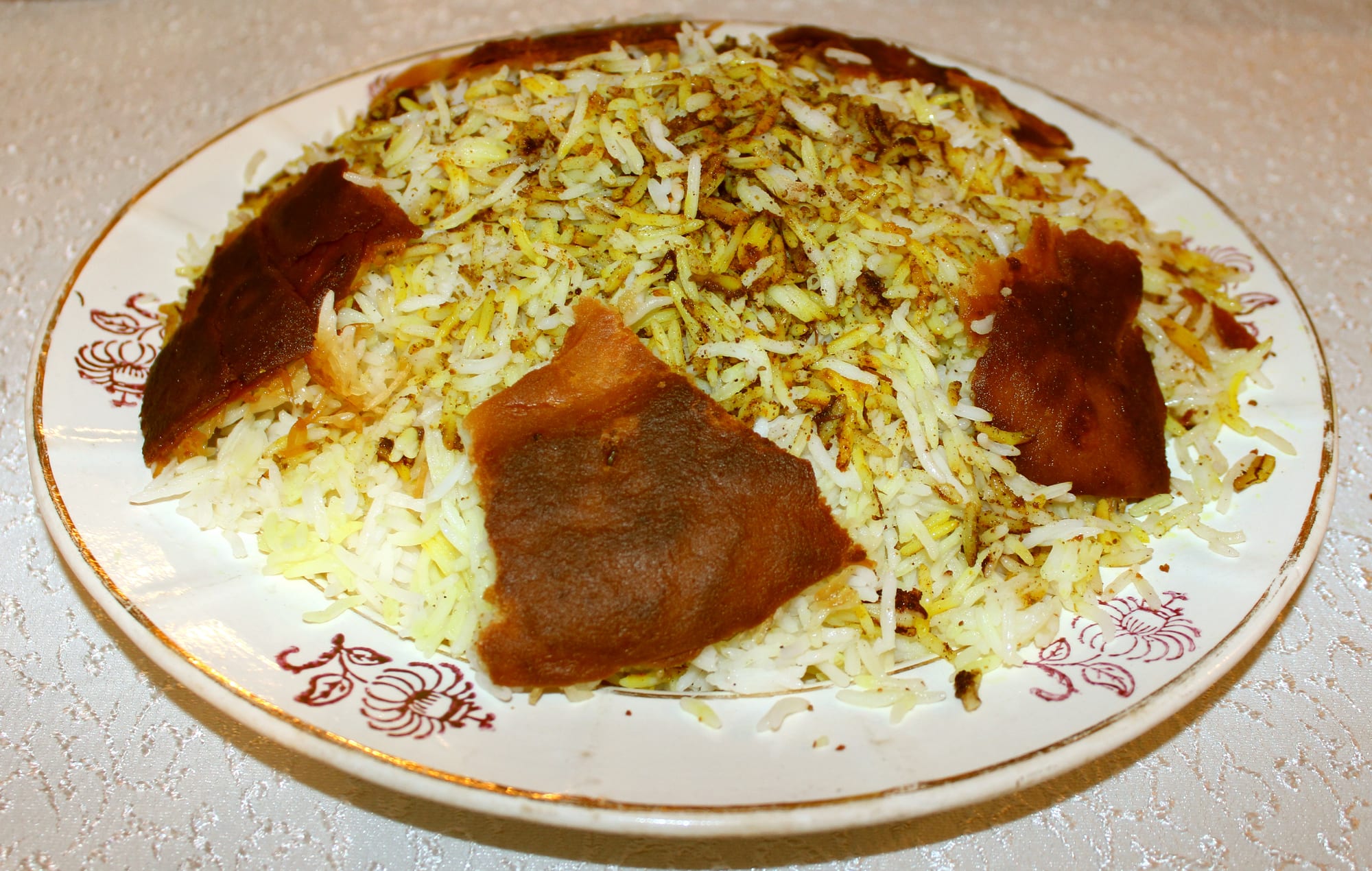
Sweet versions studded with dried apricot, raisin and chestnut sit alongside savoury ones built on lamb, chicken or fresh herbs, and a really festive plov — shah plov, "royal plov" — is wrapped entirely in a thin bread crust like a dome before serving. Which plov a family makes, and how, is a matter of real regional and even family pride.
Herbs, tea and a well-stocked table
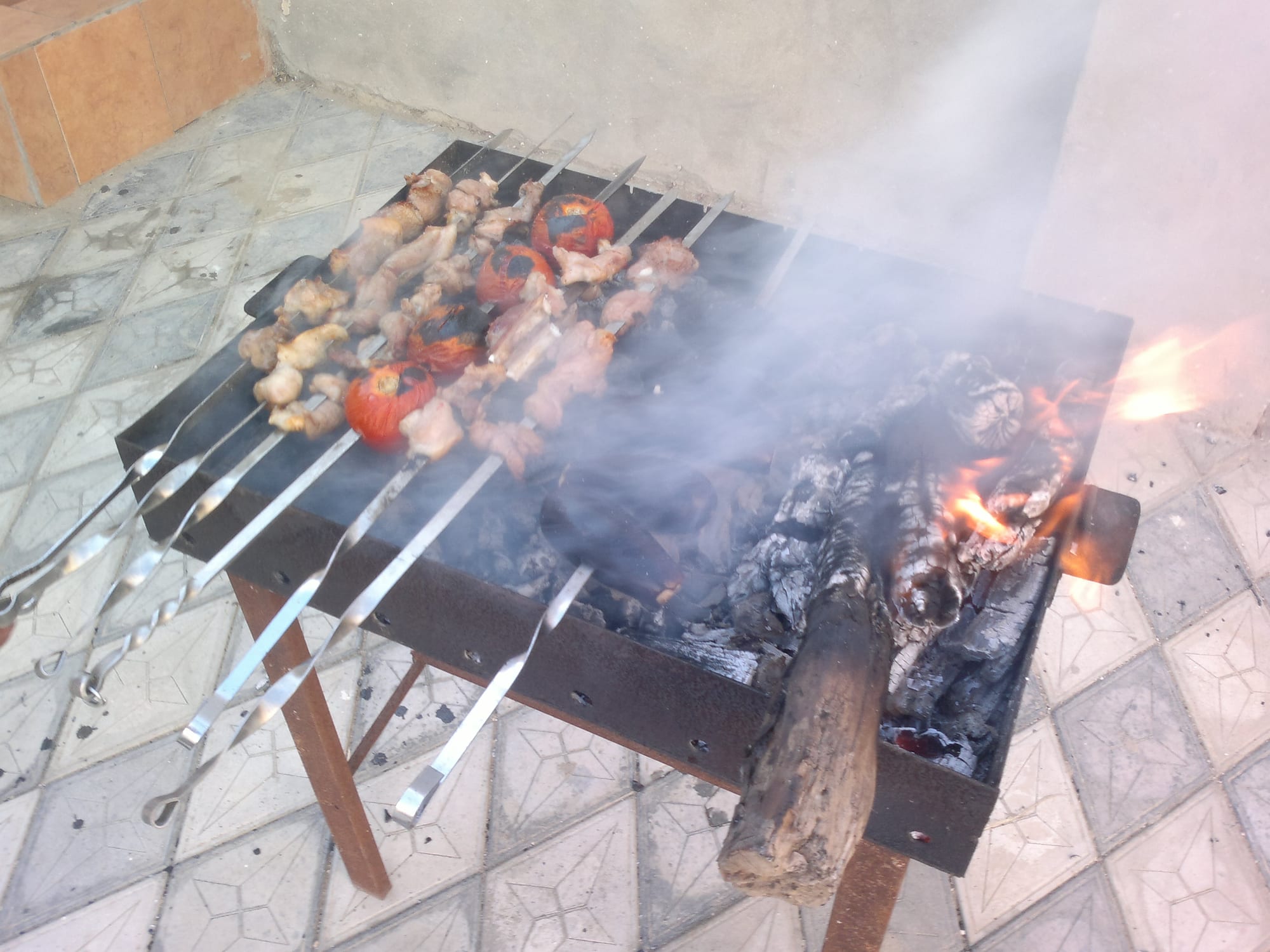
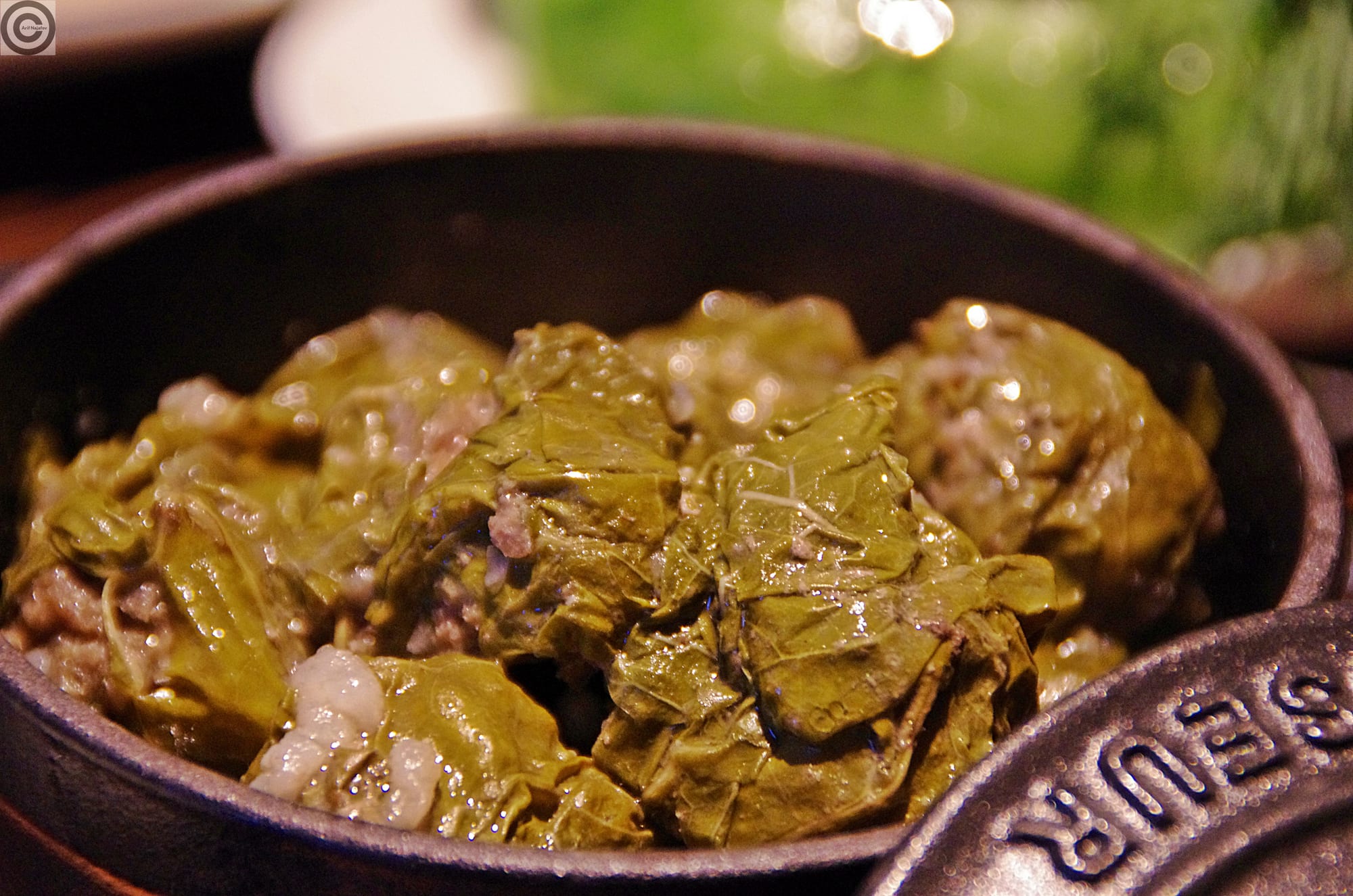
A plate of fresh herbs — tarragon, basil, mint, coriander, spring onion — sits on the table at nearly every meal, eaten on its own rather than as garnish, much as in neighbouring Armenia and Georgia. Dolma, vegetables or leaves stuffed with rice and often minced meat, is made in an enormous range of versions: grape leaves, cabbage, pepper, tomato, aubergine and even apple all get the same treatment. Kebab, grilled over a wood fire on long skewers, is everyday restaurant food, and lülə kebab — minced, seasoned meat moulded around a skewer — is a variant worth knowing by name.
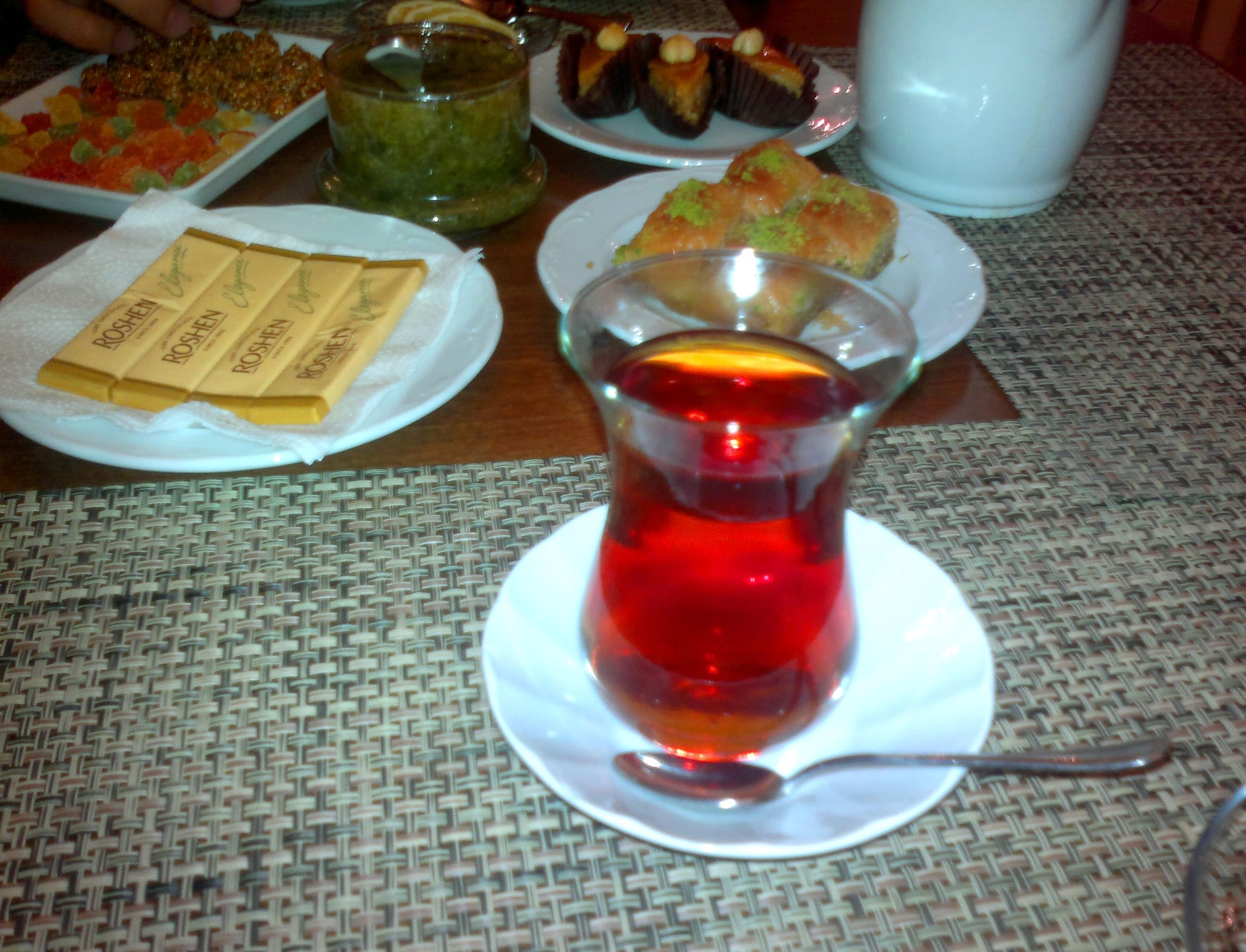
Tea, always black and usually strong, is drunk constantly and offered to guests almost the moment they sit down, often alongside a spoonful of fruit preserve eaten on its own rather than stirred in. Azerbaijan is also a major pomegranate producer — the town of Goychay holds an annual pomegranate festival — and pomegranate juice and narsharab, a thick pomegranate sauce, are used across both savoury and sweet cooking.
Dishes to know
Five to recognise on any Azerbaijani table (regional specialities are covered on the region pages):
- Dolma — vegetables or leaves stuffed with rice and often meat; among the
most common dishes in the country, in dozens of local variations.
- Piti — lamb and chickpeas slow-cooked and served in an individual clay pot,
eaten in two stages: the broth first, poured over bread, then the meat.
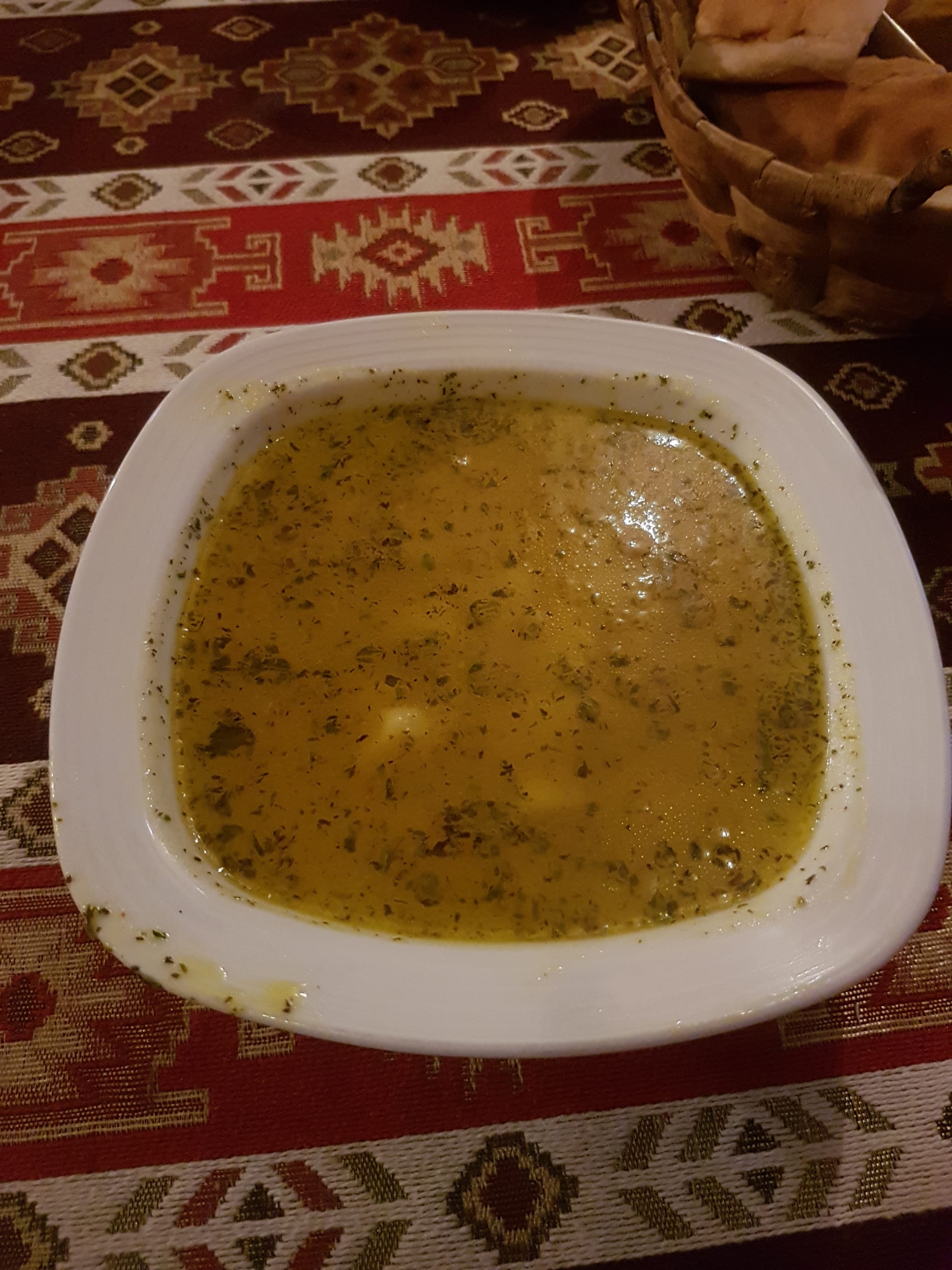
- Dushbara — very small meat-filled dumplings served in a clear, herbed
broth; making them tiny is itself a point of cooking pride.
- Qutab — a thin flatbread folded over a filling of minced meat or herbs and
cooked quickly on a dry griddle.
- Kebab — skewered, grilled meat, cooked over a wood-fired mangal rather than
gas wherever possible.
Novruz and celebration food
Novruz, the spring new year on 21 March, is Azerbaijan's biggest food holiday: households grow semeni, a dish of sprouted wheat, as a centrepiece, and bake shekerbura, a crescent-shaped pastry filled with ground nuts and sugar, its edge crimped into an elaborate decorative pattern with a special tool. Sheki, in the north-west, is famous for its own rich, saffron-coloured, syrup-soaked halva, layered with nuts and considered one of the country's finest sweets.
Eating as a traveller
Vegetarians can rely on the herb plate, many dolma fillings made without meat, and vegetable-based sides, though plov and piti are usually built around meat or its stock. Azerbaijan is a majority-Muslim but largely secular country; alcohol is available and Azerbaijan has its own small wine industry, in a region with some of the oldest evidence of winemaking anywhere. Tap water in Baku is generally safe. Tea houses, or chaykhana, are a good, cheap way to sit and watch daily life the way locals do.
What to take from the table
Plov, made well, with its crackling crust and whatever fruit or herb filling the cook favours, is the dish to seek out — and a glass of tea in an armudu glass, offered almost the moment you arrive anywhere, is the fastest way into Azerbaijani hospitality.