Culture & Customs · Azerbaijan
Azerbaijan: Elders First, Guests Always
A secular state with a Muslim heart, greetings that begin with the oldest in the room, bonfires to leap over in spring, and a code of hospitality in which even the sugar in the tea can carry a message
By Worldlore Editorial · 30 September 2026
A group of women arrives at a family home on a delicate errand. They have come on behalf of a young man, to speak well of him and his family and to find out whether a match might be welcome. Nothing is decided on the spot; the girl's parents will not answer until a later visit. But at the end of the conversation, tea is brought in, and everyone in the room watches what comes with it. In Azerbaijani custom, tea offered without sugar suggests the hopes of the visitors are slim; sweetened tea signals that there will be a wedding. It is a small gesture carrying a large meaning, and it captures much of Azerbaijani culture: hospitality is never casual, family matters are handled through elders and intermediaries, and a great deal is said without being spoken aloud.
Faith, identity and values
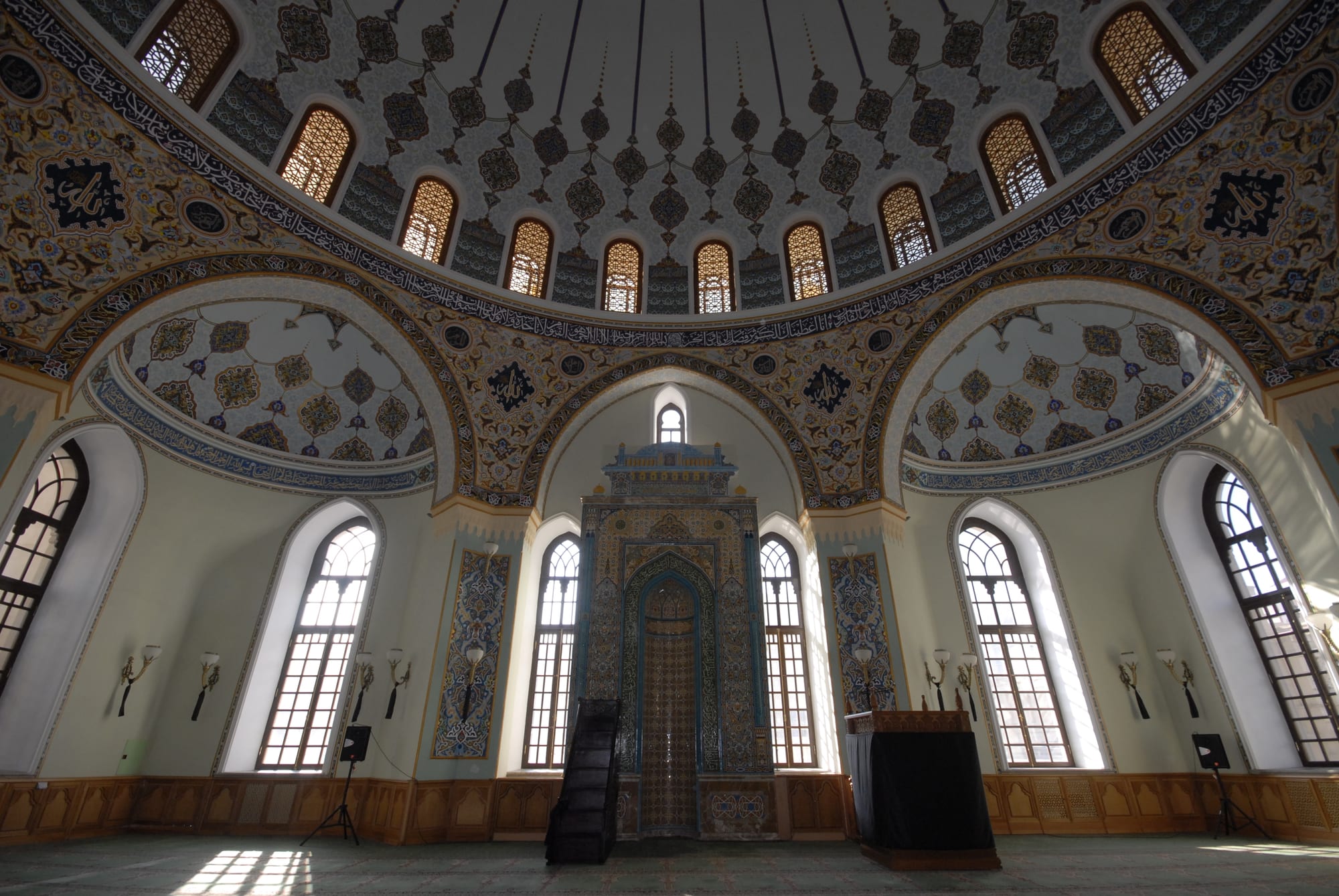
Azerbaijan is an overwhelmingly Muslim country and a firmly secular state. According to figures cited by the US State Department, about 96 per cent of the population is Muslim, of whom a majority are Shia and a large minority Sunni, while the remainder includes Russian and Georgian Orthodox Christians, Catholics, various Protestant churches, a long-established Jewish community and others. The constitution separates religion from the state and guarantees equality between faiths, and religious observance is regulated closely by the government. For many Azerbaijanis, Islam is as much a part of national and family identity as a matter of daily practice, and it sits alongside customs that are older than Islam itself, above all the spring festival of Novruz.
Beneath religion lie values that shape everyday behaviour. The family comes first, and loyalty to relatives often outweighs loyalty to wider institutions; extended family members take a close interest in one another's personal and working lives. Age commands respect, and the young are expected to defer to their elders in greeting, at the table and in family decisions. Personal trust matters more than formal arrangements, and relationships are built slowly, over tea and meals. Communication tends to be diplomatic. Direct criticism, especially in front of others, risks causing loss of face, so disagreement is often softened and meanings may need to be read between the lines. Hospitality, finally, is a point of honour, and a guest is treated as someone to be looked after rather than merely received.
Greetings and meeting people
The everyday greeting is "Salam", and the order in which people are greeted matters: the younger person approaches and greets the elder first, and in a group the oldest present are greeted before anyone else. Between men, a handshake is standard, sometimes accompanied by a kiss on the cheek between close friends or relatives. Women who know each other well often hug and exchange a single kiss on the cheek. A man meeting a woman usually waits to see whether she offers her hand before extending his own; many women will, but it should not be assumed.
Forms of address are polite and warm. The respectful forms xanım for women and bəy for men are widely used, and courtesies are observed especially carefully with older people.
Eye contact is taken as a sign of sincerity. Personal warmth and trust are expected to come before any business is done, and relationships are often built over several meetings, usually with tea.
Hospitality and being a guest
Visitors to an Azerbaijani home take off their shoes at the door. Tea is offered almost as soon as a guest sits down, freshly brewed and served hot in small pear-shaped glasses with sugar, lemon, jam or sweets alongside, and it is polite to accept. UNESCO, which added Azerbaijan's tea culture to its list of intangible heritage together with Türkiye's, describes it as a practice that shows hospitality and builds and maintains social ties, and it is part of daily life at every level of society.
Guests are rarely allowed to arrive empty-handed, and a small gift such as flowers or sweets is appreciated. Flowers are given in odd numbers. A gift may be politely declined once or twice before it is accepted, and it is not usually opened in front of the giver. At the table, elders are served first, then guests, then children, and the right hand is used for eating and for passing things. Hosts show generosity by offering far more food than anyone could finish, and they will keep pressing guests to eat.
Bread is treated with particular respect. The UNESCO listing of Azerbaijan's tandir oven and bread-baking tradition notes that parents teach their children to handle bread with care, and that bread is traditionally offered to guests and children first, in the belief that this brings prosperity to the household. Mistreating or wasting bread is frowned upon.
Festivals and life's big moments
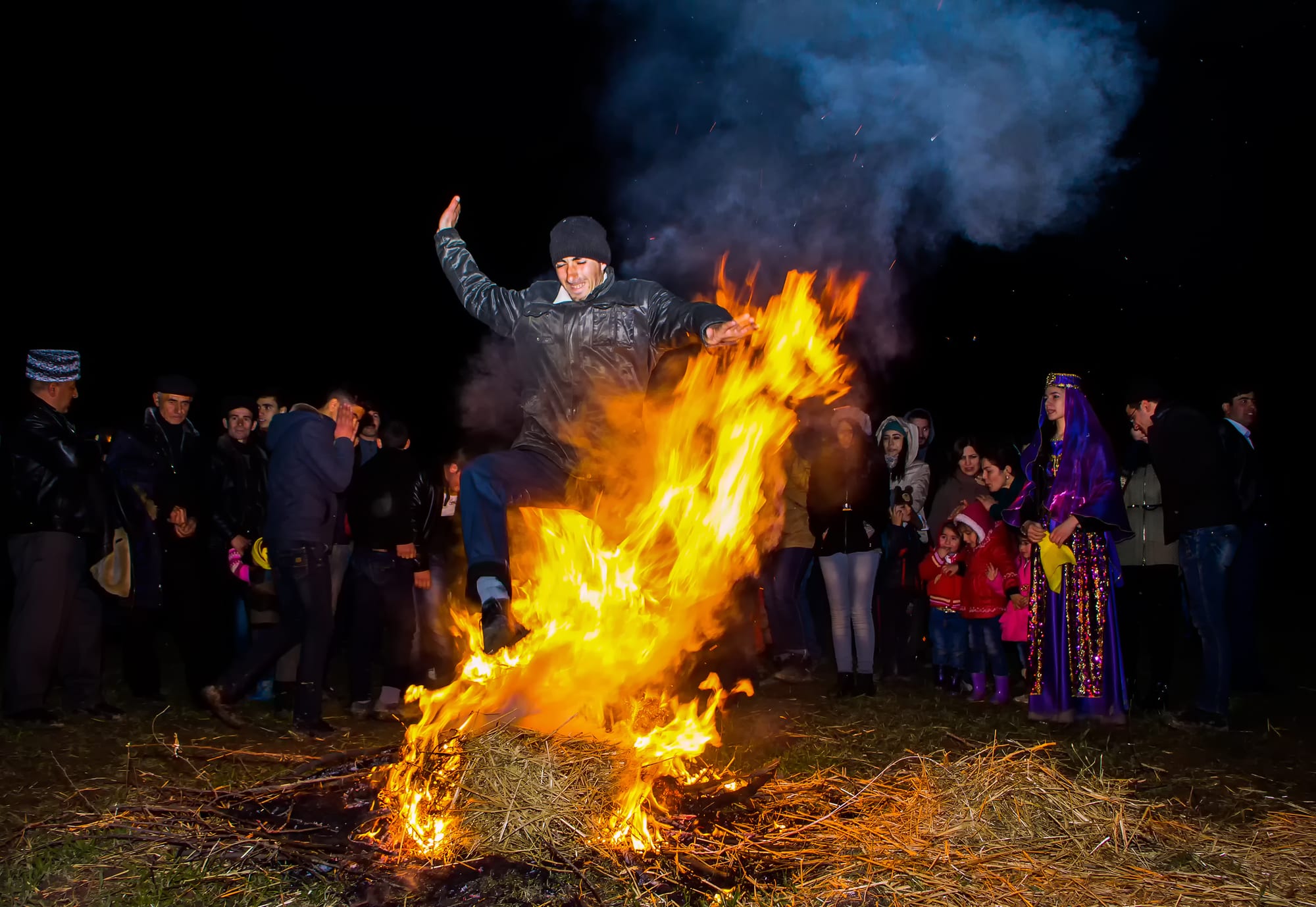
Novruz, the celebration of spring and the new year at the vernal equinox in March, is the most loved festival of the year and is on UNESCO's list of intangible heritage, shared with other countries across the region. The build-up lasts a month. Each of the four Tuesdays before the holiday is devoted to one of the elements: water, fire, wind and earth. Households clean their homes, and dishes of sprouted wheat, known as səməni, are grown as a symbol of renewal. After sunset on the Tuesdays and on the eve of the holiday, people gather in the streets to light bonfires, dance around them and leap over them, a gesture of cleansing that is said to leave the old year's troubles behind. Before the holiday, many families also visit and tend the graves of their relatives, and on the first day of Novruz homes are traditionally kept lit through the night.
The two great Islamic holidays, Ramazan Bayramı at the end of the fast of Ramadan and Gurban Bayramı, the Feast of Sacrifice, are both public holidays. Gurban Bayramı is marked by the sacrifice of an animal. The traditions surrounding the evening meal that breaks the fast during Ramadan are also on UNESCO's list, in an inscription shared with several other countries.
Weddings unfold over several stages. The first is elçilik, the visit of the matchmakers. Early visits open the subject, and the main matchmaking visit is made by the groom's more senior, respected relatives, after which the bride's family gives its answer. An engagement, nişan, follows, when the groom's relatives bring a ring, a headscarf and gifts. Trays of presents and sweets, known as xonça, decorated with red ribbons, pass between the two families, and on the henna night, xınayaxdı, the bride's hands are decorated with henna amid music and celebration. On the wedding day the bride leaves her parents' home, in many families carrying a mirror and a lamp or candle as symbols of light and protection. Red is the colour of weddings, and a bride traditionally wears a red silk headscarf at her henna party.
Funerals follow Islamic practice, and burial usually takes place on the day of death, or the next day if the person died after sunset. Relatives, neighbours and friends gather at a wake, often held in a large mourning tent, where tea, halva and dates are served and prayers are recited. The dead are remembered again on the third, seventh and fortieth days after death, and in between, on Thursdays, people come to the family home to offer condolences. Mourners wear dark clothing, and the atmosphere is restrained.
Arts, crafts and music
The classical art of Azerbaijan is mugham, inscribed on UNESCO's list of intangible heritage. It is a highly improvised musical form in which a male or female singer is accompanied by a trio of instruments: the tar, a long-necked lute; the kamancha, a bowed fiddle; and the daf, a large frame drum. Because mugham rests on an orally transmitted body of melodies, it is passed from master to student by ear, and each performance is a fresh interpretation. Traditionally it was performed at weddings and at gatherings of connoisseurs. The art of the Azerbaijani ashiq, the traditional bard, represents a second, folk tradition, also on UNESCO's list, and the crafting and playing of the tar and the kamancha are both listed in their own right.
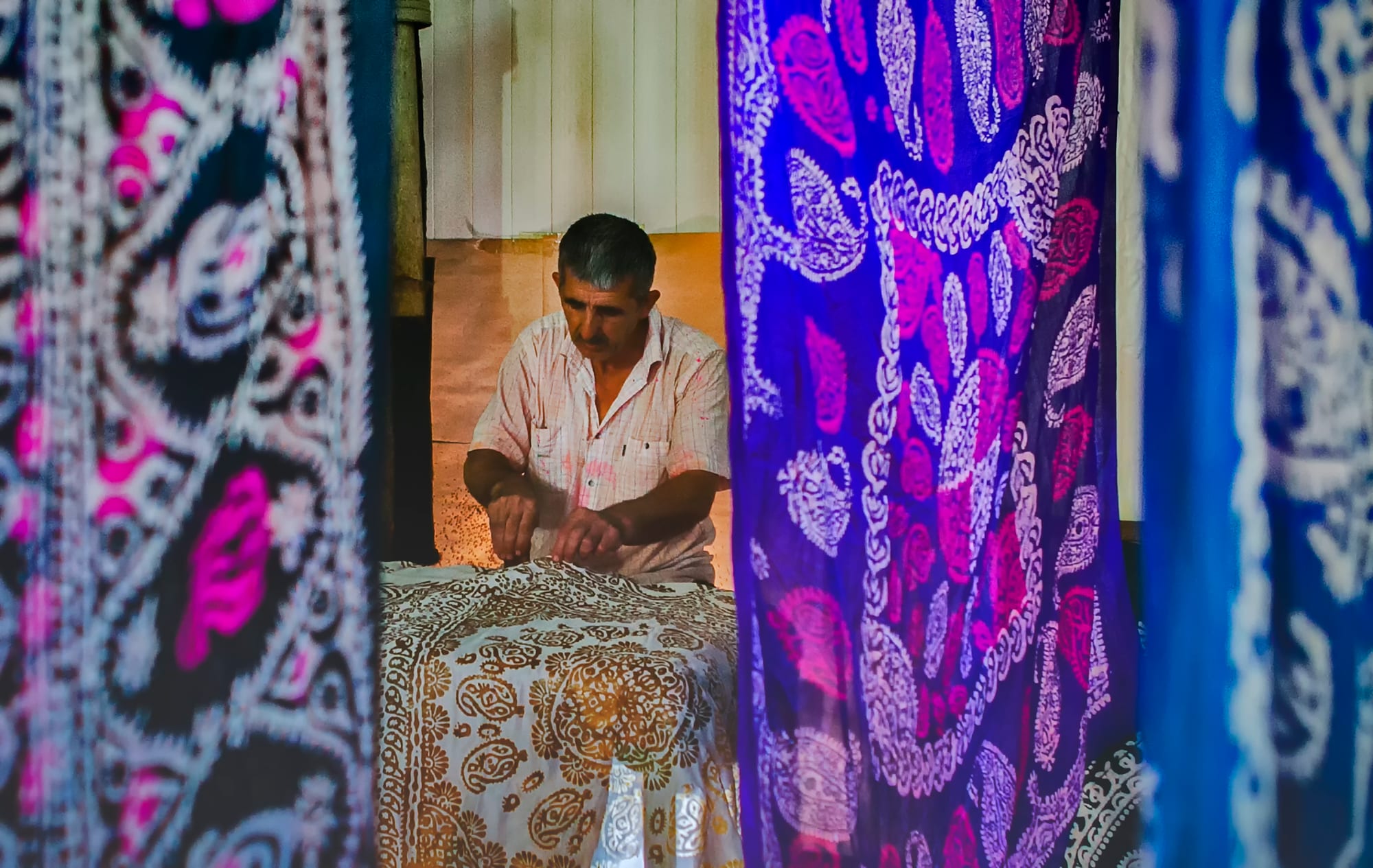
Carpet weaving is the best-known Azerbaijani craft, and the traditional art of Azerbaijani carpet weaving is also on UNESCO's list. Silk has an equally deep history. The kelaghayi, a square silk headscarf, is made by weaving the silk, dyeing it with natural colours drawn from plants and then stamping it with carved wooden blocks. The colours carry meaning: red is associated with weddings, black with mourning, and brighter scarves with the young. Each family of makers has its own patterns, passed down through apprenticeship.
Folk dance is part of celebration too, and yallı, the traditional group dances of Nakhchivan, is on UNESCO's list for urgent safeguarding. Copper craftsmanship, the art of the miniature, the decoration of books with gold illumination and the tales of the wise fool Molla Nasreddin are among the other traditions Azerbaijan shares with the world.
Dos and don'ts for visitors
- Do greet the oldest person present first, and let elders set the pace.
- Do take off shoes when entering a home, and accept the tea that is offered.
- Do bring a small gift when invited to a home, and give flowers in odd numbers.
- Do use the right hand for eating and for passing food.
- Do dress modestly at mosques and shrines, where shoes are removed and women are expected to cover their hair.
- Don't offer a handshake to a woman unless she extends her hand first.
- Don't criticise people openly; diplomatic phrasing is valued.
- Don't waste or mistreat bread, which is treated with respect.
What to take away
Azerbaijani customs rest on respect for age, family and guests, and a visitor who greets the elders first, accepts the tea and lets hospitality run its generous course will find themselves treated less as a stranger than as someone to be looked after.