Attractions & Natural Wonders · Azerbaijan
Azerbaijan: Nine Attractions and Natural Wonders
A walled medieval city under glass skyscrapers, hillsides that have burned for centuries, 40,000-year-old rock carvings, and a silk town in the Caucasus foothills
By Worldlore Editorial · 19 September 2026
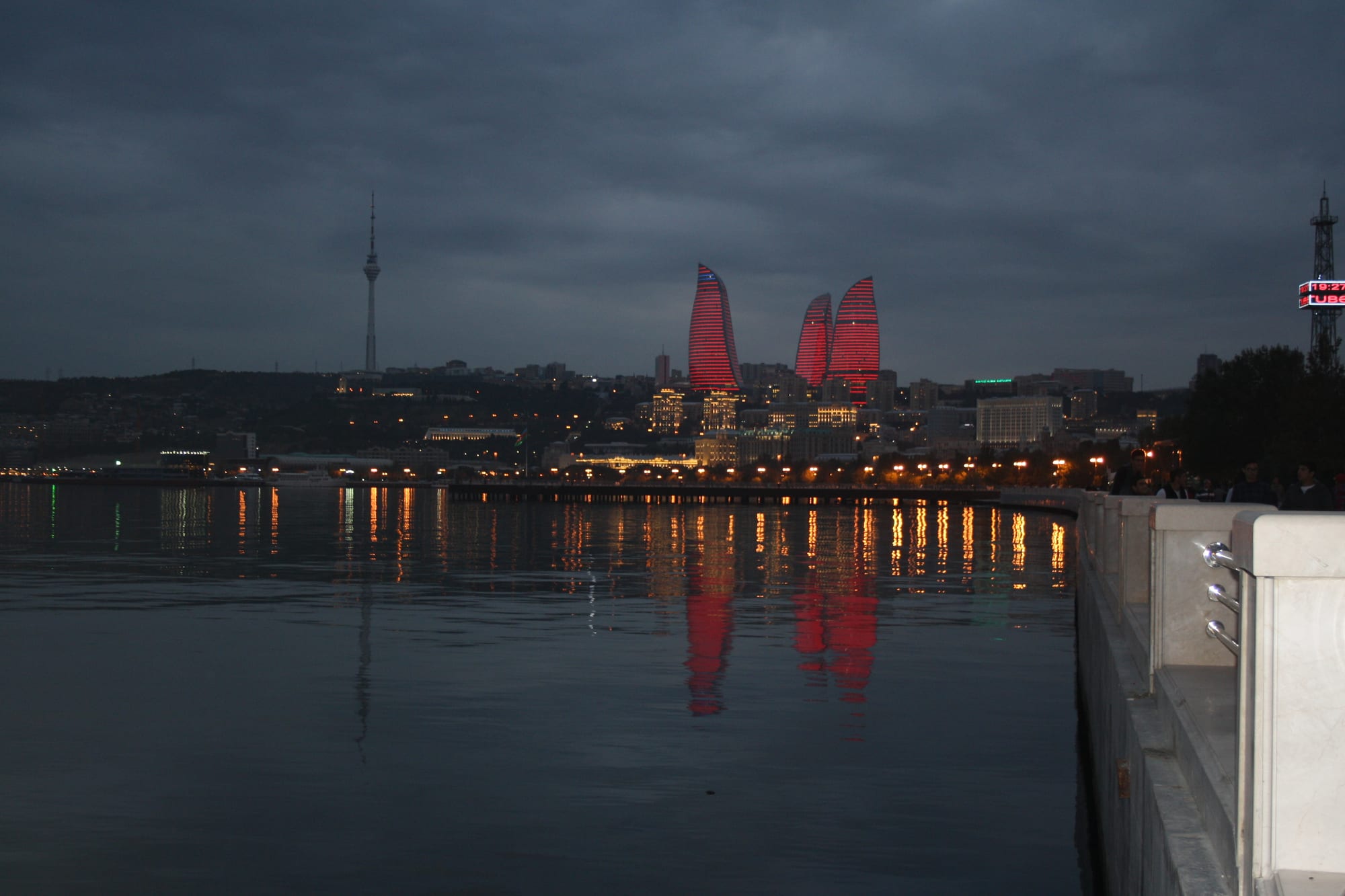
Fire, oil, and the Caspian
Azerbaijan sits where the Caucasus mountains meet the Caspian Sea, on a peninsula so rich in oil and natural gas that flames have leaked from the ground and burned for centuries — which is why fire-worship took hold here and why the country calls itself the "Land of Fire." Its capital, Baku, pairs a UNESCO-listed walled old town with a skyline of oil-money towers.
The nine below concentrate around Baku, with two — Sheki and Lahij — in the greener Caucasus foothills a few hours northwest. Spring and autumn are the best seasons; Baku summers are hot and windy, winters raw.
1. The Old City of Baku (Icherisheher)
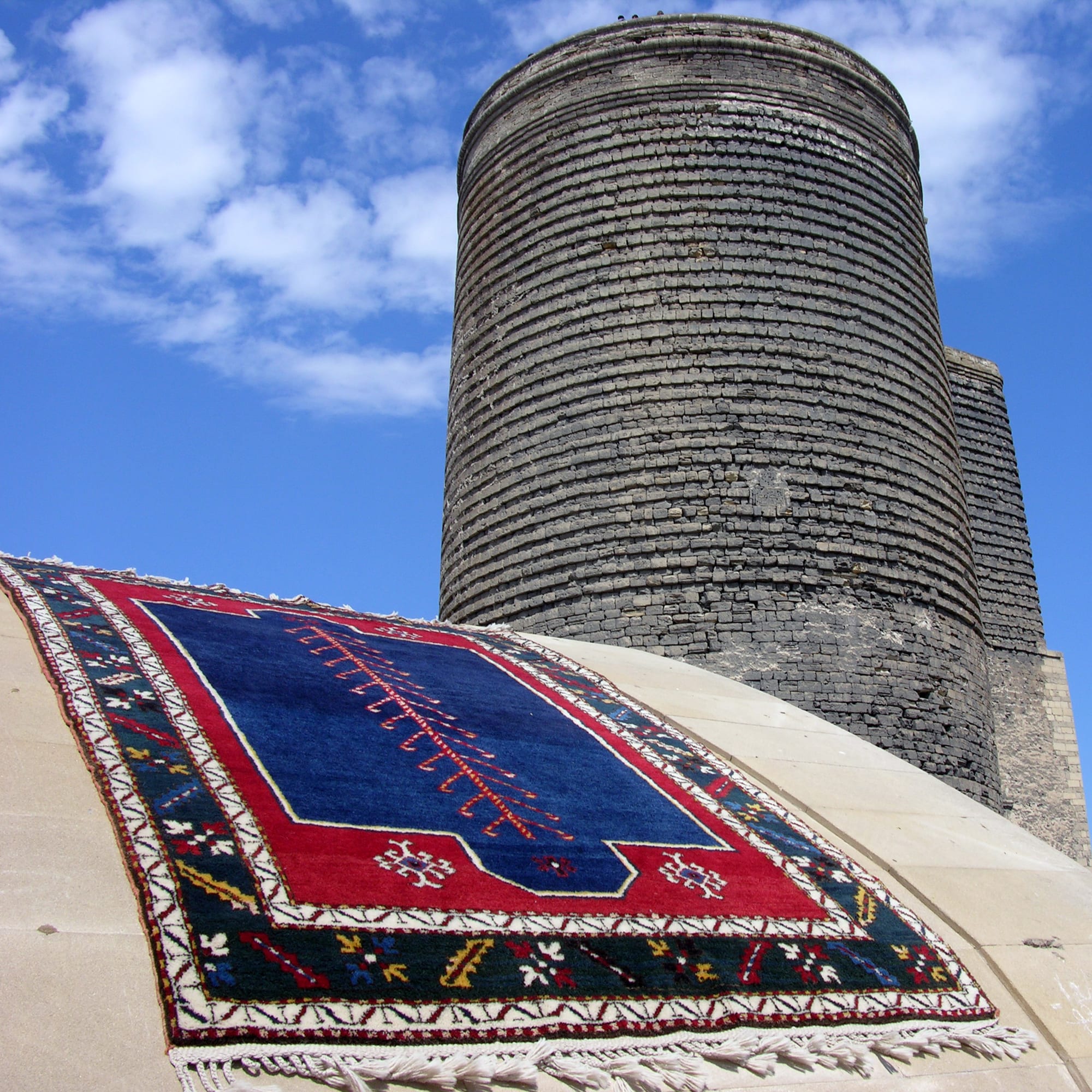
Baku's walled old town is a compact maze of honey-coloured stone: caravanserais, hammams, small mosques, and the lanes where parts of the 1999 film The World Is Not Enough were shot. It has been inhabited for many centuries and is a UNESCO World Heritage Site, along with the two monuments it contains — the Maiden Tower and the Shirvanshahs' palace.
It is walkable in a couple of hours and pleasant to get lost in, with carpet shops, tea houses, and a surviving stretch of the fortress wall and gates.
2. The Maiden Tower
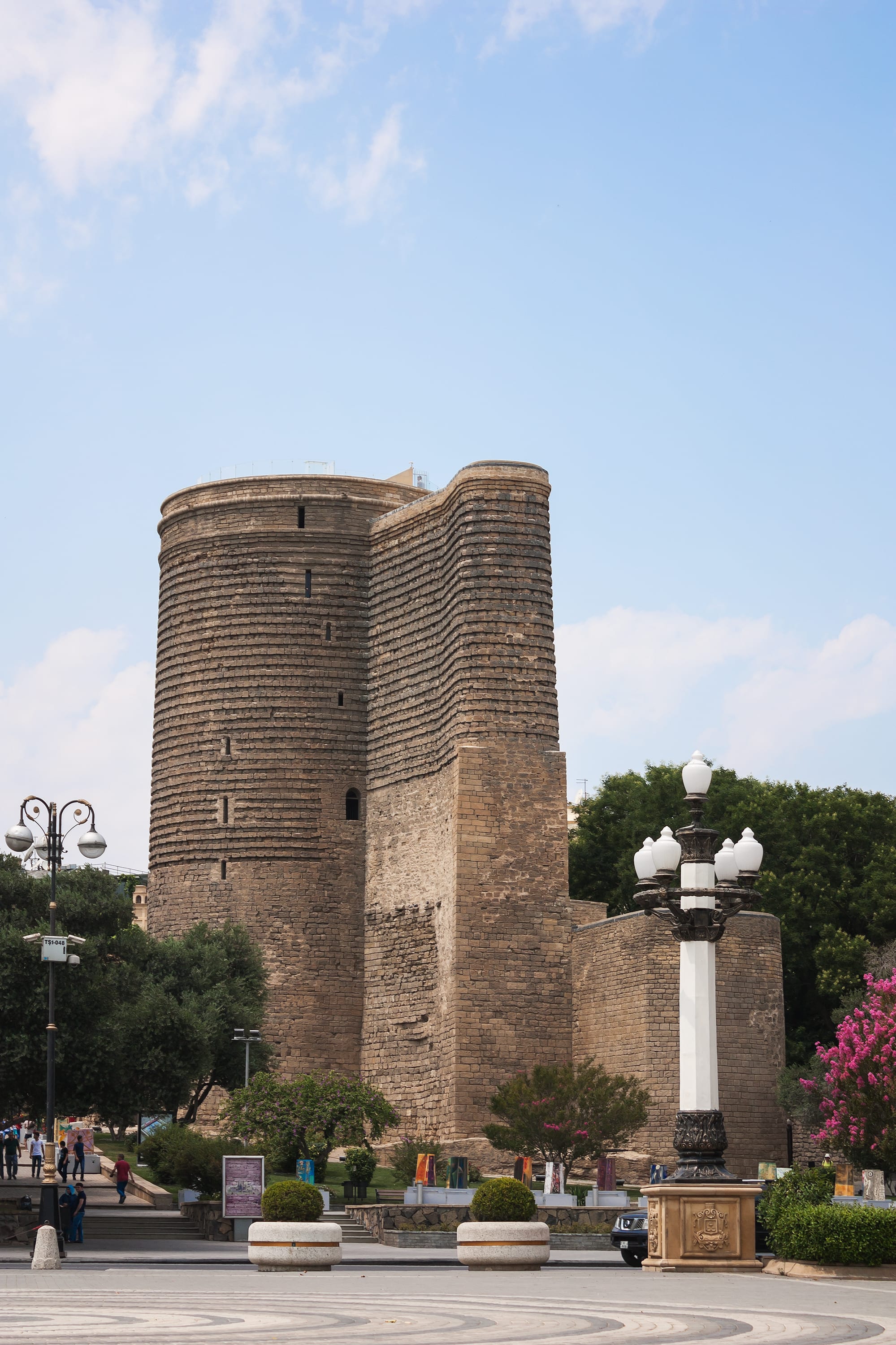
The Maiden Tower (Qız Qalası) is Baku's oldest and most enigmatic landmark: a squat stone cylinder about 28 metres tall, with walls up to five metres thick and a strange buttress running up one side. Nobody is sure when it was built — estimates range across a thousand years — or whether it was a fortress, a fire temple, or an observatory.
A climb up the internal stairs leads to a rooftop view over the Old City and the bay. A small museum inside runs through the many competing theories and the legends attached to the name.
3. The Palace of the Shirvanshahs
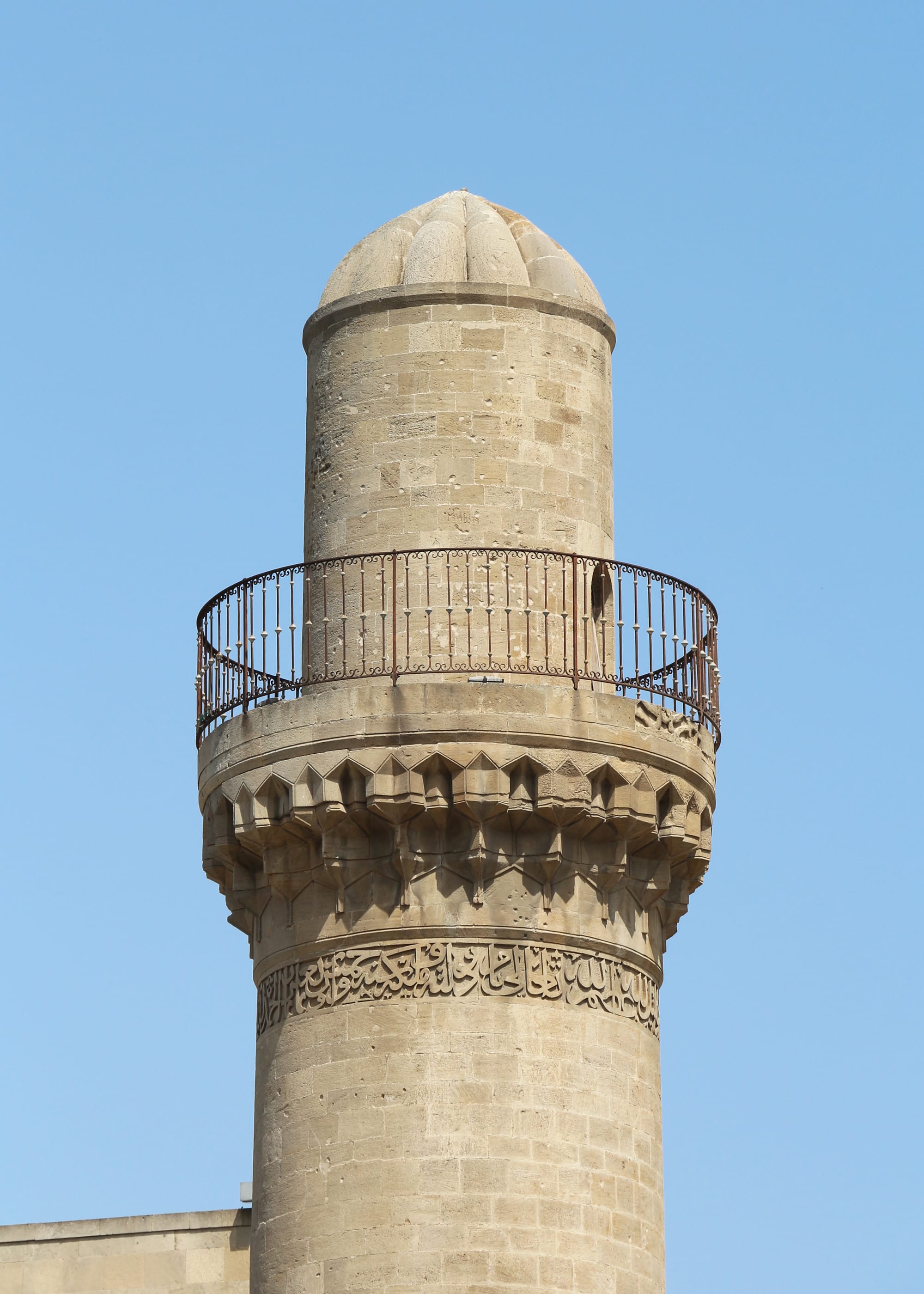
On the highest ground inside the walls, this sandstone complex was the seat of the Shirvanshahs, the local dynasty that moved its capital to Baku in the 15th century. It is a set of linked courtyards and buildings — the palace proper, a mosque and minaret, a domed burial vault, a bathhouse, and the "Divankhana," a delicate octagonal pavilion — all in the same pale, finely carved stone.
It works as an open-air museum of medieval Azerbaijani architecture, with rooms of jewellery, weapons, and manuscripts.
4. The Flame Towers and the Baku seafront
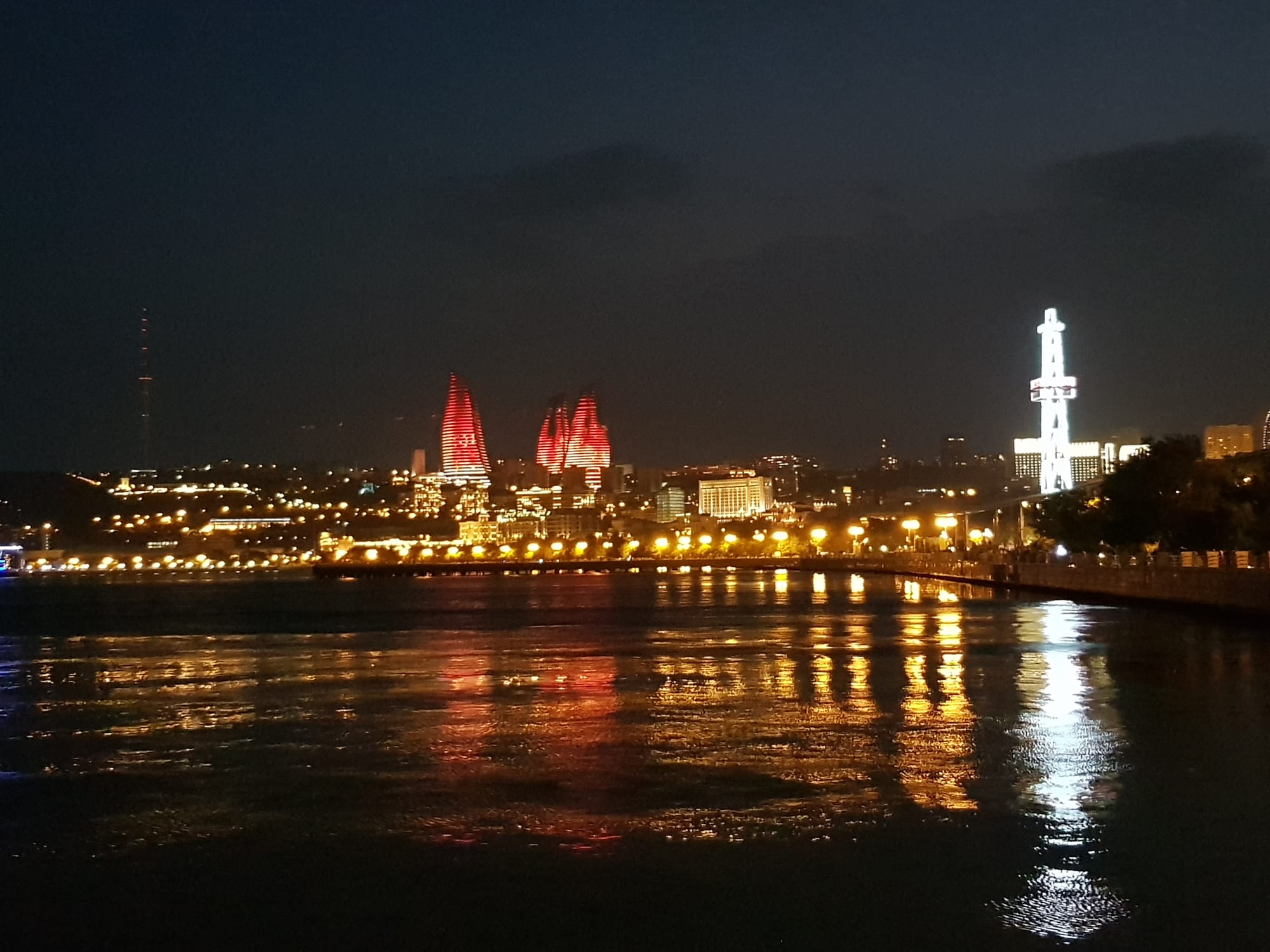
The three Flame Towers, finished in 2012, are Baku's defining modern image: 190- metre curved skyscrapers covered in LED panels that turn the whole city block into an animated bonfire after dark. They hold a hotel, offices, and apartments, and the terrace below is the standard photo spot.
At their foot, the Baku Boulevard runs for kilometres along the Caspian — landscaped gardens, a small Venice of canals, the carpet museum shaped like a rolled rug, and the funicular up to the towers.
5. Gobustan rock art and mud volcanoes
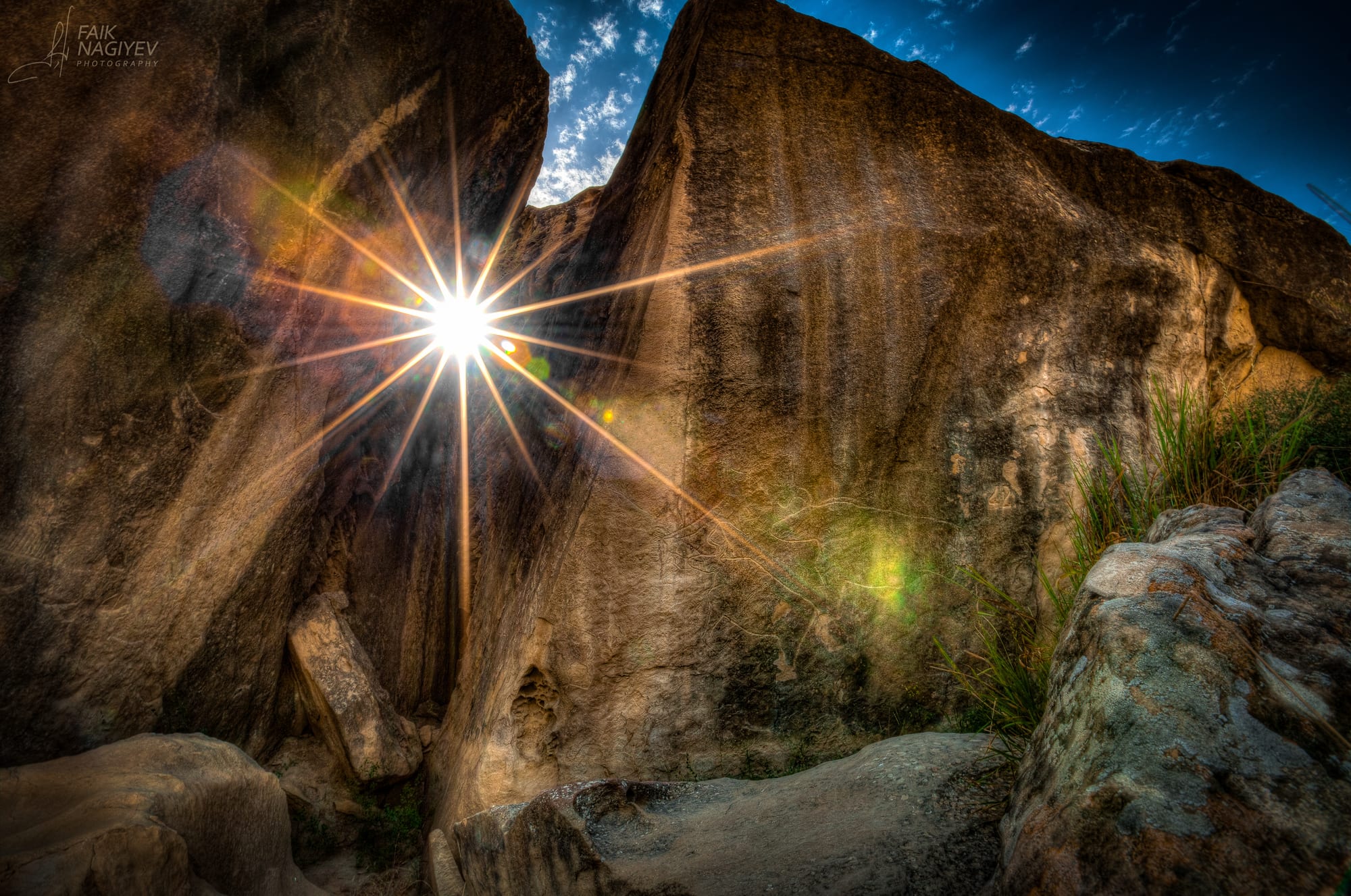
About an hour southwest of Baku, the Gobustan reserve protects more than 6,000 rock carvings — dancers, hunters, boats, aurochs, and a much-discussed Roman graffito — pecked into the sandstone over some 40,000 years. It is a UNESCO World Heritage Site with a sharp modern visitor centre.
A rough track beyond leads to a field of mud volcanoes: dozens of cold, grey cones that bubble, gurgle, and occasionally belch — Azerbaijan has more of them than any other country.
6. Yanar Dag
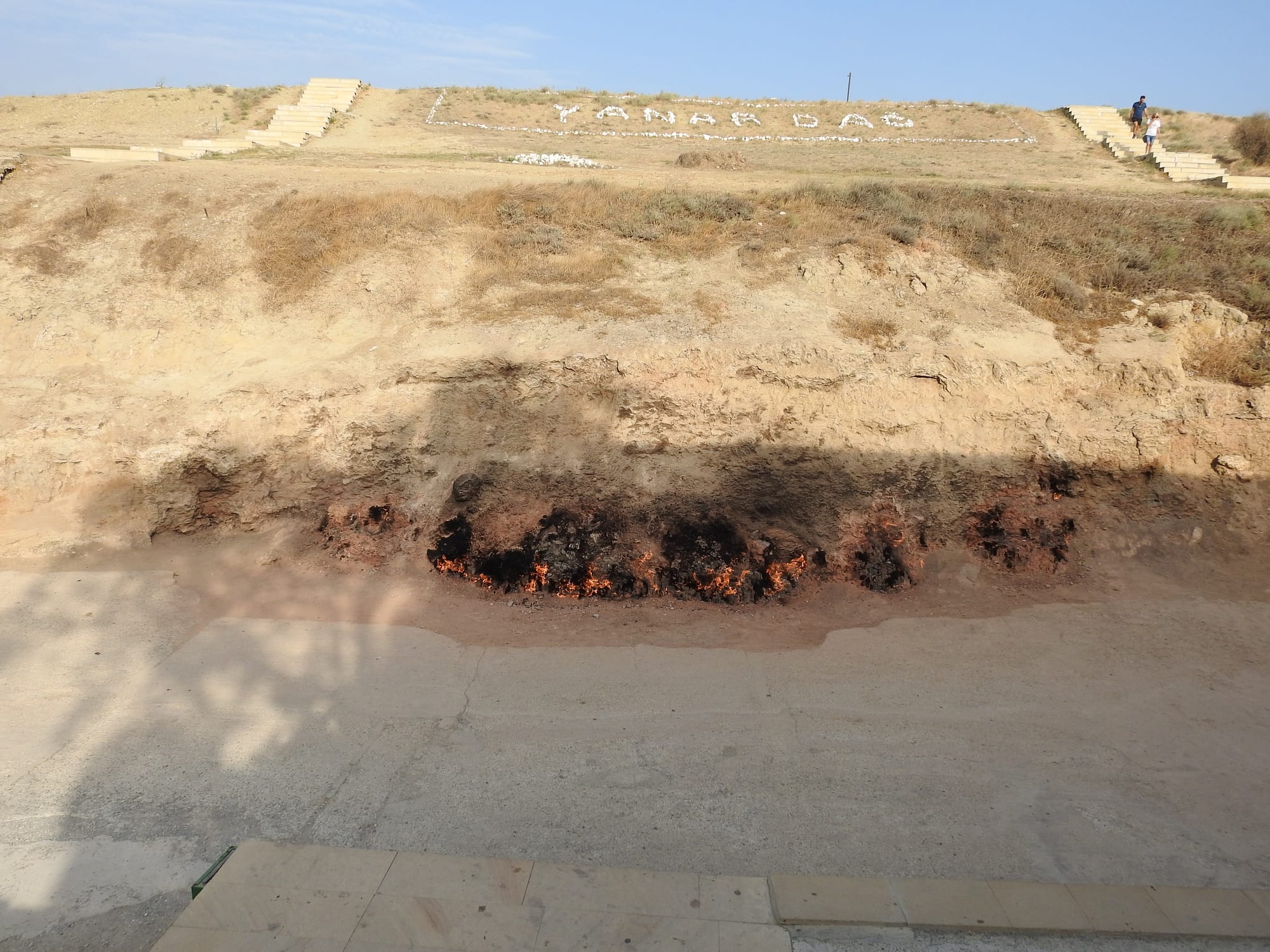
On the Absheron peninsula north of Baku, a three-metre-wide wall of flame burns continuously along the foot of a low hill, fed by natural gas escaping through the porous sandstone. It has reportedly burned for decades without pause, and possibly much longer; medieval travellers, including Marco Polo, wrote about the region's eternal fires.
It is a short visit — a fire, a viewing terrace, a small museum — and is usually combined with the Ateshgah fire temple nearby. Come at dusk, when the flames show best.
7. The Ateshgah Fire Temple
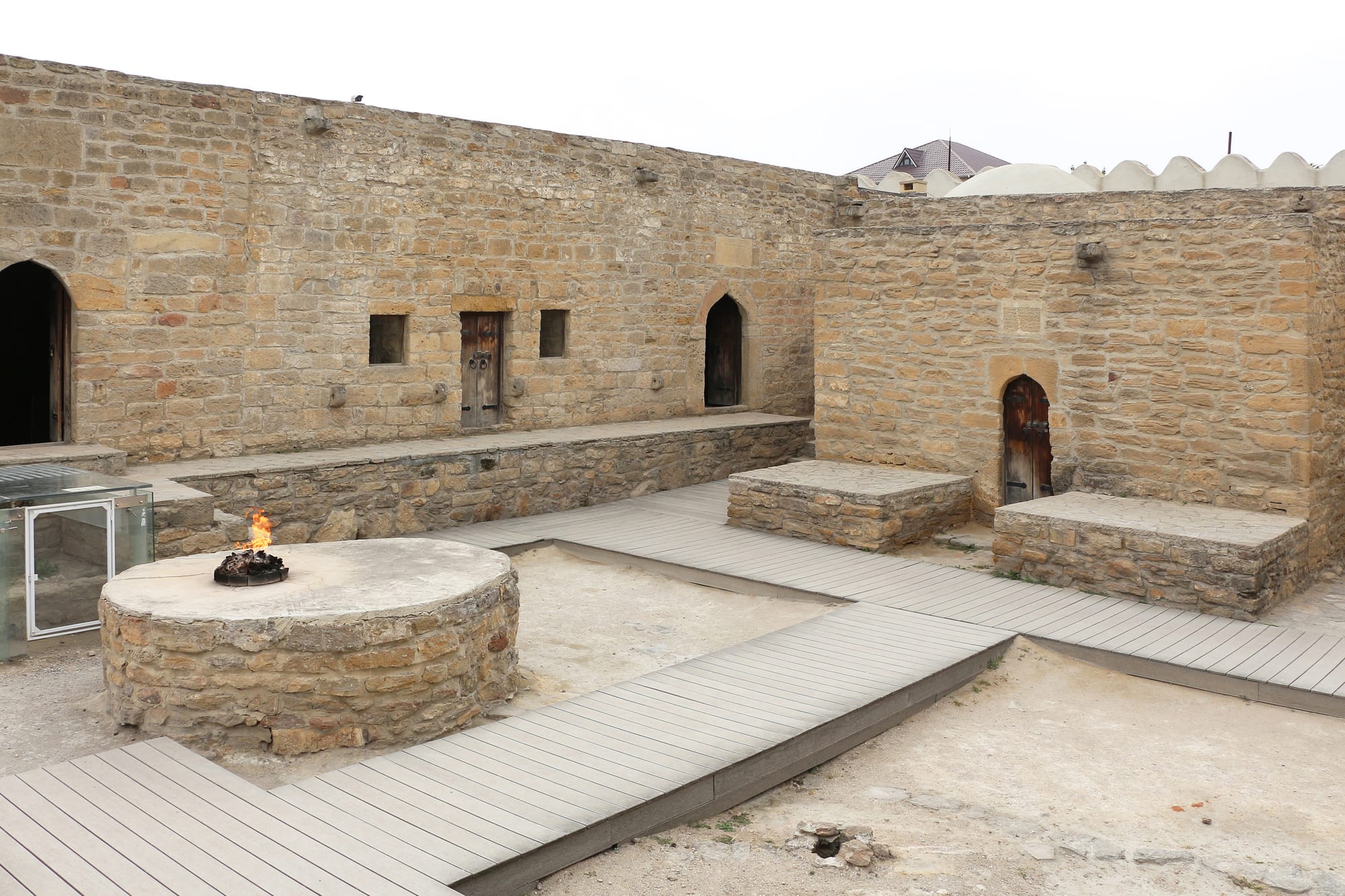
At Surakhani, on the eastern edge of Baku, a pentagonal walled compound surrounds a central domed altar over what was once a natural gas vent. The site has ancient roots as a place of fire worship; the present buildings were raised in the 17th and 18th centuries largely by Indian traders and ascetics who lived in the cells around the courtyard.
The original vent went out when local gas extraction lowered the pressure; the flame is now piped from the city mains. Inscriptions in Sanskrit and Persian are set into the cell walls.
8. Sheki and the Khan's Palace
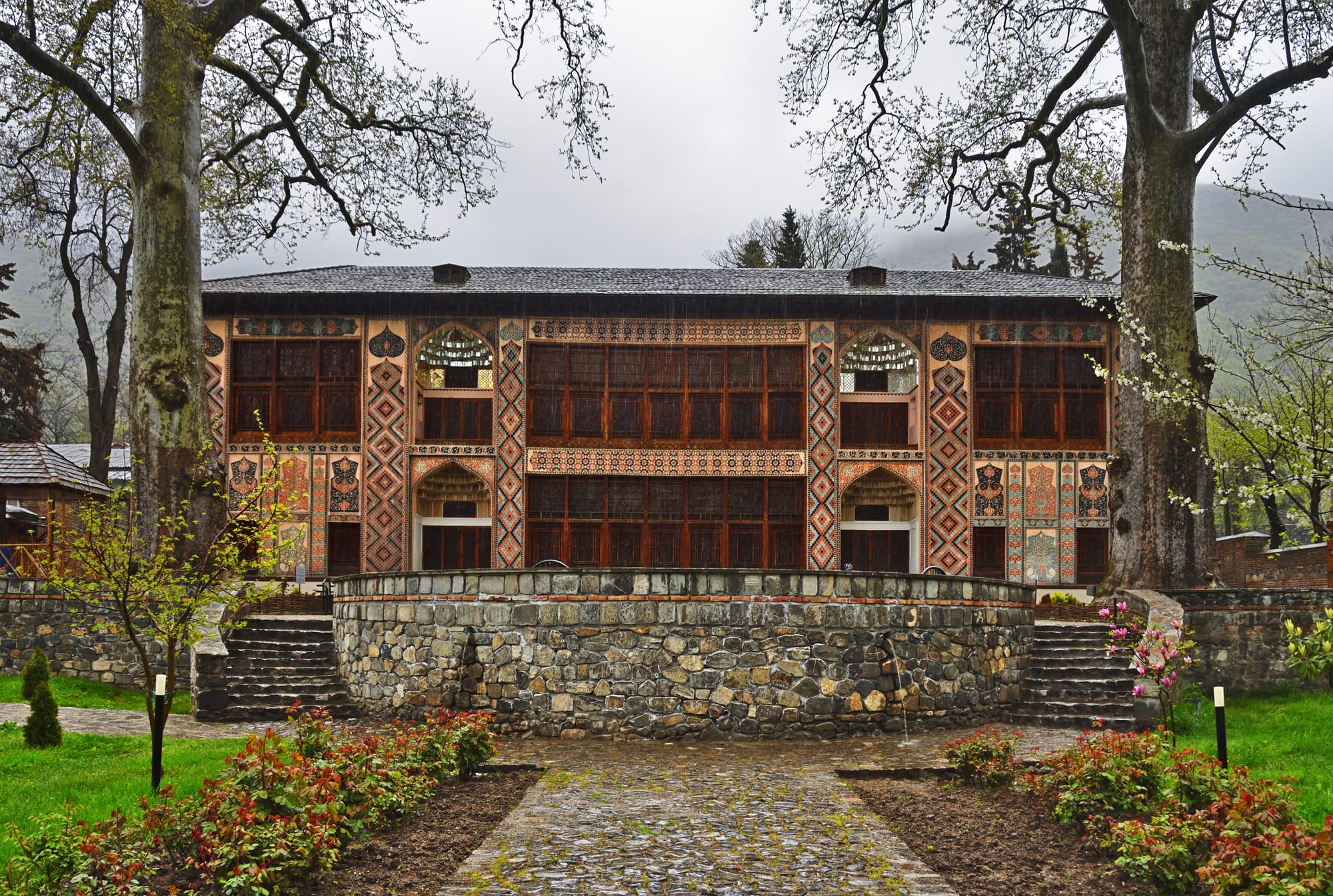
Sheki, in the wooded foothills of the Greater Caucasus, was a silk-road town and the seat of an 18th-century khanate. Its Khan's Palace is small but astonishing: every surface painted with flowers, hunting scenes, and battles, and the windows filled with shebeke, jigsaws of coloured glass and carved wood assembled without a single nail.
The old town around it — a UNESCO World Heritage Site — has caravanserais you can sleep in, a covered market, and workshops still making the lattice windows and the local halva.
9. Lahij
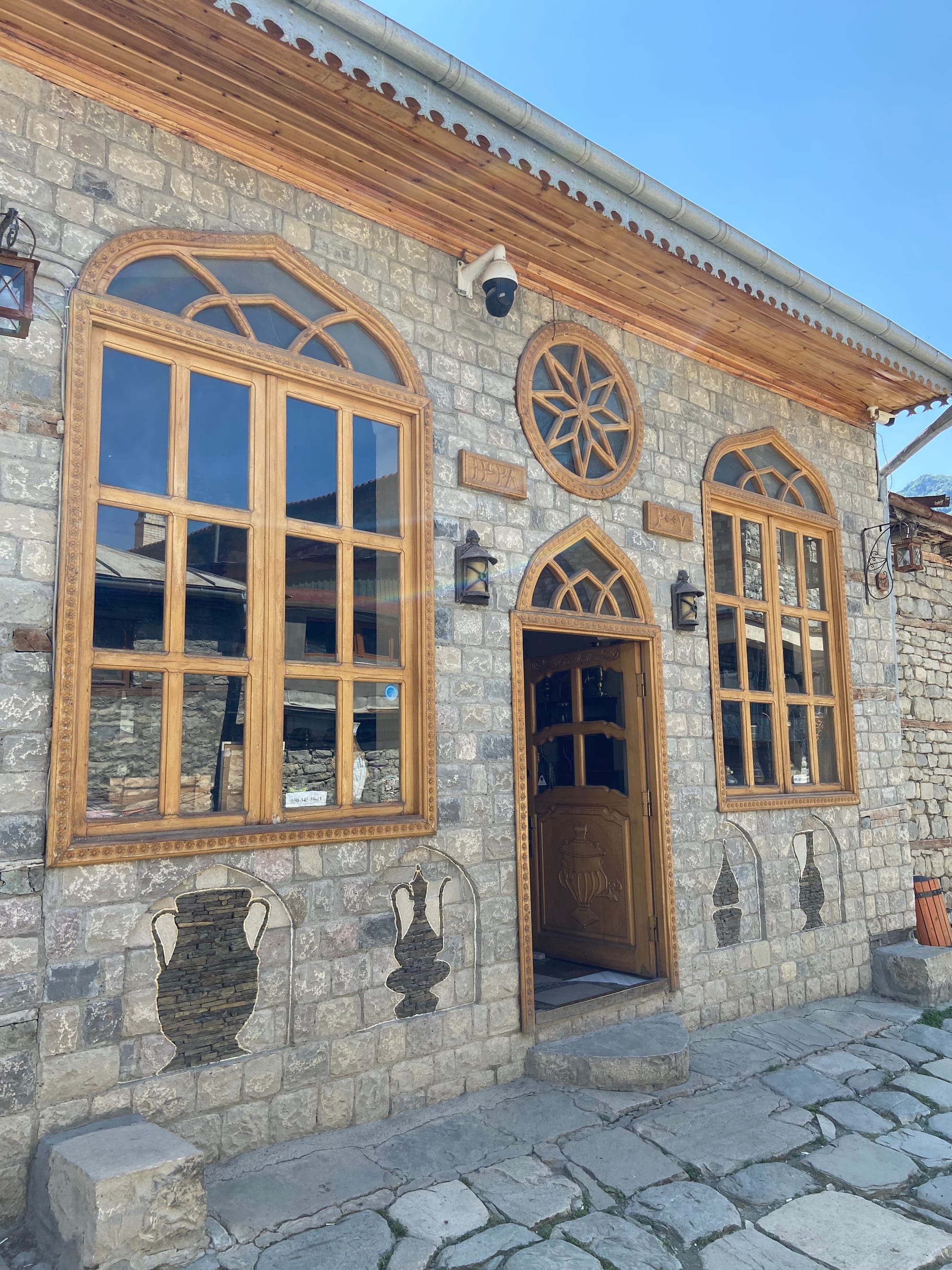
High in a river gorge off the Baku–Sheki road, Lahij is a stone village famous for metalwork: for centuries its coppersmiths hammered out pots, trays, and daggers, and a few workshops still do, tapping away along the cobbled main street. The village has its own stone-paved drainage system, carved wooden balconies, and an Iranian-related dialect of its own.
The last few kilometres of road in are rough and cling to a cliff. Most people visit on a day trip from Baku or as a stop on the way to Sheki.
Azerbaijan is easy to travel: Baku and the Absheron peninsula cover most of this list in two or three days, and a car or driver reaches Sheki and Lahij in an afternoon each.