Culture & Customs · Austria
Austria: Where the Year Keeps Its Rituals
A handshake and a "Grüß Gott" for every encounter, a Sunday that still belongs to rest, and a calendar of maypoles, masked processions and brass bands that Austrians have never quite let go of
By Worldlore Editorial · 30 September 2026
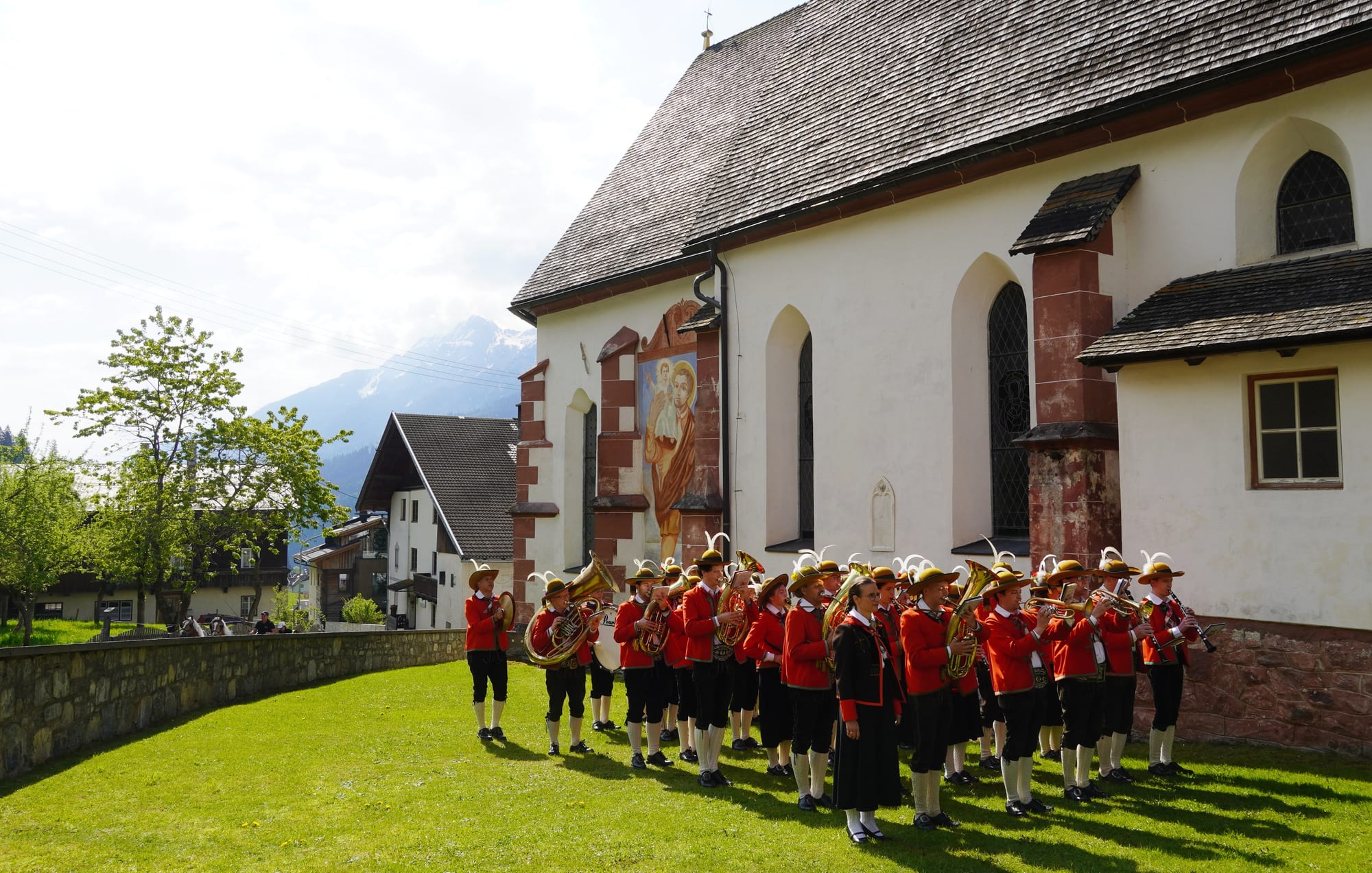
It is the first of May in an Austrian village. Since the early hours, young men have been guarding a long, stripped tree trunk from their neighbours, who would happily steal it and demand beer as ransom. By midday it stands upright in the square, crowned with a green wreath and fluttering ribbons. The local brass band plays in jackets and hats that mark out the valley it comes from, someone makes a speech, and the afternoon settles into eating, drinking and talk. Austria is a modern, prosperous and in many ways secular country, but it keeps its year by ritual: a fixed order of greetings, Sundays, feast days and customs that gives ordinary life a steady rhythm and a strong sense of belonging.
Faith, identity and values
Roman Catholicism has shaped Austria for centuries, and its imprint is everywhere: in the churches and monasteries found across the country, and in a calendar of public holidays that follows the Church year. Its hold has loosened considerably. According to the 2021 figures, about 55 per cent of the population is Catholic, down from nearly three-quarters in 2001, while around 8 per cent is Muslim, about 5 per cent Orthodox, a smaller share Protestant, and more than a fifth has no religious affiliation. Registered church members pay a church tax of around 1.1 per cent of their income, and some young people formally leave the Church when they start earning. Religious freedom is guaranteed by the constitution, and Islam has had official recognition in Austria for more than a century.
Even for the many who rarely attend Mass, Catholic tradition remains part of the texture of life. The clearest sign is Sunday. Most shops are required by law to stay closed, with limited exceptions for bakeries, petrol stations and shops at stations and in tourist areas, and the arrangement enjoys broad support. The Church has long defended Sunday as a day of rest, and unions argue that retail workers deserve a shared day off with their families. Sunday is kept for family, walks and meals out, and it is noticeably quieter.
Several values run beneath everyday behaviour. Gemütlichkeit, a warm sense of comfort and good company, is found in long hours in cafés and inns and in the Vereine, the clubs and associations that knit communities together. Public life is built on consensus, most famously in the social partnership through which employers, unions and government settle differences before laws are made. Austrians also value order, punctuality, privacy and a love of the outdoors, and they tend to avoid drawing attention to themselves. Communication is straightforward, especially in writing, but humour is dry, ironic and sometimes dark, delivered with little change of expression, so that it is not always obvious when someone is joking.
Greetings and meeting people
The handshake is the standard greeting in almost every setting, offered on arrival and again on leaving, and accompanied by direct eye contact. At gatherings, everyone present is greeted individually, regardless of age or gender, and in formal settings the eldest or most senior person usually initiates. Close friends and family, especially women, may exchange a light hug and a kiss on each cheek, but this is reserved for people who know each other well.
The spoken greeting most associated with Austria is "Grüß Gott", literally "God greet you", heard in shops, offices and on country paths. "Guten Morgen", "Guten Tag" and "Guten Abend" are the neutral alternatives, while "Servus" and "Hallo" are used among friends. It is customary to greet staff on entering a small shop and to say goodbye on leaving; walking in silently can come across as cold.
Formality persists in forms of address. German distinguishes between the polite "Sie" and the familiar "du", and adults who do not know each other use "Sie" until invited to switch. Acquaintances are addressed as Herr or Frau followed by the surname, and academic and professional titles matter: a doctor or holder of a doctorate may be introduced as "Frau Doktor" or "Herr Doktor", and it is polite to use such titles until asked not to. First names are kept for friends, family and younger people. On the telephone, callers are expected to begin by giving their surname.
Personal space is generous, roughly an arm's length in conversation, and gestures are restrained. Staring is considered rude, and pointing at people is avoided in favour of a gesture with the whole hand. Punctuality is taken seriously; being late, even by a few minutes, can seem disrespectful.
Hospitality and being a guest
Austrians do not usually drop in on one another unannounced. Visits are arranged in advance, even among friends. A guest typically brings a modest gift, such as flowers, chocolates or a bottle of wine, and it is normally opened on the spot; a lavish present can cause embarrassment. On arrival, guests offer to take off their shoes, and many hosts keep slippers ready. It is polite to remain standing until the host indicates where to sit; the best seat is usually offered to the guest.
At the table, hands are kept visible, resting on the table rather than in the lap, but elbows stay off it. Nobody begins eating until everyone has been served and the host has said "Guten Appetit" or "Mahlzeit", and cutlery is not waved about in conversation. The host normally offers a second helping, and a polite refusal is accepted. Toasts are made with a raised glass, a "Prost" and eye contact with each person at the table. When someone issues an invitation to a restaurant, the person who invited usually pays.
In cafés and restaurants, service is included in prices, but it is customary to add a small tip, typically by rounding up the bill by around 10 per cent. Rather than leaving coins on the table, the diner tells the server the total they wish to pay when handing over the money.
Festivals and life's big moments
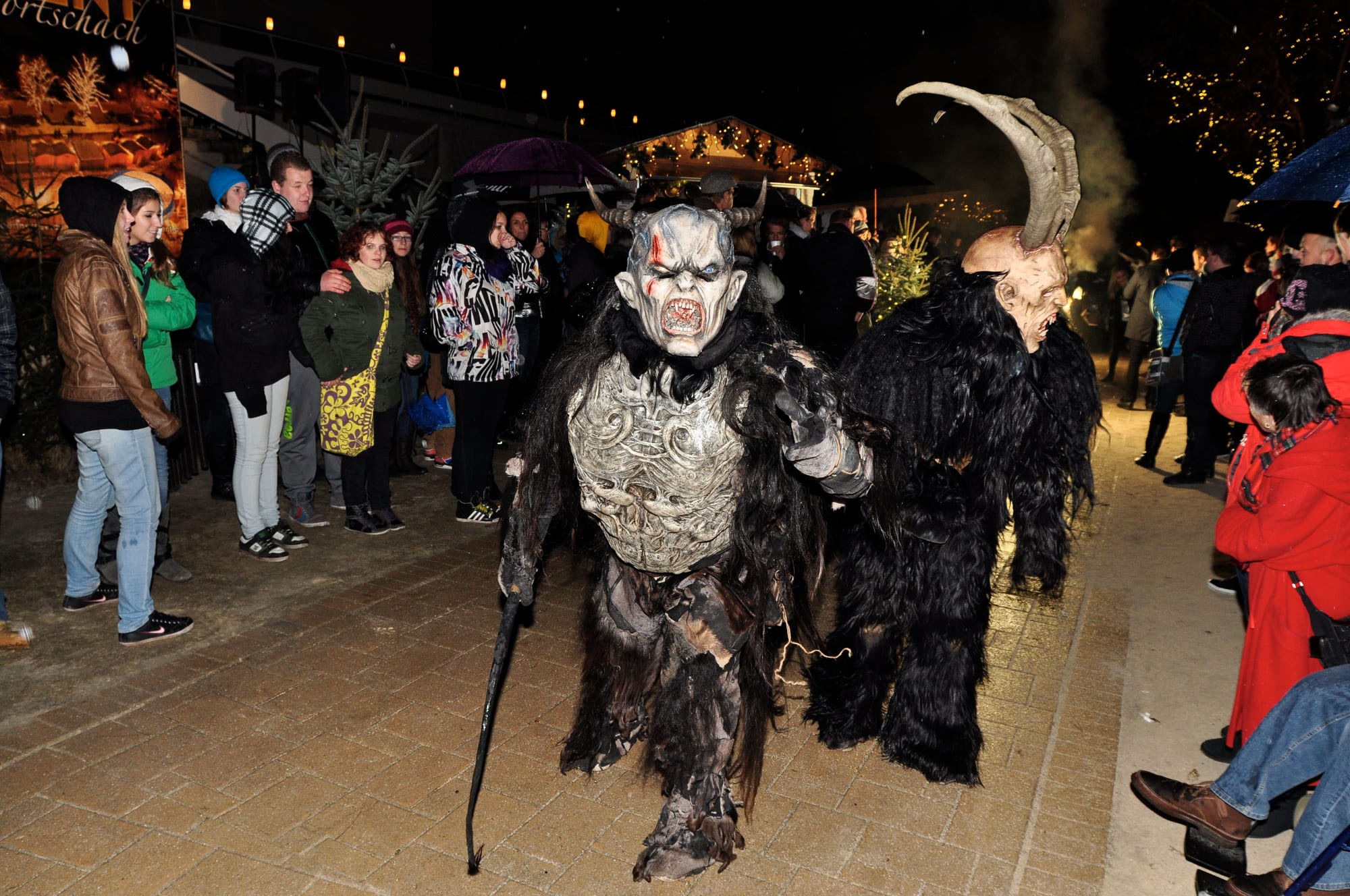
The year's customs follow the seasons and the Church calendar. In winter the two figures of St Nicholas and the Krampus appear. On the evening of 5 December, in towns and villages, the Krampus, a horned, fur-clad creature with a carved wooden mask and clanking bells, roams the streets, sometimes in large processions known as Krampus runs. St Nicholas, dressed as a bishop, rewards well-behaved children with sweets, nuts and tangerines, while the Krampus, his fearsome companion, is there to frighten those who have misbehaved; in the Krampus runs, young men in costume set out to scare the onlookers.
Advent is marked by wreaths in homes, Christmas markets and handmade straw stars and nativity scenes. On 4 December, St Barbara's Day, some families cut branches from fruit trees; if they blossom by Christmas Eve, luck is said to follow. Christmas itself is celebrated on the evening of 24 December, when presents are brought not by Father Christmas but by the Christkind, the Christ Child. Christmas Day is a quiet family day, and 26 December is for visiting. In the days around Epiphany, groups of children dressed as the Three Kings, the Sternsinger, go from door to door singing, chalking a blessing over the door and collecting money for aid projects abroad.
Winter is also ball season, which opens in November with the start of carnival and reaches its height in January and February. At the grander balls, debutantes in white and their partners in tailcoats open the evening with a polonaise before the call of "Alles Walzer!", "everyone waltz", invites all the guests onto the floor. Carnival ends with processions of masked figures in some country areas; one of them, the Schemenlaufen of Imst in Tyrol, was inscribed on UNESCO's list of intangible cultural heritage in 2012.
Spring and summer bring Easter customs such as the tapping of hard-boiled eggs against each other to see whose shell breaks first, the maypole on 1 May, which is also Labour Day, and Corpus Christi processions through streets and villages. In autumn, cattle are brought down from the high pastures decorated with flowers and wreaths. On 1 and 2 November, All Saints' and All Souls' days, families visit and tend the graves of their relatives.
Weddings come with games that guests enjoy as much as the couple. Friends may block the newlyweds' path with a decorated rope until they complete a small task, or have them saw through a log together as a test of teamwork. A popular custom is the "stealing" of the bride, when the groom's friends spirit her away to an inn and the groom must find her and settle the bill. Guests may receive small tulle bags of sugared almonds as a keepsake. Deaths have traditionally been announced with a Parte, a printed notice with a black border that names the deceased and the family members left behind.
Arts, crafts and music
Austria's classical music is world-famous, but the music most Austrians actually make is brass. According to the Austrian Commission for UNESCO, more than 140,000 musicians play in some 2,185 bands and over 1,200 youth ensembles across the country. Almost every village has one, and it turns out for church feasts, processions, maypole raisings, funerals and festivals, its players dressed in uniforms or regional costume. The bands' characteristic mellow sound, produced by wide-bored instruments such as the flugelhorn and tenor horn, is recognised by the commission as part of the country's intangible heritage, and the bands are valued for bringing generations together.
Traditional dress, known as Tracht, is still worn with pride rather than irony. The dirndl for women and lederhosen for men are the best-known forms, but colours, cuts and embroidery differ from valley to valley. They appear at festivals, weddings and church holidays, and remain everyday working clothes in some inns, hotels and farms. The position of the bow on a dirndl's apron is said to show the wearer's status: on the left for single, on the right for married or in a relationship, and at the back for widowed. Well-worn lederhosen are prized.
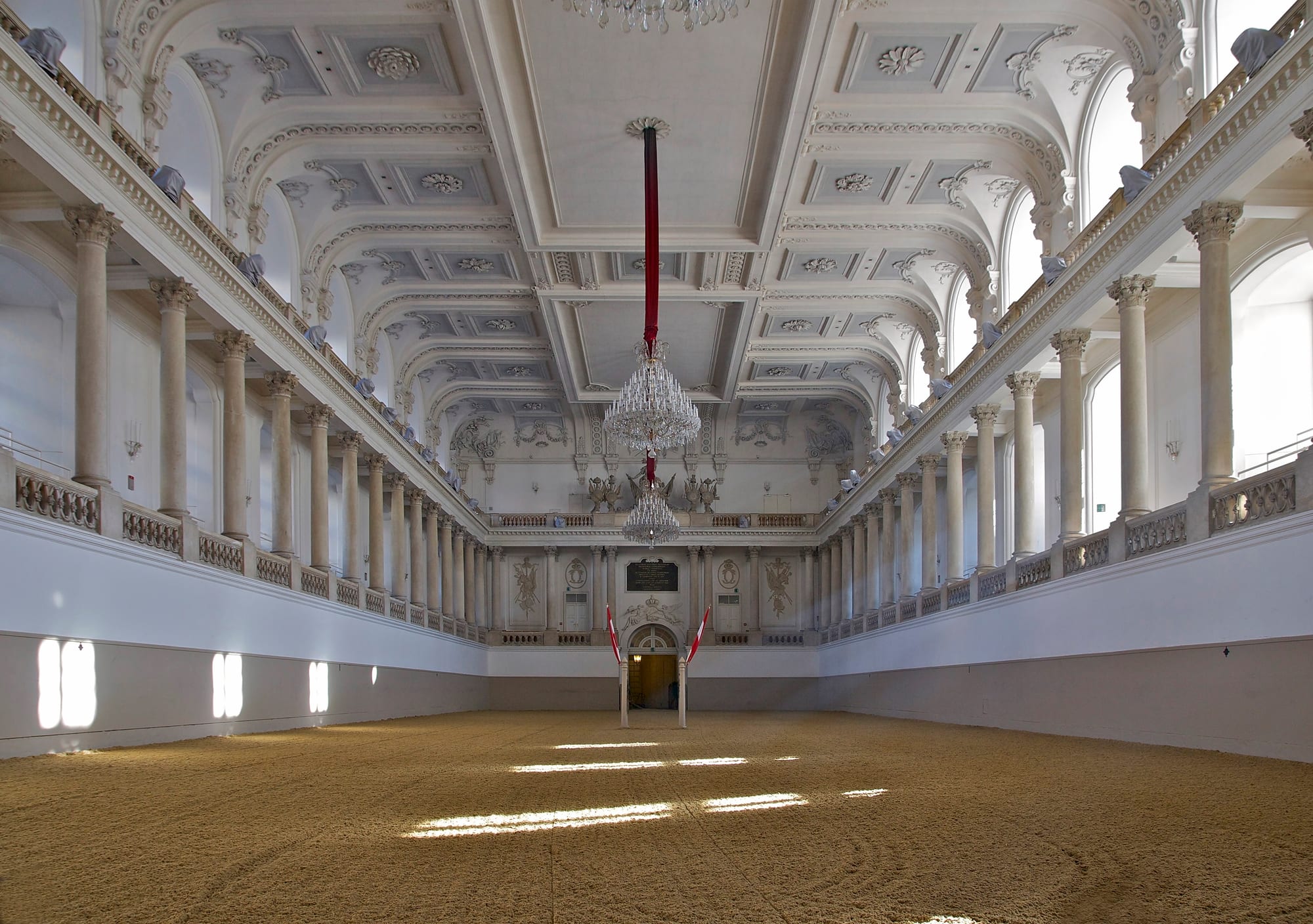
Several Austrian traditions appear on UNESCO's lists of intangible heritage, among them the classical horsemanship of the Spanish Riding School, where Lipizzaner stallions have been trained in the haute école for more than four centuries and young riders still learn by observation and instruction from experienced colleagues. Others reflect the country's crafts and mountain life, including the breeding of Lipizzaner horses, indigo resist block printing, timber rafting, dry stone walling, the seasonal droving of livestock and the knowledge of managing avalanche risk.
Dos and don'ts for visitors
- Do shake hands with everyone when arriving and leaving, with direct eye contact.
- Do say "Grüß Gott" or "Guten Tag" on entering a small shop, and goodbye on leaving.
- Do use "Sie", surnames and titles until invited to be less formal.
- Do arrive on time for appointments and invitations.
- Do keep hands on the table, not in the lap, and wait for "Guten Appetit" before eating.
- Do plan ahead for Sundays and public holidays, when most shops are closed.
- Don't drop in on people unannounced; arrange visits in advance.
- Don't leave a tip on the table; round up and tell the server the total when paying.
What to take away
Austrian customs can seem formal at first, but the handshakes, titles, quiet Sundays and seasonal rituals all serve the same purpose: to give daily life a dependable shape, and visitors who respect that shape will find a warm and generous welcome within it.