Food · Austria
Austria: Food and the National Dish
A breaded veal cutlet the size of a plate, a chocolate cake worth a seven-year lawsuit, and a coffeehouse culture protected by UNESCO
By Worldlore Editorial · 16 September 2026
An imperial kitchen
Austrian food is really the food of the old Habsburg Empire, filtered down through Vienna. For centuries the empire ruled over Hungarians, Czechs, Poles, Italians, Croats and more, and its capital's kitchens absorbed dumplings from Bohemia, paprika-rich stews from Hungary and pasta habits from northern Italy alongside its own Alpine dairy, pork and pastry traditions. What emerged is rich, meat-and-starch food built for cold winters, with an unusually serious dessert culture and a coffeehouse tradition formal enough to have its own UNESCO listing.
The national dish: Wiener Schnitzel
Wiener Schnitzel is a thin veal cutlet, pounded flat, coated in flour, egg and breadcrumbs, and fried in butter or clarified butter until the crumb puffs up and turns deep golden. It is served simply, with a wedge of lemon and either parsley potatoes or a potato salad, and it is the dish every Austrian menu is judged against.
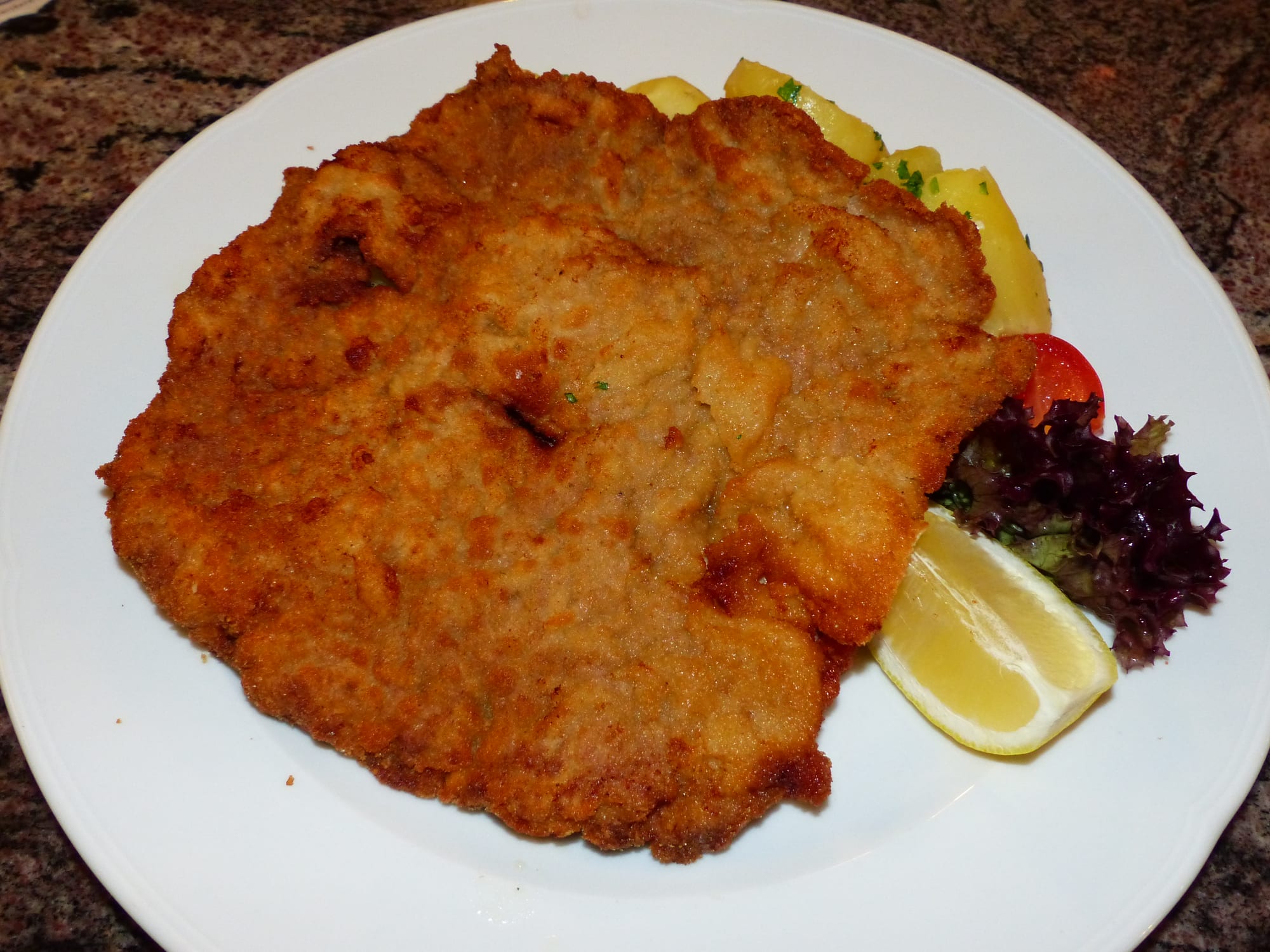
Strictly, "Wiener Schnitzel" should be veal — a schnitzel made with pork, which is common and cheaper, is properly called "Schnitzel Wiener Art" ("Vienna-style schnitzel") rather than the real thing, though the distinction gets blurred on many menus. Where the dish actually came from is disputed: Austrians and Italians have long argued over whether it descends from Milan's veal cotoletta or developed independently in Vienna, a debate that shows no sign of being settled.
Beyond the schnitzel
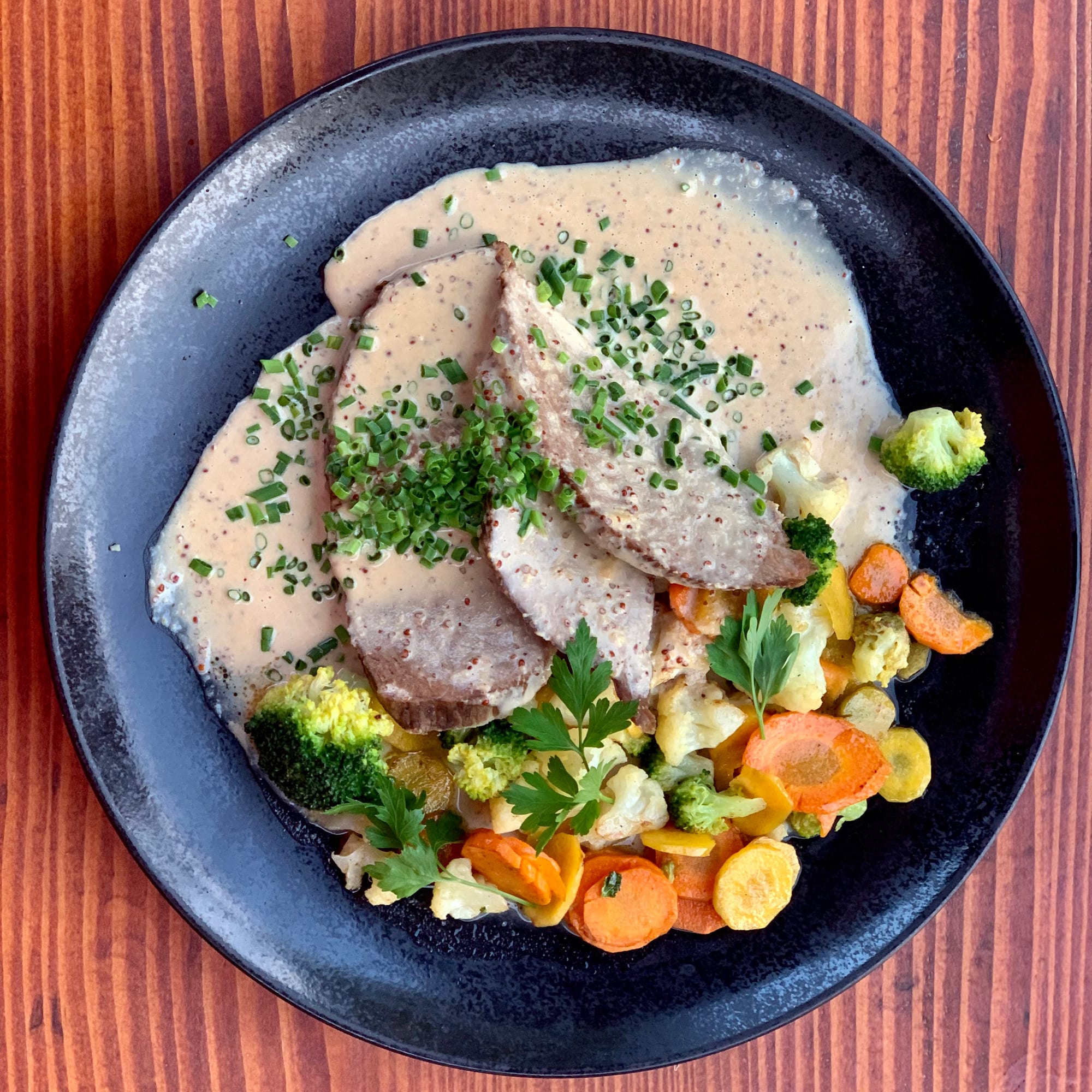
Tafelspitz, boiled beef simmered in a well-seasoned broth and served with apple-horseradish sauce and a chive sauce, has an equally strong claim to being Vienna's defining dish; it was reportedly the favourite meal of Emperor Franz Joseph I, and it remains classic Sunday food.
Gulasch, adapted from Hungary, is cooked here into a thick, deeply paprika-flavoured beef stew, usually served with a bread dumpling; and Knödel more broadly — bread or potato dumplings, savoury or filled with apricots for dessert — are a fixture wherever a Central European empire once reached.
A serious dessert culture
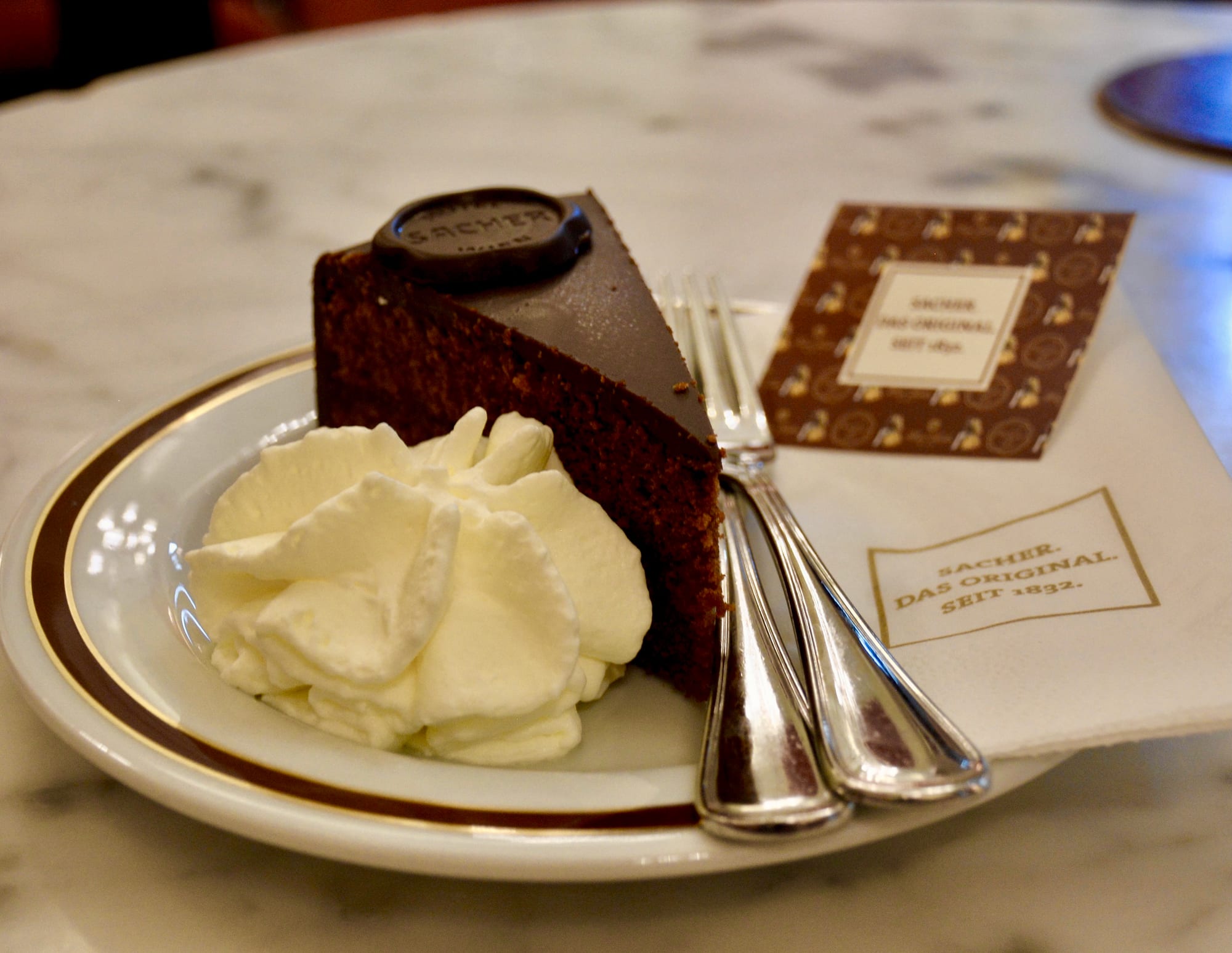
Vienna takes cake and pastry as seriously as any city in the world. Sachertorte, a dense chocolate cake with a thin layer of apricot jam under its chocolate glaze, was invented at the Hotel Sacher in 1832 and became famous enough that Hotel Sacher and the rival Demel bakery fought a real legal battle from 1954 to 1963 over which of them could call their cake the "Original Sachertorte" — Hotel Sacher won the right to the name, and its cakes still carry a chocolate seal to prove it.
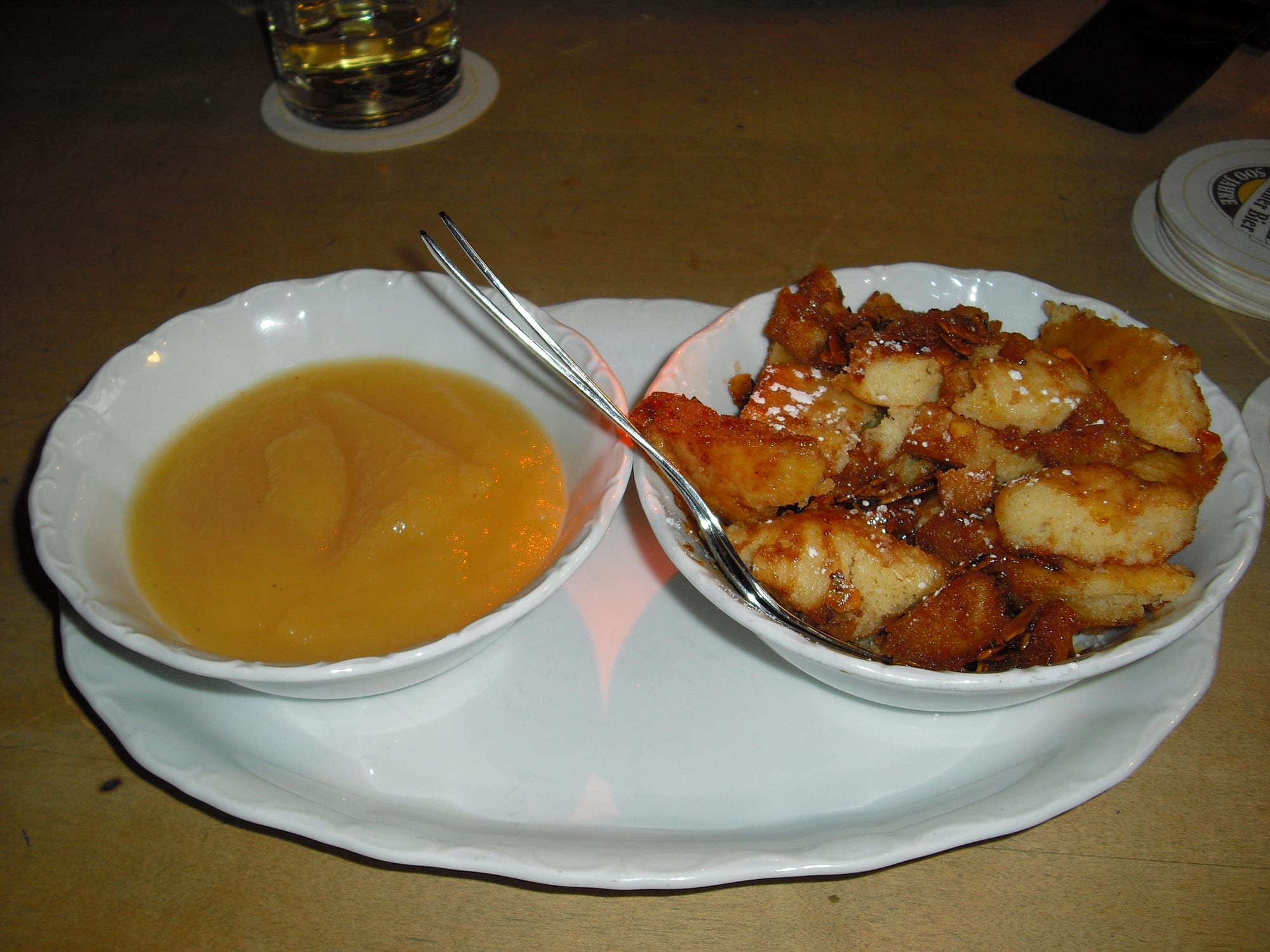
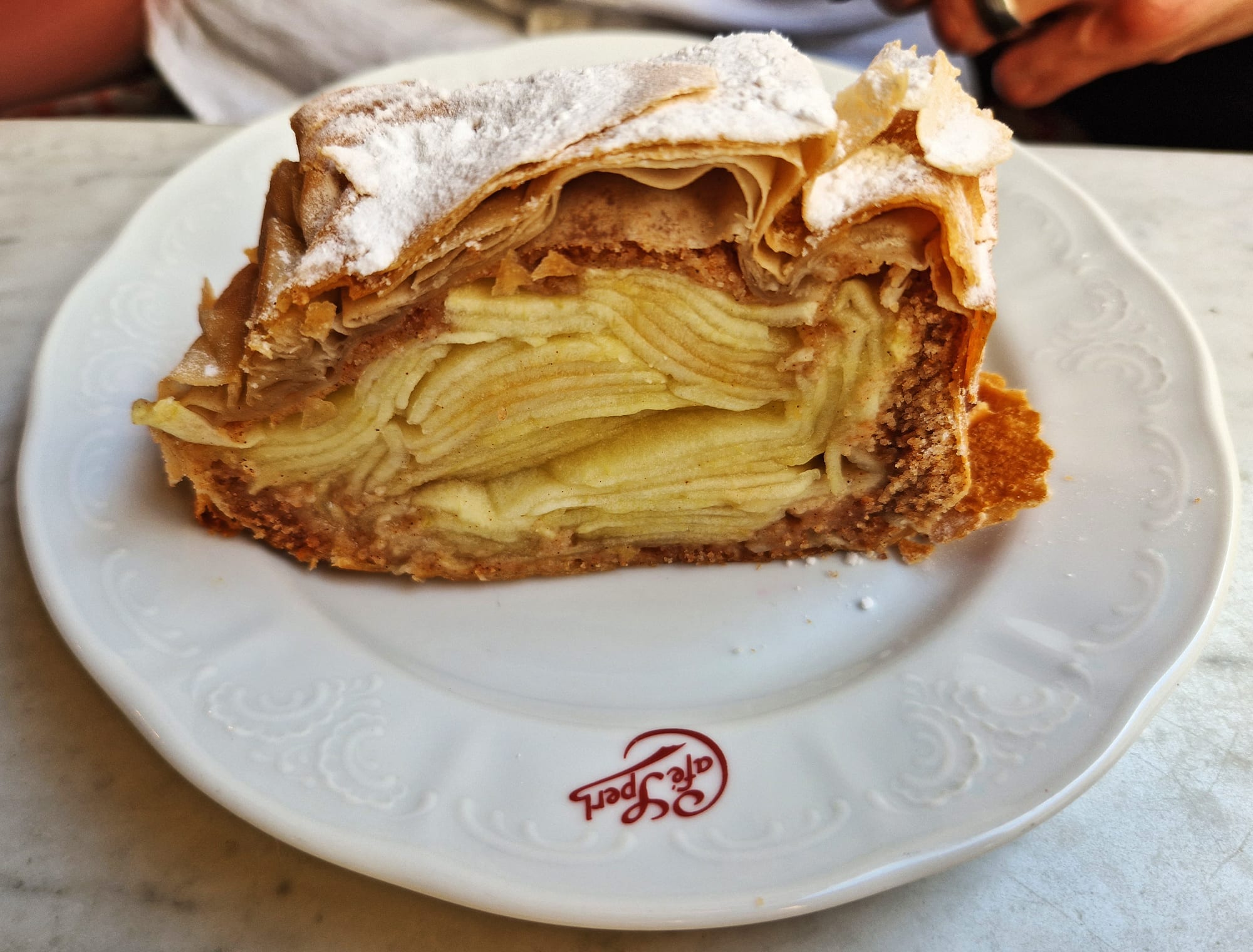
Kaiserschmarrn — a thick pancake torn into pieces, caramelised in butter and sugar, studded with raisins, and dusted with icing sugar — is named, by legend, for Emperor Franz Joseph himself, who supposedly loved it. Apfelstrudel, paper-thin pastry wrapped tightly around spiced apple, is the other dessert every bakery and coffeehouse keeps on hand, best eaten slightly warm.
Dishes to know
Five to recognise on any Austrian menu (regional specialities are covered on the region pages):
- Tafelspitz — boiled beef in broth with horseradish and chive sauce.
- Gulasch — a thick, paprika-rich beef stew adapted from Hungary.
- Sachertorte — dense chocolate cake with an apricot jam layer.
- Kaiserschmarrn — torn, caramelised pancake with raisins and icing sugar.
- Apfelstrudel — apple wrapped in paper-thin pastry, served warm.
Regional differences
Vienna's imperial cooking is only one strand. In Tyrol and the western Alps, the cuisine looks more like Switzerland's and Bavaria's — Käsespätzle, soft egg noodles baked with cheese and fried onions, and Tiroler Gröstl, a fried hash of potato, onion and leftover meat, are mountain food built for cold, hard-working days. Styria, in the south-east, is known for pumpkin seed oil, a dark, nutty oil drizzled over salads that is treated as a delicacy in its own right and exported worldwide. Carinthia has its own filled pasta, Kärntner Kasnudeln, stuffed with a sweet-savoury mix of curd cheese, potato and mint. The region pages go into each of these in more depth.
Sausage stands and street food
Not every Austrian meal is a sit-down affair. The Würstelstand, a sausage stand found on street corners across the country, sells Käsekrainer (a sausage with cheese running through it), Bosna (a spiced sausage in a roll with onion and curry-flavoured seasoning) and other Wurst variations to a lunchtime queue of office workers, a much faster and cheaper counterpart to the formal restaurant meal.
The coffeehouse and the Heuriger
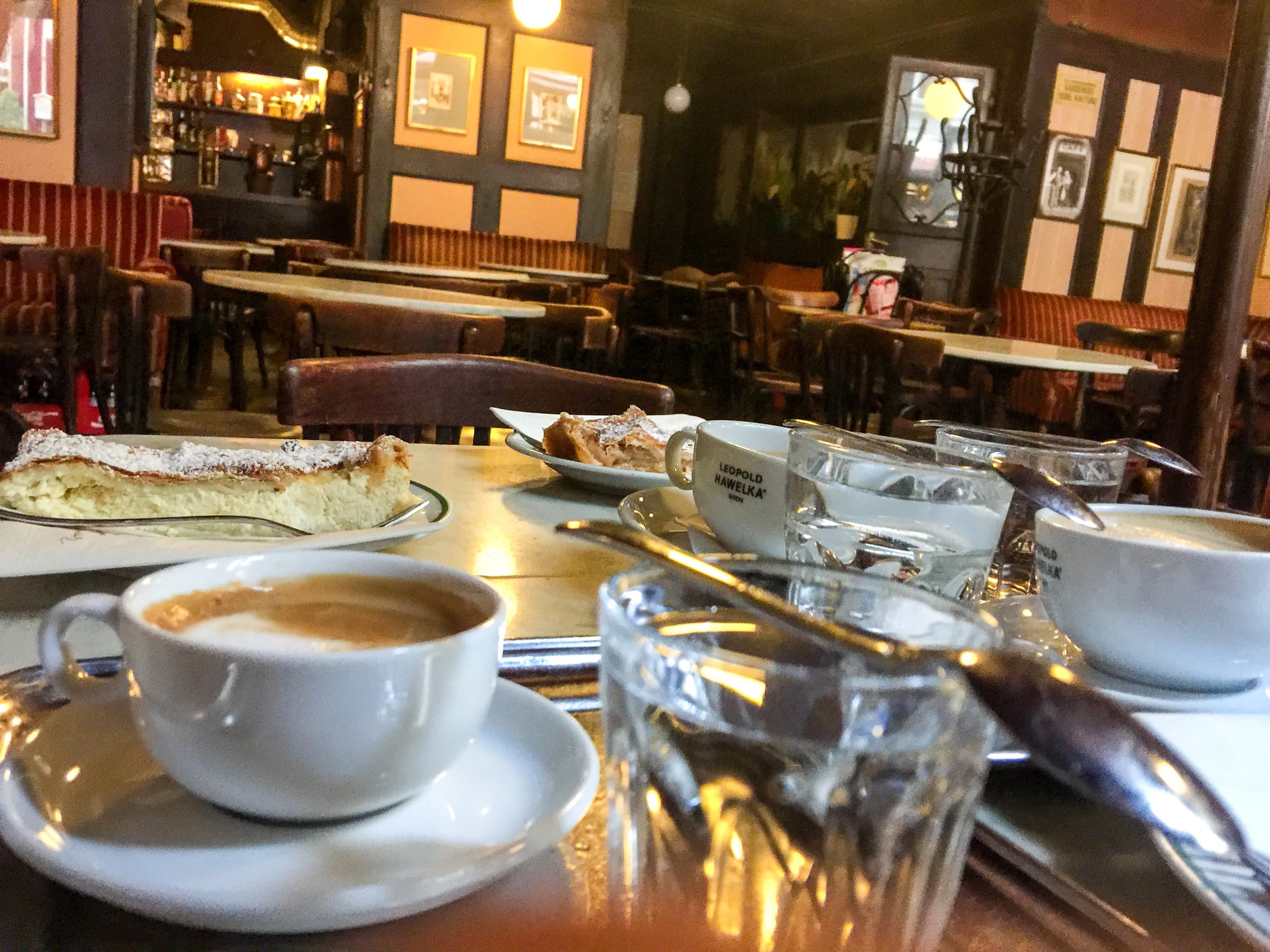
Vienna's coffeehouse culture is formal enough to have its own UNESCO intangible heritage listing (2011): a Melange, coffee with steamed milk and foam, ordered and then nursed for an hour or more with a newspaper, sitting in a room built for exactly that kind of unhurried time. Outside the city, the Heuriger — a wine tavern that sells the season's new wine, marked with a bundle of pine branches over the door — is the equivalent institution in autumn, especially around Vienna's own vineyards and the Wachau valley, known for Grüner Veltliner. Beer matters here too, and Austria has a genuine domestic brewing tradition alongside the wine.
Eating as a traveller
Vegetarians will find Knödel, cheese-based Käsespätzle and plenty of vegetable and dairy dishes, though schnitzel, Tafelspitz and gulasch are all built around meat. Tap water is safe and of very high quality throughout Austria. Sitting in a coffeehouse for a long stretch over one order is entirely normal and not considered a nuisance to staff — it is, in fact, the whole point of the place.
What to take from the table
A proper Wiener Schnitzel, a slice of something from a serious bakery, and an hour spent doing nothing in particular in an old coffeehouse: between them they cover most of what Austrian food is actually about.