History · Australia
Australia: The Oldest Cultures, a Young Nation
Sixty thousand years of Aboriginal Australia, a British penal colony, a federation built on exclusion, and a slow reckoning with both
By Worldlore Editorial · 10 September 2026
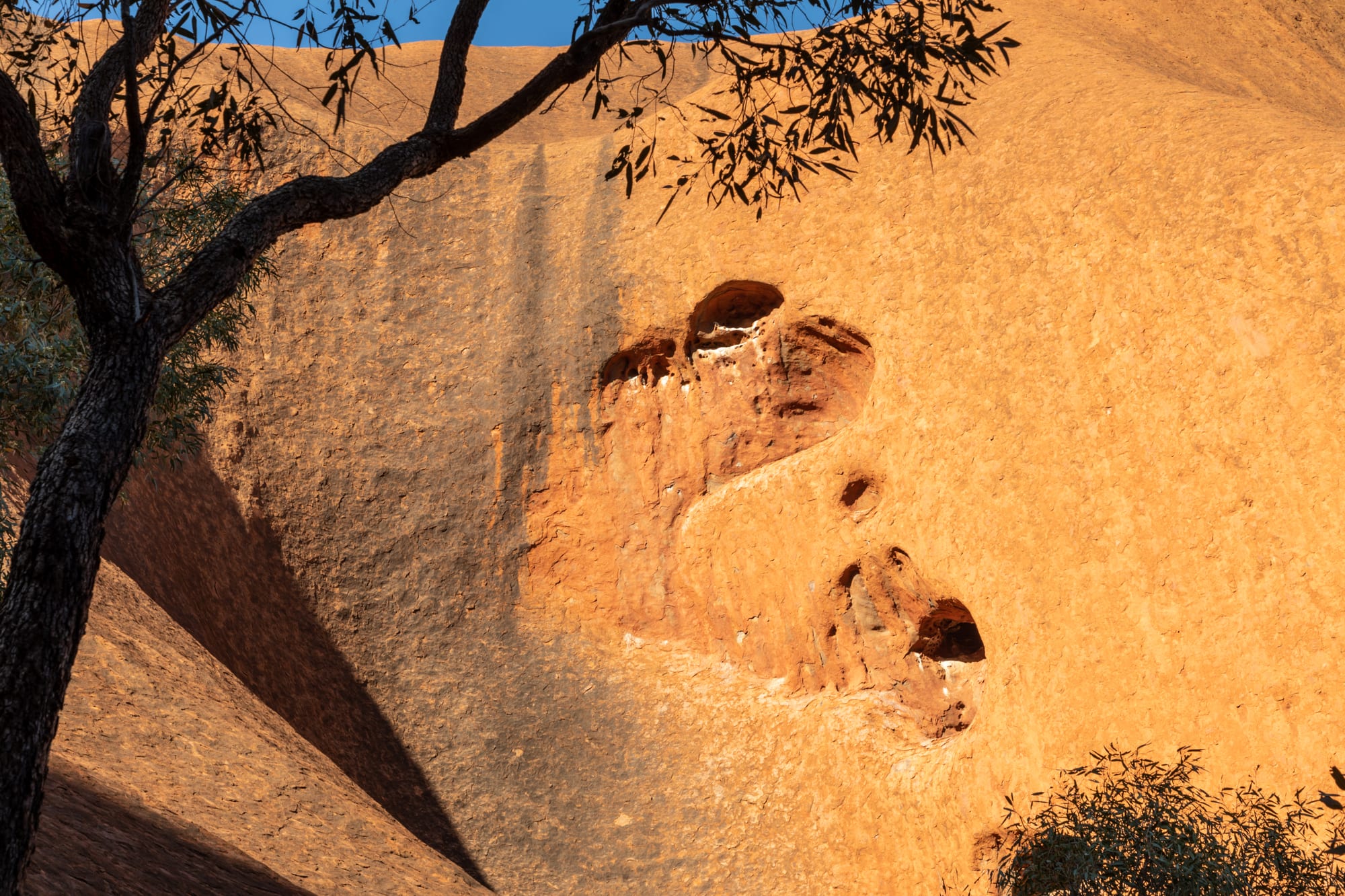
Two histories on one continent
Australia holds two histories that are wildly out of scale with each other. One is the record of Aboriginal and Torres Strait Islander peoples on this continent for at least 50,000 years, and probably closer to 65,000 — among the oldest continuous human cultures anywhere. The other is the history of the nation-state called Australia, which is barely more than a century old and began, in 1788, as a prison. Almost everything difficult about the country's past comes from the gap between the two: a very new settler society built on a very old land, without a treaty and without, for most of its history, much acknowledgement that the first history existed at all.
A short history
- from c. 65,000 years ago
Aboriginal Australia
Peoples settle the whole continent, developing hundreds of languages and land-management systems.
- 1606
First European contact
The Dutch ship Duyfken touches Cape York; Dutch navigators chart "New Holland".
- 1770
Cook
James Cook charts the east coast and claims it for Britain.
- 26 January 1788
The First Fleet
A penal colony is founded at Sydney Cove.
- 1851
Gold
Rushes in New South Wales and Victoria treble the settler population in a decade.
- 1 January 1901
Federation
Six colonies unite as the Commonwealth of Australia; the White Australia policy is among its first laws.
- 25 April 1915
Gallipoli
The Anzac landing becomes a founding national legend.
- 1947 onward
Mass immigration
A large-scale programme reshapes the population.
- 1967
The referendum
Australians vote overwhelmingly to count Aboriginal people in the census.
- 1992
Mabo
The High Court recognises native title and rejects the idea that Australia was legally empty.
The first Australians
The ancestors of Aboriginal Australians reached the continent by sea from south-east Asia during the last ice age, when sea levels were far lower, and spread across every environment it contains — rainforest, desert, alpine country, tropical coast. By the time Europeans arrived there were several hundred language groups and an intricate web of trade, law and ceremony. Far from simply living off the land, many groups actively managed it: using fire to shape grassland and encourage game, building fish traps and eel channels, and tending food plants — a system some historians now call farming by another name.
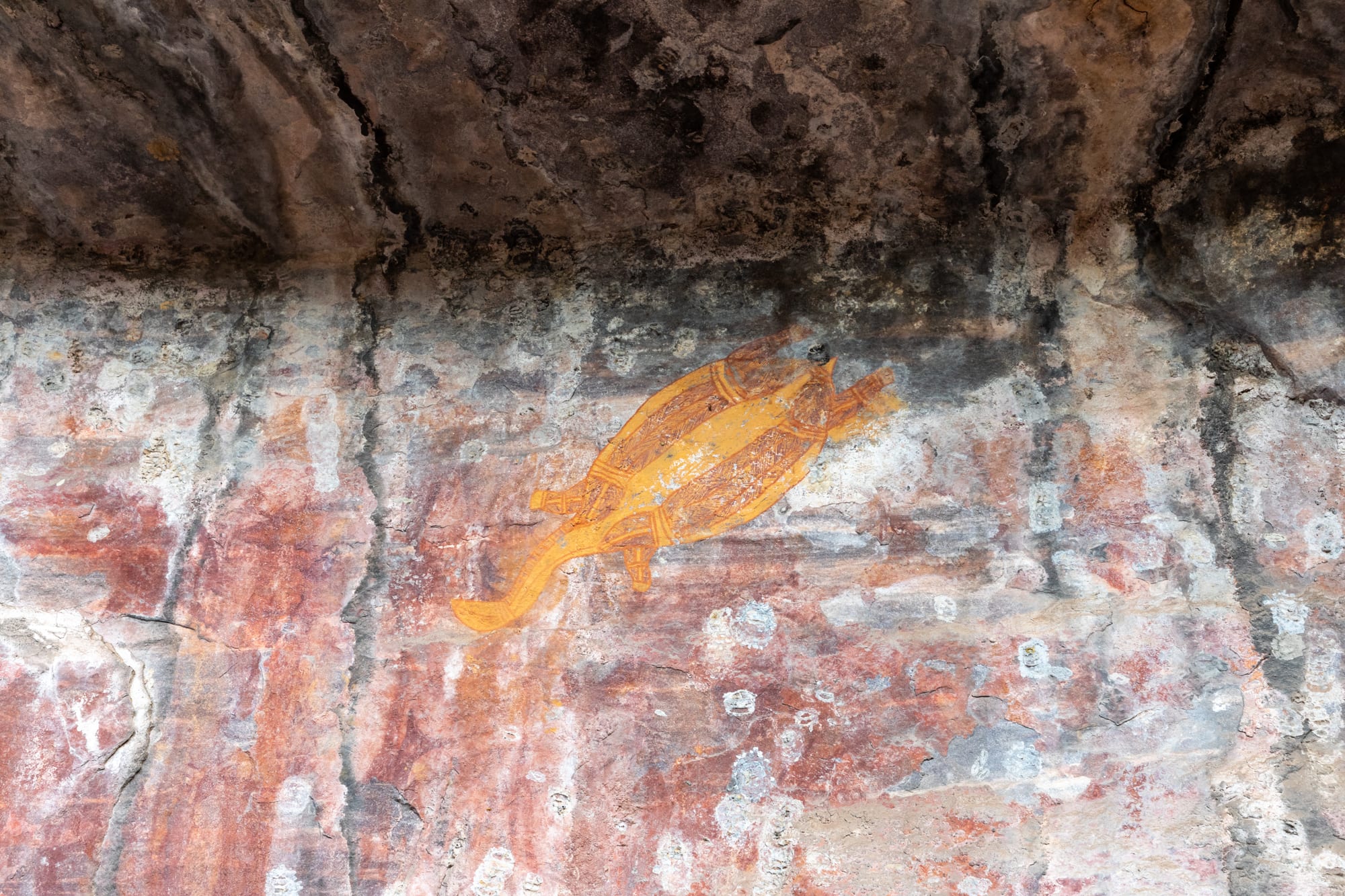
Dutch ships charted much of the western and northern coast in the 17th century and named the landmass New Holland, but found nothing to trade for and did not stay. It was James Cook, mapping the fertile east coast in 1770, who reported land worth settling, and claimed it for Britain.
A prison colony
Britain needed somewhere to send convicts after the loss of its American colonies, and in January 1788 the First Fleet — 11 ships carrying about 1,400 people, more than half of them prisoners — landed at Port Jackson and founded Sydney. Over the next 80 years around 160,000 convicts were transported to the Australian colonies. The settlement survived near-starvation, then grew: sheep runs pushed inland from the 1820s, wool became the export that paid for everything, and free immigrants began to outnumber convicts.
For Aboriginal people the arrival was catastrophic. Smallpox swept the Sydney region within two years; violence on the expanding frontier killed many thousands more over the following century; and survivors were pushed onto missions and reserves. In Tasmania the Aboriginal population was all but destroyed within three decades. None of it was covered by any treaty — the land was simply declared to belong to the Crown.
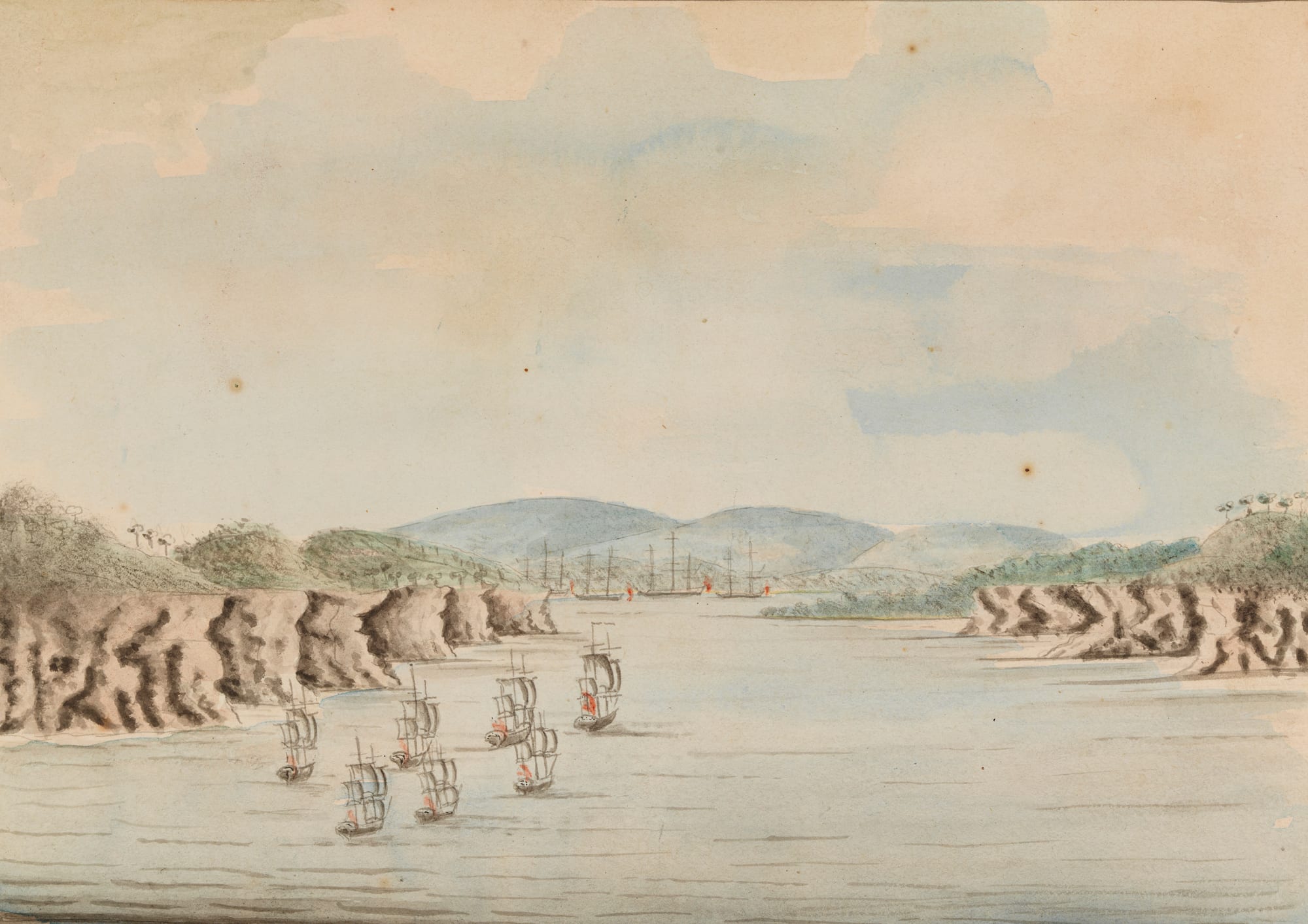
Within a few years the settlement had a farm, a brickworks and a whaling trade, and convicts who had served their time were being granted land — the beginnings of a free colonial society growing on top of the prison.
Gold and self-government
The discovery of gold in 1851, near Bathurst and then at Ballarat and Bendigo, transformed the colonies. The settler population trebled in a decade, cities boomed, and tens of thousands of Chinese miners arrived — provoking the anti-Asian feeling that would harden into national policy. In 1854 diggers at Ballarat, angry at expensive mining licences and having no vote, built a stockade and fought a brief, one-sided battle with troops. About two dozen men were killed, the leaders were acquitted, and the Eureka Stockade entered Australian memory as a birthplace of its democracy. Within a few years most colonies had won self-government and something close to manhood suffrage.
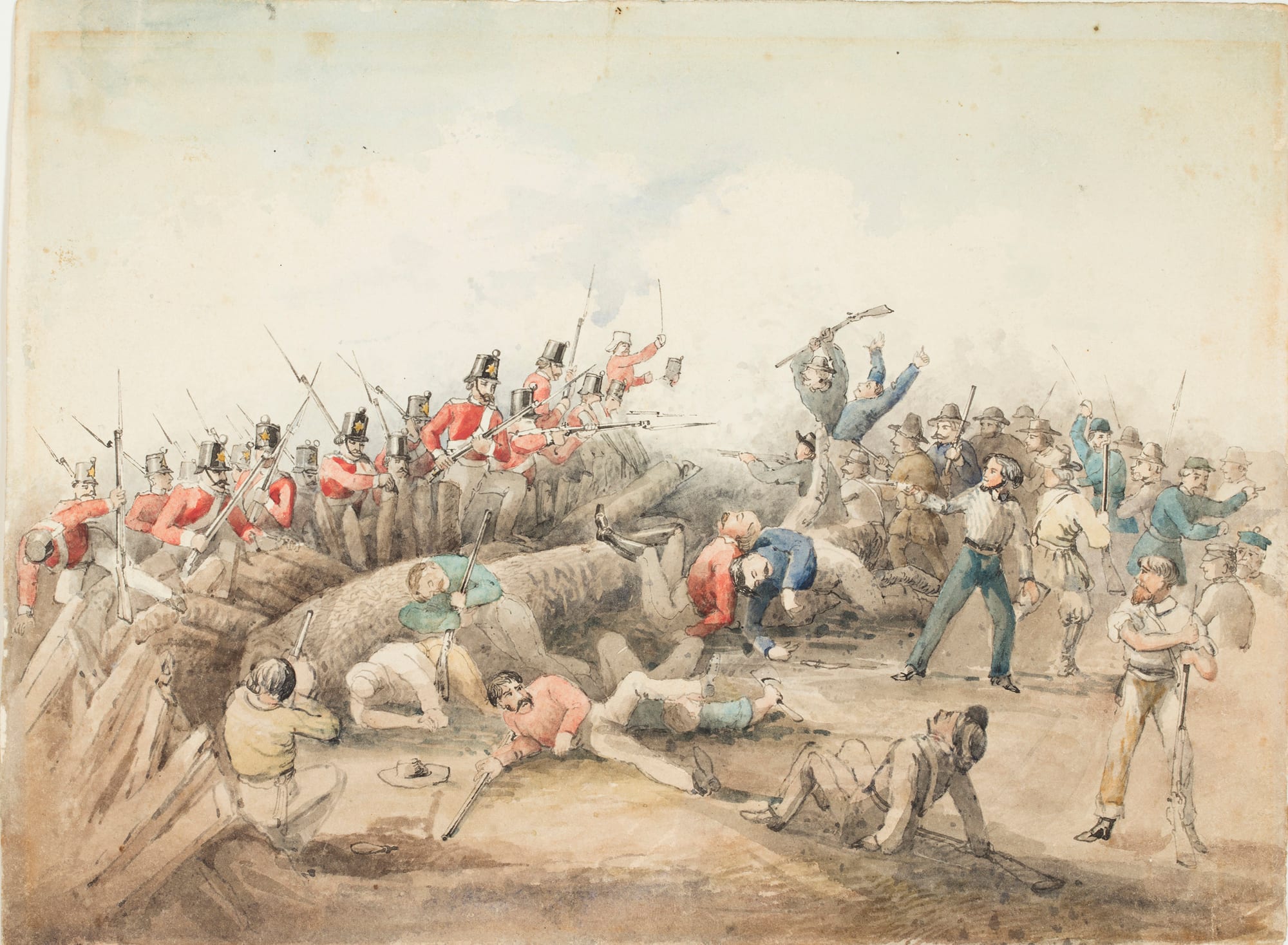
The rebels lost the fight but won the argument: the miners' demands for the vote and for cheaper licences were largely met, and Eureka passed into legend as the moment Australians stood up for democratic rights.
Federation and White Australia
On 1 January 1901 the six colonies joined together as the Commonwealth of Australia, a self-governing dominion under the British Crown. Among the new parliament's first acts was the Immigration Restriction Act, the legal core of the "White Australia policy", which used a dictation test to keep out non-Europeans and which most Australians of the day regarded as essential to the nation. The same constitution left Aboriginal people out of the census and out of the count that set electorates. A young country had defined itself, in law, by who it excluded.
Gallipoli and the wars
Australia went into the First World War in 1914 with huge enthusiasm; about 416,000 men enlisted from a population of fewer than five million, and some 60,000 died. The landing at Gallipoli on 25 April 1915 — a costly failure as a military operation — became the country's central national story, commemorated every year as Anzac Day. The Second World War brought the danger home: after the fall of Singapore and the bombing of Darwin in 1942, Australia turned decisively from Britain to the United States as its protector, an alliance formalised in 1951.
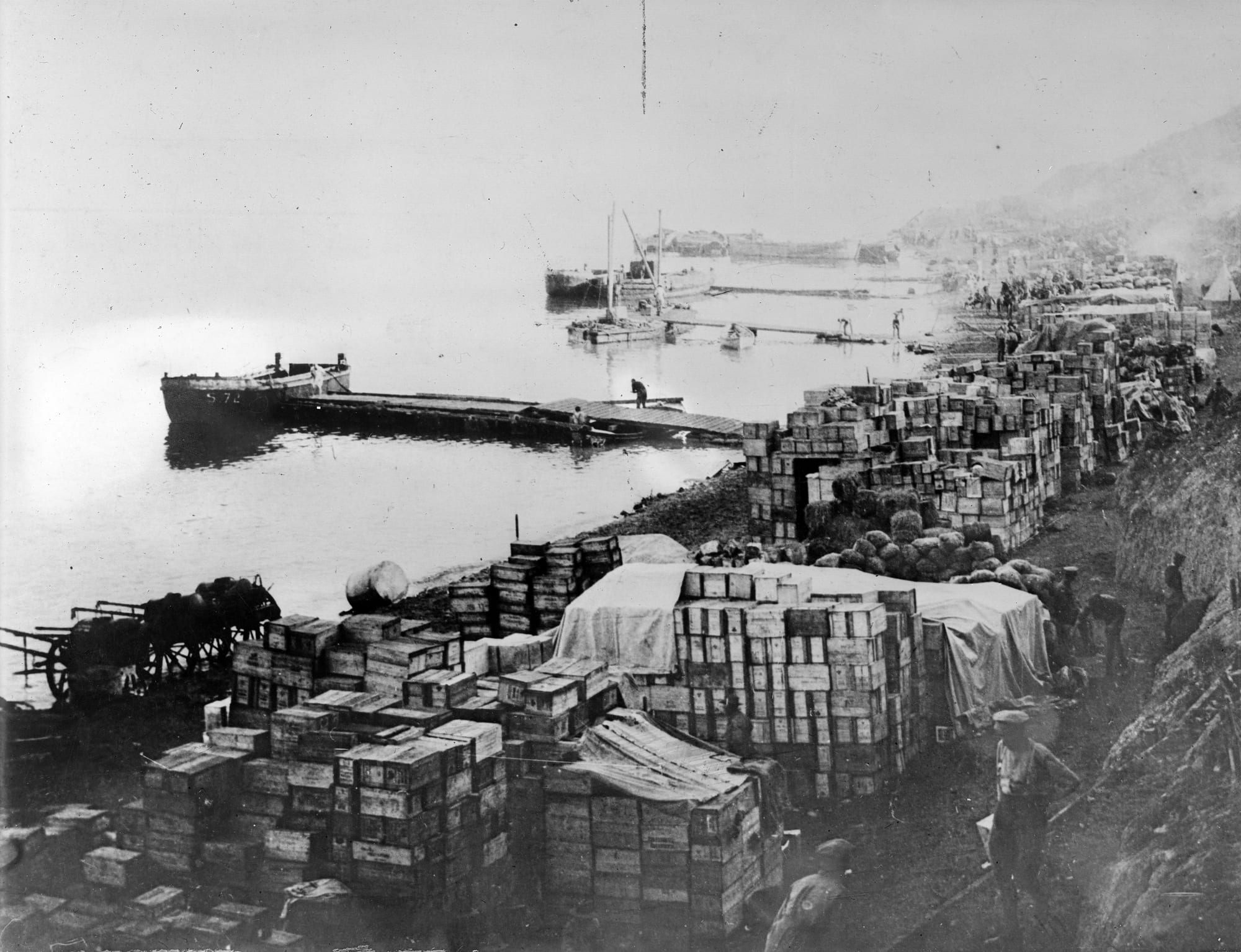
The idea that the nation had been forged in that campaign — courage, endurance, mateship under hopeless orders — became, and remains, the most powerful story Australia tells about itself.
Populate or perish
After 1945 Australia launched one of the largest immigration programmes in its history, under the slogan "populate or perish". It began with Britons, then displaced people from post-war Europe, then Italians, Greeks and others, brought out on assisted passages. The population grew from about 7.5 million in 1945 to 13 million by 1970, and projects like the Snowy Mountains hydro scheme, built largely by migrant labour, became symbols of the new Australia. The racial basis of immigration was dismantled step by step and finally abandoned in 1973; from the mid-1970s "multiculturalism" became official policy, and large-scale migration from Asia followed.
The reckoning
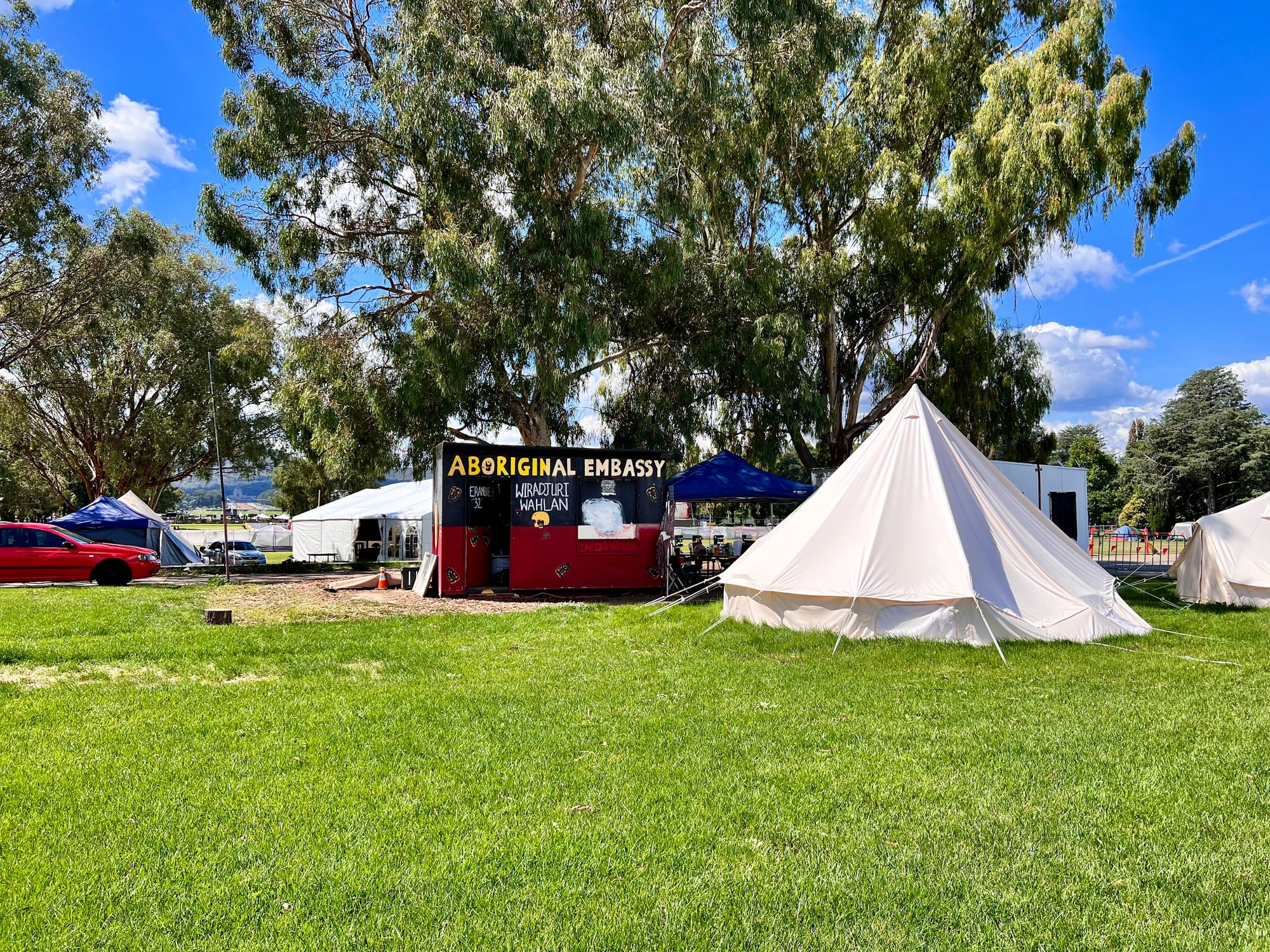
The postwar decades also brought the beginnings of a reckoning with the first history. Aboriginal people won the federal vote in 1962; in 1967 more than 90 per cent of Australians voted to have them counted in the census and to let the Commonwealth legislate for them. Gurindji stockmen walked off Wave Hill station in 1966 in a strike that became a land-rights campaign, and in 1972 activists planted an Aboriginal Tent Embassy on the lawns of Parliament House in Canberra, where it still stands.
In 1975 the elected Whitlam government, which had pushed through a wave of reforms, was dismissed from office by the Governor-General — a constitutional shock without parallel in Australian history. In 1992, in the Mabo case, the High Court threw out the doctrine that Australia had been legally empty land in 1788 and recognised that native title could survive; a Native Title Act followed the next year. In 2008 the prime minister formally apologised in Parliament to the Stolen Generations of Aboriginal children taken from their families.
Australia now
Modern Australia is a prosperous country of some 27 million people, close to a third of them born overseas, its economy tied heavily to exporting minerals and gas to Asia. It has not resolved its founding questions. A 1999 vote to become a republic was defeated; a 2023 referendum on giving Indigenous Australians a formal advisory voice in Parliament was defeated more heavily. The country remains a constitutional monarchy, still working out how a settler nation and the oldest cultures on earth share the same continent.