Culture & Customs · Australia
Australia: A Fair Go on Ancient Country
The world's oldest living cultures and a young, informal society side by side, a first-name greeting for almost everyone, and a set of manners built on equality, understatement and respect for Country
By Worldlore Editorial · 30 September 2026
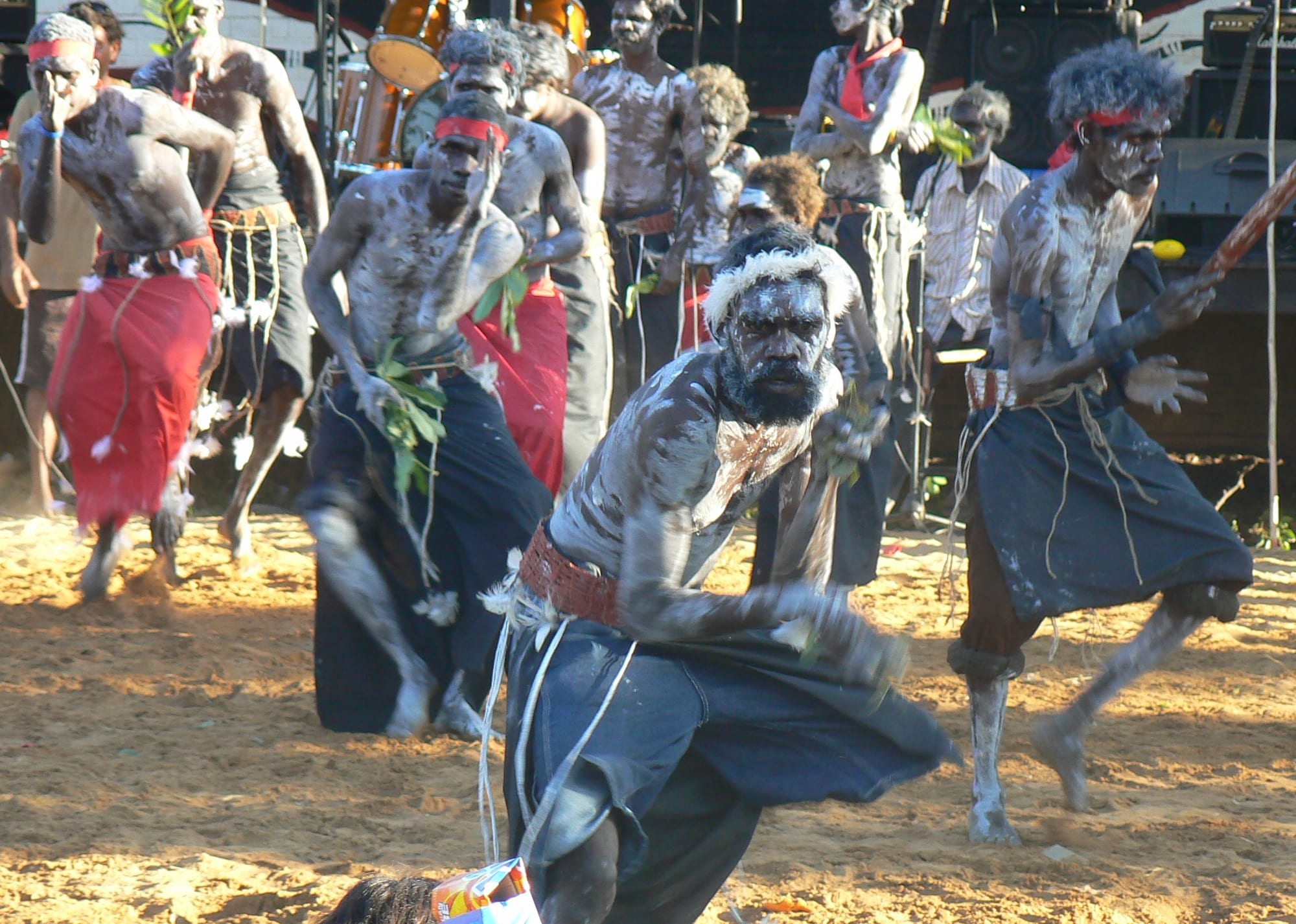
A conference is about to begin. Before anyone mentions the agenda, an Aboriginal elder steps up to the microphone and welcomes the audience to the land of their people, perhaps with a song, a speech, or the drifting smoke of gum leaves smouldering in a small fire. Minutes later the chair introduces herself by her first name, cracks a joke at her own expense and asks everyone to help themselves to coffee. The two halves of the morning say a great deal about Australia. One draws on customs tens of thousands of years old, belonging to the peoples whose Country this has always been; the other reflects a young, deliberately informal society that dislikes pretension and prizes treating everyone as an equal.
Faith, identity and values
Australia is a secular country with a high degree of religious freedom and a wide mix of faiths. At the 2021 census, 43.9 per cent of people identified as Christian, down from 52.1 per cent five years earlier, while 38.9 per cent reported no religion at all, the fastest-growing category. Catholics make up about a fifth of the population and Anglicans around one in ten. Churches still run many schools, hospitals and charities, but most Australians keep their beliefs private and tend to avoid open displays of religiosity, particularly at work.
Far older are the spiritual traditions of Aboriginal and Torres Strait Islander peoples, which stress reciprocal relationships between people, land, animals and the other elements of the natural world. Central to many of them are the ancestral narratives often called the Dreaming, which tell how the physical and social world was shaped. These are not abstractions. Uluṟu has been sacred to its Traditional Owners, the Aṉangu, for tens of thousands of years, and climbing it was not generally permitted under Tjukurpa, Aṉangu law and culture. Customs of welcome also survive in modern form. Traditionally, crossing into another group's Country required permission, and the hosts would welcome visitors and offer safe passage. Today a Welcome to Country, delivered by Traditional Owners or with their permission, opens many formal events, while an Acknowledgement of Country, which anyone may give, has become common at meetings, in speeches and even in email signatures since the reconciliation movement of the 1990s.
Beneath everyday behaviour lie a handful of ideals. The "fair go" is the belief that everyone deserves an equal chance regardless of background, and it underpins a strong dislike of hierarchy and snobbery. Anyone who boasts or sets themselves above others risks being cut down to size, the so-called tall poppy syndrome, and even successful people tend to play down their achievements. Mateship describes deep loyalty between friends, built on camaraderie rather than rank. A relaxed outlook, summed up in the phrase "she'll be right", sits alongside an affection for the larrikin, the irreverent character with little regard for rules, although in practice most Australians respect the law.
Greetings and meeting people
Greetings are informal. A firm handshake with eye contact is usual between strangers, and first names are used almost immediately, even with senior colleagues. "Hi", "Hello" or "Hey" are the everyday words; "G'day" survives, though it is heard less in the cities. "How are you going?" is a friendly formula rather than a real enquiry, and the expected answer is a brief "Good, thanks, how are you?" rather than an account of one's health. Close friends may hug or kiss on the cheek, and in casual company a simple nod or lift of the chin may be all the greeting required.
Conversation is direct, but softened by understatement and humour. Criticism is often delivered vaguely to keep things polite, and the humour is dry, sarcastic and frequently self-deprecating, which can be hard for newcomers to read. Teasing is a sign of acceptance, and taking a joke well wins more friends than taking offence. Swearing is common in casual speech and is often meant to sound friendly rather than aggressive, and slang, much of it formed by shortening words, as in "arvo" for afternoon, runs through everyday talk. People stand about an arm's length apart, and while eye contact signals sincerity, a steady stare is broken from time to time. Questions about salary, wealth, weight or age are generally considered inappropriate. One gesture to avoid is the V sign made with the palm facing inwards, which is offensive.
Hospitality and being a guest
Visits to someone's home are arranged in advance, and turning up unannounced, or bringing along extra friends or family without asking, is poor form. Punctuality matters for appointments and meetings, though arriving ten or fifteen minutes late to a party or small gathering is generally fine. A modest gift such as a bottle of wine or some beer is a welcome gesture for a dinner invitation; otherwise gifts are mostly kept for birthdays, Christmas and other special occasions.
Much entertaining happens outdoors and informally. When a host holds a gathering, guests are often asked to "bring a plate", meaning a dish to share, such as a salad to go with the meat, and invitations to larger parties make clear whether drinks are supplied or guests should "BYO", bring their own. In a group at the pub, drinks are bought in rounds, known as shouts, and each person is expected to buy at least one round for everyone. At the table, knife and fork laid together on the plate signal that the meal is finished. Tipping is not expected in restaurants or for other services, and queuing patiently for one's turn is taken for granted.
The same egalitarian instinct shapes behaviour as a guest. Asking others to do things one could easily do oneself goes down badly, as does pulling rank, and contributing money or effort to a group outing is expected.
Festivals and life's big moments
The national day, Australia Day on 26 January, marks the arrival of the First Fleet in 1788 and is a public holiday of barbecues, citizenship ceremonies and fireworks. It is also contested. For many Aboriginal and Torres Strait Islander people and their supporters it is Invasion Day or Survival Day, the day that dispossession began, and debate over whether the date should change returns every year.
Anzac Day, 25 April, is the most solemn day of the calendar, honouring Australians who have served and died in war. The dawn service echoes the military stand-to, when soldiers were woken in darkness to be alert at first light; the dawn service held at the Sydney Cenotaph in 1928 is regarded as the start of the continuous tradition. Later in the morning come marches of veterans and their descendants, then services with wreaths, hymns, the Last Post and a minute's silence. By the mid-1930s the day's other customs, including reunions and games of two-up, the coin-tossing game played by soldiers, were firmly established.
NAIDOC Week, held from the first to the second Sunday of July, celebrates the history, culture and achievements of Aboriginal and Torres Strait Islander peoples. Its roots lie in the Day of Mourning of 26 January 1938, a landmark Aboriginal civil rights protest; the observance moved to July in the 1950s to include celebration as well as protest, and became a week-long event in 1975. It is now marked by communities and organisations across the country.
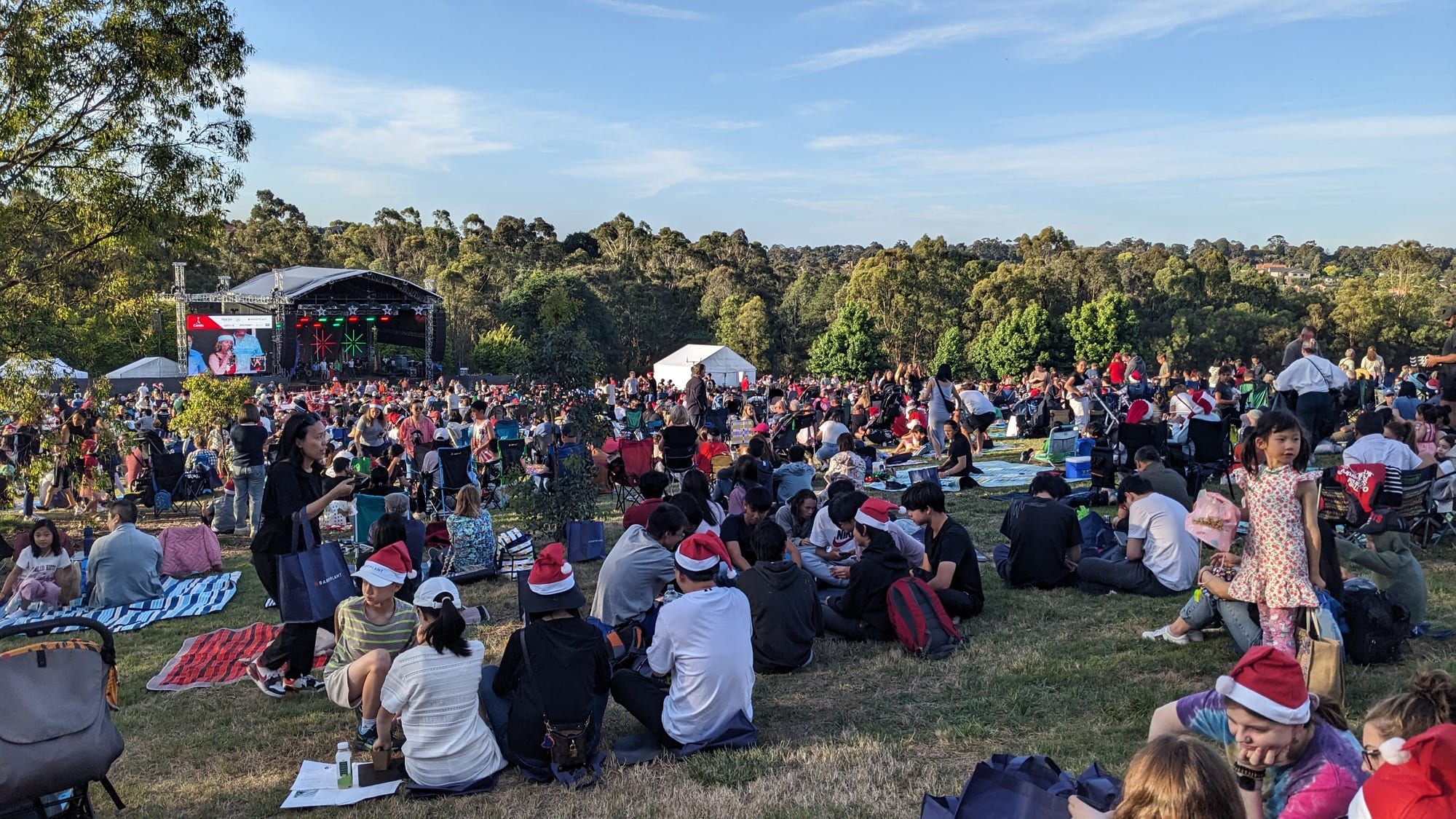
Life's milestones reflect a varied and largely secular society. Many couples live together before marrying, many marry around the age of 30, and same-sex marriage has been legal since 2017. Among Aboriginal and Torres Strait Islander peoples, death is followed by Sorry Business, a period of ceremony and mourning that can last days, weeks or even months before the funeral. It may involve not speaking the name of the person who has died, not showing their image or playing their voice, and family members staying at home and stepping back from other activities. Funerals are expected to involve the whole community, and during Sorry Business other meetings and events are put aside, something outsiders are asked to respect. For the same reason, many institutions warn Aboriginal and Torres Strait Islander audiences when material contains images, voices or names of people who have died.
Arts, crafts and music
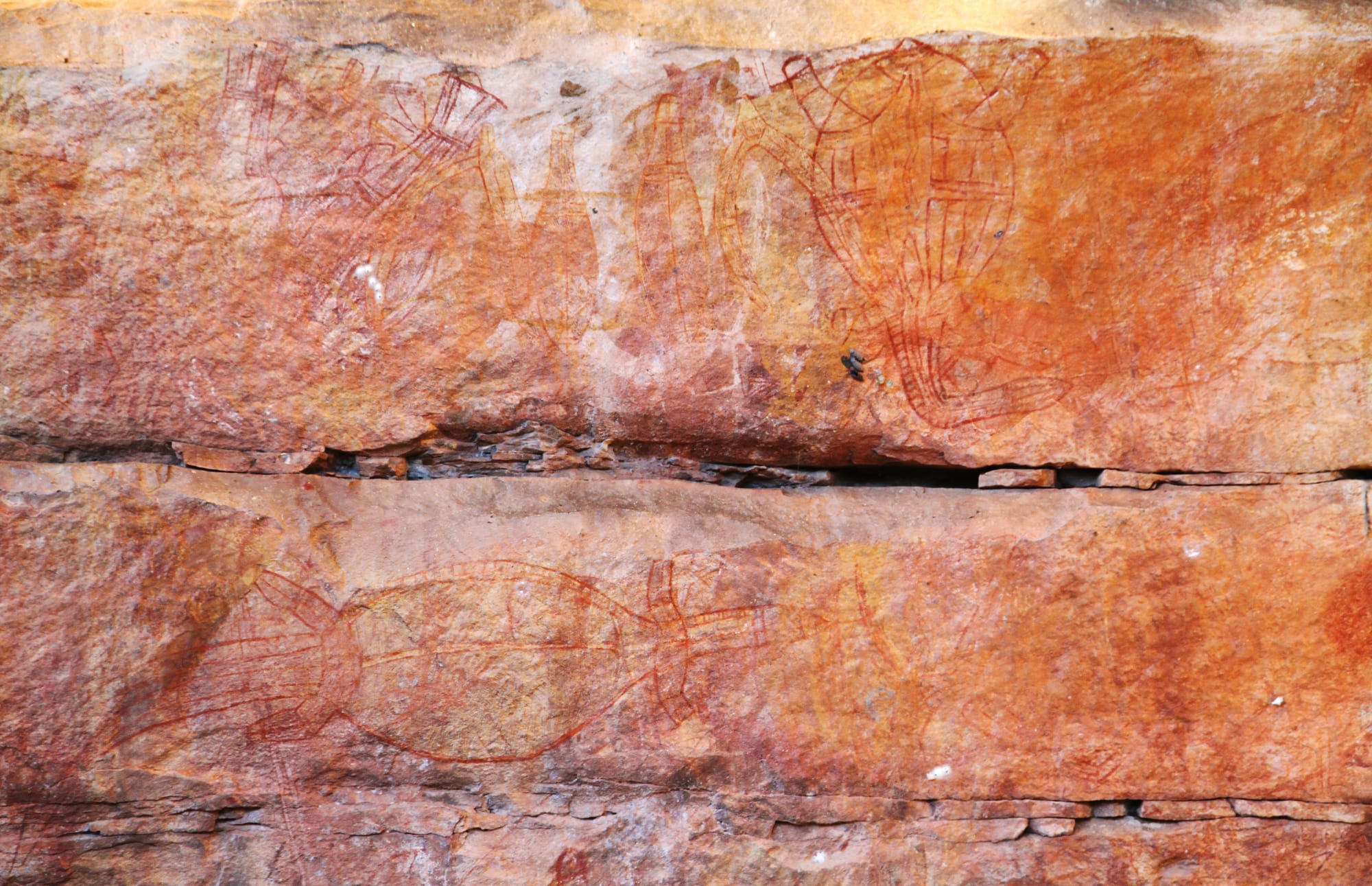
Australia holds one of the longest artistic records on Earth. In Kakadu National Park, on UNESCO's World Heritage List, some rock paintings are up to 20,000 years old. They show animals that are still hunted, objects that are still used and activities that are still carried out, painted in styles that range from naturalistic figures to the x-ray style, in which bones and organs are drawn inside the outline of a fish or animal. For the Bininj and Mungguy peoples of the region, painting is an expression of identity and connection to Country, and the act of painting has often mattered more than the finished image.
Aboriginal art also found a modern form. In 1971, a group of artists at the government settlement of Papunya in the Central Desert began painting traditional designs with acrylic paint on boards, and the following year they formed Papunya Tula Artists, a cooperative owned and operated by Aboriginal people. The Western Desert movement they started, popularly known as dot painting, brought contemporary Aboriginal art to international attention and inspired artists across the country.
The instrument most visitors associate with Australia belongs to one people in particular. The yidaki, widely known by the introduced name didgeridoo, comes from the Yolŋu of North East Arnhem Land, where it is made from a eucalyptus trunk hollowed out by termites and fitted with a beeswax mouthpiece. For the Yolŋu it is bound up with law and ceremony, song and dance; in ceremonial contexts it is played only by men, and while playing by women is sometimes discouraged, some scholars note no prohibition in informal settings. Other northern languages have their own names for similar instruments, and the yidaki has since become a symbol of Aboriginal culture far beyond its original home.
Dos and don'ts for visitors
- Do shake hands firmly and use first names; answer "How are you going?" with a brief, cheerful reply.
- Do listen respectfully during a Welcome to Country or Acknowledgement of Country at the start of an event.
- Do bring a plate or drinks when asked, and buy a round when drinking in a group.
- Do queue, arrange visits in advance, and be on time for appointments.
- Don't climb Uluṟu, which has been prohibited since 2019, or photograph sites signposted as culturally sensitive.
- Don't photograph Aboriginal people, including Aṉangu at Uluṟu, without asking first.
- Don't boast or show off; self-deprecating humour goes down far better.
- Don't ask about salary, wealth, weight or age, and don't feel obliged to tip.
What to take away
Australian manners rest on two foundations — respect for the oldest living cultures on the continent and an instinct to treat everyone as an equal — and visitors who honour both will find the welcome as easy-going as its reputation.