Culture & Customs · Aruba
Aruba: Sweet Land, Many Tongues
A Catholic island with a creole language all its own, a New Year sung from door to door, and a Carnival season that runs for months
By Worldlore Editorial · 30 September 2026
It is the last night of the year, and a small group of musicians is standing at a front door. One carries a drum, another a tambu, a third a wiri, a ridged metal scraper, and at the front a lead singer improvises verses wishing the household health and success in the year to come. The family comes out to listen. When the song ends, a hat is passed round for a contribution, and the group moves on to the next house, where the same welcome waits. This is Dande, Aruba's New Year serenade, and a visit is welcomed as a festive good omen. Much of what matters on the island is folded into that one scene: a Catholic calendar, a creole language sung with pride, music that owes something to Africa, Europe and South America at once, and a habit of turning up at other people's doors with good wishes.
Faith, identity and values
Aruba is a predominantly Catholic island. About three-quarters of the population identifies as Roman Catholic, a faith introduced during the Spanish colonial period, and the Church still shapes the rhythm of the year through Lent and Easter, Ascension Day and Christmas, with Good Friday, Easter Monday, Ascension Day and Christmas marked as public holidays. Actual attendance at Mass is considerably lower than the figures suggest, and for many Arubans Catholicism is as much a matter of family occasion and heritage as of weekly practice. Protestant congregations have long worshipped on the island, and there are also Jewish, Muslim, Hindu and Jehovah's Witness communities, among others, together with a synagogue in Oranjestad. The tourism authority's own description of religious life stresses that these faiths coexist respectfully.
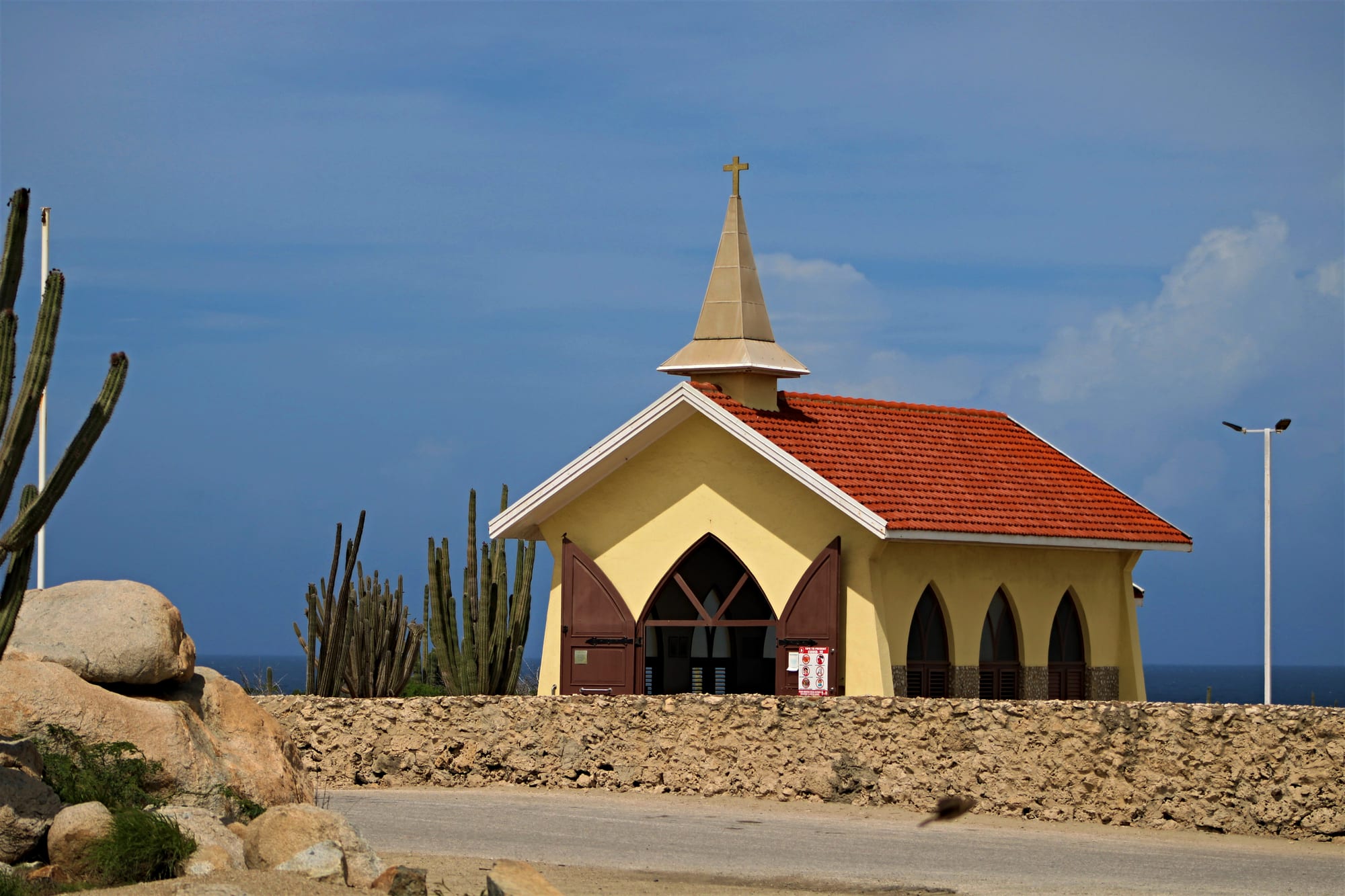
The island's best-loved religious building is small and plain. The Alto Vista Chapel, a yellow chapel with a red tiled roof standing on a hill above the north coast, marks the site where a missionary from the South American mainland established what is said to be Aruba's first chapel in 1750; the present building dates from 1952. It is still used for devotion, and on Good Friday local Catholics walk there in pilgrimage from Oranjestad.
Beneath faith sits a strong sense of being Aruban in particular. Aruba is a constituent country within the Kingdom of the Netherlands, and the separate status it gained from the rest of the former Netherlands Antilles is celebrated rather than taken for granted: two of the year's public holidays honour the island's flag, its anthem and the politician most associated with that status. Everyday etiquette has been described as a classical European formality coloured by a Latin American warmth, and visitors tend to notice the second half first. The tourism authority's own code of conduct asks guests to be kind and respectful and to "embrace island time", an acknowledgement that things are not rushed.
Greetings and meeting people
Language is the clearest marker of Aruban identity. Papiamento is a creole language based largely on Portuguese and Spanish, with heavy borrowing from Dutch and some from English, and it is shared only with the neighbouring islands of Bonaire and Curaçao. It is the language of home, of Carnival songs and of the national anthem, and Arubans speak it with pride. For much of the twentieth century schools taught mainly in Dutch; Papiamento has since entered education and now stands beside Dutch as an official language.
Greetings follow the time of day: "bon dia" in the morning, "bon tardi" in the afternoon and "bon nochi" in the evening. "Con ta bai?" asks how someone is, "danki" is thank you, and "te oro" means see you later. The phrase most visitors hear first is "bon bini", meaning welcome, which appears on signs and is used to greet arrivals. Because Papiamento is largely spelled the way it sounds, a few words are easy to attempt, and the island's tourism authority actively encourages guests to learn them. Using even a greeting before starting a conversation, or a word of thanks at the end, is noticed and appreciated.
Hospitality and being a guest
Aruba has welcomed visitors for generations, and most of its hospitality customs concern how guests conduct themselves in a place that is, for its residents, home. Swimwear belongs on the beach. The tourism authority asks visitors to wear proper clothing in supermarkets, petrol stations, hotel lobbies and other public places, and nudity and topless sunbathing are not allowed on the island's beaches, all of which are public. The same code asks visitors to respect churches and the services held in them.
Paying for service has its own conventions. Many restaurants and bars add a service charge, often around 15 per cent and especially for groups, but this is not a tip in the ordinary sense: it goes into a pool shared among the whole staff, with larger portions going to more senior employees. A guest who wants to thank a particular server is expected to add something directly, and the same goes for bartenders, housekeeping staff and taxi drivers, whose fares are fixed. Checking the bill before deciding what to leave is sensible.
Traditional hospitality shows most clearly around the holidays, when Dande singers are received at the door and given a contribution for their hat, and a family party may be accompanied by the tinkling of a barrel organ, described further below.
Festivals and life's big moments
The year opens loudly. Before midnight on New Year's Eve, families and businesses set off pagara, long strings of firecrackers that end in a few larger bangs; some are long enough to crackle for many minutes, and a long string is taken as a sign of a successful year in business as well as a way of warding off bad spirits. After midnight the Dande groups set out on their rounds. Later in January, 25 January honours the birthday of Betico Croes, the political leader who led the campaign for Aruba's separate status, with cultural, sporting and musical events.
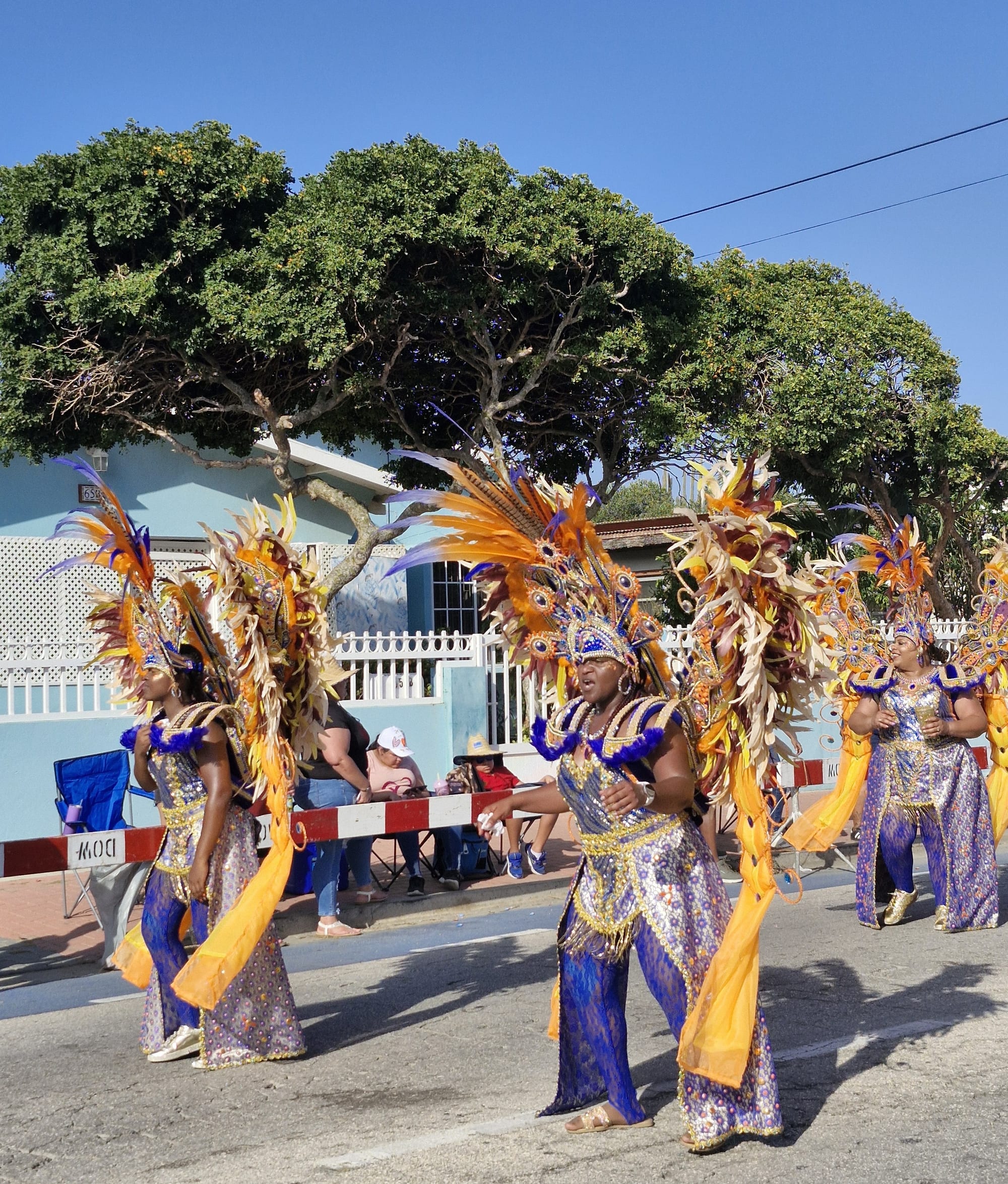
Carnival is the island's biggest celebration and its most inclusive. Its roots lie in small street festivals first organised in 1954, and the first island-wide public Carnival followed a year later. The season officially opens on 11 November at 11:11 in the morning and builds over the following months through the election of Carnival queens, princes and a pancho, a comic Carnival figure; road march, tumba and calypso competitions; and spontaneous street parties known as jump-ups. The Lighting Parade, a night procession of costumes glittering with coloured lights, has been staged since 1981. Children's parades, an early-morning Jouvert pyjama party and the Grand Parades in the two largest towns follow, with floats and elaborate costumes of feathers and stones. The season ends at midnight on the eve of Ash Wednesday with the burning of King Momo, a life-size effigy standing for the spirit of Carnival. The Monday after the Grand Parade, Carnival Monday, is a public holiday.
On 18 March, National Anthem and Flag Day is treated as the island's national day. It recalls a proposal first made on 18 March 1948 for Aruba's separation from the Netherlands Antilles, and the first Flag and Anthem Day, declared in 1976. It is marked with a scout parade, a parade of classic cars, sport and cultural events, and many shops close early or for the whole day. The anthem itself, "Aruba Dushi Tera", or "Aruba, sweet land", is a waltz written in Papiamento. King's Day on 27 April brings flea markets and kite contests. In November Sinterklaas arrives by boat in the harbour of the capital to greet children, and on 5 December children receive his presents.
One of the oldest folk celebrations is Dera Gai, "burying the rooster", held on 24 June, the feast of St John the Baptist. It blends a harvest festival with a Christian feast day. In its traditional form, a live rooster was buried with only its head above the ground, and blindfolded participants tried to strike it while musicians played and sang, with the wiri and the tambu prominent among the instruments. Today the live bird is omitted, and a calabash and an artificial rooster serve as the target. Yellow is the festival's colour, for the flowering kibrahacha tree, and women traditionally wore yellow. In the past, bonfires fuelled by the remains of the previous year's harvest were lit on the eve, as preparation for the new growing season.
For most families, life's milestones follow the Catholic sacraments, from baptism and first communion to a church wedding. The traditional barrel organ is still played at communion celebrations, receptions and family parties.
Arts, crafts and music
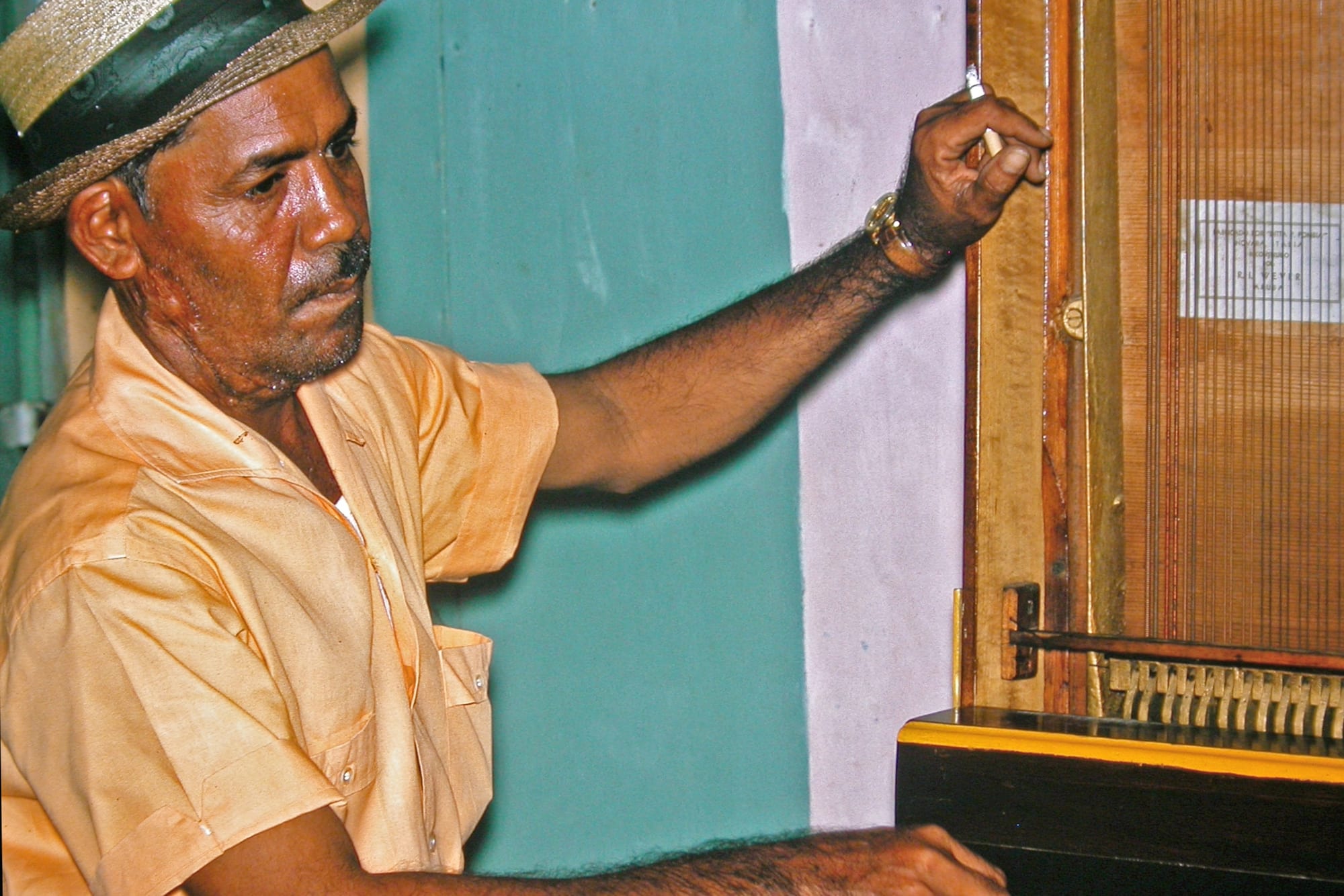
The instrument most closely identified with Aruban folk music is the kaha di òrgel, a hand-cranked barrel organ sometimes affectionately called the tingilingi box for the sound it makes. A wooden case holds a rotating cylinder pinned with up to eight tunes, which play as the handle is turned. The instrument reached the islands in the late nineteenth century, when a craftsman who had encountered it in Venezuela built the first one on Curaçao, and it spread from there to Aruba and Bonaire. It is usually heard with a wiri player alongside the organ-grinder, playing waltzes, mazurkas, polkas and tumbas. The tradition is recorded on the Netherlands' national inventory of intangible cultural heritage, where it has been listed since 2016.
Drums are the other foundation. The tambu, a drum tradition with African roots shared across the three islands, accompanies the Dande singers at New Year. Related to it is tumba, a drum-driven dance rhythm of African origin regarded as the islands' own music and now the heartbeat of Carnival, when new tumbas compete for the year's top prize. Road march songs, written for dancing through the streets, and calypsos, which comment with humour on local life and love, have their own contests in the Carnival season. Contemporary Aruban musicians mix these local and Caribbean forms with reggae and hip-hop, and the island also has a long-established amateur theatre scene.
Crafts are promoted with a formal stamp of approval. In 2012 the island's Department of Culture created the Seyo Nacional pa Artesania, a national seal of craftsmanship awarded by an expert commission using UNESCO-based criteria: craftsmanship, originality, aesthetics, use of materials, local identity and commercial value. Certified work, from jewellery and textiles to pottery and painting, is sold through Cosecha, a name meaning "harvest", which also runs workshops led by local artisans, and the seal exists partly to distinguish genuinely local handmade goods from imported souvenirs.
Dos and don'ts for visitors
- Do greet people with "bon dia", "bon tardi" or "bon nochi", and say "danki" for thank you.
- Do cover up away from the beach, including in supermarkets, petrol stations and hotel lobbies; nudity and topless sunbathing are not allowed.
- Do check the bill for a service charge, and tip the server directly if the service deserves it, since the charge is shared among all staff.
- Do dress modestly and keep quiet in churches, and respect services in progress, including at the Alto Vista Chapel.
- Do expect shops to close early or all day on public holidays such as National Anthem and Flag Day and Carnival Monday.
- Don't disturb wildlife, stack rocks or take shells home, and treat sea turtles and coral reefs with respect.
- Don't drive on beaches, which is forbidden, or damage the fofoti trees along the shore.
- Don't carve or write on historic sites, and dispose of rubbish properly; single-use plastic bags are banned.
What to take away
Aruba wears its easy-going reputation lightly, but beneath it lies a people fiercely attached to their language, their saints' days and their music — and a visitor who greets them in Papiamento and respects the island as a home will be welcomed as warmly as a Dande singer at the door.