Daily Life · Aruba
Aruba: Papiamento at Home, Tourists at Work
A household language different from the main language of the classroom, an economy that depends almost entirely on visitors, and a beach life shaped as much by flight schedules as by the trade winds
By Worldlore Editorial · 30 September 2026
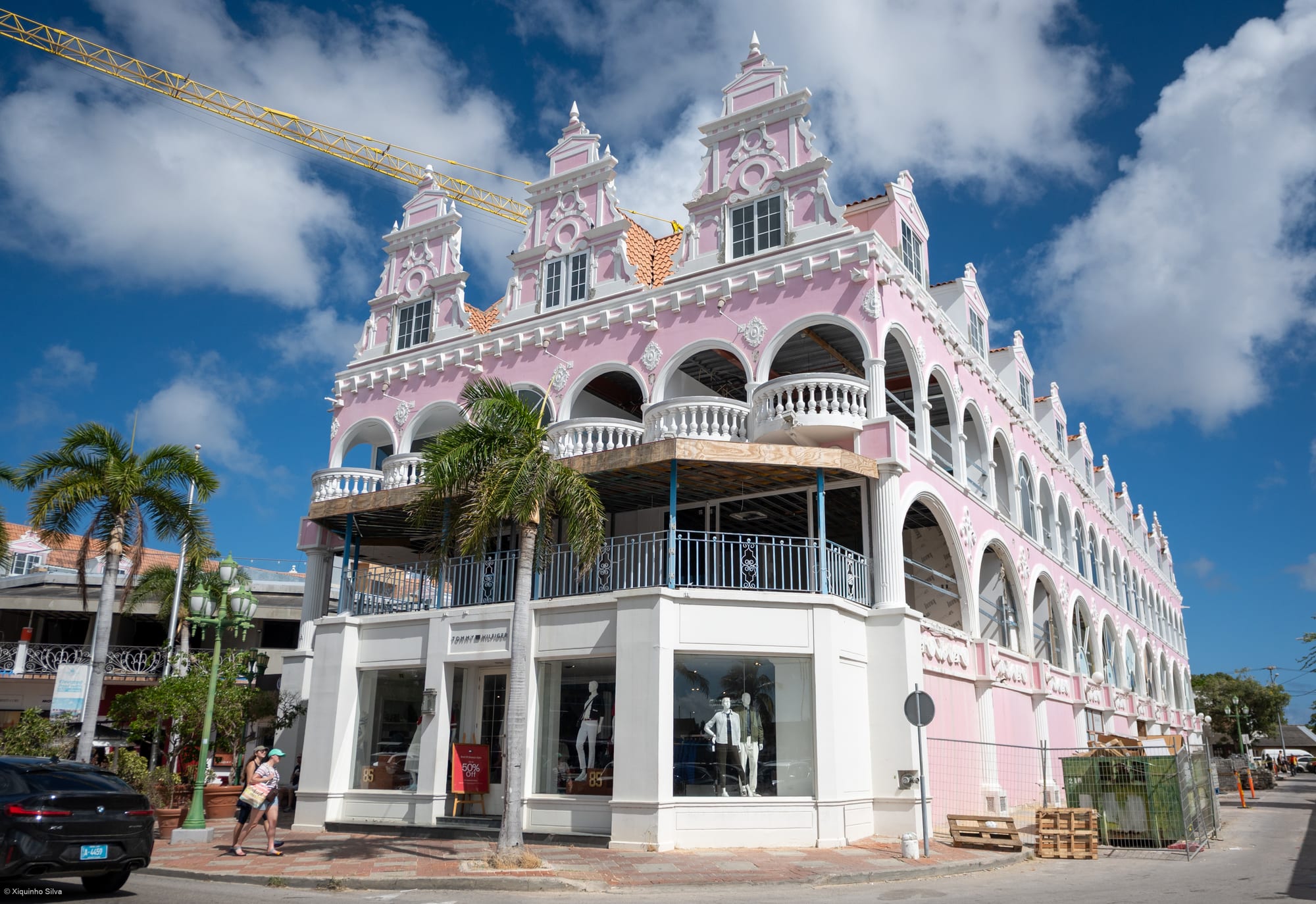
On Aruba, the language spoken at home and the industry that pays the bills often pull in different directions. Most households speak Papiamento, a Portuguese-based creole with Spanish, Dutch and West African influences, day to day, while the economy runs overwhelmingly on tourism: the IMF estimates that close to 90 percent of the economy depends directly or indirectly on visitors, many of them from the United States. Life on the developed western coast moves to the rhythm of flights and cruise ships; life in Oranjestad, Noord and the older refinery town of San Nicolas keeps its own, steadier pace.
Family and home life
Papiamento is the language spoken at home for a large share of Arubans, just over 43 percent of the population nationwide use it exclusively in the household according to the 2020 census, rising above half in several districts. As Dutch nationals, Arubans hold EU citizenship and can move freely to the Netherlands to study or work, and a good number do, keeping close family ties across the Atlantic. Housing runs from pastel Dutch colonial-style buildings in the older parts of Oranjestad to plainer concrete houses further out, and a large recent influx of Venezuelans, estimated at around 17,000 people in 2019, has added new households, while strong tourism demand has made housing harder to find and afford.
Work, school and the rhythm of the day
Tourism dominates the working day in a way few countries can match: the IMF puts the share of the economy that depends directly or indirectly on tourism at close to 90 percent, and the work it creates is above all in hotels, restaurants, transport and retail. Dutch is the sole language of administration and the main language of instruction in schools, with Papiamento taught as a subject, and English and Spanish added from the sixth grade. For much of the workforce, the working day still bends around flight schedules and the arrival of cruise ships rather than a fixed nine-to-five, and English and Spanish are used constantly alongside Papiamento and Dutch simply because so much of the job is dealing directly with visitors.
Community life and public spaces
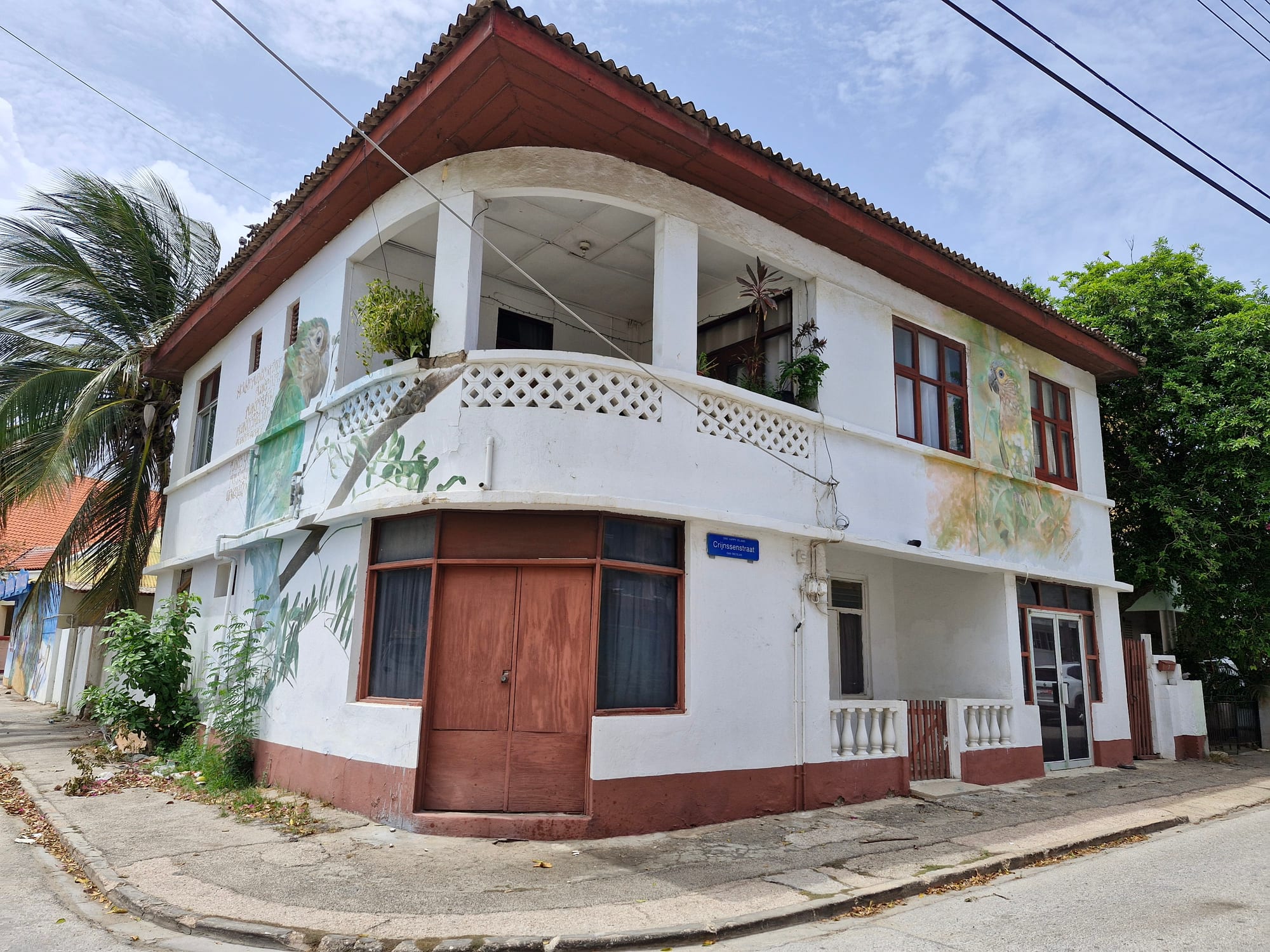
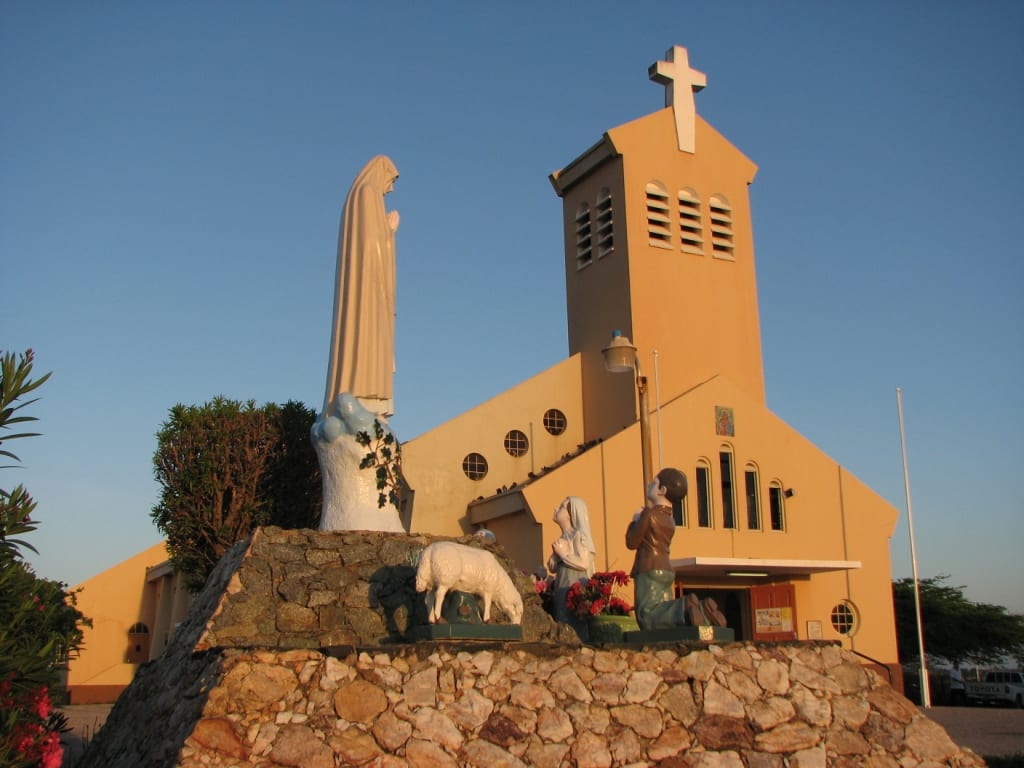
Oranjestad's pastel-painted Dutch colonial buildings and a small tram loop are the backdrop to daily errands in the capital, while San Nicolas, the old refinery town in the south, keeps a separate identity and has become known for its open-air street art. Church remains a real anchor of neighbourhood life: most Arubans are Roman Catholic, alongside Protestant, Jewish and other communities. The Arubus public bus service runs the length of the developed west coast cheaply, though a car, scooter or UTV is the practical way to reach the rougher, undeveloped east side of the island.
Free time and weekends
Carnival is the cultural high point of the year, running for weeks until the evening before Lent, with jump-ups, music competitions, a Lighting Parade and the ceremonial burning of King Momo drawing whole neighbourhoods out onto the streets. Weekends on the calm, leeward west coast mean the beach almost by default, since the water is warm and safe nearly year-round, while windsurfers and kitesurfers head for the breezier stretches near the hotel strip. Baseball and football both have a following, and a Sunday family lunch that runs into the afternoon is as much a fixture of the week as the beach itself.
A visitor's ordinary day
The Aruban florin is pegged to the US dollar, and dollars are accepted almost everywhere, often quoted alongside florin prices, so currency is rarely a practical problem. Papiamento is the language heard on the street, but English and Spanish are spoken so widely that visitors rarely have any difficulty being understood. The Arubus service is a cheap way to move along the developed coast, but a hire car, scooter or UTV is worth arranging for at least a day to see Arikok National Park and the wilder windward coast, which public transport does not reach.
What to take away
An ordinary day on Aruba runs on two different logics at once: Papiamento and family life at home, and an economy built almost entirely around visitors, with the island's daily rhythm shaped by whichever one currently has the upper hand.