Daily Life · Antigua and Barbuda
Antigua and Barbuda: Two Islands, Two Rhythms
Privately run minibuses, a produce market in St John's, and a sister island so quiet that Hurricane Irma once emptied it for the first time in three hundred years
By Worldlore Editorial · 30 September 2026
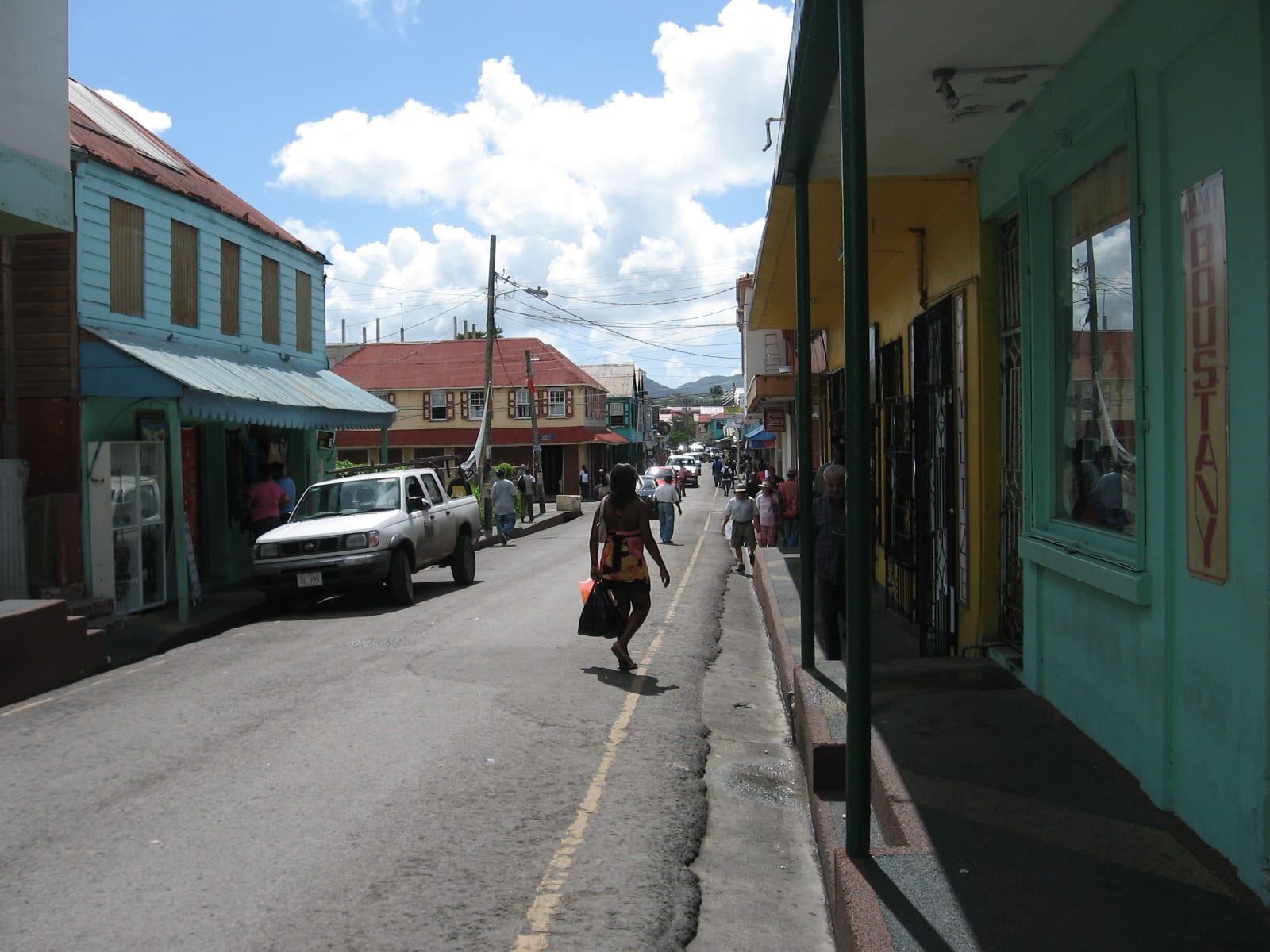
Life in Antigua and Barbuda runs at two different speeds under one flag. On Antigua, the day is shaped by tourism and government work, by privately run minibuses whose drivers largely set their own departure times, and by a produce market in St John's that still draws people in from the villages. Some 30 miles to the north, Barbuda keeps to its own, much quieter pace, almost its entire population living in a single village and getting by on government jobs, fishing and a trickle of visitors. What holds the two islands together is smaller and more constant: church on Sunday, extended family scattered as far as London and New York, and a hurricane season both islands watch just as closely every year.
Family and home life
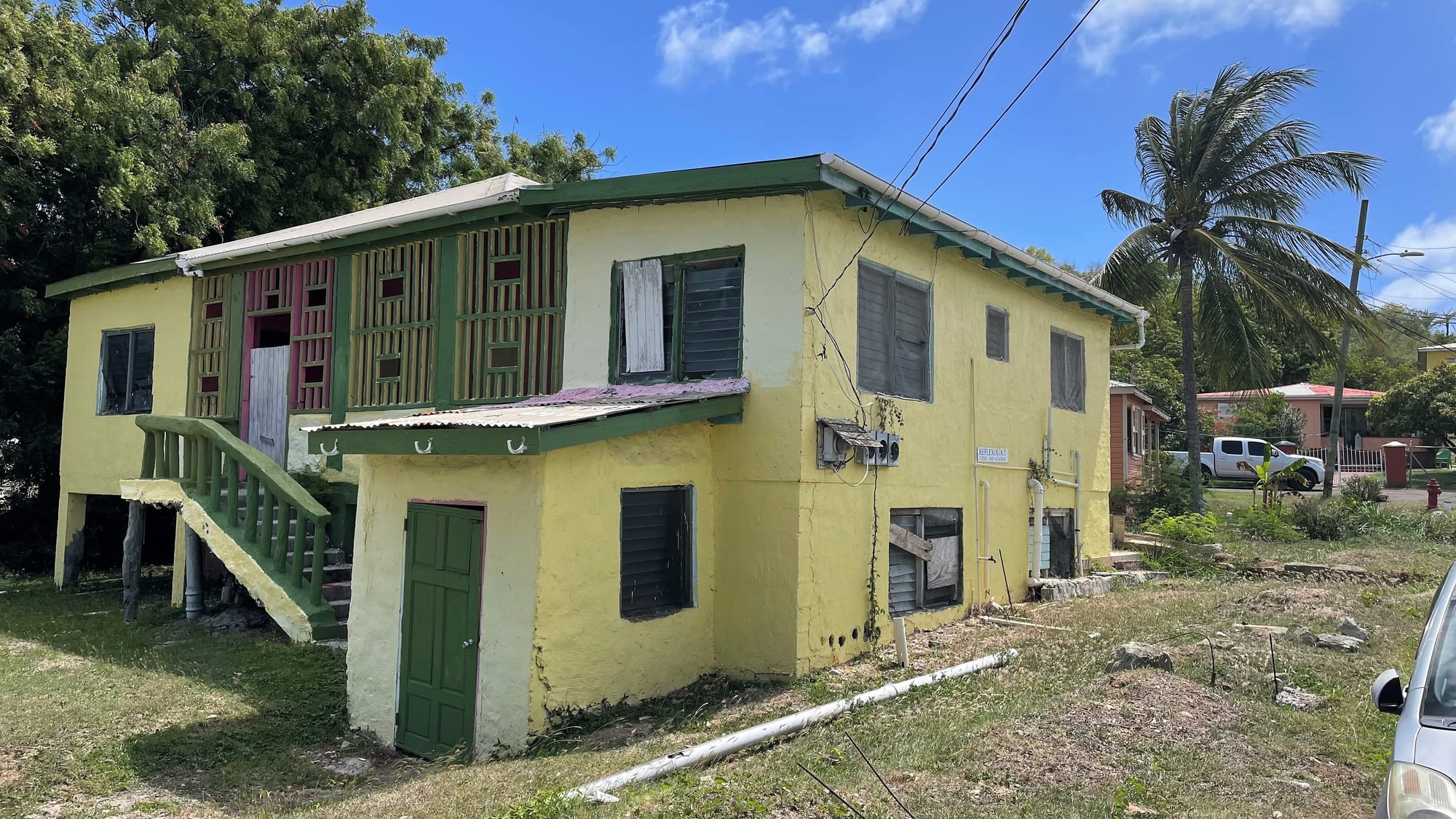
Family life on Antigua often stretches beyond a single household, with grandparents and cousins living close by and helping with childcare, and a house may be added onto over the years as a family grows. Homes are typically single or two-storey wooden or concrete houses, many still built in the raised, shuttered style long used across the islands to catch the breeze and shed rain. Ties to relatives who have emigrated to the United Kingdom, the United States and Canada remain close, and money sent home by family abroad matters to many households. On Barbuda, where nearly the whole population lives in the single village of Codrington, land is still held under a long tradition of communal rather than individual ownership, a system that has become a real point of political dispute since Hurricane Irma.
Work, school and the rhythm of the day
The working week generally runs Monday to Friday, with a standard day of around eight hours; public-sector staff generally work somewhat shorter hours. Tourism and government are the two biggest employers on Antigua, and much of the tourism work bends around the arrival of cruise ships and the flow of stopover visitors rather than a fixed nine-to-five. School runs on the same Monday-to-Friday pattern, and pupils in uniform are a familiar sight on the morning minibuses into St John's. Barbuda runs to a slower, more self-reliant economy built on government jobs, fishing, lobster and a far smaller trickle of tourism, without the cruise-ship rhythm that shapes the working day on Antigua.
Community life and public spaces
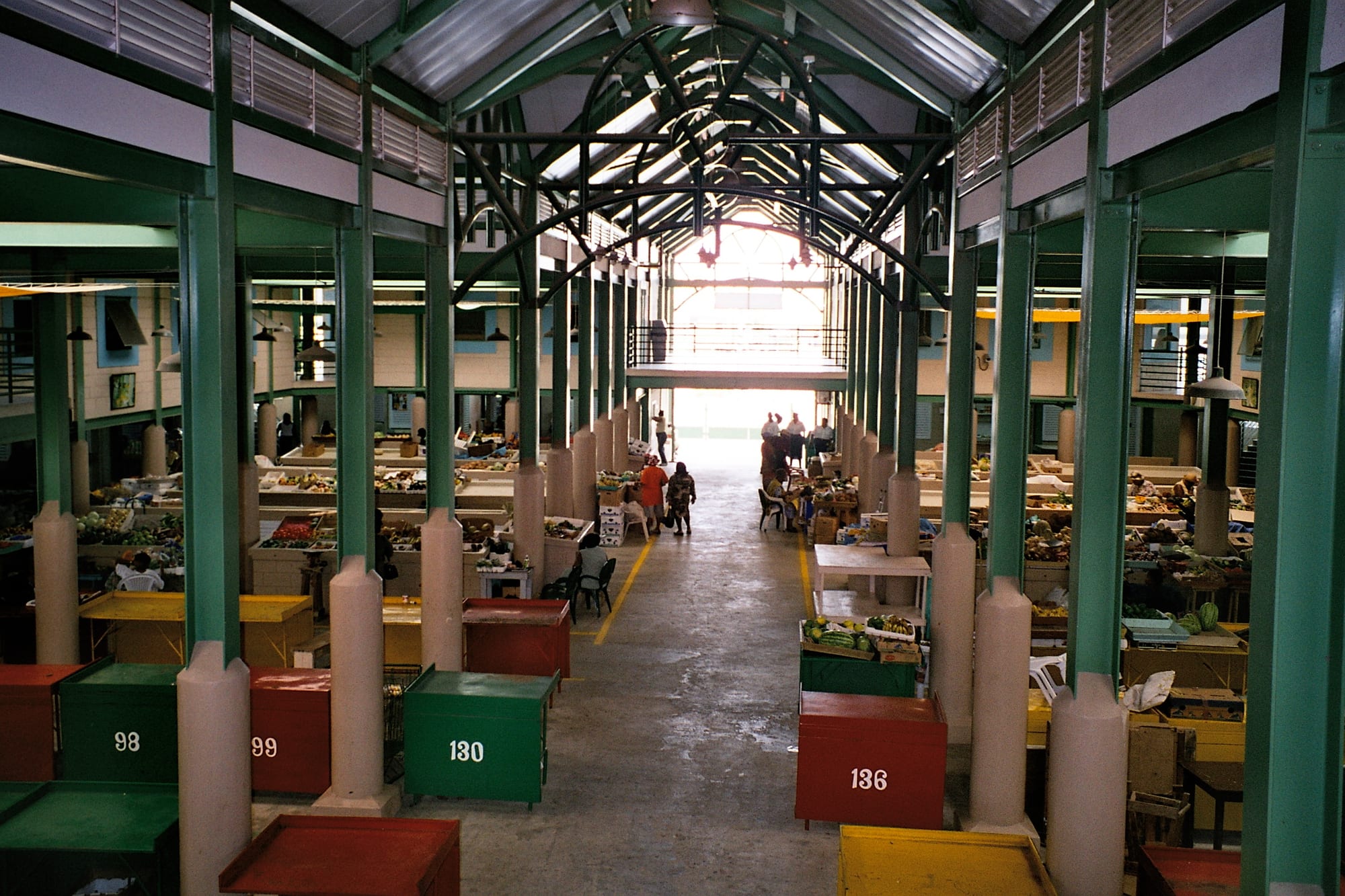
The public market in St John's is the country's real gathering point, open daily, with produce, meat and fish brought in from around the island laid out under one shared roof. Getting around means the privately run minibuses that ply fixed routes between St John's and the villages: most have their route posted in the front window, they run roughly from 5.30 in the morning to about 6 in the evening, and departure times are often left up to the driver. Churches, from long-established Anglican, Moravian and Methodist congregations to newer ones, anchor village life beyond the market and the bus routes, and on Sunday the church car parks fill.
Free time and weekends
Cricket is close to a national passion given how small the country is: a population of under 100,000 has produced Test greats such as Sir Vivian Richards, Sir Andy Roberts, Richie Richardson and Sir Curtly Ambrose, and a weekend match at the stadium named for Richards or on a village ground draws a real crowd. Carnival, held over roughly two weeks from late July into early August, is the other fixed point of the year, marking the 1834 abolition of slavery with calypso and soca competitions, steel bands and costumed troupes filling the streets of St John's. Sunday itself is largely kept for church and an extended family lunch, and where money and time allow, a Sunday afternoon at the beach is as ordinary an outing as exists.
A visitor's ordinary day
Cards and US dollars are accepted almost everywhere on Antigua, though the East Caribbean dollar is the official currency and change is often given in it. Minibuses are the cheapest way to get around by day but stop running by early evening and do not serve the main hotel strip well, so it is worth budgeting for a taxi after dark. Shops in St John's generally keep daytime hours, and many close on Sunday, when much of the country is at church rather than at work. Getting to Barbuda means a ferry from St John's or a short flight, and services there are far more limited, so a day trip needs planning rather than spontaneity.
What to take away
An ordinary day in Antigua and Barbuda is really two ordinary days: one paced by minibuses, cruise ships and a busy market, the other by fishing boats and a single village, joined by little more than a shared flag, a shared Sunday, and a hurricane season both islands watch just as anxiously every year.