History · Antigua and Barbuda
Antigua and Barbuda: Sugar, Sea Power, and Emancipation
A prime English sugar island and the Royal Navy's Caribbean base, where enslaved Africans built an economy their descendants inherited
By Worldlore Editorial · 10 September 2026
Two islands, one nation
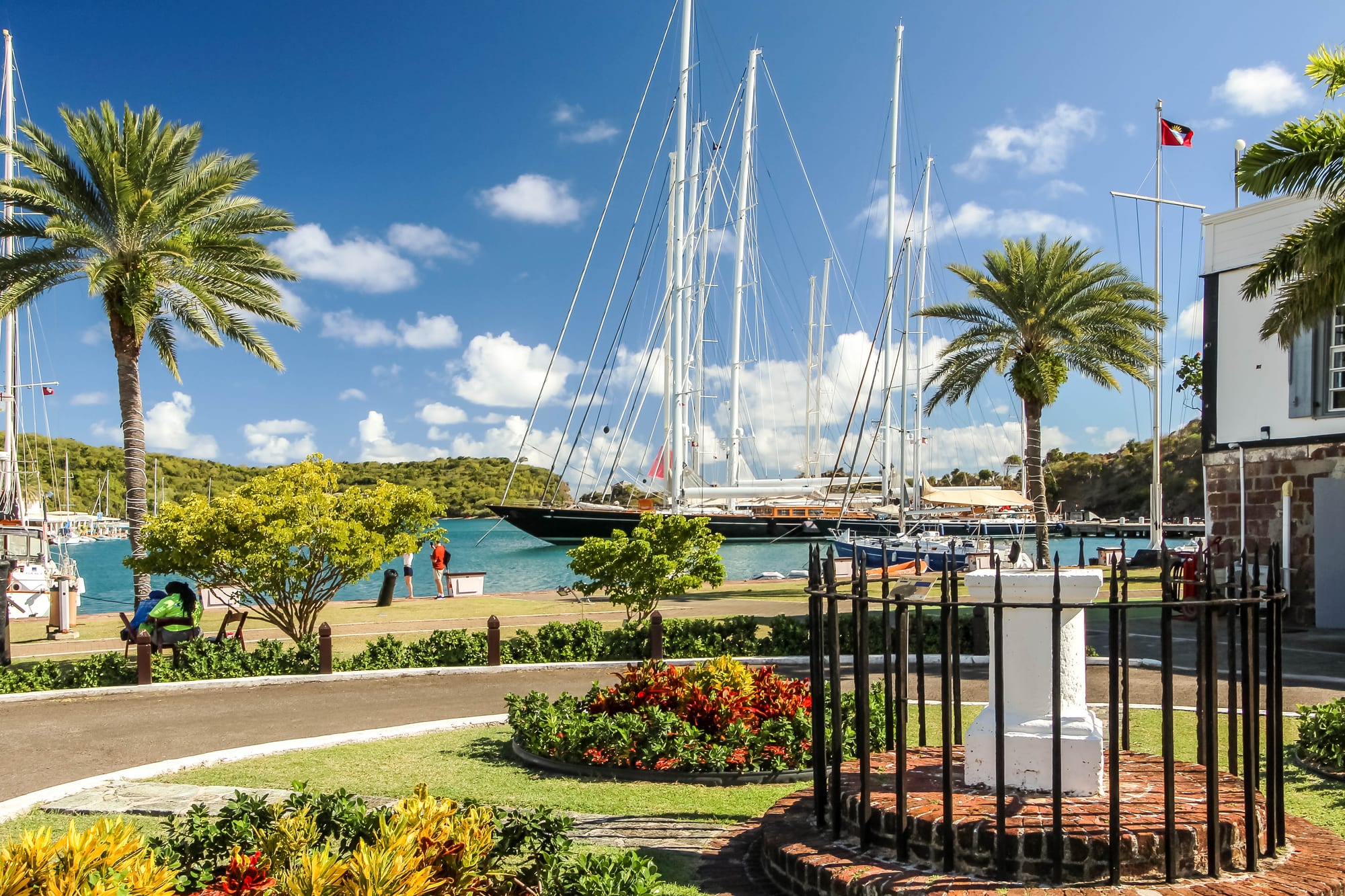
Antigua and Barbuda is a country of two main islands and a scatter of rock. Antigua, about 280 square kilometres, has no mountains and no rivers; Barbuda, flat and dry, lies 40 kilometres north with a single village, Codrington, and a vast bird-filled lagoon. Nearly all of the country's roughly 100,000 people live on Antigua, around the capital, St John's. Two facts of geography made the history. Antigua's rolling, rain-shadowed land was close to ideal for sugar cane, and its deep, sheltered south-coast harbours were close to ideal for a naval base. For two centuries the island was worked as one and defended as the other.
A short history
- from c. 2000 BCE
First settlers
Archaic-age people reach Antigua, among the earliest in the Lesser Antilles.
- 1632
English settlement
Colonists arrive from St Kitts; Barbuda is later leased to the Codrington family.
- 1670s onward
The sugar island
Antigua is converted almost entirely to sugar estates worked by enslaved Africans.
- 1736
The conspiracy
An island-wide plot by the enslaved is betrayed; some 88 people are executed.
- 1725–1889
The Navy's dockyard
English Harbour is built up as the Royal Navy's Eastern Caribbean base.
- 1834
Immediate emancipation
Antigua frees its enslaved population outright, skipping the "apprenticeship" used elsewhere.
- 1939
The labour movement
The Trades and Labour Union is founded; V. C. Bird rises through it.
- 1 November 1981
Independence
Antigua and Barbuda becomes a sovereign state; Barbuda objects.
The first islanders
People reached Antigua more than 4,000 years ago, in one of the earliest waves of settlement in the Lesser Antilles, drawn in part by the island's outcrops of hard stone, which was flaked into tools and traded along the chain. Later came ceramic-making, cassava-farming Arawak communities. As on the other small islands, the population had thinned close to nothing by the time European ships arrived. Columbus sighted Antigua in 1493 and named it for a church in Seville.
An English sugar island
English settlers crossed from St Kitts in 1632. Barbuda was leased from 1685 to the Codrington family, who used it as a supply farm — livestock, provisions, timber — for their Antiguan plantations. Antigua itself was turned over almost wholly to sugar in the later 17th century. Windmills to crush the cane went up on every ridge; by the 1770s there were more than 150 estates and the population was over 90 per cent enslaved African. The Codringtons' own estate, Betty's Hope, was among the first and largest.
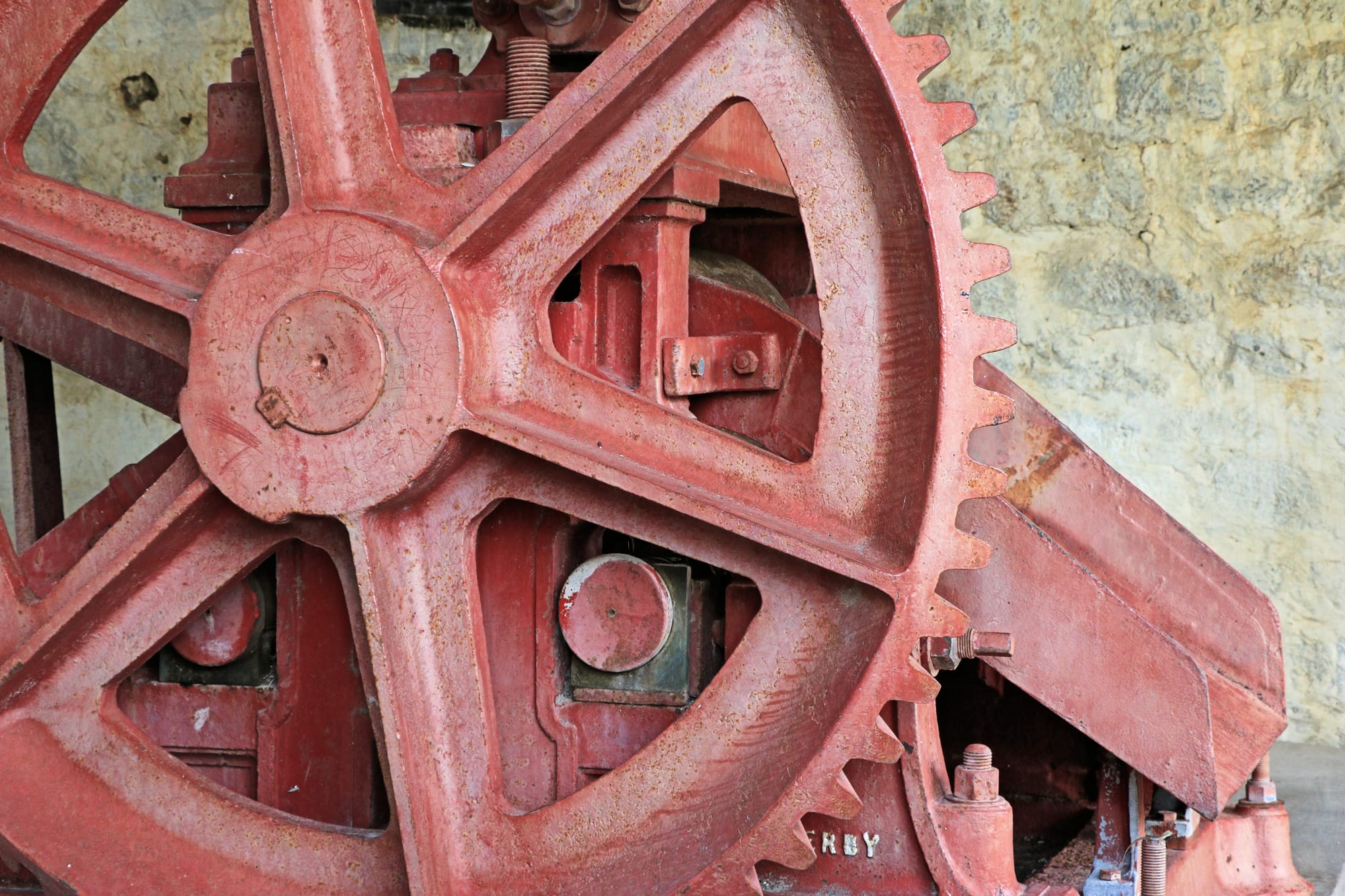
The wind did the heavy work: sails turned rollers that crushed the cane, and the juice was boiled down to sugar and molasses in the works alongside. Everything else — planting, cutting, feeding the mill — was done by enslaved hands.
Slavery and resistance
The Antiguan regime was harsh even by Caribbean standards, and it was challenged. In 1736 an island-wide conspiracy among the enslaved — its leaders remembered as Prince Klaas, or Court, and Tomboy — planned to blow up the planters at a ball in St John's and seize the island. It was discovered days before, and the reprisals were savage: around 88 people were executed, many burned or broken on the wheel. From the mid-18th century, Moravian and then Methodist missionaries won large followings among the enslaved population, and the churches became one of the few institutions Black Antiguans could call their own.
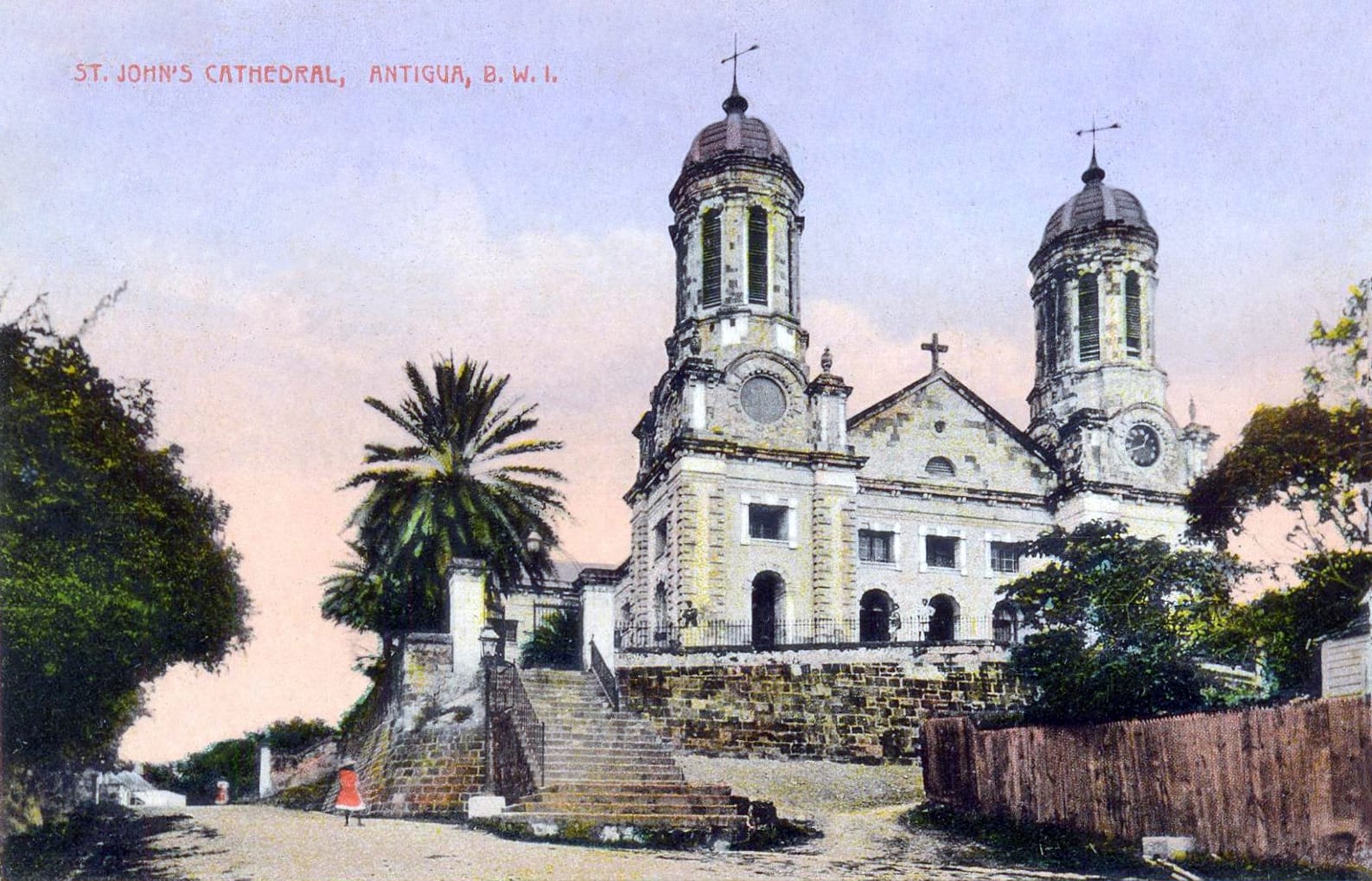
St John's grew up as the island's port and capital, its skyline dominated by the Anglican cathedral of the planter class — while the enslaved majority worshipped, increasingly, in the Moravian and Methodist chapels on the estates.
The Royal Navy's dockyard
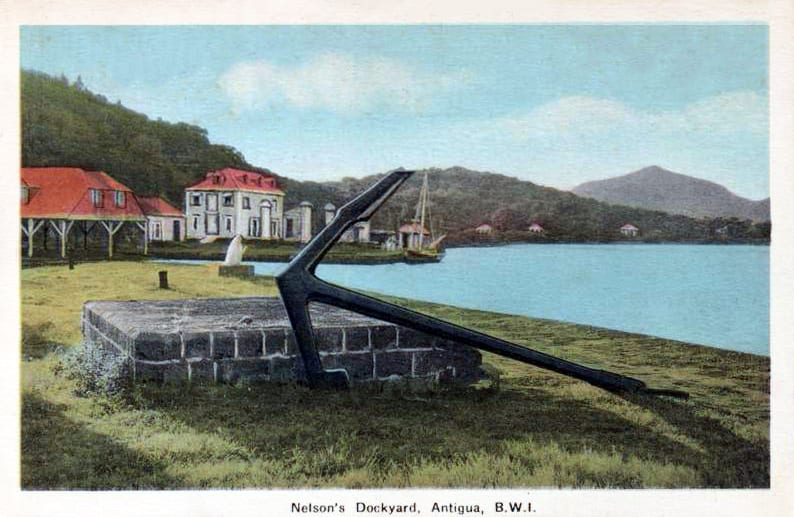
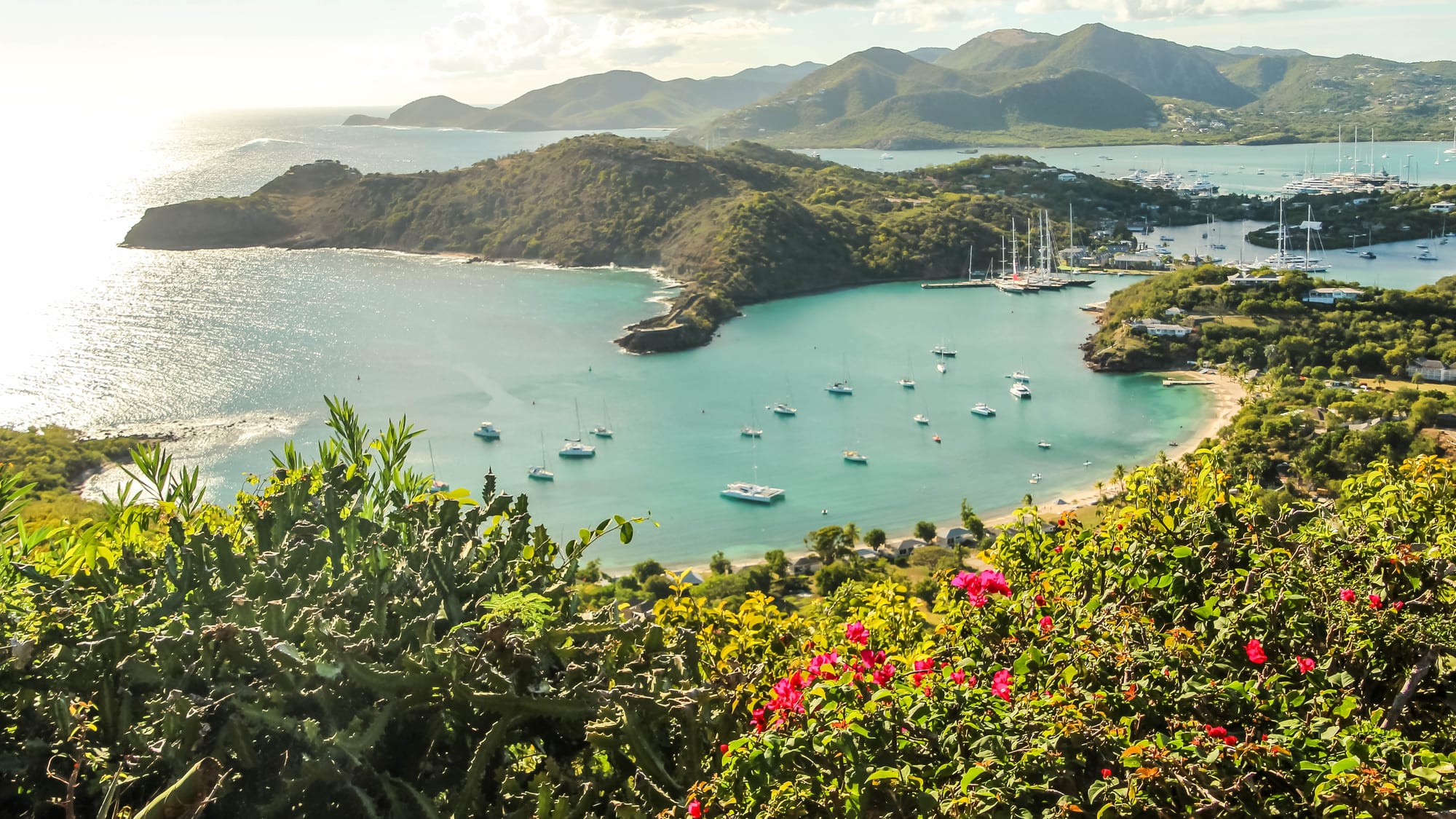
English Harbour, on the south coast, is a nearly hurricane-proof anchorage, and from the 1720s the Royal Navy built a dockyard there to careen and repair the warships that watched the French islands and enforced Britain's trade laws. A ring of forts and lookouts — Shirley Heights, Fort Berkeley — guarded the approaches. Horatio Nelson spent three unhappy years based here in the 1780s, enforcing the Navigation Acts against local merchants who resented him for it. Steam power made the yard obsolete, and the Navy abandoned it in 1889; it was restored in the 20th century as "Nelson's Dockyard".
The naval station
Emancipation without apprenticeship
When Britain abolished slavery in 1834, most colonies imposed a four-year transition called "apprenticeship". Antigua did not. Its planters reasoned that on a small island with no spare land, freed people would have no choice but to keep working the estates for wages — so they freed everyone at once, in August 1834. The calculation mostly held. Emancipation produced a landless wage-labouring population, dependent on planter-owned estates and paid very little, and the decades that followed brought hunger, emigration and, in 1918, riots over wages. Sugar itself declined steadily through the 20th century.
From labour movement to nation
Out of the poverty and the 1918 unrest came the Antigua Trades and Labour Union, founded in 1939. Vere Cornwall Bird rose through it to lead first the union and then, for half a century, the island's politics. Universal adult suffrage came in 1951, internal self-government in 1967, and full independence, as Antigua and Barbuda, on 1 November 1981, with Bird as the first prime minister. Barbudans largely opposed independence, fearing that union with Antigua would erode their tradition of holding land in common — a right their representatives are still defending.
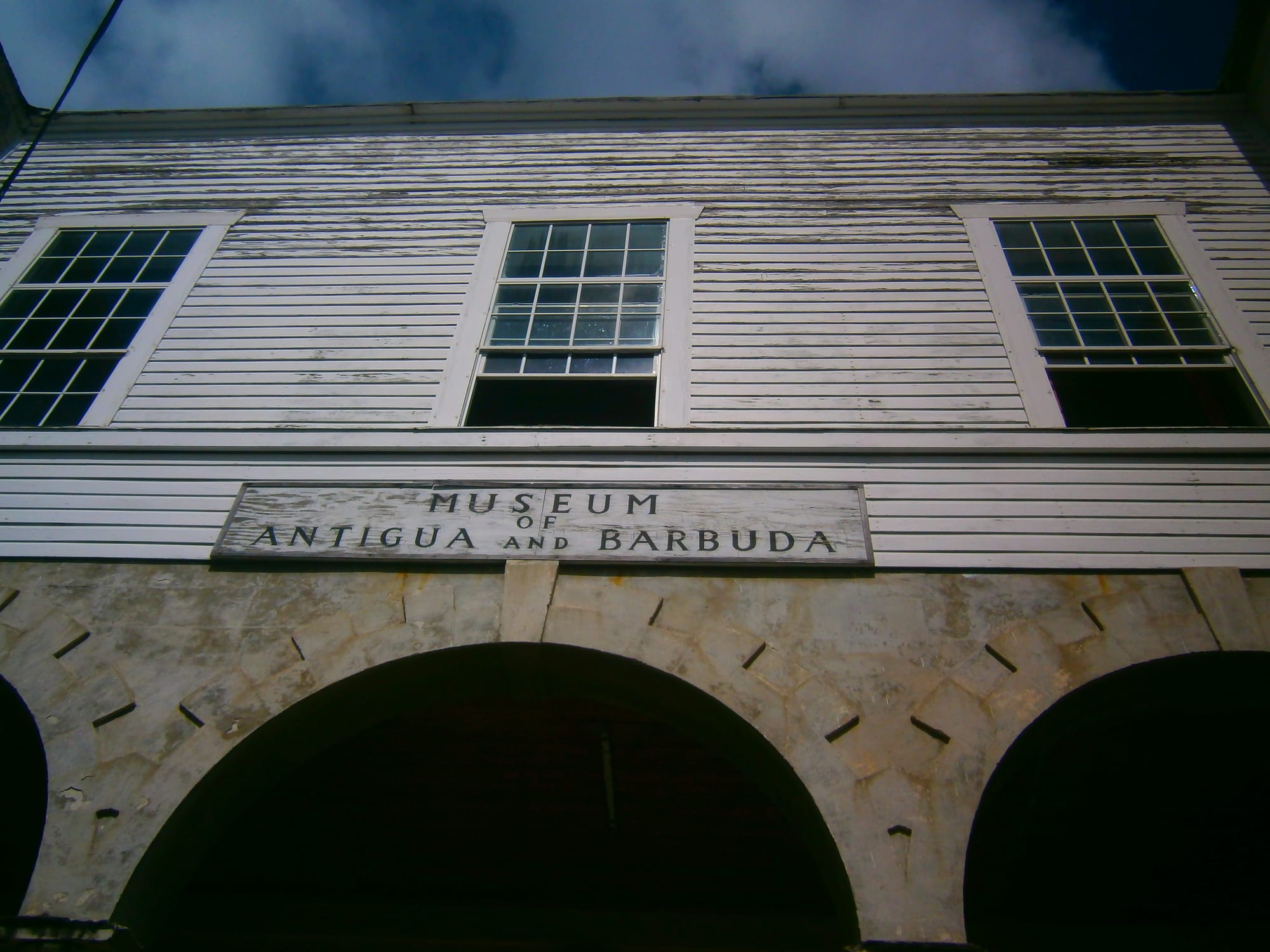
The old Court House, built in 1750 from island limestone, has been shaken by earthquakes, gutted, and rebuilt more than once; since 1985 it has held the national museum.
The modern country
The Bird family and its Antigua Labour Party held power almost continuously until 2004, through years of patronage and financial scandal. Tourism replaced sugar entirely — the last crop was cut around 1972 — and was joined by offshore banking, online gambling and a programme selling citizenship to foreign investors. In 2017 Hurricane Irma struck Barbuda head-on, wrecking almost every building and forcing the evacuation of the whole population to Antigua for the first time in some 300 years; the rebuilding since has been shadowed by a fight over whether Barbudan land can be sold to developers.
What Antigua and Barbuda keeps
The country runs on an economy that enslaved people built and that their descendants took over whole. The dockyard that was once the cutting edge of British sea power is now the centrepiece of the tourist trade, and Barbuda — still holding its land in common, still uneasy about the union — remains the standing argument that the nation of 1981 was Antigua's project more than its own.