Food · Albania
Albania: Food and the National Dish
Baked lamb under a yoghurt crust, filo pies sold by the slice, meze with home-distilled raki, and a coast of olive oil and grilled fish
By Worldlore Editorial · 16 September 2026
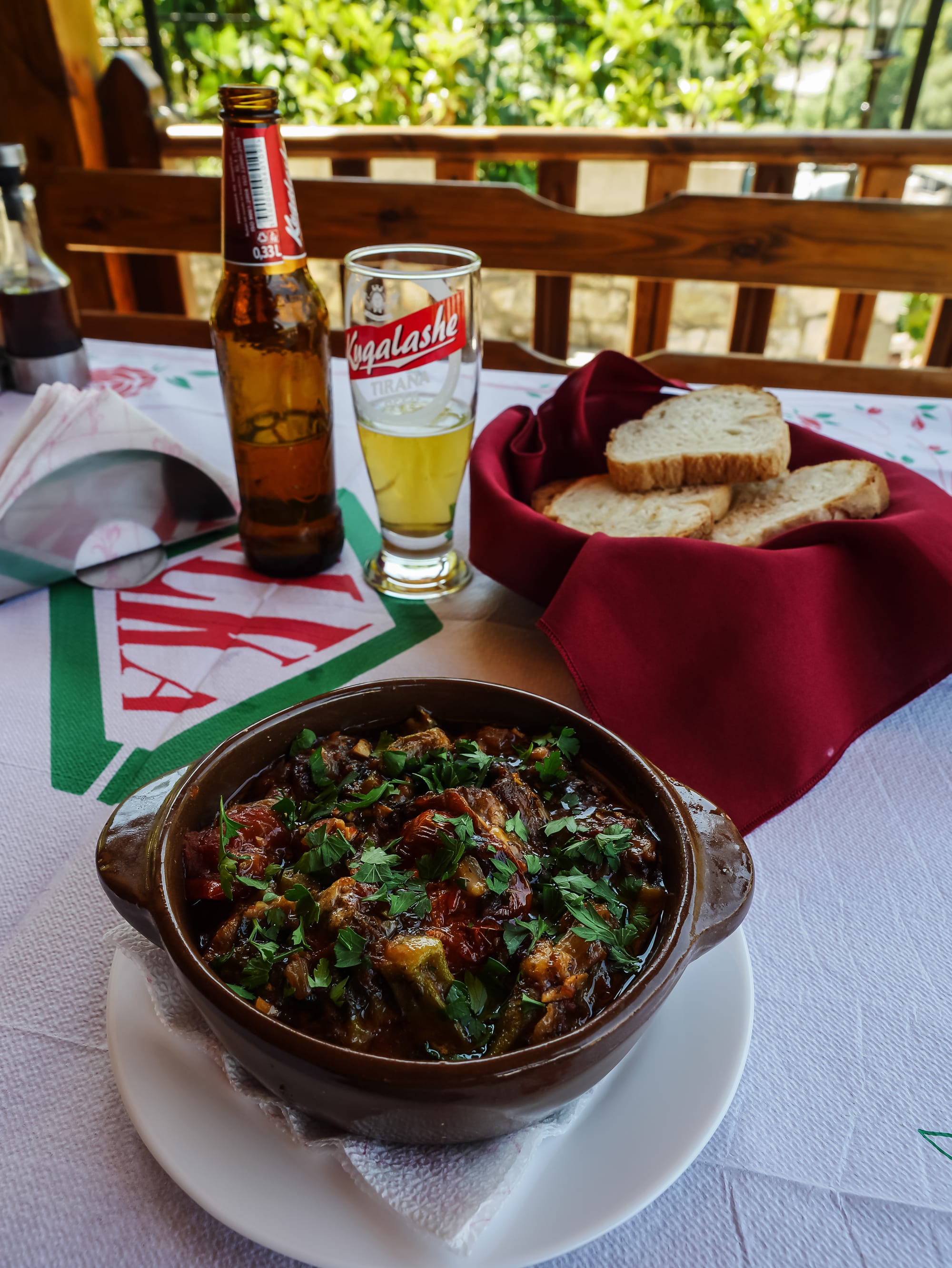
A Mediterranean kitchen with an Ottoman accent
Albanian food sits where the Balkans, the Mediterranean and the old Ottoman world overlap. From the Ottoman centuries come filo pastry, stuffed vegetables, grilled minced meat, syrup-soaked sweets and thick coffee. From the Mediterranean come olive oil, tomatoes, peppers, aubergine, beans and, along the coast, fish. And a strong local dairy habit — yoghurt, brined white cheese, curd and clotted cream — runs through nearly everything. It is not a spicy cuisine or a complicated one: the aim is a few good ingredients, plainly cooked, with bread on the table and, very often, a glass of raki alongside.
The national dish: tavë kosi
Tavë kosi means "yoghurt bake", and that is more or less the dish: pieces of lamb or mutton set in a wide earthenware dish, covered with a thick sauce of yoghurt, eggs and a little flour-and-butter roux, and baked until the top sets into a tangy golden crust somewhere between a custard and a soufflé. Rice is usually cooked in with it, soaking up the juices.
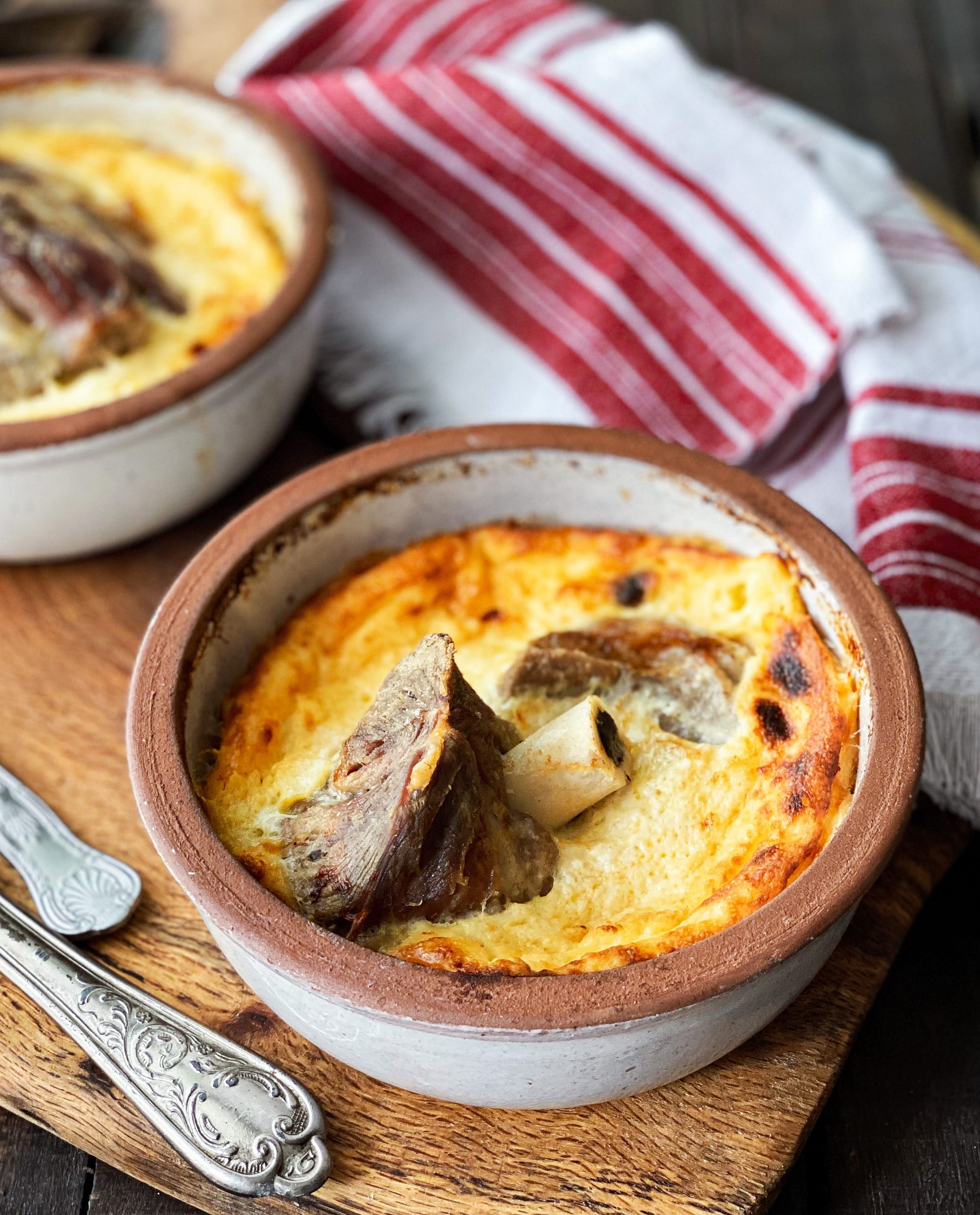
The dish belongs to Elbasan, in the central plains, and is often called tavë Elbasani for that reason; from there it has spread to every restaurant menu in the country as the thing to order if you order one thing. It is Sunday lunch food and celebration food, made in a big dish for a table rather than plated per person, and it shows the two moves Albanian cooking makes most often: bake it slowly in clay, and finish it with yoghurt.
## What an Albanian kitchen runs on
The everyday foundation is bread, beans, vegetables and dairy. Wheat bread is on the table at every meal; in the mountains and historically among the poor it was cornbread, bukë misri, eaten dipped in the salty brine from a cheese barrel. White brined cheese (djathë i bardhë) turns up at breakfast, in pies and on the meze plate; kaçkavall is the firmer yellow cheese; gjizë is the fresh curd baked into fërgesë; and kajmak, a clotted cream, goes on bread and pastries.
Meat is mostly lamb, mutton and chicken, with pork common in Christian areas and absent in Muslim ones; offal is not wasted, and paçe, a rich soup of sheep's head and feet, is a traditional weekend breakfast. Vegetables lead in summer — tomatoes, peppers, cucumbers, aubergine, okra — and beans (fasule) carry the winter. Olive oil is the main fat, pressed heavily along the southern coast. Seasoning is restrained: onion, garlic, black pepper, oregano, mint, dill, parsley, bay, and a little paprika. Heat from chilli is rare.
Preserving still matters, a habit held over from decades when the shops were often empty. Households put up turshi — mixed vegetables pickled sharp in brine and vinegar for the winter — dry peppers and figs in the sun, salt cheese down in barrels, and cure sausage and pastërma. Autumn is when families distil their raki and boil down grape must, and a village kitchen in October smells of both.
## How the food got this way
Four Ottoman centuries did the most obvious shaping. The pie-making, the kebab-and-köfte tradition, the stuffed peppers and vine leaves, the baklava and the whole ritual of coffee all arrived or matured under Ottoman rule and stayed after it. Underneath that is an older Mediterranean layer — the Greeks and Romans planted vines and olives on this coast well over two thousand years ago, and Albania has one of Europe's longest continuous winemaking traditions, with native grapes like Shesh and Kallmet still grown.
The 20th century left its own marks. Communist-era Albania was poor and largely sealed off, with private restaurants banned and meat and coffee often rationed, which kept the cooking rural, seasonal and frugal, leaning on bread, beans and preserves — a plain baseline the food has only partly moved away from. Since the 1990s the coast has reconnected with Italy, just across the strait, and Italian influence now shows in the espresso, the pasta on menus, and a national obsession with trileçe, the tres-leches milk cake, which is everywhere despite being Latin American by origin. Emigrants returning from Greece, Italy and beyond have folded in their own borrowings, so a family table today may carry a Greek-style salad, a pasta dish and a clay pot of something very old, all at once.
:::did-you-know By several widely cited counts, Albania has more cafés and bars per person than any other country in Europe, and possibly the world. Coffee here is less a drink than a social unit: meeting someone "for a coffee" can fill an afternoon, and in Tirana the cafés spill across whole squares from mid-morning on.
From Elbasan to the coast
Regional accents are strong for such a small country. Elbasan has tavë kosi and ballokume, a corn-flour biscuit made for Summer Day in March. Tirana claims fërgesë. Korçë, in the south-east, is pie country — its version of byrek is called lakror — and home of Birra Korça, brewed since 1928 and treated as a point of national pride. Gjirokastër in the south does qifqi, little fried balls of rice, egg and mint, and oshaf, a fig-and-walnut pudding. The northern highlands around Shkodër and Kukës make fli, a stack of thin grilled batter layers, and take carp and eel from Lake Shkodër. The Riviera and the far south run on olive oil, citrus and grilled fish. Those are the threads the region pages pick up.
Dishes to know
Five to recognise on any Albanian menu (regional specialities are covered on the region pages):
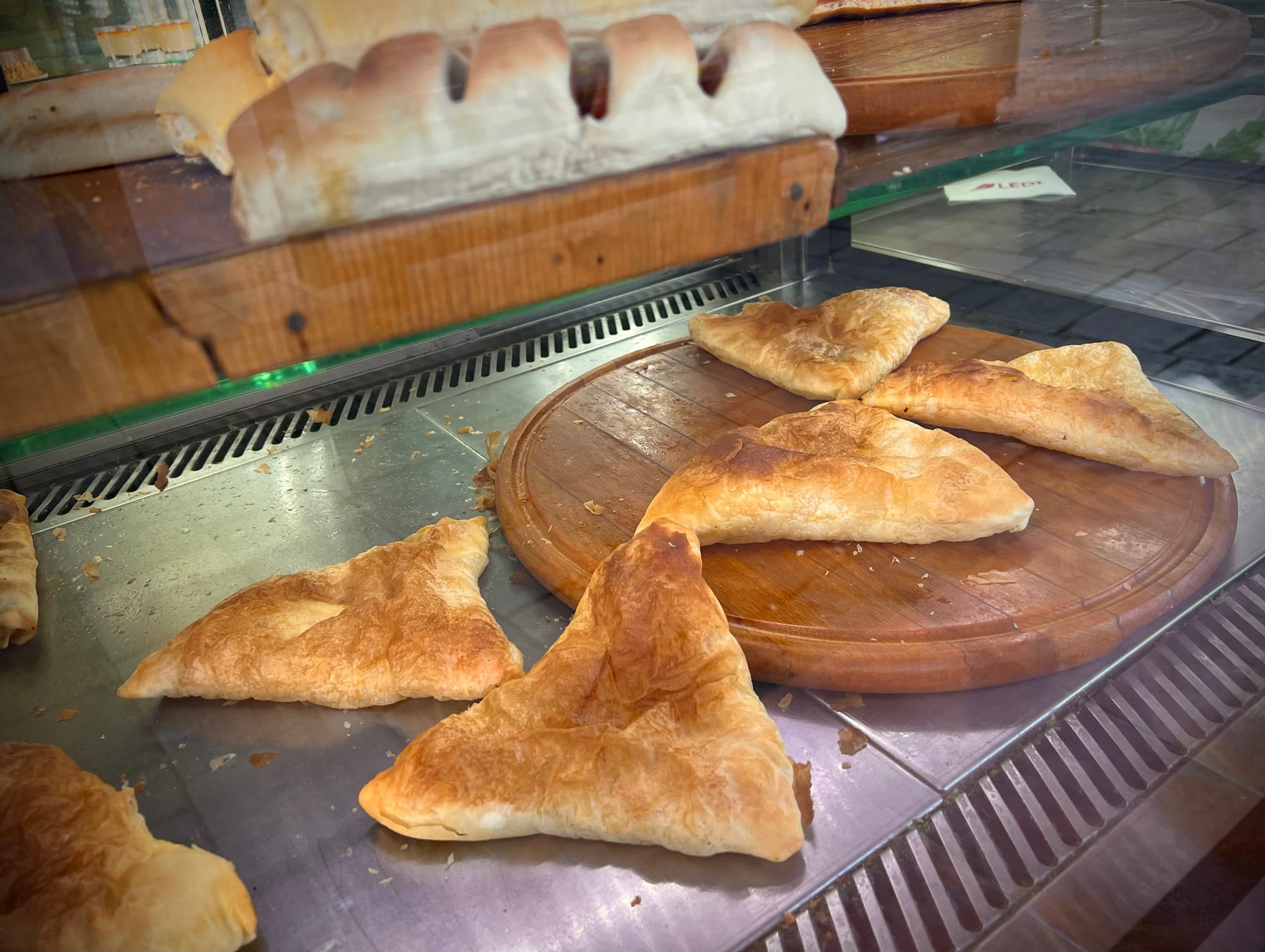
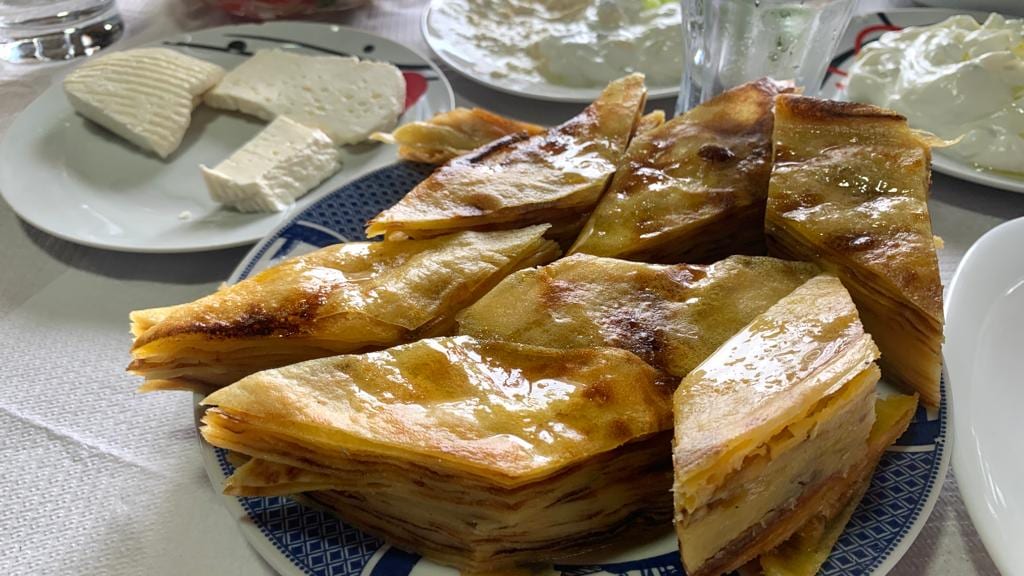
- Byrek — a pie of thin hand-stretched pastry layered around a filling: white
cheese, spinach, minced meat, pumpkin or wild greens. Sold hot by the slice at bakeries and eaten at any time of day, breakfast included.
- Fërgesë — peppers, tomatoes and soft curd cheese baked in a clay dish until
they set; a Tirana speciality, with a richer version made with veal liver.
- Qofte — grilled or fried rissoles of minced meat with onion and herbs, a
staff of every grill house, usually served with chips, raw onion and bread.
- Japrak and sarma — rice and sometimes minced meat rolled in leaves: fresh vine
leaves in summer, pickled cabbage leaves in winter.
- Fasule — a slow white-bean stew, plain or with a little cured meat or sausage,
and the classic cheap winter meal.
Alongside these, the meze plate does a lot of the eating: olives, cubes of white cheese, cured meat, fried peppers, and tarator, a cold soup or dip of yoghurt, cucumber, garlic and walnuts. Sweets are mostly Ottoman — baklava, revani, sugared semolina cakes, and hoshaf, a compote of dried figs and other fruit.
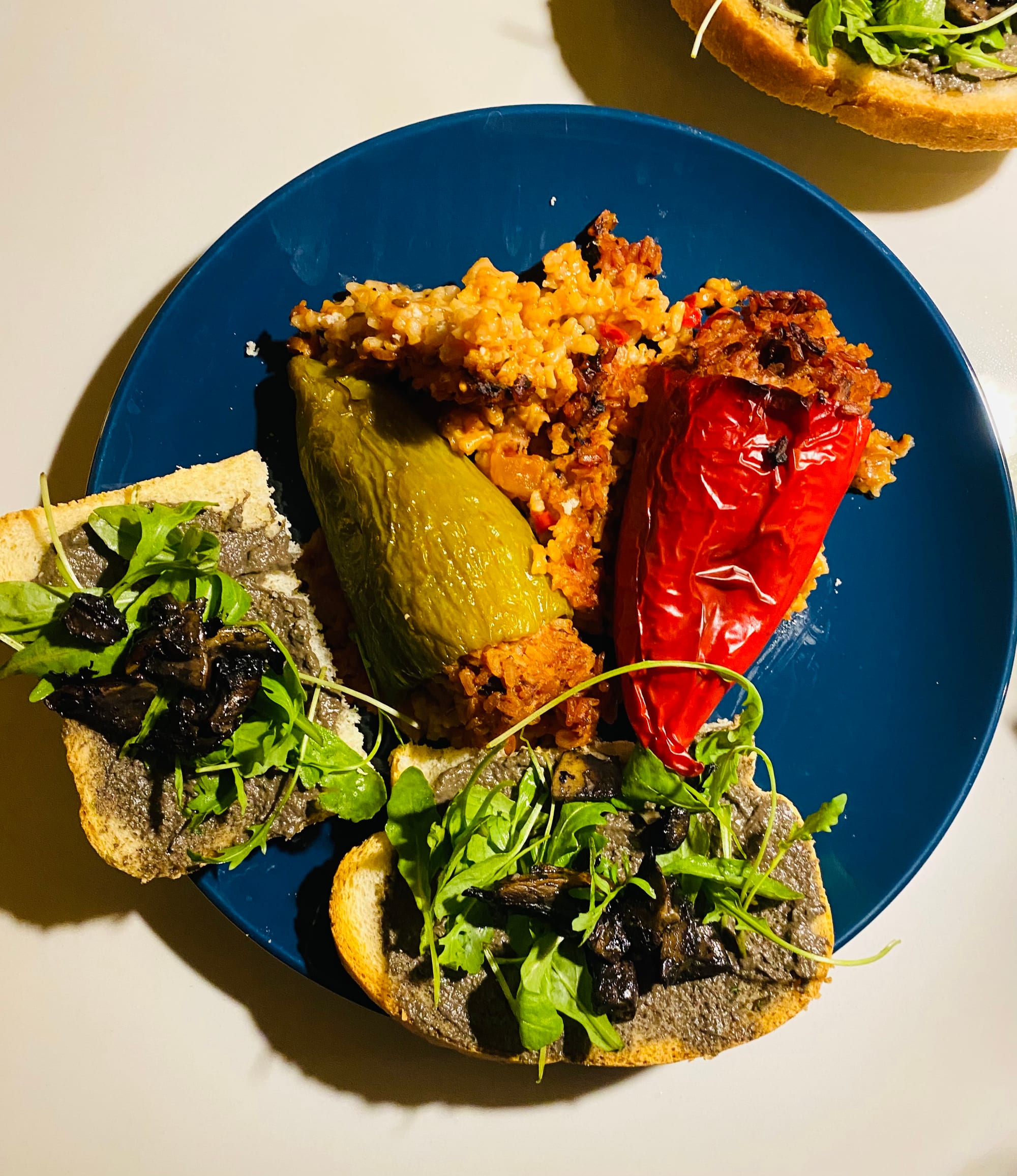
Fresh vegetables are eaten simply the rest of the time: a "village salad" of tomato, cucumber, onion and white cheese under olive oil, or a plate of grilled summer vegetables, sits on nearly every table.
Raki, coffee and the table
Two drinks frame Albanian eating. Raki — a clear fruit brandy, usually from grapes but also mulberries or plums, and very often home-distilled in the village — is the aperitif: a small glass with meze before a meal, and the thing a host pours for a guest, sometimes regardless of the hour. Coffee comes at the other end, either Turkish-style and thick or, increasingly, as Italian espresso, and an invitation to coffee is the basic unit of Albanian social life.
Beyond those, look for dhallë, a salted watered-down yoghurt drink taken with heavy food, and çaj mali, "mountain tea", a caffeine-free tisane of wild-gathered ironwort that most households keep and drink for its supposed health benefits. Beer is mostly lager, with Birra Korça the name to know and a beer festival in Korçë each August. Albania also makes wine again, from small producers working with native grapes such as Shesh and Kallmet, after decades in which it was produced by the tanker-load.
Hospitality and how meals work
Feeding a guest well is a serious matter in Albania, rooted in the old customary law, the Kanun, under which the traveller was almost sacred and a host was bound to protect and provide. In practice that means large midday meals, a table with more dishes than the number of people can finish, the best pieces pressed on visitors, and raki and coffee bracketing the whole thing. A meal often opens slowly, with meze and raki stretched over an hour of talk before anything hot arrives, and for weddings, saints' days and family gatherings the centrepiece is a whole lamb or kid turned on a spit over embers, mish në hell, carved straight onto the table. Religious lines are soft — the country is majority Muslim but strongly secular, with Orthodox and Catholic communities — so a family may mark Bajram, Easter and Christmas in the same year, each with its own food, and no one finds it strange.
Eating as a traveller
Vegetarians manage well: byrek, fërgesë, bean stew, stuffed vegetables, grilled vegetables and salads are all standard, though a "vegetable" soup may be started with meat stock. Pork appears in Christian areas and not in Muslim ones, and most meat is otherwise unremarkable to order. Tap water is generally chlorinated in cities but many travellers prefer bottled. Portions are large and cheap, grilled meat and byrek are the reliable quick meals, and on the southern coast the seafood is worth building a day around.
What to take from the table
Albanian food is generous and unfussy — a clay dish of something baked with yoghurt, good bread, a sharp white cheese, olives, and raki to start. It is best in a home or a village tavern rather than a smart restaurant, and if someone invites you to eat, expect to leave heavier than you planned.